
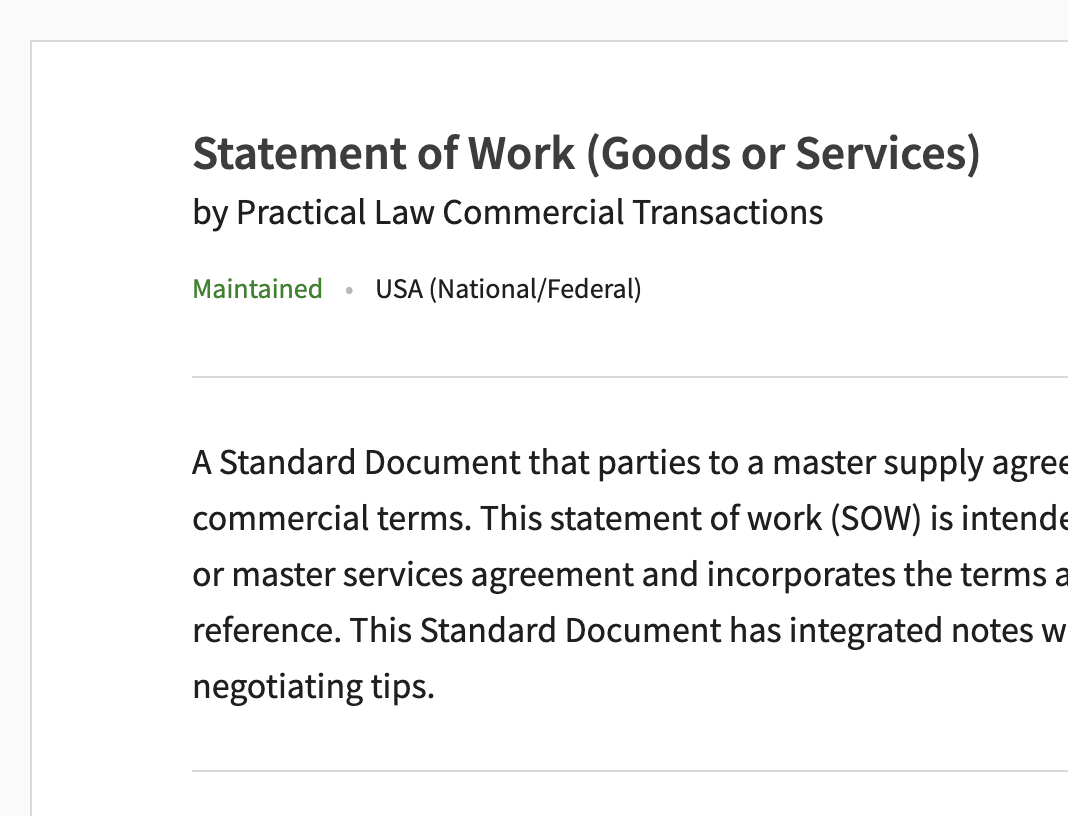
The realm of technology, especially within project management and software development, is replete with acronyms. Among these, the Statement of Work, or SOW, stands out as a crucial document that often dictates the success or failure of a project. Far from being a mere formality, a well-crafted SOW acts as the bedrock of understanding, expectation management, and accountability between parties involved in a technical endeavor. Whether you’re a client commissioning a new software application, a freelancer embarking on a complex coding project, or a project manager overseeing a large-scale system implementation, grasping the nuances of an SOW is paramount.

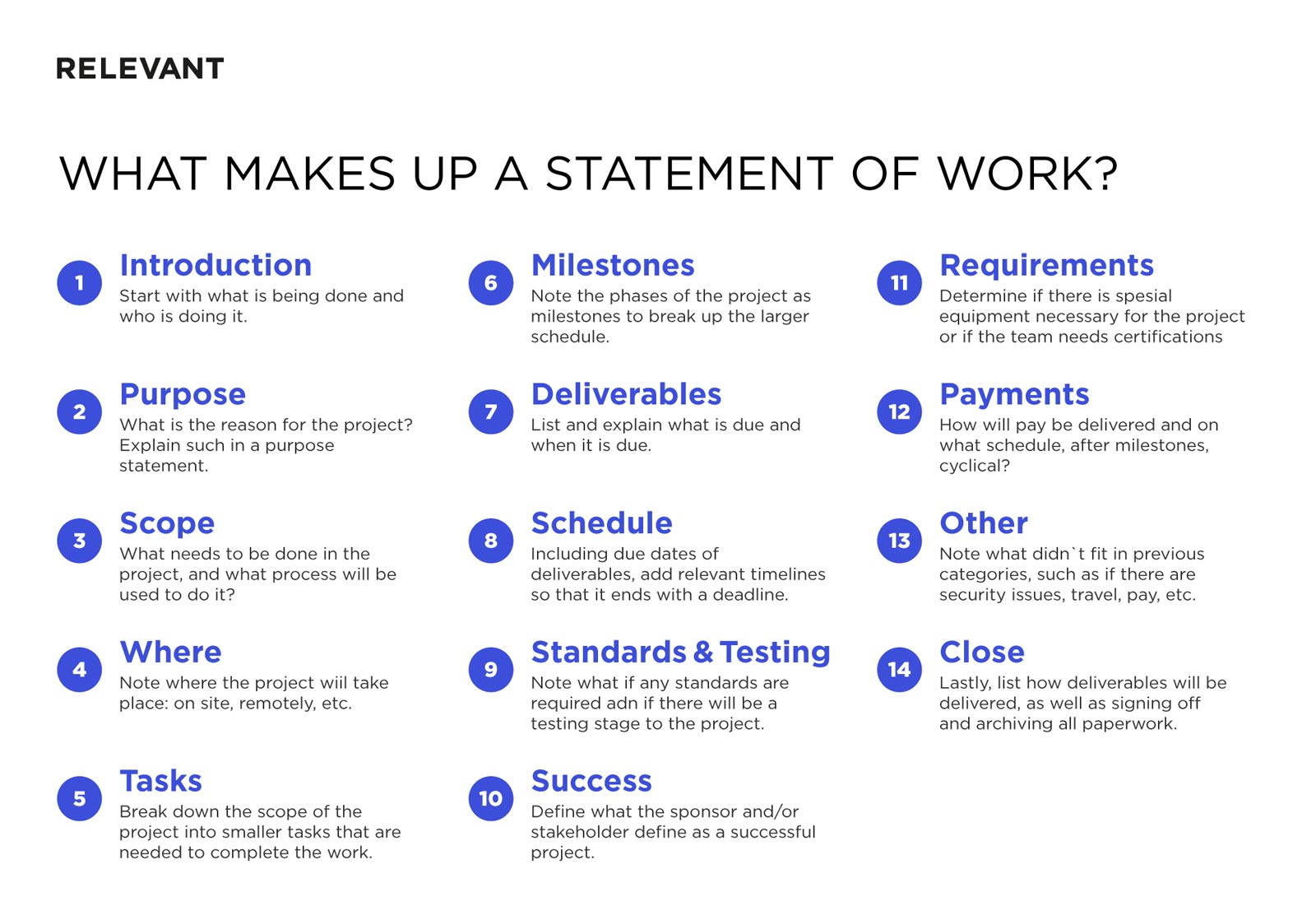
At its core, an SOW is a detailed document that outlines the specific work to be performed under a contract. It defines the objectives, scope, deliverables, timelines, and costs associated with a project. In the fast-paced and often intricate world of tech, where requirements can evolve and technical complexities abound, the SOW serves as a critical agreement. It ensures that all stakeholders are on the same page, minimizing ambiguity and potential disputes that can derail even the most promising technological advancements. This article will delve into the multifaceted nature of an SOW within the tech industry, exploring its essential components, its role in different tech contexts, and best practices for its creation and utilization.
The Foundational Pillars of a Tech SOW
A robust SOW is not simply a wish list; it’s a meticulously constructed document that lays out the ground rules for a technical project. Its strength lies in its comprehensiveness and clarity. When engaging in any technical undertaking, from developing a mobile app to implementing a cloud infrastructure, the SOW must address several key areas to ensure a shared understanding and a clear path forward.
Project Objectives and Goals
The genesis of any SOW lies in clearly articulating why the project is being undertaken. This section defines the overarching goals and objectives the project aims to achieve. In a tech context, this could mean improving operational efficiency through a new software system, launching a disruptive new digital product, or enhancing cybersecurity posture. These objectives should be SMART: Specific, Measurable, Achievable, Relevant, and Time-bound. For instance, instead of “Improve website performance,” a SMART objective would be “Increase website load speed by 20% within three months of deployment.” This clarity at the outset ensures that all parties are working towards a common, quantifiable outcome, preventing scope creep and misaligned expectations down the line.
Scope of Work: Defining the Boundaries
Perhaps the most critical element of an SOW is the detailed definition of the scope of work. This section explicitly outlines what will be done and, just as importantly, what will not be done. In technology, scope can be incredibly broad, encompassing everything from initial conceptualization and design to development, testing, deployment, and ongoing maintenance.
In-Scope Activities
This sub-section enumerates all the tasks, activities, and features that are explicitly included within the project’s purview. For a software development project, this might include detailed specifications for user interface design, functional requirements for specific modules, database architecture, integration with existing systems, and all phases of the Software Development Life Cycle (SDLC). It’s crucial to be as granular as possible. For example, if a feature is included, the SOW should detail its functionalities, expected user interactions, and any specific technical constraints.
Out-of-Scope Activities
Equally important is clearly stating what is not included. This proactive measure helps prevent misunderstandings and protects both the client and the service provider from unexpected demands. For example, a software development SOW might explicitly state that user training, data migration from legacy systems (unless specified as in-scope), or ongoing content creation are outside the defined scope. This doesn’t mean these services can’t be added later, but it clarifies that they are not part of the initial agreement and would require a change order or a new SOW.
Deliverables: Tangible Outcomes
Deliverables are the concrete, tangible outputs that will be produced by the service provider and accepted by the client upon completion of the work. In the tech world, deliverables can take many forms.
Tangible Tech Outputs
These are the physical or digital products of the project. For software development, this could include source code, compiled applications, user manuals, API documentation, and test reports. For infrastructure projects, it might involve configured servers, network diagrams, or security audit reports. For AI projects, deliverables could include trained models, deployed algorithms, or data analysis reports. The SOW must precisely define each deliverable, including its format, quality standards, and acceptance criteria. For instance, the SOW for a mobile app might specify that the deliverable is a fully functional iOS and Android application, tested according to industry best practices, and submitted to the respective app stores.
Acceptance Criteria
To ensure that deliverables meet the required standards, the SOW must establish clear and objective acceptance criteria. These are the conditions that must be met for a deliverable to be considered complete and satisfactory. Without well-defined acceptance criteria, disputes can arise when a client deems a deliverable unacceptable for subjective reasons. For example, an acceptance criterion for a software feature might be that it passes all defined unit tests and user acceptance testing (UAT) scenarios without critical bugs.
The Strategic Deployment of an SOW in Tech Projects
The SOW is not a one-size-fits-all document. Its application and emphasis can vary significantly depending on the specific type of tech project and the contractual relationship between parties. Understanding these variations allows for more effective and tailored SOW development.
Fixed-Price vs. Time & Materials Contracts
The nature of the contract heavily influences the structure and detail of an SOW.
Fixed-Price SOWs
In a fixed-price agreement, the scope of work is typically very well-defined and rigid. The SOW for such projects must be exceptionally detailed, leaving little room for interpretation. This is because the price is fixed, and any deviation from the agreed-upon scope can lead to significant financial implications for the provider. Fixed-price SOWs are often used for projects with clearly defined requirements and a low probability of significant change, such as the development of a standard piece of software with well-understood functionalities. The SOW will meticulously list every feature, every task, and every deliverable, with precise timelines and milestones.
Time & Materials (T&M) SOWs
Conversely, T&M contracts are more common for projects where the scope is less certain or likely to evolve, such as innovative R&D projects or complex system integrations where the exact technical challenges may not be fully predictable at the outset. In a T&M SOW, the focus is on outlining the overall objectives, the general approach, and the estimated effort, rather than providing an exhaustive list of every minute task. The SOW will define the roles and responsibilities, the reporting mechanisms, and the hourly or daily rates. While less granular on specific tasks, it still needs to clearly define the boundaries of the engagement and the process for scope adjustments. The emphasis is on transparency in tracking hours and resources.
Agile Development and Iterative SOWs
The rise of Agile methodologies has also influenced how SOWs are approached. Traditional, rigid SOWs can sometimes clash with the iterative and adaptive nature of Agile development. However, SOWs remain vital, albeit often adapted to accommodate flexibility.
Iterative Scope Definition
Instead of defining the entire project scope upfront in minute detail, an Agile SOW might focus on defining the overarching product vision, the minimum viable product (MVP), and the initial sprint goals. The detailed scope for subsequent iterations is then refined and agreed upon at the beginning of each sprint or iteration. The SOW would outline the framework for this iterative planning and the mechanisms for evolving requirements and deliverables throughout the project lifecycle. This approach allows for flexibility while maintaining a contractual agreement.
Defining Roles and Responsibilities in Agile
In Agile, collaboration and shared responsibility are key. An Agile SOW will clearly delineate the roles and responsibilities of both the development team and the client, especially the product owner. It will define how feedback will be gathered, how user stories will be prioritized, and how acceptance will be managed on a continuous basis, rather than at the end of the project.
Ensuring Success: Best Practices for Creating and Managing Tech SOWs
A well-written SOW is a powerful tool, but its effectiveness hinges on the care and diligence applied to its creation and subsequent management. Ignoring best practices can lead to costly disputes and project failures.
Clarity, Specificity, and Measurability
The golden rule of SOW creation is to prioritize clarity. Avoid jargon where possible, or define it clearly. Be specific in describing tasks, deliverables, and timelines. Crucially, ensure that all objectives and acceptance criteria are measurable. Vague statements like “improve user experience” are unhelpful. Instead, specify metrics like “reduce average task completion time by 15%.” This specificity ensures that both parties have a concrete understanding of what constitutes success.
Defining Roles, Responsibilities, and Communication Channels
A successful tech project is a collaborative effort. The SOW must clearly outline who is responsible for what. This includes defining the client’s responsibilities (e.g., providing timely feedback, access to systems) and the service provider’s obligations. Furthermore, it’s essential to establish clear communication channels, meeting cadences, and reporting protocols. This proactive approach minimizes miscommunication and ensures that issues are addressed promptly.
Change Management: Navigating the Unforeseen
Even with the most meticulous planning, changes are often inevitable in tech projects. The SOW must include a robust change management process. This typically involves a formal process for submitting, evaluating, and approving any proposed changes to the scope, timeline, or budget. This process usually requires a written change order that details the modification, its impact, and the revised cost and schedule, signed by both parties. Without this, uncontrolled scope creep can quickly derail a project and strain relationships.
Review and Legal Scrutiny
Before signing any SOW, it is imperative for both parties to conduct thorough internal reviews. This should involve all relevant stakeholders, including technical leads, project managers, and business analysts. Crucially, the SOW should also be reviewed by legal counsel to ensure that all terms are legally sound, protect the interests of both parties, and comply with relevant regulations, particularly concerning intellectual property, data privacy, and security in the tech context.
In conclusion, the Statement of Work is an indispensable document in the technology sector. It serves as the blueprint for any technical endeavor, ensuring that all parties are aligned on objectives, scope, deliverables, and timelines. By investing time and effort into creating a clear, comprehensive, and well-managed SOW, businesses and individuals can significantly increase the likelihood of successful project outcomes, fostering stronger partnerships and driving technological innovation effectively.
aViewFromTheCave is a participant in the Amazon Services LLC Associates Program, an affiliate advertising program designed to provide a means for sites to earn advertising fees by advertising and linking to Amazon.com. Amazon, the Amazon logo, AmazonSupply, and the AmazonSupply logo are trademarks of Amazon.com, Inc. or its affiliates. As an Amazon Associate we earn affiliate commissions from qualifying purchases.