
In the vast ecosystem of commercial climate control, few pieces of equipment are as ubiquitous or as vital as the Rooftop Unit (RTU). For facility managers, building owners, and maintenance technicians, understanding the functionality and technological integration of an RTU is essential for maintaining building efficiency, occupant comfort, and long-term asset value. As building management systems (BMS) become increasingly digitized, the RTU has evolved from a simple mechanical heater and cooler into a sophisticated node within the modern smart building network.
Understanding the Anatomy and Function of an RTU
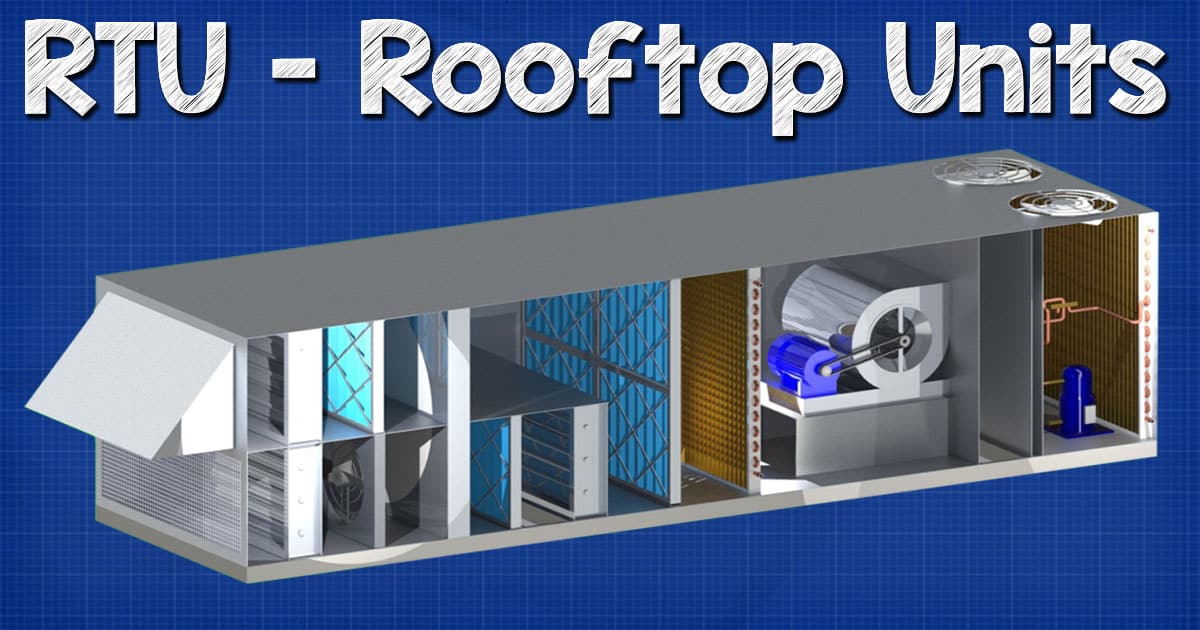
At its core, an RTU is a “packaged” HVAC system. Unlike a split-system air conditioner, where the evaporator coil is located inside and the condenser unit is outside, a rooftop unit contains all the necessary components for air conditioning and heating within a single, weatherproof enclosure. This self-contained design is specifically engineered for rooftop installation, saving valuable interior square footage in commercial properties like warehouses, retail spaces, schools, and offices.
Core Components of the Package
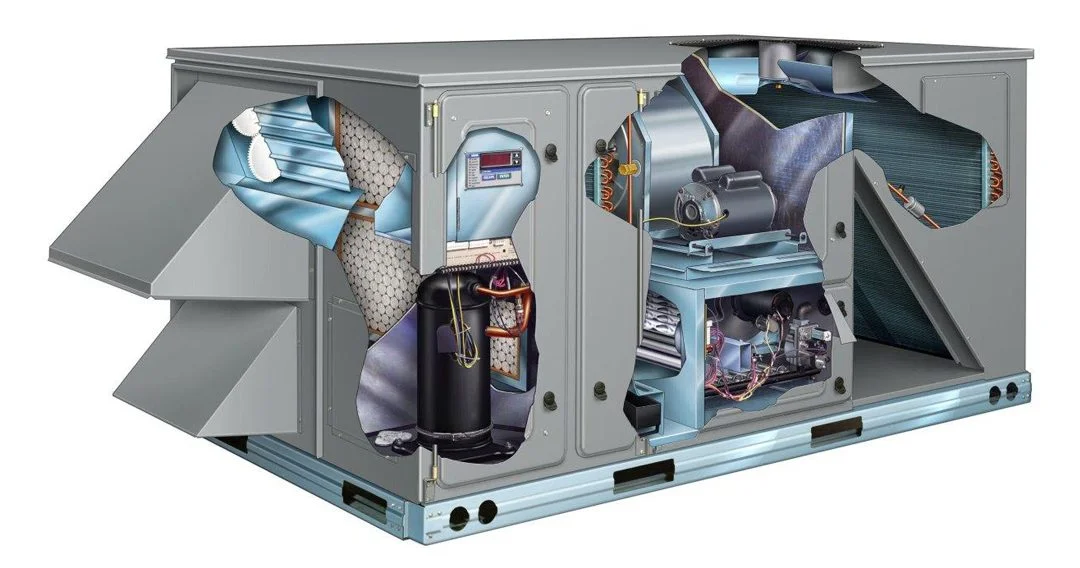
A standard RTU integrates several key modules to facilitate environmental control. The air-handling section includes blowers and fans that circulate air throughout the facility. The refrigeration cycle components—the compressor, condenser coil, and expansion valve—work in tandem to remove heat from the building’s air supply. On the heating side, most units utilize gas-fired heat exchangers or electric heating elements. Finally, the economizer section serves as a crucial intelligent component, capable of bringing in outside air to provide “free cooling” when ambient outdoor temperatures are favorable, significantly reducing the energy load on the mechanical compressor.
Why the Rooftop Configuration Matters
The primary benefit of the rooftop configuration is accessibility and space optimization. By placing the equipment on the roof, the building’s interior layout remains unencumbered by bulky mechanical rooms. Furthermore, maintenance technicians can access the unit for routine servicing—such as changing filters, checking refrigerant levels, and inspecting heat exchangers—without disrupting the operations of the tenants inside. This centralized location also simplifies ductwork design in single-story structures, allowing for efficient air distribution directly through the ceiling or roof deck.
The Technological Evolution: RTUs in the Age of Smart Buildings
The modern RTU is no longer just a mechanical device that cycles on and off based on a basic thermostat. We are currently witnessing a paradigm shift where RTUs are becoming critical “edge devices” in the Internet of Things (IoT) landscape. Integration with digital control systems has transformed how these units report performance data and react to environmental variables.
Digital Control and BMS Integration
Most contemporary RTUs are equipped with factory-mounted unit controllers that communicate via standard protocols such as BACnet or Modbus. This integration allows facility managers to monitor the health of their rooftop fleet from a centralized dashboard. Instead of relying on reactive maintenance—fixing the unit after it stops cooling—modern digital interfaces allow for proactive, condition-based maintenance. By monitoring discharge air temperatures, compressor run times, and damper positions, operators can identify performance drift before it results in a system failure.
Advanced Variable Frequency Drives (VFDs)
One of the most significant technological advancements in RTU design is the widespread adoption of Variable Frequency Drives (VFDs) for supply and exhaust fans. Historically, RTU fans operated in a binary state: either full blast or off. This led to massive energy waste and significant noise fluctuations. With VFDs, the motor speed is modulated based on the actual load requirements of the building. If a space is only partially occupied, the RTU slows down, consuming exponentially less energy while maintaining precise airflow. This fine-tuned control is a cornerstone of current energy-saving strategies in commercial real estate.
Optimizing Performance and Energy Efficiency
Energy costs represent the single largest operating expense for many commercial buildings, and the RTU fleet is often the primary driver of this expenditure. Optimizing these units is not merely about maintenance; it is a financial strategy. By focusing on airflow dynamics, sensor accuracy, and intelligent sequencing, building owners can achieve double-digit percentage savings in monthly energy costs.
The Role of Economizers in Energy Management
The economizer is arguably the most impactful component for energy efficiency in temperate climates. An economizer uses a series of dampers to draw in outdoor air when the outside temperature and humidity are lower than the indoor setpoint. By using “free” outdoor air to cool the building instead of running the mechanical compressor, the unit drastically reduces electricity consumption. However, economizers are notorious for failing if not properly calibrated. If an economizer sensor is faulty, the unit might pull in hot, humid air during the summer, forcing the compressor to work twice as hard to dehumidify and cool that air. Regular calibration of enthalpy sensors is a high-yield task for any facility team.
Predictive Maintenance through Sensor Analytics
The rise of software-based analytics platforms has changed the maintenance game. By deploying wireless vibration sensors and current transducers on RTU motors, facility managers can detect “hidden” problems. For example, a slight increase in motor current might indicate that a belt is beginning to slip, or that a bearing is beginning to seize. By identifying these anomalies through data, maintenance crews can replace parts during a scheduled visit rather than dealing with an emergency lockout in the middle of a hot summer day. This move from calendar-based maintenance to predictive maintenance is the hallmark of a high-performance facility strategy.
Key Considerations for Selection and Lifecycle Management
Selecting the right RTU for a building involves more than just matching the cooling capacity (in tons) to the square footage of the space. It is a decision that impacts the building’s operating budget for the next fifteen to twenty years.
Understanding Efficiency Ratings
When evaluating new RTUs, buyers must look beyond the initial purchase price. The Seasonal Energy Efficiency Ratio (SEER) and the Integrated Energy Efficiency Ratio (IEER) are critical metrics. While SEER measures cooling efficiency at specific conditions, IEER provides a better representation of how the unit performs under the varied, part-load conditions that commercial buildings experience most of the time. Investing in units with higher IEER ratings typically pays for itself through utility savings within the first few years of operation.

Lifecycle Considerations and Retrofits
The lifecycle of an RTU is generally dictated by the quality of the indoor air environment and the frequency of service. In corrosive environments—such as near the ocean or in chemical-heavy industrial areas—the lifespan can be significantly shortened unless specialized protective coatings (like phenolic coil coatings) are applied to the condenser coils.
When an RTU reaches the end of its useful life, owners have a choice: a “like-for-like” replacement or a high-efficiency upgrade. A high-efficiency upgrade often includes advanced features like demand-controlled ventilation (DCV), which uses CO2 sensors to modulate airflow based on actual occupant density. If a conference room is empty, the RTU scales back, saving energy. If a large group enters, the system increases outside air intake to maintain air quality. Such intelligent retrofits are the current gold standard in sustainable facility management, ensuring that the HVAC infrastructure not only cools the building but also serves as an active participant in environmental stewardship and financial efficiency.
In summary, the RTU is the workhorse of the modern commercial building. By understanding the technological capabilities, the necessity of digital integration, and the financial impact of energy-efficient operation, stakeholders can ensure their HVAC systems remain a competitive asset rather than a hidden cost center. Through proper maintenance and the smart application of digital tools, the rooftop unit remains a testament to the intersection of mechanical engineering and intelligent building management.
aViewFromTheCave is a participant in the Amazon Services LLC Associates Program, an affiliate advertising program designed to provide a means for sites to earn advertising fees by advertising and linking to Amazon.com. Amazon, the Amazon logo, AmazonSupply, and the AmazonSupply logo are trademarks of Amazon.com, Inc. or its affiliates. As an Amazon Associate we earn affiliate commissions from qualifying purchases.