
In the landscape of industrial design and manufacturing, few mechanical innovations have had as profound an impact on the global apparel and textile industries as the overlocking stitch. Often referred to in professional circles as a serger stitch, the overlocking stitch represents a pinnacle of high-speed mechanical synchronization and edge-finishing technology. Unlike the standard lockstitch produced by a domestic sewing machine, the overlocking stitch is a complex, multi-thread system designed to wrap thread around the edge of fabric to prevent fraying while providing a high degree of elasticity and structural integrity.

From a technological standpoint, the overlocking stitch is not merely a method of joining fabric; it is a sophisticated solution to the challenges of materials science. As synthetic fabrics, high-performance knits, and industrial-grade textiles have evolved, the hardware required to process them has transitioned from simple mechanical gears to computerized systems integrated with sensors and pneumatic automation. Understanding what an overlocking stitch is requires an exploration of the precision engineering that allows these machines to operate at speeds exceeding 8,000 stitches per minute.
The Mechanical Architecture of Overlocking Systems
The hardware responsible for an overlocking stitch is fundamentally different from a standard sewing machine. While a traditional machine uses a bobbin and a needle to create a lockstitch, an overlocker—or serger—utilizes a series of “loopers” and needles that work in a highly synchronized cycle. This hardware configuration allows for the simultaneous trimming of the fabric edge and the application of a thread-based binding.
Differential Feed and Precision Hardware
One of the most significant technological breakthroughs in the evolution of the overlocking stitch is the implementation of the differential feed system. Modern overlockers utilize two independent sets of feed dogs—the mechanical teeth that move fabric through the machine—located under the presser foot.
The “differential” refers to the ability of the operator or the onboard software to adjust the speed of the front feed dogs relative to the rear ones. In high-performance tech-wear manufacturing, this is critical. When working with ultra-stretch fabrics like Lycra or Spandex, the machine can be programmed to “gather” the fabric slightly before the needle strikes, preventing the seam from waving or puckering. Conversely, for lighter silks, the feed dogs can be adjusted to stretch the fabric slightly to ensure a flat finish. This mechanical control is what allows mass-produced clothing to maintain its shape after repeated washing and wear.
The Synchronized Looper System
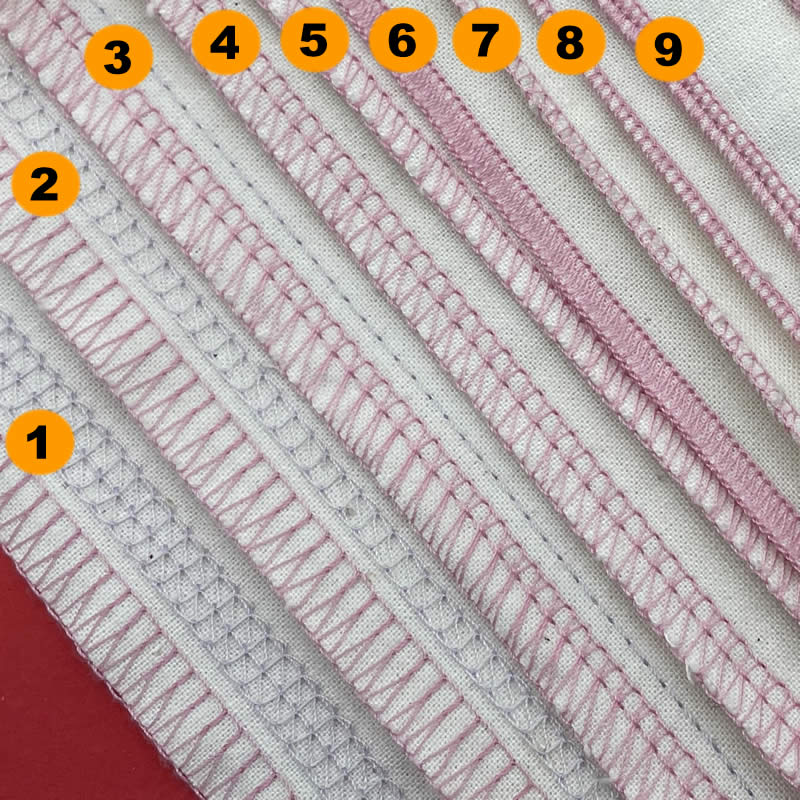
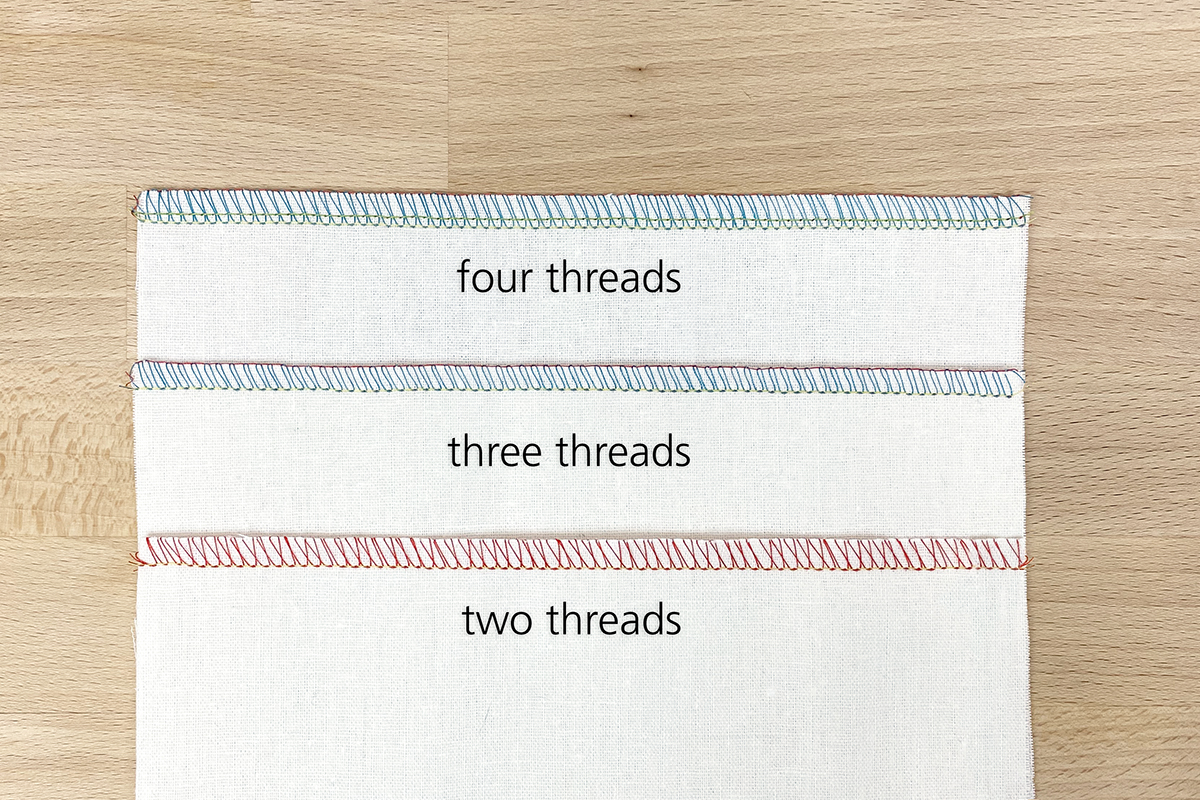
The overlocking stitch is categorized by the number of threads used, typically ranging from two to five. The engineering challenge lies in the timing of the upper and lower loopers. These loopers are oscillating metal arms that carry the thread across the edge of the fabric, meeting the needle in a precise “handshake.”
If the timing is off by even a fraction of a millimeter, the stitch fails, or the needles collide with the looper hardware, causing catastrophic machine failure. In modern industrial settings, this timing is controlled by high-torque servo motors and computerized belts, replacing the older, less reliable cam-driven systems. This shift to digital motor control allows for variable speed stitching without the loss of piercing power, a vital feature for sewing through multi-layered technical textiles or heavy-duty automotive upholstery.
Industrial Automation and Digital Stitch Control
As we move further into the era of Industry 4.0, the overlocking stitch has become a focal point for automation and smart manufacturing. What was once a labor-intensive process requiring high manual dexterity is now being augmented by sophisticated software and sensor arrays that monitor stitch quality in real-time.
Sensor-Driven Tension Management
One of the most complex aspects of textile technology is maintaining consistent thread tension. Thread is an inconsistent material; factors such as humidity, dye thickness, and spool winding can affect how it moves through a machine. Modern high-tech overlockers now feature active tensioning systems.
These systems utilize sensors to measure the diameter and resistance of the thread as it passes through the tension disks. If the software detects a micro-fluctuation—perhaps the thread is getting thinner or catching on a knot—the machine automatically adjusts the pressure on the disks in milliseconds. This prevents “bird-nesting” (thread tangling) and ensures that every overlocking stitch across a 1,000-unit production run is identical. This level of digital oversight is essential for brands that prioritize “Zero Defect” manufacturing.
Automated Trimming and Waste Management
A defining feature of the overlocking process is the integrated knife system. As the loopers create the stitch, a pair of high-speed steel or carbide-tipped blades trims the excess seam allowance. In advanced industrial models, these blades are part of an automated waste extraction system.
Using vacuum-suction technology, the fabric scraps are instantly removed from the needle plate and transported to a collection bin. This prevents debris from fouling the internal gears and sensors of the machine. Furthermore, “smart” knives are now entering the market, which can be programmed to engage or disengage based on the pattern data, allowing for complex garment construction where only specific sections of a seam require an overlocked edge.
The Digital Integration of the Sewing Lab
The concept of a “standalone” sewing machine is rapidly becoming obsolete in the professional textile sector. Overlocking technology is now fully integrated into the digital ecosystem of the modern design lab, connecting software-based pattern making with physical production.
IoT Connectivity and Firmware
Modern industrial overlockers are now equipped with Wi-Fi and IoT (Internet of Things) capabilities. This allows factory managers to monitor the “health” of a fleet of machines from a central dashboard. Data such as the number of stitches performed, the frequency of thread breaks, and the temperature of the motors are tracked.
Predictive maintenance algorithms analyze this data to alert technicians before a mechanical failure occurs. For instance, if the software detects an increase in the vibration of the looper shaft, it can schedule a replacement before the part breaks and halts the production line. Additionally, firmware updates can be pushed to machines to optimize stitch patterns for new, experimental fabrics that may have different friction coefficients.
CAD-to-Machine Integration
The bridge between Computer-Aided Design (CAD) and the physical overlocking stitch is narrowing. Designers using 3D modeling software like CLO3D or Optitex can now export “stitch metadata” directly to the production floor. This data tells the overlocker exactly what type of stitch density, width, and differential feed setting is required for every seam in a garment.
This eliminates the “trial and error” phase of manufacturing. By the time the fabric reaches the overlocking station, the machine has already been pre-configured via a barcode scan on the production ticket. This digital workflow ensures that the structural engineering of the garment—designed in a virtual environment—is perfectly translated into the physical world.
Future Horizons: Robotics and Sustainable Stitching
The future of the overlocking stitch is inextricably linked to the rise of “Sewbots”—robotic systems capable of handling limp materials. Historically, the greatest barrier to fully automated garment manufacturing was the difficulty of robots manipulating fabric, which shifts and folds unpredictably.
Robotic Overlocking
New research in computer vision and soft robotics is enabling machines to perform overlocking stitches with minimal human intervention. Using high-resolution cameras, these systems can “see” the edge of the fabric and adjust the machine’s path in real-time to maintain a perfect 3mm or 5mm overlock. This technology is currently being deployed in the production of basic garments like t-shirts and pillows, where high-volume overlocking is a primary requirement.
Sustainable Engineering and Thread Consumption
As the tech industry moves toward more sustainable practices, overlocking technology is being re-engineered to reduce material waste. Traditional overlocking produces a continuous strip of waste fabric and consumes a significant amount of thread compared to a standard stitch.
Engineers are developing “narrow-margin” overlocking machines that can operate closer to the fabric edge, reducing trim waste by up to 20%. Furthermore, software optimizations are being used to calculate the exact amount of thread needed for a specific production run, reducing the over-ordering of synthetic threads that contribute to environmental footprints.
Conclusion: The Silicon Valley of Textiles
The overlocking stitch is often overlooked as a simple component of clothing, but from a technological perspective, it is a marvel of precision engineering and digital integration. It represents the intersection of mechanical physics, materials science, and advanced software control.
As we look toward the future of wearable technology and automated manufacturing, the overlocker remains a critical piece of hardware. Its ability to secure raw edges, provide structural elasticity, and integrate with modern digital workflows makes it the backbone of the global textile industry. Whether it is through the implementation of AI-driven tension sensors or the development of robotic handling systems, the evolution of the overlocking stitch continues to drive the boundaries of what is possible in the world of high-tech manufacturing.
aViewFromTheCave is a participant in the Amazon Services LLC Associates Program, an affiliate advertising program designed to provide a means for sites to earn advertising fees by advertising and linking to Amazon.com. Amazon, the Amazon logo, AmazonSupply, and the AmazonSupply logo are trademarks of Amazon.com, Inc. or its affiliates. As an Amazon Associate we earn affiliate commissions from qualifying purchases.