
In the competitive landscape of luxury retail and high-end niche perfumery, few ingredients carry the weight of prestige and financial gravity as oud. Often referred to as “liquid gold,” oud—derived from the resinous heartwood of the agarwood tree—has transcended its historical roots in Middle Eastern culture to become a cornerstone of global luxury branding. For marketers, brand strategists, and business consultants, understanding the “oud phenomenon” is essential for grasping how heritage, scarcity, and sensory storytelling converge to command premium price points in the modern fragrance market.
The Economics of Scarcity and Luxury Branding
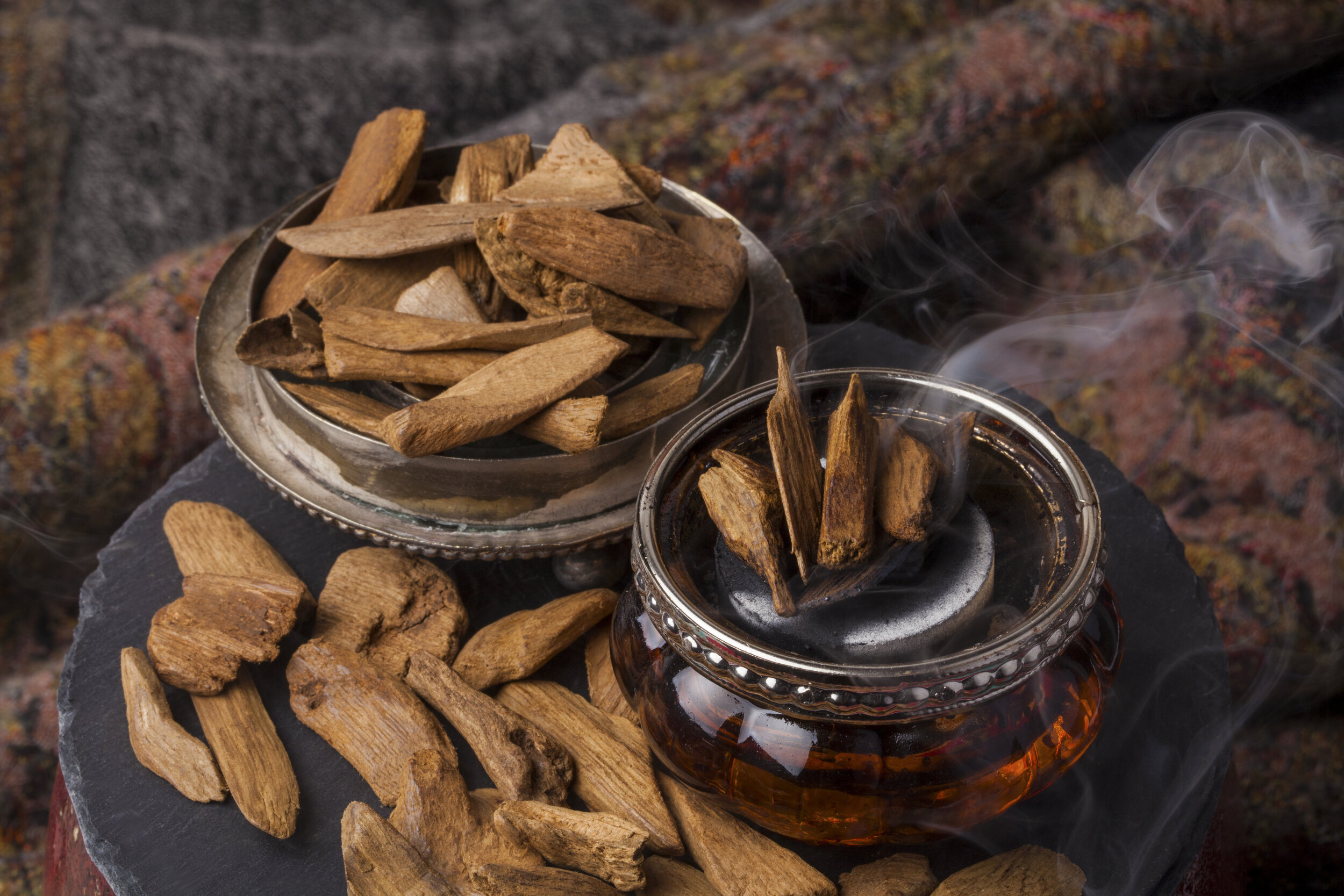
From a brand strategy perspective, oud is the ultimate case study in the power of perceived value. The material itself is not merely a scent; it is an economic indicator. Genuine oud oil is produced only when the Aquilaria tree becomes infected with a specific type of mold, Phialophora parasitica. In a desperate attempt to defend itself, the tree produces a dark, aromatic resin. This process is rare, unpredictable, and labor-intensive, often taking decades to yield high-quality material.
Scarcity as a Marketing Lever
Brand managers leverage this inherent scarcity to justify high retail prices. By framing oud as an artisanal, rare, and difficult-to-source commodity, brands cultivate an image of exclusivity. This creates a halo effect around a product line. When a fragrance house introduces an “Oud Collection,” they are signaling to the consumer that the brand has the global reach and supply chain sophistication to procure one of the most expensive natural raw materials in the world. This is a deliberate brand positioning tactic designed to elevate the brand’s equity from mass-market or “bridge” luxury to the status of an elite, heritage-driven house.
The Rise of Synthetic Oud
The intersection of chemistry and business is nowhere more apparent than in the production of synthetic oud. Because natural oud is volatile in terms of supply and cost, many major fragrance houses have invested heavily in creating synthetic accords. This represents a strategic shift in brand operations. By utilizing proprietary synthetic versions of oud, companies can maintain consistent profit margins and predictable scent profiles across global markets, ensuring that a product sold in Dubai performs exactly like a product sold in New York. This standardization is vital for corporate scaling, allowing brands to protect their identity while democratizing a luxury note that was once reserved for the ultra-wealthy.
Brand Positioning: Oud as an Archetype of Sophistication
Marketing departments often utilize oud to tap into specific consumer archetypes. The “Oud Buyer” is typically perceived as sophisticated, well-traveled, and status-conscious. Consequently, the branding surrounding these products relies heavily on cues of heritage and mystery.
Narratives of Provenance
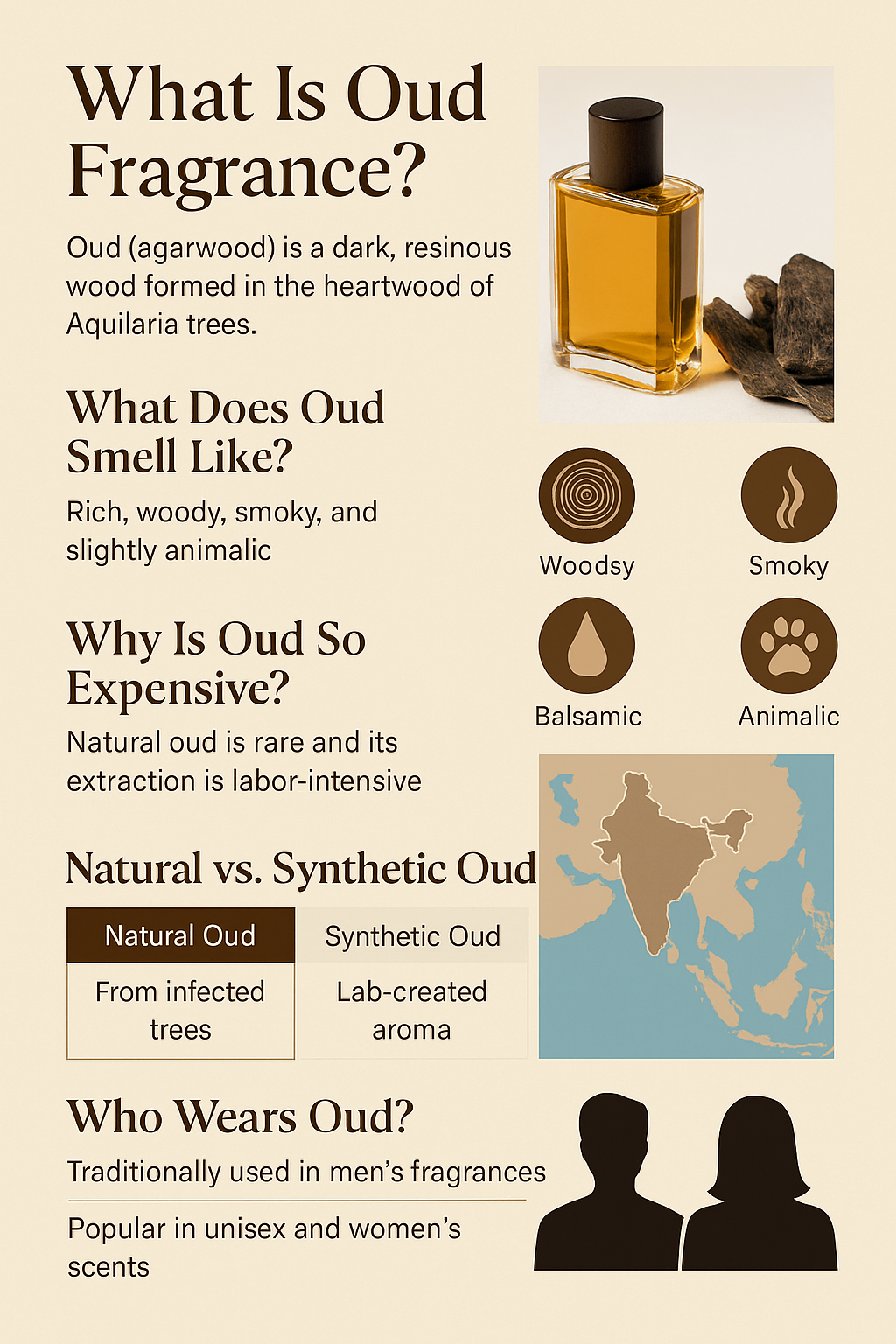
Successful fragrance brands do not just sell a smell; they sell a destination and a history. Marketing campaigns often emphasize the geographical origins of the wood—typically regions like Southeast Asia, India, or Vietnam. By weaving narratives about traditional distillation methods or the age of the trees, brands create a “story-living” experience. This is crucial for premium branding, as the consumer is paying for the intellectual property of the brand’s story as much as they are for the olfactory experience.
The Evolution of the “Westernized” Oud
Over the last decade, we have seen a pivot in how oud is marketed to the West. Early iterations were deep, barnyard-heavy, and unapologetically pungent. However, to capture a broader market, brand strategists have overseen the creation of “Westernized” oud—fragrances that blend the medicinal, earthy notes of agarwood with crowd-pleasing florals, bright citrus, or sweet vanilla. This strategic adaptation demonstrates how brands use oud to bridge the gap between regional cultural preferences and global commercial appeal. It is a tactical move to enter emerging markets without alienating traditional consumer bases.
Financial Dynamics of the Niche Fragrance Industry
When analyzing the financial health of the luxury fragrance sector, oud plays an outsized role. It is a high-margin product that acts as a gatekeeper for consumer loyalty.
High-Margin Portfolio Management
Fragrance houses utilize oud-based products as “anchor” items. These products generally boast significantly higher price points than alcohol-heavy, light-citrus scents. From a business finance standpoint, the inclusion of an oud-based perfume in a house’s portfolio boosts the Average Order Value (AOV). Customers willing to spend $300 to $600 on a bottle of oud-centric perfume often represent a high-LTV (Lifetime Value) demographic. This segment of the market is less price-sensitive and more focused on brand prestige and product quality, making them an ideal target for luxury expansion strategies.
The Role of Influencers and Digital Branding
The rise of “niche” perfume influencers on platforms like TikTok and Instagram has fundamentally shifted the marketing spend for fragrance houses. Oud, due to its complexity and polarising nature, is a perfect subject for viral content. Brands are increasingly allocating marketing budgets toward influencer partnerships that prioritize education—teaching consumers how to identify “real” oud notes versus synthetic ones. This influencer-led education functions as a trust-building mechanism, which is essential for brands selling luxury goods online, where the consumer cannot experience the scent before purchase.
Strategic Outlook: The Sustainability and Future of Oud
As with any premium commodity, the future of the oud market is tied to sustainability and corporate social responsibility (CSR). The over-harvesting of wild agarwood trees has led to ecological concerns, which now feature prominently in corporate identity disclosures.
Transparency as a Competitive Advantage
Modern consumers, particularly Gen Z and Millennials, prioritize ethical sourcing. Brands that have successfully pivoted to using sustainably harvested, plantation-grown agarwood can use this as a key marketing differentiator. By integrating ESG (Environmental, Social, and Governance) criteria into their supply chain, companies are not only protecting their long-term supply of raw materials but also strengthening their brand value among conscious consumers. This shift demonstrates that the modern fragrance business is no longer just about scent—it is about responsible asset management.
Diversification Beyond the Bottle
Finally, the “Oud” brand strategy is expanding beyond individual perfumes. Luxury houses are increasingly launching entire “Oud Lines” that include home scents, candles, and even skincare. This is a classic brand extension strategy. By leveraging the brand equity established by a successful oud fragrance, companies are creating a multi-category ecosystem. This increases the brand’s “share of wallet” among its top-tier customers, reinforcing their corporate identity as lifestyle providers rather than mere perfumers.
In conclusion, oud is far more than a complex aromatic note; it is a sophisticated financial instrument and a powerful marketing asset. For those analyzing the luxury sector, the trajectory of oud—from its humble origins in natural decay to its position as a pillar of global luxury—provides a roadmap for how brands can identify, market, and capitalize on high-value, high-scarcity commodities in an increasingly competitive global economy. The successful brand of the future will be one that respects the heritage of this ingredient while mastering the precision of modern supply chain management and consumer-centric digital engagement.
aViewFromTheCave is a participant in the Amazon Services LLC Associates Program, an affiliate advertising program designed to provide a means for sites to earn advertising fees by advertising and linking to Amazon.com. Amazon, the Amazon logo, AmazonSupply, and the AmazonSupply logo are trademarks of Amazon.com, Inc. or its affiliates. As an Amazon Associate we earn affiliate commissions from qualifying purchases.