
In the rapidly evolving landscape of electronics, hardware engineering, and DIY tech culture, the ability to diagnose and understand the behavior of electrical circuits is paramount. At the heart of this diagnostic capability lies a fundamental tool: the ohmmeter. Whether you are a professional hardware engineer, a hobbyist building your first IoT device, or a technician troubleshooting a complex server rack, the ohmmeter is an indispensable gadget in your arsenal.
An ohmmeter is a specialized electronic instrument used to measure electrical resistance—the opposition that a device or material offers to the passage of an electric current. Expressed in ohms ($Omega$), named after the German physicist Georg Simon Ohm, resistance is one of the three core pillars of electronics, alongside voltage and current. This guide explores the mechanics, applications, and technological evolution of the ohmmeter, providing a deep dive into how this tool remains a cornerstone of modern technological advancement.
The Science and Mechanics of Resistance Measurement
To understand what an ohmmeter is, one must first grasp the concept of Ohm’s Law. Ohm’s Law states that the current passing through a conductor between two points is directly proportional to the voltage across the two points and inversely proportional to the resistance. Mathematically, this is expressed as $R = V / I$.
An ohmmeter functions by applying a small, known internal voltage to the component or circuit being tested. It then measures the resulting current that flows through the circuit. By applying the principles of Ohm’s Law internally, the device calculates the resistance and displays it to the user.
Analog vs. Digital Ohmmeters
The tech industry has largely transitioned from analog to digital measurement tools, yet both hold a place in history and specific niche applications.
- Analog Ohmmeters: These traditional devices utilize a microammeter and a needle that moves across a graduated scale. They rely on a battery to provide the current for the measurement. While they are less common today, some purists prefer them for detecting slow changes in resistance that might be harder to see on a flickering digital display.
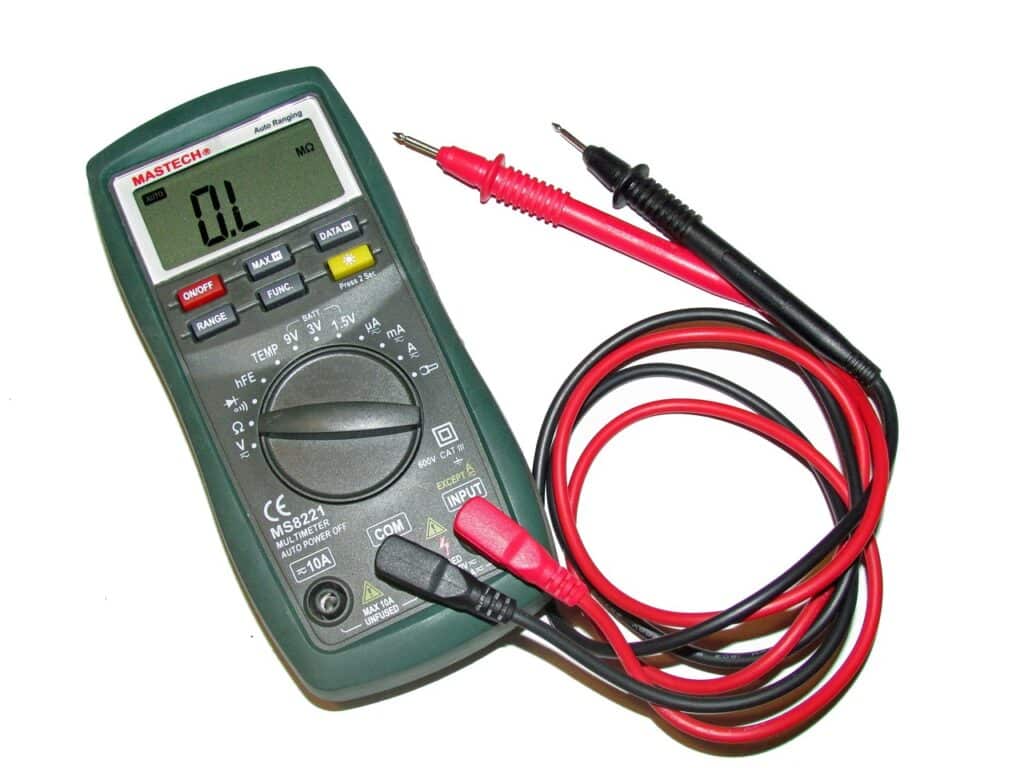
- Digital Ohmmeters: Most modern tech professionals use Digital Multimeters (DMMs) that include an ohmmeter function. These devices use an analog-to-digital converter (ADC) to provide a precise numerical readout on an LCD or LED screen. They offer higher accuracy, durability, and features such as “auto-ranging,” which automatically selects the appropriate magnitude (ohms, kilo-ohms, or mega-ohms) for the measurement.
The Importance of Precision: Micro-ohmmeters and Megohmmeters
Not all resistance is created equal. In the tech sector, we often deal with extremes.
- Micro-ohmmeters: Used for measuring very low resistances, such as the contact resistance of connectors or the integrity of high-power busbars in data centers.
- Megohmmeters (Meggers): These are designed to measure very high resistances, typically used for testing the insulation of cables. In digital security and infrastructure, ensuring that high-voltage lines are properly insulated prevents catastrophic hardware failures.
Practical Tutorials: How to Use an Ohmmeter in Hardware Tech
Using an ohmmeter is a fundamental skill for anyone involved in hardware maintenance, circuit design, or gadget repair. However, because the tool introduces its own current into a circuit, there are strict protocols to ensure both the safety of the user and the integrity of the device under test.
Step 1: Pre-Measurement Safety and Calibration
Before connecting an ohmmeter, the most critical step is to ensure the device or circuit being tested is completely powered off. Because the ohmmeter provides its own voltage, any external power source can lead to inaccurate readings or, in worse cases, blow the internal fuse of the meter.
For digital meters, check the battery level. For analog meters, “zeroing” the device is essential. This involves touching the two probes together and adjusting the dial until the needle points exactly to zero. This compensates for the internal resistance of the probes themselves.
Step 2: Selecting the Correct Range
In manual ohmmeters, you must select a range (e.g., 200$Omega$, 2k$Omega$, 20k$Omega$). If you select a range that is too low, the meter will display “1” or “OL” (Over Load), indicating the resistance exceeds the setting. Modern digital tools often feature auto-ranging, which eliminates this guesswork and is highly recommended for rapid prototyping.
Step 3: Measuring Continuity and Components
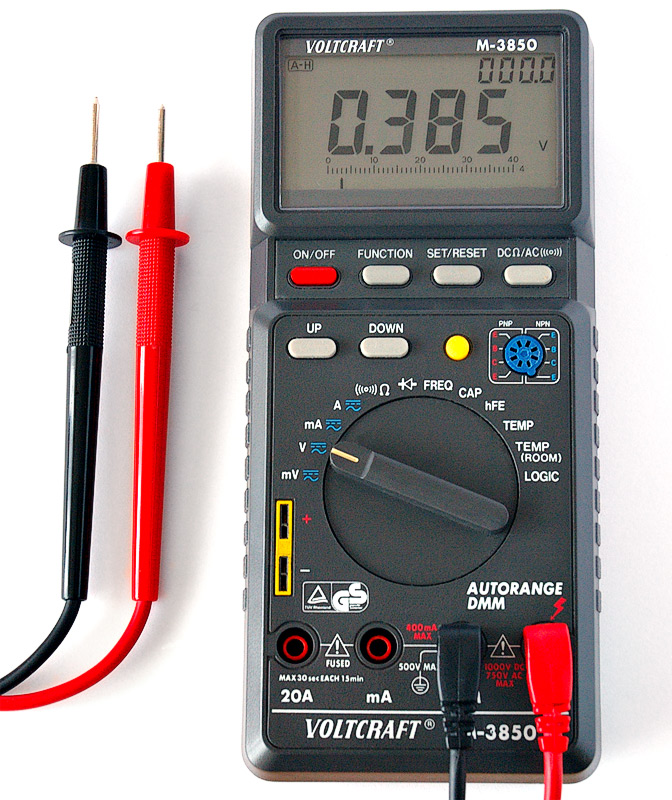
Testing for “continuity” is perhaps the most common use of an ohmmeter in tech troubleshooting. Continuity indicates a continuous path for current flow. If you are checking a USB cable for a break, you touch the probes to both ends of the wire. A reading of near-zero ohms indicates a healthy connection. A reading of infinity (OL) suggests a “broken” circuit or a severed wire.
When measuring individual components like resistors, the ohmmeter verifies that the component is within its specified tolerance. In tech manufacturing, this quality control ensures that a 10k$Omega$ resistor on a motherboard actually provides 10k$Omega$ of resistance, preventing circuit instability.
Troubleshooting and Prototyping in Modern Tech Ecosystems
In the world of software-defined hardware and rapid prototyping (using platforms like Arduino, Raspberry Pi, or custom PCBs), the ohmmeter serves as the primary diagnostic tool for “debugging” physical systems.
Identifying Short Circuits in PCBs
A short circuit is the nightmare of any hardware developer. It occurs when electricity takes an unintended path with little to no resistance, often leading to overheating or “fried” components. By using an ohmmeter to probe the traces on a printed circuit board (PCB), a developer can identify where two paths have accidentally crossed due to a soldering error or a manufacturing defect.
Validating Sensors and Actuators
Modern tech gadgets rely heavily on sensors—thermistors for temperature, photoresistors for light, and potentiometers for user input. These components change their resistance based on environmental factors. An ohmmeter allows a tech enthusiast to verify if a sensor is functioning correctly. For example, if a thermistor’s resistance does not change when heat is applied, the ohmmeter confirms that the sensor is faulty and needs replacement.
Battery Health and Connection Integrity
In the mobile tech and EV (Electric Vehicle) industries, resistance is a key indicator of health. High resistance in a battery terminal can lead to poor performance and excessive heat. Technicians use high-precision ohmmeters to ensure that battery interconnects are secure, ensuring the efficiency of power delivery in high-density tech environments.
The Evolution of Measurement: Smart Features and Future Trends
As with all tech gadgets, the humble ohmmeter is undergoing a digital transformation. The integration of software and wireless connectivity is turning traditional measurement tools into data-driven powerhouses.
Data Logging and Cloud Integration
Modern high-end ohmmeters and multimeters now feature Bluetooth connectivity. This allows engineers to stream resistance data directly to a smartphone or a cloud-based dashboard. In industrial tech settings, this “Smart Testing” allows for long-term monitoring of component degradation. If the resistance of a motor winding slowly increases over months, the software can predict a failure before it occurs, a concept known as predictive maintenance.
The Rise of Smart Tweezers
For the miniaturized world of Surface Mount Technology (SMT), standard probes are often too bulky. Enter “Smart Tweezers”—a specialized form of ohmmeter designed specifically for testing tiny components on high-density circuit boards found in smartphones and wearables. These devices automatically identify the component (resistor, capacitor, or inductor) and display its value, drastically speeding up the repair and assembly process in the tech industry.
Software-Defined Measurement
We are seeing a move toward USB-based measurement tools that utilize a computer’s processing power to analyze electrical signals. These tools often combine the functions of an ohmmeter, oscilloscope, and logic analyzer into a single compact device. This convergence is a boon for remote engineers and “digital nomads” in the hardware space who need a full lab setup that fits in a laptop bag.
Conclusion: Why the Ohmmeter Remains Essential
In an era dominated by AI, cloud computing, and sophisticated software, it is easy to overlook the physical foundations of our digital world. However, every line of code eventually translates into electrical signals moving through physical hardware. The ohmmeter remains the bridge between the theoretical design and the physical reality of a circuit.
Understanding what an ohmmeter is and how to use it is more than just a technical skill; it is an insight into how the gadgets we rely on daily actually function. From the simplest continuity check to the most complex high-resistance insulation test, the ohmmeter ensures that our tech remains safe, efficient, and functional. As hardware continues to shrink and complexity continues to grow, the need for precise, reliable measurement tools will only increase, cementing the ohmmeter’s status as a foundational pillar of the technology industry.
aViewFromTheCave is a participant in the Amazon Services LLC Associates Program, an affiliate advertising program designed to provide a means for sites to earn advertising fees by advertising and linking to Amazon.com. Amazon, the Amazon logo, AmazonSupply, and the AmazonSupply logo are trademarks of Amazon.com, Inc. or its affiliates. As an Amazon Associate we earn affiliate commissions from qualifying purchases.