
The automotive world is a complex interplay of mechanical engineering and increasingly sophisticated electronic systems. Among the myriad of sensors and components that keep a modern vehicle running smoothly and efficiently, the Mass Airflow (MAF) sensor plays a crucial, albeit often overlooked, role. Understanding what an MAF sensor is, how it functions, and why it’s vital for your car’s performance and emissions is essential for any car owner who wants to stay informed about their vehicle’s technology.
At its core, the MAF sensor is an electronic component that measures the amount of air entering the engine. This seemingly simple function is critical because the engine’s computer, the Powertrain Control Module (PCM) or Engine Control Unit (ECU), needs to know precisely how much air is present to accurately calculate the correct amount of fuel to inject. Fuel and air are the fundamental ingredients for combustion, and getting the ratio right is paramount for optimal engine operation, fuel economy, and emissions control. Without an accurate reading from the MAF sensor, the PCM would be flying blind, leading to a cascade of performance issues.
This article will delve into the intricacies of the MAF sensor, exploring its technological underpinnings, its crucial role within the vehicle’s ecosystem, common issues that can arise, and the implications for your car’s overall health and efficiency. By the end, you’ll have a comprehensive understanding of this vital piece of automotive technology.
The Fundamental Role of the MAF Sensor in Engine Management
The MAF sensor is more than just a measurement device; it’s a cornerstone of modern engine management systems. Its primary objective is to provide real-time data to the PCM, allowing it to make instantaneous adjustments that optimize combustion. This constant feedback loop is what differentiates modern vehicles from their carbureted predecessors, enabling them to meet stringent emissions standards and achieve remarkable fuel efficiency.
Quantifying the Incoming Airflow
The engine’s performance is directly tied to the amount of air it can ingest. More air generally means more fuel can be burned, leading to more power. Conversely, less air necessitates less fuel. The MAF sensor’s job is to precisely quantify this incoming airflow. It achieves this by measuring the mass of the air, rather than just its volume. This is a crucial distinction because air density can vary significantly based on temperature and altitude. By measuring mass, the MAF sensor provides a more accurate representation of the actual amount of oxygen available for combustion, regardless of these environmental factors.
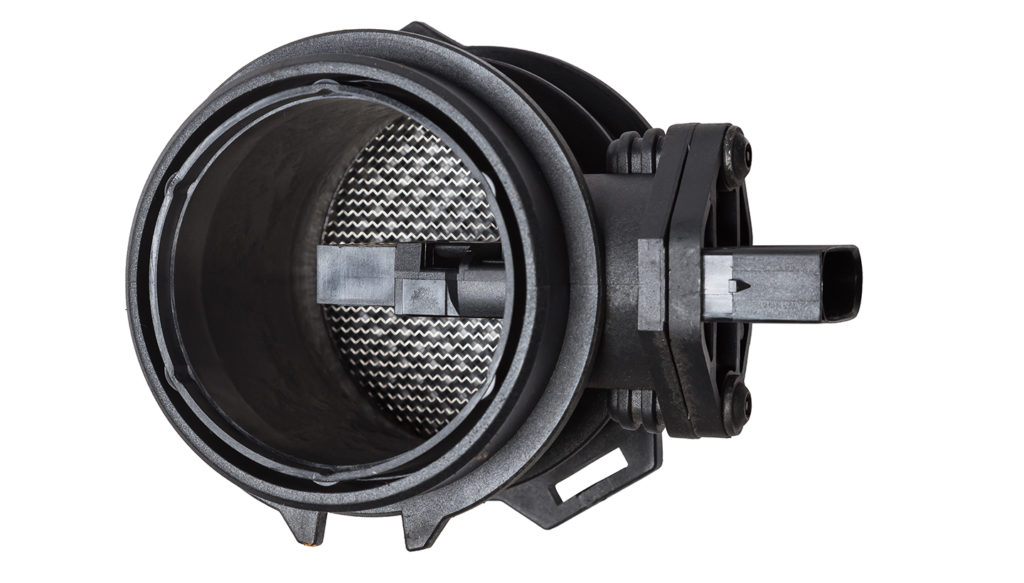
There are several types of MAF sensors, but the most common employs a heated wire or a heated film. In a hot-wire MAF sensor, a thin platinum wire is heated to a specific temperature. As air flows over the wire, it cools it down. The MAF sensor then measures the amount of electrical current needed to maintain the wire at its constant temperature. The greater the airflow, the more current is required to keep the wire hot, and this current is directly proportional to the mass of the air flowing into the engine. Similarly, a hot-film MAF sensor uses a heated silicon film, which operates on the same principle. This technology allows for very precise measurements, ensuring the PCM has the accurate data it needs.
The MAF Sensor’s Data and the PCM
The data generated by the MAF sensor is fed into the PCM in real-time, typically in the form of a frequency or voltage signal. This signal represents the mass of air entering the engine per unit of time. The PCM then uses this information in conjunction with data from other sensors, such as the throttle position sensor (TPS), the oxygen sensor (O2 sensor), and the engine coolant temperature sensor (ECT), to make critical decisions about fuel injection and ignition timing.
For instance, if you press the accelerator pedal, the TPS tells the PCM that you want more power. Simultaneously, the MAF sensor reports an increase in airflow. The PCM, armed with this data, calculates the precise amount of fuel needed to create the optimal air-fuel ratio for the increased airflow, ensuring smooth acceleration and efficient combustion. If the MAF sensor were to provide an inaccurate reading, the PCM would inject too much or too little fuel, leading to a variety of drivability issues.
The Impact of the MAF Sensor on Engine Performance and Emissions
The MAF sensor’s accurate measurement of airflow directly influences how your engine performs and how clean its exhaust is. Any discrepancies in its readings can have tangible consequences that a driver will notice.
Optimizing Air-Fuel Ratio for Performance
The ideal air-fuel ratio for gasoline combustion, often referred to as the stoichiometric ratio, is approximately 14.7 parts of air to 1 part of fuel by mass. Deviating from this ratio can lead to either a fuel-rich mixture (too much fuel, not enough air) or a fuel-lean mixture (too little fuel, too much air).
A fuel-rich mixture can cause poor fuel economy, sluggish acceleration, rough idling, and even misfires. The unburned fuel can also lead to increased carbon buildup in the engine and premature catalytic converter failure.
A fuel-lean mixture, on the other hand, can cause the engine to run hot, leading to potential overheating and engine damage. It can also result in hesitation, stumbling during acceleration, and a rough idle. While a slightly lean mixture might improve fuel economy under light load conditions, a significantly lean mixture is detrimental to engine health and performance.
The MAF sensor is the primary tool the PCM uses to maintain this delicate balance. By accurately measuring the incoming air, it allows the PCM to precisely control the fuel injectors, ensuring the engine receives the optimal amount of fuel for any given condition. This meticulous control translates to smooth power delivery, responsive acceleration, and efficient operation across the entire RPM range.
Maintaining Emissions Compliance
Modern vehicles are designed to meet increasingly stringent emissions standards set by regulatory bodies worldwide. The MAF sensor plays a pivotal role in this environmental compliance. By ensuring the air-fuel ratio is consistently maintained at or near the stoichiometric point, the MAF sensor helps the catalytic converter function at its peak efficiency.
The catalytic converter is a device in the exhaust system that converts harmful pollutants like carbon monoxide (CO), unburned hydrocarbons (HC), and nitrogen oxides (NOx) into less harmful substances like carbon dioxide (CO2), water (H2O), and nitrogen (N2). However, the catalytic converter is only effective when the exhaust gases are within a specific chemical composition, which is directly influenced by the air-fuel ratio.
If the MAF sensor provides inaccurate readings, leading to a consistently rich or lean mixture, the catalytic converter’s ability to perform its job is compromised. A rich mixture can overwhelm the catalytic converter with unburned fuel, leading to its degradation and eventual failure. A lean mixture can reduce its effectiveness in reducing NOx emissions. Consequently, a malfunctioning MAF sensor can cause your vehicle to fail emissions tests and contribute to higher levels of pollution.
Common MAF Sensor Issues and Their Symptoms
Like any electronic component, MAF sensors can degrade over time or fail due to various factors. Recognizing the symptoms of a failing MAF sensor is crucial for timely diagnosis and repair, preventing further damage and costly repairs down the line.
Signs of a Malfunctioning MAF Sensor
A failing MAF sensor can manifest itself in a variety of ways, often impacting the vehicle’s drivability and fuel efficiency. Some of the most common symptoms include:
- Check Engine Light Illuminated: This is often the first indicator that something is amiss. The PCM, detecting an anomaly in the MAF sensor’s readings, will trigger the Check Engine Light to alert the driver. Diagnostic trouble codes (DTCs) related to MAF sensor performance, such as P0100, P0101, P0102, or P0103, will likely be stored in the PCM’s memory.
- Rough Idle: When the MAF sensor is not providing accurate airflow data, the PCM struggles to maintain a stable idle. The engine may run rough, stumble, or even stall at idle speeds.
- Poor Acceleration and Hesitation: If the MAF sensor underreports airflow, the PCM will inject too little fuel, resulting in a lean condition. This can cause the engine to hesitate or stumble when you press the accelerator, lacking the expected power. Conversely, an overreporting MAF sensor could lead to a rich condition, also impacting smooth acceleration.
- Decreased Fuel Economy: Incorrect air-fuel ratios directly impact fuel consumption. If the MAF sensor is causing a consistently rich mixture, your fuel economy will suffer as the engine burns more fuel than necessary.
- Engine Surging or Stalling: At certain engine speeds or loads, a faulty MAF sensor can cause the engine to surge unexpectedly or even stall completely.
- Difficulty Starting: In some cases, a severely malfunctioning MAF sensor can make it difficult for the engine to start.
Factors Leading to MAF Sensor Failure
Several factors can contribute to the failure or degradation of an MAF sensor:
- Contamination: The most common cause of MAF sensor failure is contamination of the sensing element (the hot wire or film). This contamination can occur due to dirt, oil, or other debris entering the intake system. Over time, these particles can build up on the sensing element, insulating it and affecting its ability to accurately measure airflow. This is why it’s often recommended to use high-quality air filters and avoid “oiled” performance air filters unless they are specifically designed for MAF sensors and properly maintained.
- Electrical Issues: Like any electronic component, MAF sensors can suffer from internal electrical failures or issues with their wiring harness. Corroded connectors, damaged wires, or internal circuit board problems can all lead to MAF sensor malfunction.
- Age and Wear: While MAF sensors are generally robust, they are subject to the harsh environment under the hood of a car. Extreme temperatures, vibrations, and exposure to engine bay contaminants can lead to wear and tear over time, eventually causing failure.
- Improper Installation or Maintenance: If an MAF sensor is not installed correctly, or if the air intake system is disturbed without proper care, it can lead to premature failure. For instance, introducing oil into the intake from an over-oiled air filter can quickly foul the MAF sensor.
Diagnosing and Replacing a Faulty MAF Sensor
When you suspect a MAF sensor issue, a systematic approach to diagnosis is key. Modern diagnostic tools can quickly pinpoint the problem, and replacement is often a straightforward procedure.
Diagnostic Procedures
Diagnosing a MAF sensor problem typically involves a combination of visual inspection, scanning for diagnostic trouble codes (DTCs), and analyzing sensor data.
- Scan for DTCs: The first step is to connect an OBD-II (On-Board Diagnostics II) scanner to the vehicle’s diagnostic port. This will retrieve any stored DTCs. As mentioned earlier, codes like P0100-P0103 specifically relate to MAF sensor circuits and performance.
- Visual Inspection: A visual inspection of the MAF sensor and its connector is essential. Look for any signs of damage, corrosion, or loose connections. Also, check the air intake system for any leaks or obstructions that could be affecting airflow. Inspect the air filter for cleanliness and proper fit.
- Data Stream Analysis: With the scanner still connected, you can access the live data stream from the PCM. This allows you to observe the MAF sensor’s readings in real-time as the engine idles and accelerates. Compare these readings to manufacturer specifications or to known good values for your vehicle. A significant deviation or erratic readings can indicate a faulty sensor.
- MAF Sensor Cleaning (Precautionary): In some cases, a dirty MAF sensor can be cleaned and restored to proper function. Specialized MAF sensor cleaner spray is available for this purpose. It’s crucial to use a cleaner specifically designed for MAF sensors, as other solvents can damage the delicate sensing element. After cleaning, allow the sensor to dry completely before reinstalling it. It’s important to note that cleaning is not always effective, and in many cases, replacement is the definitive solution.
Replacement Process
Replacing a MAF sensor is generally a relatively simple task that many DIY enthusiasts can tackle.
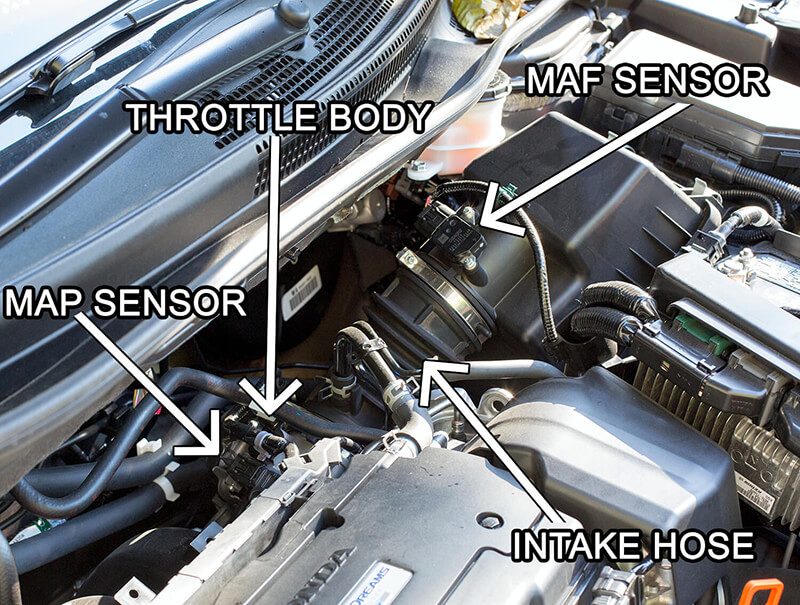
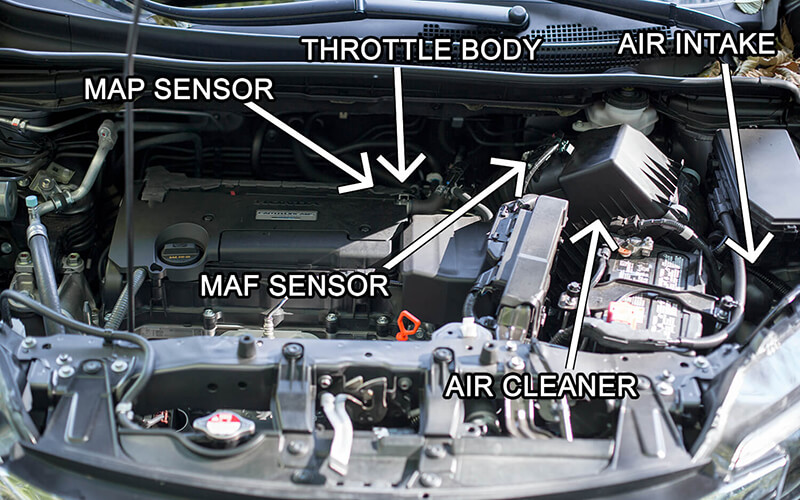
- Locate the MAF Sensor: The MAF sensor is typically located in the intake tract between the air filter housing and the throttle body. It’s usually a relatively small, rectangular or cylindrical component.
- Disconnect the Electrical Connector: Carefully unclip or release the electrical connector attached to the MAF sensor.
- Remove the Sensor: The MAF sensor is usually held in place by two screws or bolts. Remove these fasteners, and then gently pull the sensor out of the intake tract. Be careful not to drop any fasteners into the intake.
- Install the New Sensor: Insert the new MAF sensor into the intake tract, ensuring it’s properly oriented. Reinstall the screws or bolts, tightening them to the manufacturer’s specified torque.
- Reconnect the Electrical Connector: Reattach the electrical connector to the new MAF sensor until it clicks securely into place.
- Clear DTCs: After installation, use the OBD-II scanner to clear any stored DTCs from the PCM.
- Test Drive: Take the vehicle for a test drive to ensure the symptoms have been resolved and that the engine is running smoothly. The PCM will relearn the new sensor’s readings over time.
While MAF sensor replacement is often straightforward, always refer to your vehicle’s service manual for specific instructions and torque specifications. If you are uncomfortable performing the repair yourself, it’s best to consult a qualified mechanic.
In conclusion, the MAF sensor is a sophisticated yet critical component that acts as the “nose” of your car’s engine. Its accurate measurement of incoming air allows the PCM to precisely control fuel delivery, ensuring optimal performance, fuel efficiency, and emissions compliance. Understanding its function and recognizing the signs of a potential issue empowers you to keep your vehicle running at its best.
aViewFromTheCave is a participant in the Amazon Services LLC Associates Program, an affiliate advertising program designed to provide a means for sites to earn advertising fees by advertising and linking to Amazon.com. Amazon, the Amazon logo, AmazonSupply, and the AmazonSupply logo are trademarks of Amazon.com, Inc. or its affiliates. As an Amazon Associate we earn affiliate commissions from qualifying purchases.