
The phrase “LLC C Corp” often reflects a common misconception among new entrepreneurs and even seasoned business owners regarding business entity structures. Fundamentally, an LLC (Limited Liability Company) and a C Corp (C Corporation) are distinct legal entities with different characteristics, particularly concerning their tax treatment and operational formalities. However, an LLC can elect to be taxed as a C Corporation by the Internal Revenue Service (IRS), creating the hybrid scenario that this phrase attempts to capture. Understanding this nuance is crucial for effective business finance, strategic planning, and tax optimization.
Understanding the Core Business Structures
Before delving into the complexities of an LLC electing C Corp taxation, it’s essential to grasp the foundational characteristics of each entity in their default forms. These structures are chosen primarily for their implications on owner liability, taxation, administrative burden, and ability to raise capital.
The Limited Liability Company (LLC)
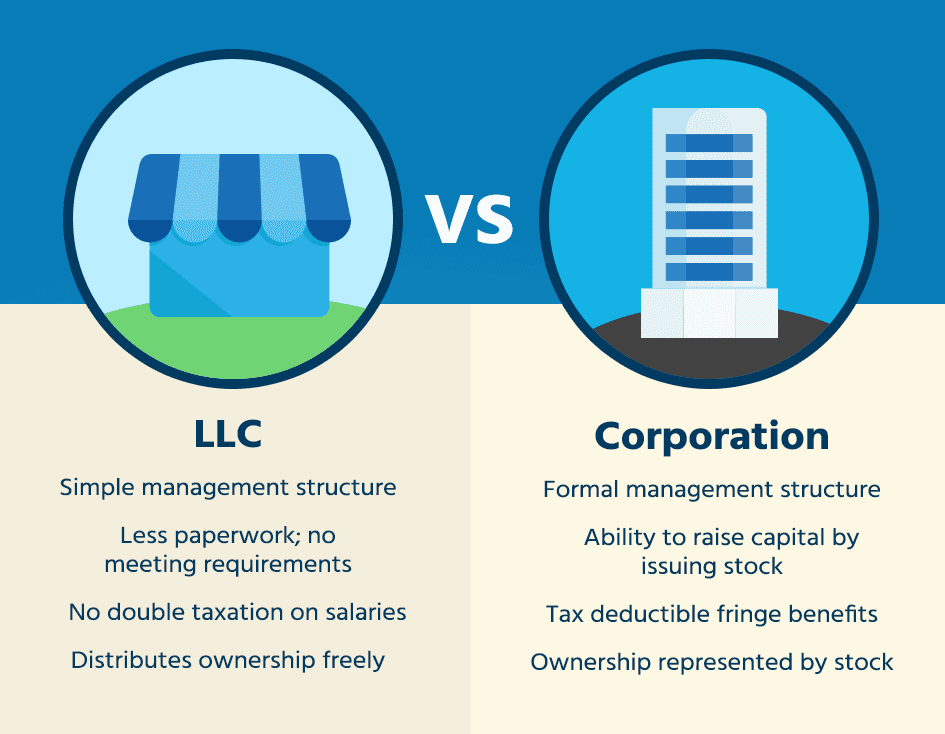
An LLC is a flexible business structure that combines elements of both corporations and partnerships. It offers its owners, referred to as members, personal liability protection, meaning their personal assets are generally shielded from the business’s debts and legal obligations.
From a financial and tax perspective, an LLC typically defaults to a “pass-through” entity. This means the business itself does not pay federal income tax. Instead, profits and losses are “passed through” to the owners’ personal income tax returns, where they are taxed at individual income tax rates. This avoids the “double taxation” problem associated with C Corporations.
Key financial characteristics of an LLC include:
- Pass-Through Taxation: Profits are taxed only once at the owner level.
- Flexibility in Profit Distribution: Owners can agree on various profit-sharing arrangements, not necessarily tied to their ownership percentage.
- Reduced Administrative Burden: Generally fewer formal requirements compared to corporations (e.g., no mandatory board meetings, less strict record-keeping).
- Ease of Formation and Maintenance: Relatively straightforward to set up and manage.
The C Corporation (C Corp)
A C Corporation is a legal entity separate and distinct from its owners, known as shareholders. It is designed for businesses that intend to grow significantly, potentially raise capital from external investors, or eventually go public. The C Corp structure provides robust liability protection for its shareholders.
The defining financial characteristic of a C Corporation is its “double taxation.” The corporation itself is taxed on its profits at the corporate income tax rate. Then, when the remaining profits are distributed to shareholders as dividends, those dividends are taxed again at the individual shareholder level. This double taxation is often cited as a major drawback for smaller, privately held businesses.
Key financial characteristics of a C Corp include:
- Separate Legal Entity: The corporation exists independently of its owners.
- Double Taxation: Corporate profits are taxed at the corporate level, and distributed dividends are taxed again at the shareholder level.
- Scalability and Investment Potential: Ideal for attracting venture capital and other external investments through the sale of stock.
- Formal Structure: Requires strict adherence to corporate formalities, including bylaws, board of directors, shareholder meetings, and extensive record-keeping.
- Employee Benefits: Can offer a wider range of tax-deductible employee benefits.
The Critical Distinction: How an LLC Can Be Taxed as a C Corp
The confusion around “LLC C Corp” stems from the IRS’s flexibility in allowing certain entity types to choose how they are taxed. While an LLC is a legal structure and a C Corp is a legal structure, an LLC, by default a pass-through entity, has the option to elect to be taxed as a C Corporation. This changes its tax treatment without altering its underlying legal classification as an LLC.
Default Tax Treatment for LLCs
By default, the IRS treats LLCs based on the number of members:
- Single-Member LLC (SMLLC): Taxed as a disregarded entity (sole proprietorship). All profits and losses are reported on the owner’s personal Form 1040, Schedule C.
- Multi-Member LLC: Taxed as a partnership. The LLC files Form 1065 (Partnership Return of Income), and each member receives a Schedule K-1 detailing their share of profits and losses, which they report on their personal tax returns.
Both of these default treatments are forms of pass-through taxation, avoiding the corporate level tax.
Electing C Corp Taxation for an LLC: When and Why
An LLC can elect to be taxed as a C Corporation by filing Form 8832, Entity Classification Election, with the IRS. This decision is not taken lightly and is usually driven by specific financial and strategic objectives.

The primary reasons an LLC might choose C Corp taxation revolve around:
- Attracting Outside Investment: Many venture capitalists and institutional investors prefer to invest in C Corporations. The C Corp structure allows for different classes of stock, easier transferability of ownership, and a more familiar legal framework for large-scale investment. If an LLC plans to seek significant equity funding, electing C Corp taxation makes it more appealing to these investors.
- Accessing Specific Tax Benefits: C Corps can deduct a broader range of expenses, including certain employee benefits (like health insurance premiums) and executive compensation strategies, which might not be fully deductible for pass-through entities. For highly profitable businesses with significant growth plans, the specific deductions available to C Corps can sometimes outweigh the double taxation, especially if profits are largely retained within the company for reinvestment rather than distributed as dividends.
- Future IPO Potential: If the ultimate goal is to take the company public (Initial Public Offering), a C Corporation structure is almost always required. An LLC electing C Corp taxation can be a step in this direction, facilitating a smoother conversion to a statutory C Corp later on.
- Minimizing Self-Employment Taxes: For highly profitable LLCs, electing C Corp taxation can sometimes lead to overall tax savings on owner compensation. In an LLC taxed as a partnership or sole proprietorship, all active income is subject to self-employment taxes (Social Security and Medicare). In a C Corp, owner-employees are paid a reasonable salary (subject to payroll taxes, including FICA), and any remaining profits distributed as dividends are not subject to self-employment tax. This strategy requires careful planning to ensure the salary is indeed “reasonable” by IRS standards.
Key Financial and Operational Differences
Understanding the practical implications of an LLC operating under C Corp tax rules versus a default LLC or a statutory C Corp is paramount for financial management.
Taxation: Pass-Through vs. Double Taxation
This is the most significant financial differentiator.
- Default LLC (Pass-Through): Business profits are taxed only once at the individual owner’s income tax rate. This simplifies tax filings for the business entity itself and avoids corporate-level tax.
- LLC Taxed as a C Corp / Statutory C Corp: The entity pays corporate income tax on its profits. If profits are then distributed to owners as dividends, those dividends are taxed again at the individual owner’s tax rate. This “double taxation” can significantly reduce the net return to owners. However, if the business retains profits for reinvestment and growth rather than distributing them, the immediate impact of double taxation on owners is deferred.
Investment and Funding Potential
- Default LLC: While LLCs can raise capital, their structure (membership interests vs. stock) can be less appealing to traditional venture capital firms and institutional investors. Investors often prefer the established corporate governance and stock structure of a C Corp.
- LLC Taxed as a C Corp / Statutory C Corp: These structures are significantly more attractive to large-scale investors. The ability to issue various classes of stock, establish clear corporate governance (board of directors), and offer familiar equity instruments streamlines the investment process and makes the company more “investor-ready.” This is often the driving financial reason for an LLC to elect C Corp taxation.
Administrative Burden and Compliance Costs
- Default LLC: Generally has fewer ongoing administrative requirements. States typically require an annual report and maintenance of registered agent information, but internal formalities are minimal. This translates to lower legal and accounting compliance costs.
- LLC Taxed as a C Corp / Statutory C Corp: Requires a higher level of corporate governance. This includes maintaining corporate bylaws, holding regular board of directors and shareholder meetings, keeping detailed minutes, and adhering to strict record-keeping. These formalities are not just recommendations; failing to observe them can lead to “piercing the corporate veil,” exposing owners to personal liability. The increased complexity typically results in higher legal and accounting fees.
Owner Liability and Structure
- Both LLC and C Corp: Provide personal liability protection to their owners (members or shareholders, respectively). This is a fundamental benefit of both structures, separating personal assets from business liabilities.
- Structural Differences: An LLC offers more flexibility in its internal management structure and ownership transfer. A C Corp has a more rigid hierarchy with shareholders, a board of directors, and officers, which is often seen as a benefit by external investors looking for clear accountability and governance.
Making the Right Choice for Your Business Finance
The decision of which business structure, or tax election, is right for your venture is one of the most critical financial and strategic choices an entrepreneur will make. It hinges on the business’s current stage, future growth plans, and specific financial objectives.
Factors for Sole Proprietors and Small Businesses
For most small businesses, solo entrepreneurs, or those with modest growth expectations, remaining an LLC with its default pass-through taxation (as a sole proprietorship or partnership) is often the most financially advantageous.
- Simplicity and Cost-Effectiveness: Lower administrative burdens and compliance costs mean more resources can be directed back into the business.
- Avoidance of Double Taxation: Maximizes the net income available to owners by taxing profits only once.
- Flexibility: Allows for easy adjustments to ownership and management without complex corporate procedures.
- Tax Benefits: Owners can still deduct legitimate business expenses against their income.

Considerations for Growth-Oriented and Funded Ventures
If your business aims for rapid expansion, plans to seek significant venture capital, or has aspirations for an eventual acquisition or public offering, an LLC taxed as a C Corp or a statutory C Corp becomes more compelling.
- Investor Appeal: Essential for attracting institutional investors who prefer the C Corp framework for its clarity in equity structures and governance.
- Scalability: The C Corp structure is built for scale, facilitating easier stock issuance, mergers, and acquisitions.
- Sophisticated Financial Planning: Allows for complex executive compensation plans, stock options, and other financial instruments common in larger enterprises.
- Specific Tax Advantages: While double taxation is a concern, the ability to retain earnings for reinvestment without immediate shareholder-level taxation, coupled with certain corporate deductions and benefits, can be strategically beneficial for high-growth companies.
Ultimately, navigating the landscape of business entities requires careful consideration of financial implications, tax strategies, and future growth trajectories. Consulting with a qualified tax advisor and legal professional is indispensable to ensure the chosen structure aligns perfectly with your business’s financial goals and operational realities. The flexibility of an LLC electing C Corp taxation offers a powerful hybrid option for businesses aiming to balance liability protection with the strategic advantages of corporate tax treatment for growth and investment.
aViewFromTheCave is a participant in the Amazon Services LLC Associates Program, an affiliate advertising program designed to provide a means for sites to earn advertising fees by advertising and linking to Amazon.com. Amazon, the Amazon logo, AmazonSupply, and the AmazonSupply logo are trademarks of Amazon.com, Inc. or its affiliates. As an Amazon Associate we earn affiliate commissions from qualifying purchases.