
In the modern digital landscape, communication has evolved from the delayed gratification of email to the immediacy of real-time exchange. An instant messenger (IM) is a type of online chat service that offers real-time text transmission over the internet between two or more parties. Unlike traditional SMS (Short Message Service) that relies on cellular networks and carrier protocols, instant messaging utilizes data connections—either Wi-Fi or mobile data—to facilitate instantaneous communication across global distances.
At its core, an instant messenger acts as a bridge, connecting users regardless of their geographical location. It provides a platform where conversations occur in a synchronized fashion: you send a message, and the recipient receives it the moment they are connected to the network. This technology has become the backbone of both personal social interaction and professional workplace collaboration, fundamentally altering how we perceive the speed of human connection.
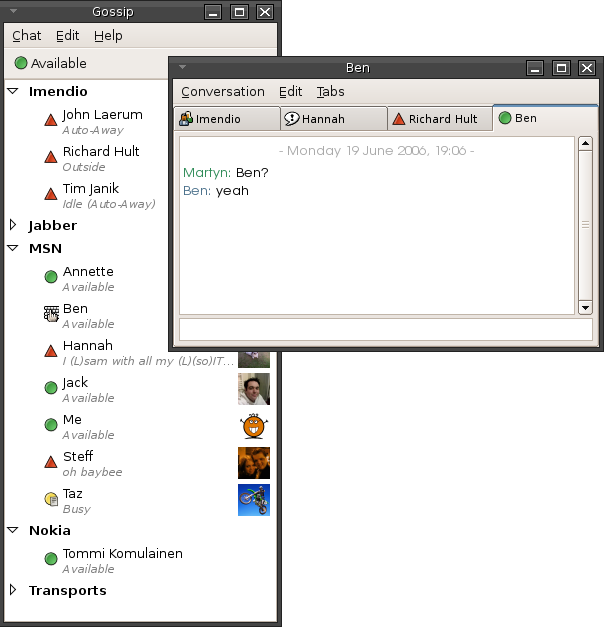
The Evolution and Mechanics of Instant Messaging
The history of instant messaging is a journey from simple text-based interfaces to sophisticated, multimedia-rich environments. What began as rudimentary lines of text on early computer networks has transformed into comprehensive ecosystems capable of handling voice calls, video conferencing, file sharing, and end-to-end encrypted data transmission.
The Technical Foundation
Instant messaging platforms operate on a client-server architecture. When a user logs into an IM application, the app establishes a connection with a central server. This server acts as a digital clearinghouse; it maintains a list of “active” users, manages contact lists, and facilitates the routing of data packets from one client to another.
Modern IM services often use protocols such as XMPP (Extensible Messaging and Presence Protocol) or proprietary, closed-source protocols designed by tech conglomerates. The critical feature that distinguishes IM from other communication tools is the “presence” indicator—the ability to see when a contact is “online,” “away,” or “busy.” This real-time status update creates the psychological expectation of immediacy, which is the hallmark of the technology.
From Text to Multimedia
Early IM platforms, such as AOL Instant Messenger (AIM) or ICQ, were primarily text-centric. Today, the definition of instant messaging has expanded to include “Rich Communication Services.” Current platforms now support:
- Media Integration: The ability to send high-resolution images, videos, and voice notes.
- Collaborative Tools: Integration with cloud-based document editing and project management software.
- Ephemeral Messaging: The capability to send messages that self-destruct after being viewed, catering to privacy-conscious users.
- Cross-Platform Synchronization: The ability to start a conversation on a mobile device and seamlessly transition to a desktop computer without losing message history.
The Role of Instant Messaging in Modern Business
The corporate landscape has undergone a radical transformation due to the integration of instant messaging. As the workforce has become increasingly decentralized and remote, IM platforms have evolved from mere chat apps into essential productivity suites.
Bridging the Productivity Gap
Before the widespread adoption of IM in the workplace, internal communication relied heavily on email threads that were often cumbersome, slow, and prone to getting lost in cluttered inboxes. Instant messaging solves the “latency problem.” By allowing for rapid back-and-forth communication, teams can resolve issues, share quick updates, and coordinate tasks in seconds rather than hours.
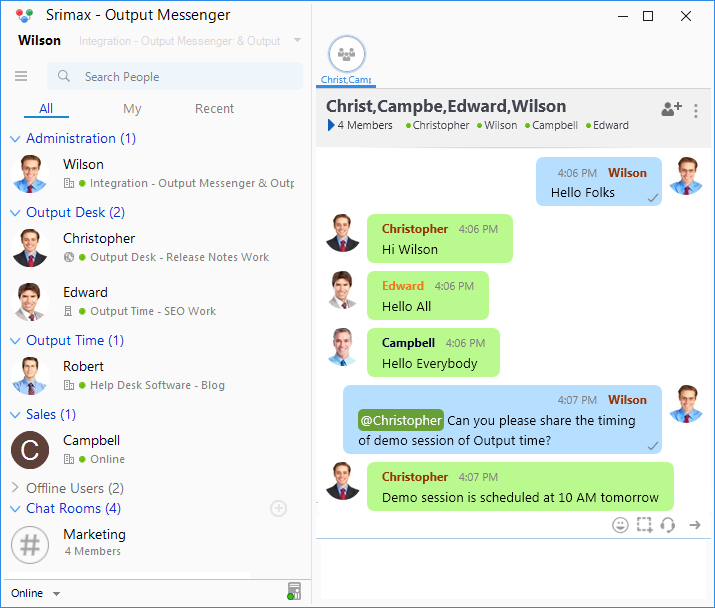
Platforms designed for business—such as Slack, Microsoft Teams, and Discord—have introduced the concept of “channels” or “spaces.” These allow for organized communication segmented by project, department, or topic. This structure prevents information overload and ensures that relevant team members are kept in the loop without the need for constant, formal meetings.
Challenges of Workplace IM
Despite the benefits, the constant availability afforded by instant messaging presents challenges. The “always-on” culture can lead to notification fatigue, where employees feel pressured to respond to messages outside of working hours, contributing to burnout. Furthermore, the casual nature of IM can lead to ambiguity or miscommunication if not managed with professional etiquette. Effective organizational use of IM requires setting boundaries, establishing communication guidelines, and training teams to differentiate between urgent issues that require immediate chat responses and long-form inquiries better suited for email.
Digital Security and Privacy Concerns
As instant messaging has become the primary vehicle for both personal secrets and corporate intellectual property, the security of these platforms has come under intense scrutiny. The transition of data over the internet makes messages vulnerable to interception if not properly secured.
Understanding End-to-End Encryption (E2EE)
The gold standard for modern instant messaging security is End-to-End Encryption. With E2EE, only the communicating users can read the messages. The service provider, internet service providers (ISPs), and even malicious actors attempting to intercept the data cannot decrypt the content because the keys required to unlock the message are stored solely on the users’ devices.
When choosing an instant messenger, privacy-conscious users look for platforms that mandate E2EE by default. While this ensures privacy, it also presents challenges for legal and compliance departments in corporate environments, as encrypted data is often inaccessible for data retention and auditing purposes. Consequently, businesses often employ enterprise-grade messaging tools that offer centralized management and archiving while maintaining high levels of transport layer security.
Risks of Metadata and Data Harvesting
While E2EE protects the content of the message, users should be aware that many free instant messaging services monetize user metadata. Even if the text of the message is hidden, the service provider may still record who you are talking to, when you are talking, how long the conversation lasts, and your approximate location. This data is often used for targeted advertising or behavioral modeling. Understanding the privacy policy of an IM provider is just as critical as understanding its encryption capabilities.
The Future: AI Integration and Decentralization
The next phase of instant messaging is currently being written by the integration of Artificial Intelligence and the shift toward decentralized protocols. We are moving toward a future where the instant messenger is not just a communication tool, but an intelligent assistant.
AI-Augmented Chat
AI is already revolutionizing IM through features like predictive text, real-time language translation, and smart replies. Future iterations will likely feature AI agents that sit inside the chat, capable of summarizing long threads, scheduling meetings based on context within the chat, and retrieving information from external databases without the user ever leaving the messaging window. This turns the IM interface into an “operating system” for digital interactions.

The Decentralized Frontier
Concerns over data ownership and censorship have led to the rise of decentralized messaging protocols. Unlike traditional IMs that rely on a central company’s server, decentralized platforms use peer-to-peer networks or blockchain technology to route messages. In these systems, no single entity owns the network or the data, providing a higher degree of resilience against outages and external interference.
As we look ahead, the definition of an instant messenger will continue to blur with other digital services. It is no longer just about sending a message; it is about creating a secure, efficient, and intelligent environment for human interaction. Whether for keeping in touch with family across the globe or managing complex multinational projects, instant messaging has cemented its status as the heartbeat of our digital existence. As technology advances, the focus will remain on balancing the need for speed and convenience with the imperative of security and personal privacy.
aViewFromTheCave is a participant in the Amazon Services LLC Associates Program, an affiliate advertising program designed to provide a means for sites to earn advertising fees by advertising and linking to Amazon.com. Amazon, the Amazon logo, AmazonSupply, and the AmazonSupply logo are trademarks of Amazon.com, Inc. or its affiliates. As an Amazon Associate we earn affiliate commissions from qualifying purchases.