
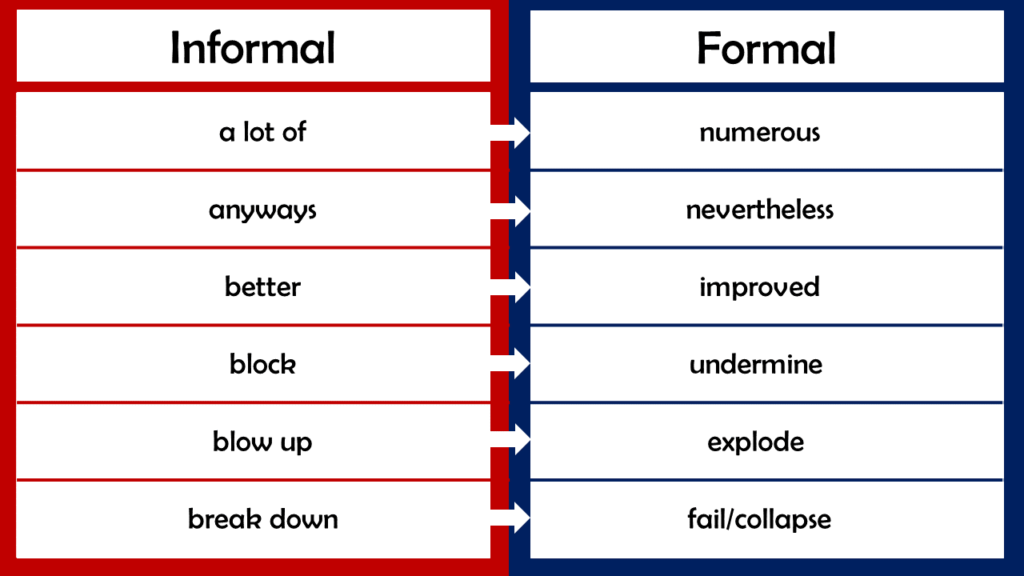
In the landscape of modern technology, the definition of language has shifted from a rigid set of grammatical rules to a fluid, evolving data set. When we ask “what is an informal language” within the context of software development and artificial intelligence, we are not merely discussing slang or casual conversation. Instead, we are identifying one of the most significant hurdles in the field of Natural Language Processing (NLP). Informal language represents the non-standard, unstructured, and highly contextual data that defines how humans actually communicate in the digital age—through emojis, abbreviations, regional dialects, and internet-specific syntax.

For tech leaders, software engineers, and AI researchers, mastering informal language is the key to building tools that feel truly intuitive. From the chatbots that handle customer service to the Large Language Models (LLMs) that power the next generation of productivity apps, the ability to parse “informal” input is what separates a brittle algorithm from a robust, human-centric system.
The Architectural Shift: How AI Learned to Speak Human
Historically, computer science approached language as a logic puzzle. Early translation and processing tools relied on “Symbolic AI,” which used hand-coded rules and dictionaries. These systems functioned perfectly when processing formal language—think of a legal contract or a peer-reviewed medical journal—because the syntax was predictable. However, these systems would break the moment they encountered informal language. A simple typo or the use of a word like “ghosting” in a social context would leave a rule-based system unable to function.
From Rule-Based Systems to Neural Networks
The breakthrough in understanding informal language came with the transition to connectionism and neural networks. Rather than being told what a word “should” mean based on a dictionary, modern AI models are trained on massive datasets of actual human interaction. This includes Reddit threads, Twitter (X) feeds, and open-source chat logs. By using “Deep Learning,” these models identify patterns. They learn that in an informal tech context, the word “bug” is rarely an insect, and “shipping” has nothing to do with maritime logistics.
The Rise of the Transformer Architecture
The most significant leap in processing informal language was the introduction of the Transformer architecture in 2017. Transformers use a mechanism called “Self-Attention,” which allows the model to weigh the importance of different words in a sentence regardless of their position. This is crucial for informal language, where the most important context might be buried under layers of sarcasm or non-standard sentence structure. If a user types, “Yeah, great, the update broke my workflow, thanks a lot,” a Transformer-based AI can identify that “great” and “thanks” are being used sarcastically by analyzing the surrounding words like “broke” and “workflow.”
The Mechanics of Modern NLP: Processing Non-Standard Data
To understand how technology bridges the gap between formal code and informal human speech, we must look at the specific technical processes that occur when an AI encounters a casual prompt.
Tokenization and the Nuance of Internet Slang
Before a model can “read” informal language, it must break it down into “tokens.” In formal language, tokens are usually whole words. However, informal language often uses “sub-word tokenization.” This is vital for handling internet slang or newly coined terms. For instance, a word like “un-freaking-believable” isn’t in a standard dictionary, but a modern tokenizer can break it into “un,” “freaking,” and “believable,” allowing the AI to calculate the emotional weight of the message. This flexibility allows AI tools to stay relevant even as digital vernacular changes weekly.
Sentiment Analysis and Contextual Understanding
One of the primary uses of informal language processing in tech is sentiment analysis. Brands use AI to scan millions of comments to gauge the public’s reaction to a product launch. Informal language makes this difficult because of “polysemy”—where one word has multiple meanings. The word “sick” could mean a user is ill, or it could mean they find a new gadget impressive. Modern NLP models use contextual embeddings to differentiate these meanings based on the proximity of other tokens, ensuring that a “sick new laptop” is flagged as a positive sentiment.
Handling “Noise”: Typos, Emojis, and Punctuation
In the world of data science, informal language is often referred to as “noisy” data. High-quality software must be able to filter or interpret this noise without losing the user’s intent.
- Auto-correction Integration: AI tools now use probabilistic models to understand that if a user types “hwo,” they likely meant “how.”
- Emoji Mapping: Emojis are no longer ignored; they are treated as high-value data points. In informal digital communication, an emoji can completely flip the meaning of a sentence. Software is now built to convert emojis into vector representations that contribute to the overall “meaning vector” of a text string.
Practical Applications: Where Informal Language Meets Software
The ability of technology to decode informal language is not just a theoretical triumph; it is the engine behind some of the most profitable and ubiquitous software tools in use today.
Next-Gen Chatbots and Virtual Assistants
The first generation of chatbots was notoriously frustrating because they required users to speak like machines. “Please state your request in a few words,” they would drone. Modern conversational AI, powered by models like GPT-4 or Claude, encourages informal language. Users can vent, use slang, and provide rambling, unstructured explanations. The technology’s ability to extract “intent” from this informal mess allows for a seamless user experience (UX) that feels human.
Social Media Monitoring and Market Intelligence
For tech companies, the most valuable data is often found in the “informal” corners of the web. Market intelligence tools use NLP to scrape forums and social media to identify emerging trends before they hit the mainstream. By understanding the informal language of specific subcultures—such as the “FinTech” community on Twitter or the “DevOps” community on Reddit—companies can pivot their product roadmaps based on real-time, unfiltered user feedback.
Coding and Scripting in “Plain English”
Perhaps the most revolutionary application is in the field of software engineering itself. Tools like GitHub Copilot allow developers to write comments in informal, plain English, which the AI then translates into formal code. A developer might write, “Hey, make a function that fetches the user’s profile and handles errors if the API is down.” The AI understands this informal instruction and generates the rigorous, formal syntax required by the programming language. This effectively turns informal human language into a high-level programming language.
The Future of Interaction: From Informal Text to Intuitive Intent
As we look toward the future of technology, the distinction between formal and informal language will likely continue to blur. The goal of the next decade of AI development is to create “ambient computing,” where the machine understands us without us having to change the way we naturally speak or type.
Hyper-Personalization through Linguistic Mirroring
Future AI tools will not just understand informal language; they will mirror it. Research is currently being conducted into “stylistic transfer,” where an AI assistant can adjust its tone to match the user’s level of formality. If a user is being professional and concise, the AI responds in kind. If the user is being casual and using regional slang, the AI can adopt a similar persona. This linguistic mirroring creates a deeper sense of trust and engagement between the user and the software.
The Ethical Frontier: Bias and Regional Dialects
One of the most pressing challenges in the tech industry’s handling of informal language is addressing algorithmic bias. Most AI models are trained predominantly on “Standard American English.” This often leads to “Linguistic Discrimination,” where the AI fails to understand or misinterprets African American Vernacular English (AAVE), regional UK dialects, or “Hinglish” (a blend of Hindi and English).
The next frontier for NLP engineers is the creation of “inclusive models” that are trained on diverse, global sets of informal data. This is not just a social imperative but a business one; as software expands into emerging markets, the ability to understand local, informal nuances is a competitive advantage.

Multimodal Learning: Beyond Text
Finally, the definition of informal language is expanding to include voice and video. Multimodal AI models are being developed to understand the “informal” cues in our voices—the stammers, the pauses, and the rising intonation of a question. In the world of gadgets and wearables, like AI-powered glasses or pins, the software must interpret informal verbal commands delivered in noisy environments. The future of tech lies in its ability to parse the beautiful, chaotic, and informal reality of human existence and translate it into actionable digital intelligence.
By mastering the “what” and “how” of informal language, the technology sector is moving away from being a tool we operate and toward being a partner we communicate with. The complexity of a simple “What’s up?” or a well-placed emoji is no longer a bug in the system—it is the very data that is making our software more intelligent, more empathetic, and more human.
aViewFromTheCave is a participant in the Amazon Services LLC Associates Program, an affiliate advertising program designed to provide a means for sites to earn advertising fees by advertising and linking to Amazon.com. Amazon, the Amazon logo, AmazonSupply, and the AmazonSupply logo are trademarks of Amazon.com, Inc. or its affiliates. As an Amazon Associate we earn affiliate commissions from qualifying purchases.