
The infield fly rule is one of the most perplexing and often misunderstood rules in baseball. For the uninitiated, it can seem like a nonsensical interruption to the flow of the game, leading to confusion and frustration. However, for seasoned fans and players, it’s a crucial element designed to maintain fairness and prevent strategic manipulation that would otherwise exploit the game’s mechanics. At its core, the infield fly rule is a protective measure, ensuring that baserunners are not unfairly put at a disadvantage due to a defensive player’s deliberate decision to let a fly ball drop in fair territory.
Understanding the infield fly rule requires a deep dive into the strategic nuances of baseball defense and the principles of fair play. It’s not just about if a ball is caught, but why it might be dropped. This rule, though specific to certain game situations, has broader implications for how teams approach defensive positioning and offensive strategy. Let’s break down the conditions under which it’s invoked, the rationale behind its existence, and its impact on the game.
The Mechanics of the Infield Fly Rule
The infield fly rule is triggered under a very specific set of circumstances that combine the actions of the batter, the ball, and the defensive team. It’s a rule designed to address a potential loophole where a defensive team could gain an unfair advantage by intentionally letting a fly ball fall.
Conditions for an Infield Fly Call
For an infield fly to be declared, several criteria must be met simultaneously. Firstly, there must be fewer than two outs in the inning. This is a critical prerequisite; if there are already two outs, the defense has no incentive to deliberately drop the ball, as a force out or tag out would end the inning anyway.
Secondly, there must be runners on first and second base, or the bases must be loaded. The presence of runners on these bases is essential because it establishes the force play situation. If a fly ball is hit with runners on first and second or with the bases loaded, and fewer than two outs, the runners are forced to advance to the next base if the ball is caught.
Thirdly, the batter must hit a fair fly ball, meaning a ball hit into the field of play that is not a line drive or a ground ball. This ball must be one that, in the judgment of the umpire, an infielder can catch with ordinary effort. The “ordinary effort” clause is subjective and rests entirely on the umpire’s interpretation of the play. This typically means a ball hit high into the air within the infield – hence the name “infield fly.” It doesn’t necessarily mean the ball must be physically in the infield dirt when caught; a popup near the foul line or an outfielder playing in as an infielder could still result in an infield fly call if the other conditions are met.
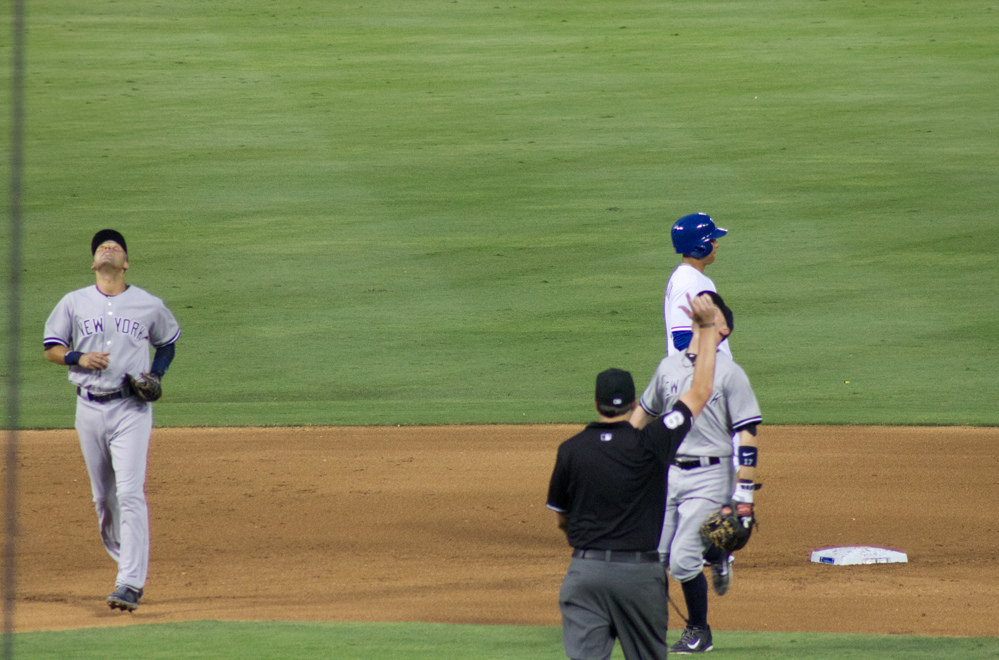
The final, and arguably most crucial, condition is the umpire’s declaration. When all the preceding conditions are met, the umpire will signal an infield fly by raising their hand and shouting “Infield fly!” or “Infield fly, batter’s out!” This declaration immediately makes the batter out, regardless of whether the ball is actually caught.
The Umpire’s Judgment: A Crucial Element
The umpire’s judgment is paramount in the application of the infield fly rule. It’s not a rule that can be invoked by players or coaches; it’s solely at the discretion of the officiating umpire. This discretionary power is what allows the rule to function as intended, preventing situations that could be perceived as unfair.
The umpire must assess whether the hit ball is a fly ball and if it can be caught with “ordinary effort.” This assessment is made in real-time, considering factors such as the trajectory of the ball, the wind, the positioning of the infielders, and the overall difficulty of the play. If the umpire believes the ball could be caught easily by an infielder, they are obligated to call it.
Conversely, if the ball is hit with such velocity, or such a trajectory that even an infielder would have a difficult time securing it, then an infield fly will not be called. Similarly, if the ball is hit to the outfield and requires a significant run and dive, it is unlikely to be an infield fly, even with runners on base and fewer than two outs. The umpire’s role is to identify situations where the defense could exploit the force play by allowing a catchable popup to drop.
The Rationale Behind the Rule: Preventing Exploitation
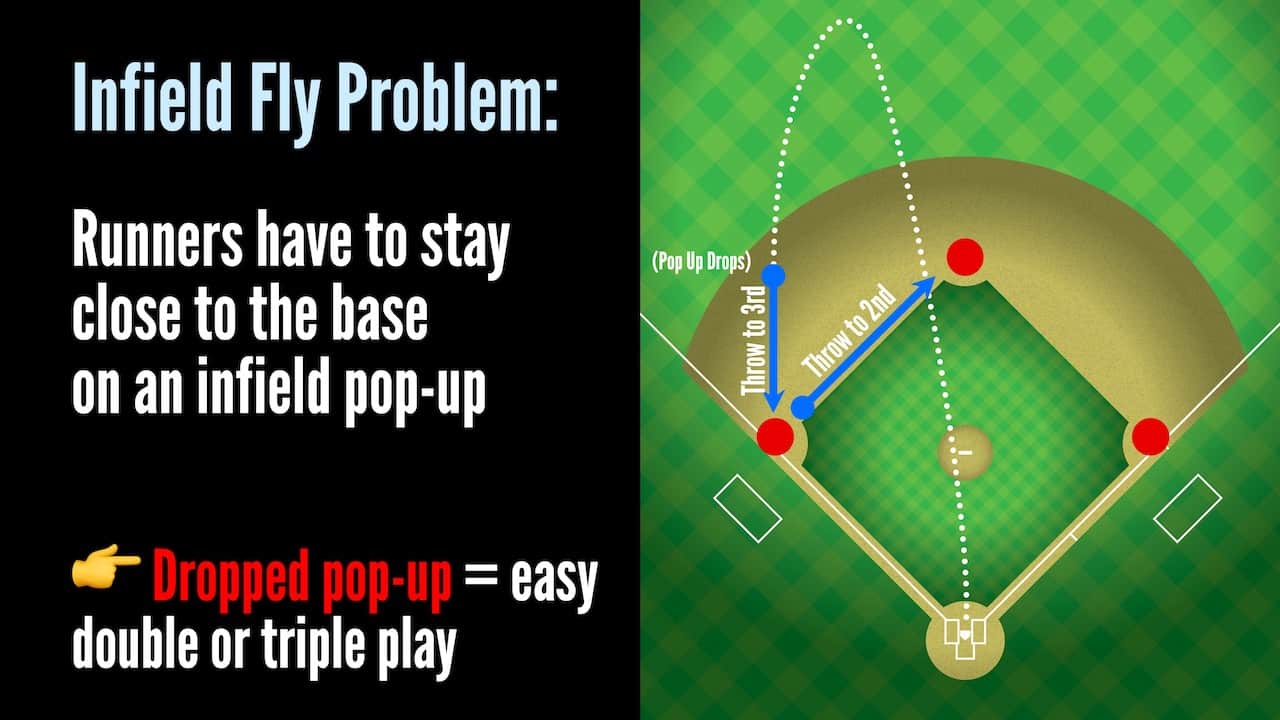
The infield fly rule was introduced into baseball to prevent a specific type of defensive strategy that would unfairly disadvantage the baserunners. Without this rule, a team could intentionally let a routine pop fly fall to the ground in fair territory, thereby creating a force-out situation at multiple bases.
The Force Play Scenario
In baseball, a force play occurs when a runner is forced to advance to the next base because the batter becomes a runner. This happens when the batter hits a fair ball and it’s not caught in the air. If there are runners on first and second, or the bases are loaded, and the batter hits a ground ball or a line drive that is not caught, the runner on first must advance to second, the runner on second must advance to third, and the runner on third must advance to home.
The defense can then exploit this by fielding the ball and throwing to the base the runner is forced to advance to, securing an out. If the ball is dropped, the defense can tag the runner or force them out at the next base.
How the Infield Fly Rule Prevents Exploitation
Consider a scenario with runners on first and second and fewer than two outs. The batter hits a shallow fly ball into fair territory, easily catchable by the second baseman. If the infield fly rule is not in effect, the second baseman could intentionally let the ball drop. Because the batter hit a fair ball, the runner on first is now forced to advance to second, and the runner on second is forced to advance to third. The second baseman, now holding the ball, could simply tag the runner advancing from first to second, or throw to second base for a force out. The runner on second is then forced to advance to third, and the defense could potentially get another out. This could turn a simple catch into a double or even a triple play, effectively capitalizing on a defensive maneuver that bypasses the traditional risk of dropping a catchable fly ball.
The infield fly rule negates this potential for exploitation. By calling the batter out immediately upon the ball being hit under the specified conditions, the batter becomes the third out if there are already two outs (though the rule is only invoked with fewer than two outs, it’s worth noting that if the conditions are met and the batter is called out, and there are already two outs, that would be the end of the inning). More importantly, if the ball is dropped, it is treated as if it were caught. This means the runners are not forced to advance. They can only be put out if they are tagged by a fielder with the ball, or if they are forced out because the batter is now a runner and has not yet reached first base. The defense no longer has the advantage of a guaranteed force play simply because they chose to let the ball drop. This protects the runners from being victims of a deliberate defensive tactic designed to create force outs.
The Aftermath of an Infield Fly Call
Once an infield fly is declared, the game continues, but the implications for runners and the defensive team are significant. The batter is out, but the play itself can still result in further action.
Batter is Out, But the Play Continues
The moment the umpire declares “Infield fly!” the batter is out. This is the primary function of the rule – to remove the batter from the equation as a runner. However, the ball is still live, meaning it is in play until it is possessed by a fielder or becomes dead.
If the infielder catches the fly ball, the batter is out, and the runners can advance at their own risk, just as they would on any caught fly ball. They can try to tag up and advance, but they are not forced to.
If the infielder drops the ball (either intentionally or unintentionally), the batter is still out. However, because the batter is out, the force play is nullified. The runners on base are no longer obligated to advance. They can choose to advance, but they can only be put out if they are tagged by a fielder holding the ball, or if a fielder tags them at the base they are advancing to, and it can be proven that they were forced to advance (which is no longer the case once the batter is out). In practice, runners are usually very cautious after a dropped infield fly and will not advance unless they are certain they can do so safely, as the defense can still attempt to tag them out.
Strategic Implications for Both Teams
The infield fly rule has significant strategic implications for both the offensive and defensive teams.
For the offense, the rule removes a potential trap. Hitters can swing away at fly balls with slightly less concern about the ball dropping and leading to a force out, though they should still aim to make solid contact. They also need to be aware of the umpire’s call and be prepared to advance cautiously if the ball is dropped, as a tag out is still possible.
For the defense, the rule dictates how they should approach catchable fly balls with runners on base. Rather than letting the ball drop to set up a force, they are incentivized to make the catch. If they do drop it, they must immediately transition to tagging runners rather than relying on force outs. This can sometimes lead to more aggressive defensive plays and a greater chance of errors if the fielder is rushed or makes a poor decision.
In essence, the infield fly rule is a guardian of fairness, ensuring that the game’s progression isn’t unduly manipulated by a defensive team’s calculated decision to let the ball fall. It upholds the spirit of baseball by requiring a genuine attempt to make plays, rather than orchestrating advantageous scenarios through deliberate inaction.
aViewFromTheCave is a participant in the Amazon Services LLC Associates Program, an affiliate advertising program designed to provide a means for sites to earn advertising fees by advertising and linking to Amazon.com. Amazon, the Amazon logo, AmazonSupply, and the AmazonSupply logo are trademarks of Amazon.com, Inc. or its affiliates. As an Amazon Associate we earn affiliate commissions from qualifying purchases.