
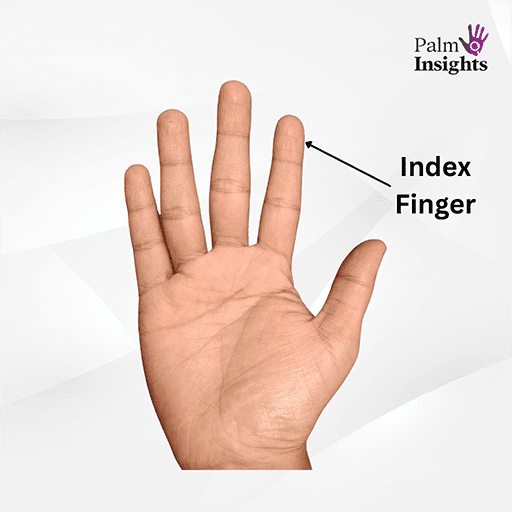
At its most fundamental, an index finger is a part of the human anatomy, the second digit of the hand, renowned for its precision in pointing, selecting, and interacting with the world. It’s the finger we instinctively use to guide attention, to press a button, or to scroll through information. While its biological function is clear, within the vast and intricate landscape of technology, the concept of an “index finger” transcends its physical form, evolving into a powerful metaphor for efficiency, navigation, and structured access to information. In the digital realm, “indexing” is not merely a gesture but a core architectural principle that underpins nearly every aspect of our technological experience, from how we find data to how artificial intelligence processes information.

This article will delve into the profound significance of “indexing” within technology, using the familiar precision of the human index finger as a lens. We’ll explore how this concept, in its various digital manifestations, streamlines operations, enhances user experience, and forms the bedrock of modern computing. By understanding the digital index finger, we uncover the hidden mechanisms that make our connected world function seamlessly.
The Digital Pointer: From Human Gesture to Algorithmic Efficiency
The human index finger is an intuitive tool for interaction. When we point, we direct focus; when we tap, we initiate action; when we swipe, we navigate. This physical interaction model has profoundly influenced the design of digital interfaces and the underlying systems that power them.
Human-Computer Interaction: The Tangible Link
In the early days of computing, interaction was primarily textual. With the advent of graphical user interfaces (GUIs), the mouse became the primary “pointer,” an extension of the index finger, allowing users to select icons, click buttons, and navigate menus. Today, touchscreens have brought the physical index finger back into direct contact with our devices, making interaction more intuitive than ever. From smartphones to smart home devices, the index finger is the primary interface for countless applications, embodying the immediate connection between human intent and digital action. Virtual reality (VR) and augmented reality (AR) technologies further push this paradigm, tracking finger movements to allow for natural interaction within simulated environments. The precise, deliberate action of the index finger serves as a constant reminder that even the most complex digital systems are ultimately designed to be accessible and controllable by human hands.
Beyond the Physical: The Abstract Concept of “Pointing” in Data
Beyond its role in physical interaction, the concept of “pointing” extends deep into the abstract architecture of digital systems. In computing, to “index” means to create a structured pointer or reference that facilitates rapid access to specific data, much like an index in a book helps you quickly find a topic. Without indexing, a computer would have to sift through every piece of information sequentially to find what it needs, a process that quickly becomes prohibitively slow as data volumes grow. The digital index finger, therefore, is an algorithmic construct that dramatically reduces search times, making vast datasets manageable and instantly queryable. This abstract pointing mechanism is what enables the instantaneous responses we expect from our technology, from loading a webpage to retrieving a customer record.
Indexing in Databases and Software: The Architect’s Blueprint
The most prominent application of indexing in technology is found within databases and software systems. Here, indexes are critical data structures designed to improve the speed of data retrieval operations on a database table or a software’s internal data store.
Accelerating Data Retrieval: How Indexes Power Performance
Imagine a colossal library without a catalog. To find a specific book, you’d have to search every shelf. This is akin to a database query without an index: the system performs a “full table scan,” sequentially checking every record until it finds a match. This approach is acceptable for small datasets, but becomes incredibly inefficient as tables grow to millions or billions of rows.
An index, in this context, is like the library’s catalog. It’s a separate data structure that stores a small, ordered subset of the data from the main table, along with pointers to the full records. When you query for data that is indexed, the database system can rapidly scan the smaller, ordered index, locate the pointers to the relevant full records, and retrieve them directly. This drastically reduces the amount of data that needs to be processed, often transforming queries from minutes or hours into milliseconds. This performance boost is essential for applications that require real-time data access, such as e-commerce platforms, banking systems, and social media feeds.
Types of Indexes: B-Trees, Hash Tables, and More
Database systems employ various types of indexes, each optimized for different data access patterns:
-
B-Tree Indexes: These are the most common type, resembling a balanced tree structure. They are highly effective for a wide range of queries, including equality searches (e.g.,
WHERE user_id = '123') and range searches (e.g.,WHERE created_date BETWEEN '2023-01-01' AND '2023-12-31'). Their balanced nature ensures consistent search times, regardless of where the data resides in the tree. -
Hash Indexes: These indexes use a hash function to map column values to specific locations, making them extremely fast for equality searches. However, they are less suitable for range queries because the hashed values lose their original order.
-
Full-Text Indexes: Designed for searching through large blocks of text, these indexes allow for efficient keyword searches within documents, often found in content management systems or search features within applications.
-
Spatial Indexes: Used for geographic information systems (GIS), these indexes optimize queries based on location data, such as finding all points within a specific radius.
The choice of index type depends on the specific requirements of the application and the nature of the data being indexed.
The Cost-Benefit Analysis of Indexing
While indexes dramatically improve read performance, they are not without their costs. Every time data in the main table is inserted, updated, or deleted, the corresponding index also needs to be updated. This overhead can slow down write operations. Moreover, indexes consume storage space. Database administrators and developers must carefully perform a cost-benefit analysis, balancing the need for fast reads against the overhead of maintaining indexes and the storage footprint. Over-indexing can lead to diminishing returns in read performance while significantly degrading write performance. Therefore, strategic indexing, targeting frequently queried columns and balancing against update frequency, is a critical aspect of database design and optimization.

Search Engine Indexing: Mapping the World Wide Web
Beyond internal databases, perhaps the most recognizable and impactful form of indexing in our daily lives is that performed by search engines. Google, Bing, and other search providers operate on an unprecedented scale, indexing the entire World Wide Web to make its vast information instantly discoverable.
Crawling and Cataloging: Building the Internet’s Library
Search engine indexing begins with “crawling.” Automated programs called “spiders” or “bots” continuously scour the internet, following links from one webpage to another. As they encounter new pages, they read the content, identify keywords, analyze structure, and extract metadata. This raw information is then processed and added to the search engine’s massive index – a colossal digital catalog of the internet’s content. This index doesn’t store entire webpages directly but rather an optimized, inverted list that maps keywords to the pages where they appear, along with other relevant information. This process is akin to building the world’s largest, most detailed library catalog, updated constantly, ensuring that virtually any piece of public information on the web can be located.
Ranking and Relevance: Guiding Users to Information
Having an index is only half the battle. When a user enters a query, the search engine doesn’t just retrieve every page containing those keywords. Instead, it uses complex algorithms to rank the indexed results based on relevance, authority, quality, and hundreds of other factors. This ranking process is where the “digital index finger” truly shines, pointing users not just to any information, but to the best and most relevant information available.
Factors influencing ranking include:
-
Keyword matching: How closely the page content matches the query.
-
Page quality: Expertise, authoritativeness, and trustworthiness of the source.
-
Backlinks: The number and quality of other websites linking to the page.
-
User experience: Page load speed, mobile-friendliness, and readability.
-
Freshness: How recently the content was updated.
This intricate ranking system ensures that when you ask a question, the search engine’s “index finger” directs you to the most authoritative and useful answer, filtering out noise and low-quality content.
The AI Evolution: Semantic Indexing and Understanding
The evolution of search engine indexing is increasingly driven by artificial intelligence and machine learning. Modern search engines are moving beyond simple keyword matching to semantic indexing, where they strive to understand the meaning and context of both the user’s query and the content on the web. AI models like Google’s BERT (Bidirectional Encoder Representations from Transformers) and RankBrain allow search engines to:
-
Interpret natural language queries: Understanding phrases and questions rather than just isolated keywords.
-
Identify related concepts: Connecting queries to synonyms and semantically similar topics.
-
Process diverse content types: Indexing not just text, but also images, videos, and audio.
-
Personalize results: Tailoring search results based on user location, history, and preferences.
This AI-driven approach makes the digital index finger incredibly intelligent, capable of not just pointing, but truly comprehending what you’re looking for and guiding you with unprecedented accuracy.
The Future of Indexing: AI, Big Data, and Beyond
As data continues to explode in volume, velocity, and variety, the art and science of indexing become even more critical. The future of technology will rely heavily on advanced indexing techniques to manage and extract value from this ever-growing ocean of information.
AI-Driven Indexing: Predictive and Adaptive Systems
The next frontier for indexing involves artificial intelligence taking an even more active role. AI-driven indexing systems won’t just store and retrieve; they will predict what information will be needed, dynamically adjust indexes based on usage patterns, and even proactively organize data in anticipation of future queries. Machine learning algorithms can analyze query logs, user behavior, and data change patterns to optimize index structures in real-time, making databases and search engines increasingly self-optimizing and adaptive. This means the digital index finger will not only point precisely but will also anticipate your needs, making interactions even more seamless and personalized.
Indexing in Distributed Systems and Blockchain
With the rise of distributed systems, cloud computing, and blockchain technology, indexing faces new challenges and opportunities.
-
Distributed Indexes: In highly distributed databases (like NoSQL databases or data warehouses spanning multiple geographical regions), indexing strategies must account for data fragmentation and network latency. Distributed indexes are designed to efficiently locate data across multiple nodes, ensuring high availability and fault tolerance.
-
Blockchain and Decentralized Indexing: Blockchain technology presents an interesting paradigm shift. While blockchains themselves are append-only ledgers that are inherently difficult to query efficiently in traditional ways, the emergence of decentralized indexing solutions (like The Graph protocol) allows developers to build fast, reliable APIs to query blockchain data. This provides the “index finger” needed to navigate the transparent yet complex world of decentralized applications (dApps).
Personalization and Contextual Indexing
The future also holds more sophisticated personalization and contextual indexing. Imagine indexes that understand not just what you’re searching for, but why you’re searching for it, adapting results based on your current task, location, or even emotional state. Wearable technology, IoT devices, and advanced AI will feed into systems that build incredibly rich, context-aware indexes of information, offering hyper-personalized experiences that anticipate user needs before they are explicitly stated. This means the index finger won’t just direct you; it will intelligently curate your information landscape.
In conclusion, while the literal “index finger” is a simple, yet indispensable, part of human anatomy, its conceptual counterpart in technology – “indexing” – is a complex, omnipresent, and utterly foundational principle. From accelerating database queries to powering global search engines and enabling the next generation of AI-driven interactions, indexing acts as the unseen guide, the silent pointer that organizes chaos into order. It ensures that in a world awash with data, we can still find exactly what we’re looking for, instantly and efficiently. The digital index finger is, and will remain, an essential tool for navigating the ever-expanding universe of information.
aViewFromTheCave is a participant in the Amazon Services LLC Associates Program, an affiliate advertising program designed to provide a means for sites to earn advertising fees by advertising and linking to Amazon.com. Amazon, the Amazon logo, AmazonSupply, and the AmazonSupply logo are trademarks of Amazon.com, Inc. or its affiliates. As an Amazon Associate we earn affiliate commissions from qualifying purchases.