
In the rapidly evolving landscape of technology, understanding the fundamental building blocks that power our devices is crucial. From the smart gadgets in our pockets to the sophisticated machinery driving industrial automation, countless innovations rely on ingenious electronic circuits. One such fundamental component, often working silently behind the scenes, is the H-bridge. While its name might sound technical, its function is surprisingly straightforward and incredibly impactful across a wide spectrum of technological applications.
The concept of an H-bridge is rooted in the need to control the direction of current flow, particularly in applications involving electric motors. At its core, an H-bridge is a circuit that allows a voltage to be applied across a load in either direction. This seemingly simple capability unlocks a world of possibilities, enabling precise control over motor speed, direction, and even braking. Given its ubiquitous presence in robotics, automotive systems, consumer electronics, and industrial machinery, a grasp of what an H-bridge is and how it operates is increasingly relevant for anyone interested in technology, from hobbyists to seasoned engineers. This article will delve into the intricacies of the H-bridge, exploring its fundamental principles, common configurations, and its vital role in powering the technological advancements we see today.
The Fundamental Principle: Controlling Current Direction
At its heart, an H-bridge is a clever arrangement of electronic switches designed to manipulate the flow of electricity. Imagine electricity as a one-way street; without any mechanism to reverse its flow, devices would be limited in their functionality. The H-bridge provides this crucial directional control.
Anatomy of an H-Bridge: The Four Switches
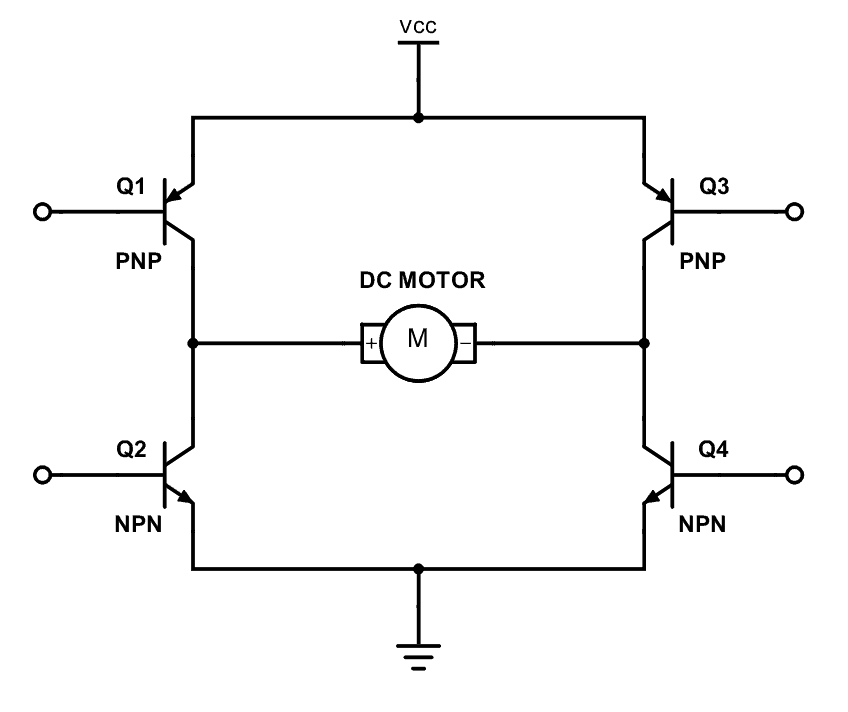
The name “H-bridge” is derived from the circuit’s schematic diagram, which visually resembles the letter “H.” In this “H” configuration, there are four main components: four electronic switches. These switches can be implemented using various technologies, most commonly transistors such as MOSFETs (Metal-Oxide-Semiconductor Field-Effect Transistors) or BJTs (Bipolar Junction Transistors).
These four switches are arranged in two parallel branches, with the load (typically a DC motor) connected between the midpoints of these branches. The input to the H-bridge consists of control signals that dictate which switches are opened or closed.
How it Works: Forward, Reverse, and Stop
Let’s break down the operation of an H-bridge by considering how these switches are controlled:
-
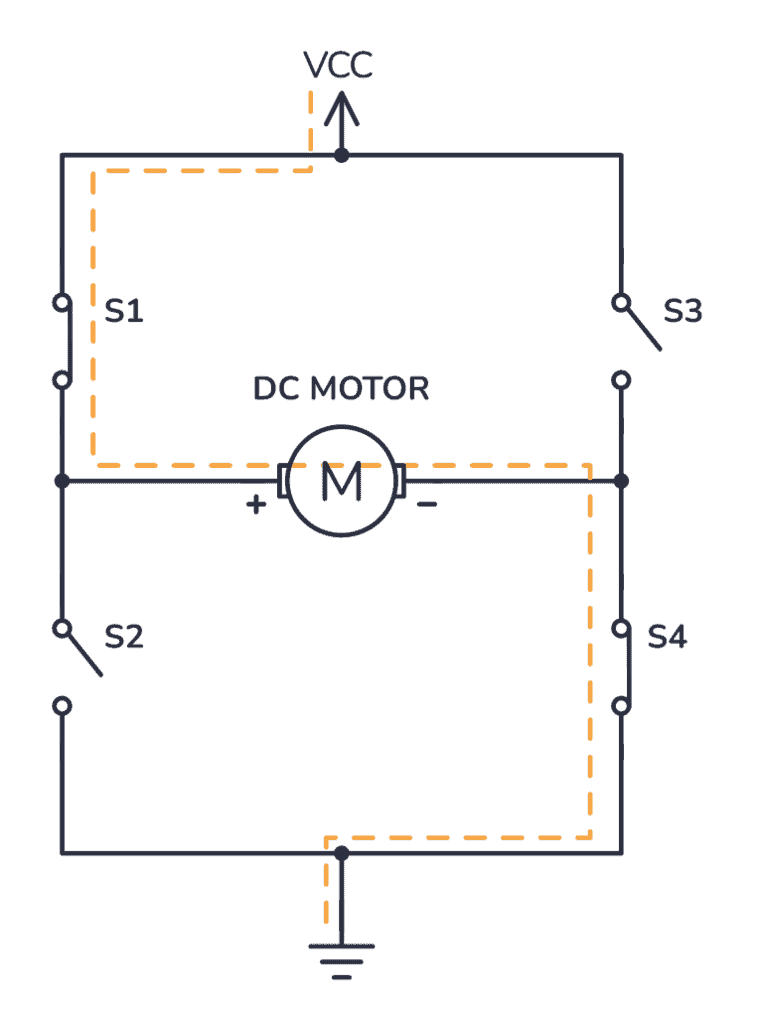
Forward Motion: To make a DC motor spin in one direction, two diagonally opposite switches are closed, while the other two are opened. For instance, closing the top-left and bottom-right switches allows current to flow from the positive terminal of the power supply, through the top-left switch, through the motor, through the bottom-right switch, and finally to the ground. This establishes a specific current path, resulting in the motor rotating in a particular direction.
-
Reverse Motion: To reverse the motor’s direction, the control signals are altered to close the other pair of diagonally opposite switches. In our example, this would be closing the top-right and bottom-left switches. This reverses the polarity of the voltage applied across the motor, causing it to spin in the opposite direction.
-
Braking (Short Circuit Braking): An H-bridge also facilitates effective braking for a DC motor. This is achieved by closing both switches on one side of the H-bridge simultaneously, while the other two remain open. For example, closing both top switches will effectively short-circuit the motor terminals. When a motor is spinning and its terminals are shorted, its kinetic energy is converted into electrical energy, which is then dissipated as heat. This rapid dissipation of energy creates a braking effect, bringing the motor to a halt quickly.
-
Coast (Freewheeling): To allow the motor to simply coast to a stop, all four switches are opened. In this state, the motor is disconnected from the power supply, and its momentum will gradually bring it to rest.
The Importance of Control Logic
The brilliance of the H-bridge lies in its control logic. By intelligently switching these four components, a single DC power source can be used to drive a load in two opposite directions. This is fundamental for applications requiring bidirectional movement or precise speed and direction control. The control signals are typically generated by a microcontroller or other digital logic circuitry, allowing for sophisticated programming and automation.
Applications of the H-Bridge: Powering Innovation Across Industries
The versatility and fundamental nature of the H-bridge make it an indispensable component in a vast array of technological applications. Its ability to control the direction and speed of DC motors is key to enabling movement and automation in countless devices.
Robotics and Automation: The Moving Parts
Robotics is perhaps one of the most prominent domains where H-bridges shine. The wheels of a mobile robot need to move forward, backward, and turn. This requires precise control over the motors driving each wheel. An H-bridge allows each motor to be independently controlled, enabling the robot to navigate complex environments, perform intricate maneuvers, and execute programmed tasks with accuracy.
In industrial automation, H-bridges are essential for controlling conveyor belts, robotic arms, automated guided vehicles (AGVs), and any machinery that relies on the precise movement of DC motors. The ability to dynamically change motor direction and speed is critical for optimizing production lines, ensuring efficient material handling, and enhancing safety protocols.
Automotive Systems: More Than Just a V8
The modern automobile is a sophisticated electronic marvel, and H-bridges play a significant role within it. While larger systems like the engine might use different power sources, numerous auxiliary functions rely on DC motors controlled by H-bridges. Examples include:
- Power Windows and Seats: The motors that operate power windows and adjustable seats utilize H-bridges to provide bidirectional movement for raising, lowering, and adjusting positions.
- Wiper Systems: The windshield wipers need to sweep back and forth, a clear application for an H-bridge.
- Electric Power Steering (EPS): While complex, the electric motors assisting steering often employ H-bridges for precise control.
- Electric Vehicle (EV) Powertrains: In the realm of EVs, H-bridges are fundamental components within the motor controllers, managing the flow of power from the battery to the electric motors, enabling acceleration, deceleration, and regenerative braking.
Consumer Electronics and Gadgets: The Unseen Workhorses
Even in the consumer electronics we interact with daily, H-bridges are quietly at work:
- RC Cars and Drones: Remote-controlled vehicles, from toy cars to hobbyist drones, extensively use H-bridges to control the speed and direction of their motors for agile movement and flight.
- Printers: The intricate movements of printer heads and paper feeders often rely on DC motors controlled by H-bridges.
- Washing Machines and Dryers: While some modern appliances use AC motors, many smaller DC motors within these machines for tasks like drum rotation or pump operation might be managed by H-bridges.
- Smart Home Devices: Devices that involve mechanical actuation, such as automatic blinds or robotic vacuum cleaners, often incorporate H-bridges for their motor control needs.
Building and Understanding H-Bridges: From Discrete Components to Integrated Circuits
The implementation of an H-bridge can vary significantly, ranging from circuits built with individual transistors to highly integrated solutions found in specialized ICs (Integrated Circuits). Understanding these different approaches provides a clearer picture of how the technology is practically applied.
Discrete Component H-Bridges: The DIY Approach
For hobbyists and educational purposes, building an H-bridge using discrete transistors (like MOSFETs or BJTs), resistors, and diodes is a common and valuable learning experience. This approach allows for a deep understanding of the underlying principles by manually connecting components and observing their behavior.
- Advantages: Offers complete control over component selection, flexibility in design, and excellent learning opportunities for understanding transistor behavior, current handling, and voltage requirements.
- Disadvantages: Can be more complex to assemble, prone to wiring errors, may require more board space, and might not be as efficient or robust as integrated solutions for high-power applications.
Integrated Circuit (IC) H-Bridges: Streamlined Solutions
The most common way to implement an H-bridge in modern electronics is by using dedicated H-bridge integrated circuits. These ICs package all the necessary switching components, driver circuitry, and often protection features into a single chip.
-
Types of H-Bridge ICs: These range from simple, low-power ICs suitable for small hobby projects to robust, high-power ICs designed for demanding industrial and automotive applications. Many ICs also include features like:
- Built-in Diodes: For flyback protection, crucial for preventing damage from voltage spikes when switching inductive loads like motors.
- Overcurrent Protection: To prevent damage to the IC and the motor in case of a stall or short circuit.
- Thermal Shutdown: To protect the IC from overheating.
- Logic Level Translation: To interface easily with microcontrollers operating at different voltage levels.
-
Advantages: Significantly simplifies circuit design, reduces board space, offers higher reliability and performance, and often includes advanced protection features.
-
Disadvantages: Less flexibility in component choice compared to discrete designs, and might be more expensive for very low-volume or specific custom needs.
Control Strategies: PWM and Beyond
The H-bridge itself is just the switching mechanism. How these switches are controlled is what determines the motor’s behavior.
-
Pulse Width Modulation (PWM): This is a highly effective technique for controlling the speed of a DC motor using an H-bridge. Instead of applying a constant voltage, PWM rapidly switches the motor on and off. The duty cycle – the proportion of time the signal is “on” versus “off” – determines the average voltage delivered to the motor, and thus its speed. A higher duty cycle means a higher average voltage and faster motor speed, while a lower duty cycle results in a slower speed. This method is highly energy-efficient.
-
Direction Control: As discussed earlier, the H-bridge’s primary function is to enable bidirectional control by selecting the appropriate pair of switches.
Considerations for Selection and Design
When choosing or designing with an H-bridge, several key parameters must be considered:
- Voltage Rating: The maximum voltage the H-bridge can safely handle.
- Current Rating: The maximum continuous current the H-bridge can pass through its switches, as well as its peak current handling capability.
- Switching Speed: How quickly the switches can turn on and off, which impacts efficiency and the ability to use high-frequency PWM.
- On-Resistance: The resistance of the switches when they are turned on. Lower on-resistance leads to less power loss and better efficiency.
- Heat Dissipation: For higher power applications, managing heat generated by the H-bridge is crucial, often requiring heatsinks.

The H-Bridge in the Ecosystem of Technology
The H-bridge, while seemingly a simple circuit, is a cornerstone of electromechanical control in modern technology. Its fundamental ability to reverse current flow unlocks a cascade of functionalities that drive everything from the smallest robotic toy to the most sophisticated industrial automation systems. In the context of the website’s broader themes, the H-bridge bridges the gap between digital control and physical action, impacting Tech advancements, enabling new Brand experiences through intelligent products, and even contributing to Money by facilitating efficiency and new product development.
As technology continues to advance, the demand for precise and efficient motor control will only grow. H-bridges, in their various forms, will remain critical components, silently powering the innovation that shapes our world. Understanding what an H-bridge is and how it operates provides a valuable insight into the intricate workings of the devices we rely on, demystifying a fundamental element of the technological ecosystem.
aViewFromTheCave is a participant in the Amazon Services LLC Associates Program, an affiliate advertising program designed to provide a means for sites to earn advertising fees by advertising and linking to Amazon.com. Amazon, the Amazon logo, AmazonSupply, and the AmazonSupply logo are trademarks of Amazon.com, Inc. or its affiliates. As an Amazon Associate we earn affiliate commissions from qualifying purchases.