
In the rapidly evolving landscape of home diagnostics, the humble pregnancy test stands as one of the most successful applications of portable bio-technology in history. However, despite decades of refinement, users often encounter a technical artifact known as the “evaporation line” (evap line). To the uninitiated, this faint streak is a source of confusion; to a technologist, it represents a fascinating case study in chemical signaling, hardware limitations, and the burgeoning role of AI-supported interpretation in the FemTech (Female Technology) sector.
Understanding what an evap line is requires a deep dive into the engineering of lateral flow assays and the digital solutions now being deployed to eliminate human error in diagnostic interpretation.
The Bio-Sensor Interface: How Pregnancy Tests Function as Hardware
At its core, a standard pregnancy test is not just a piece of plastic; it is a sophisticated piece of microfluidic hardware. This technology, known as a Lateral Flow Immunoassay (LFI), is designed to detect the presence of Human Chorionic Gonadotropin (hCG) in a liquid sample.
Lateral Flow Immunoassay Technology
The architecture of a pregnancy test involves several distinct layers of technical components. The process begins at the sample pad, where the liquid is introduced. Through capillary action—a physical phenomenon where liquid flows through narrow spaces without the assistance of external forces—the sample moves across a nitrocellulose membrane. This membrane acts as the “circuitry” of the test, guiding the fluid toward specific “reagents” or chemical sensors.
The Role of Gold Nanoparticles and Conjugate Pads
Inside the test, there is a conjugate pad containing antibodies tagged with a signaling molecule, often colloidal gold or colored latex beads. When hCG is present, these tagged antibodies bind to the hormone. As the fluid continues its journey, it hits the “Test Line” (T-line), where a second set of fixed antibodies traps the hCG-antibody complex. This accumulation of gold nanoparticles creates a visible color change—a high-tech signal represented in a low-tech, analog format.
The “Evap Line” Phenomenon: A Technical Analysis of Signal Failure
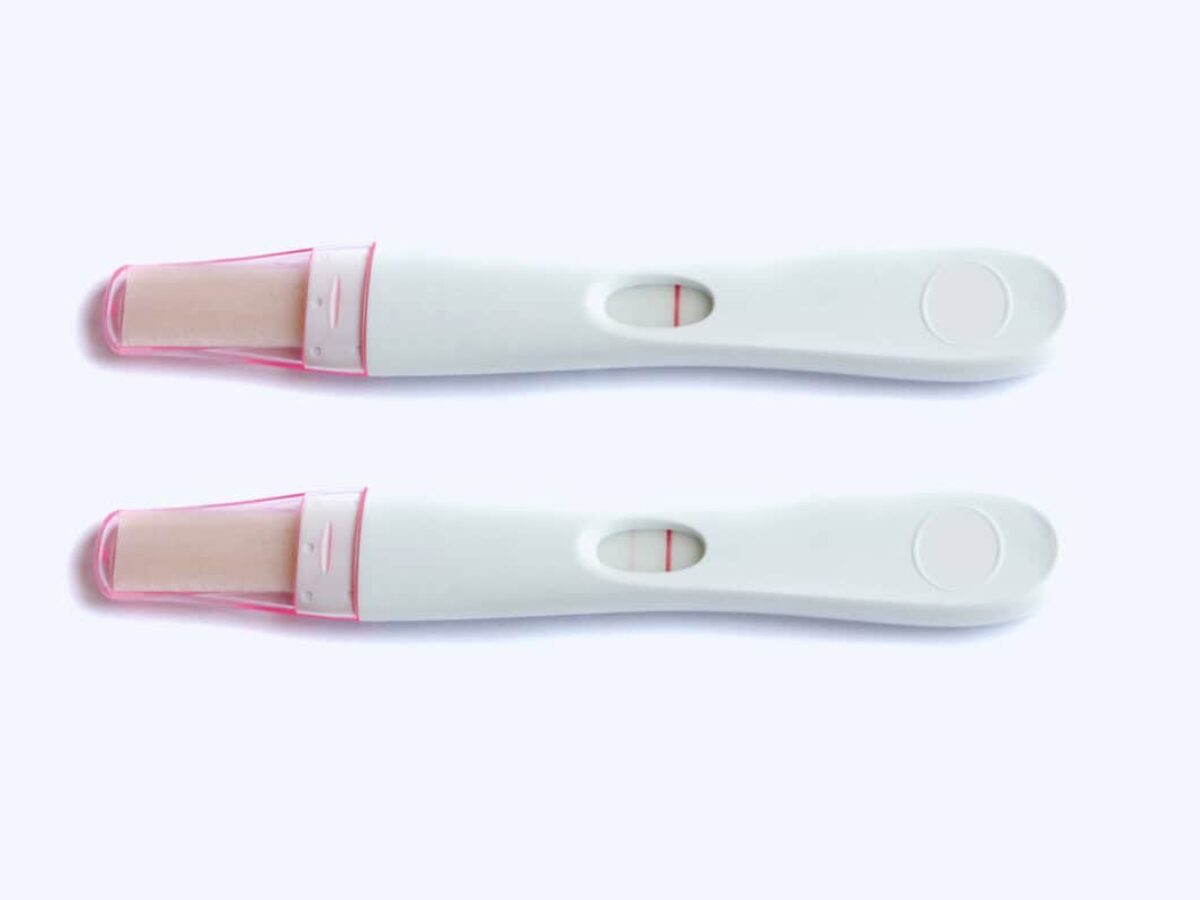
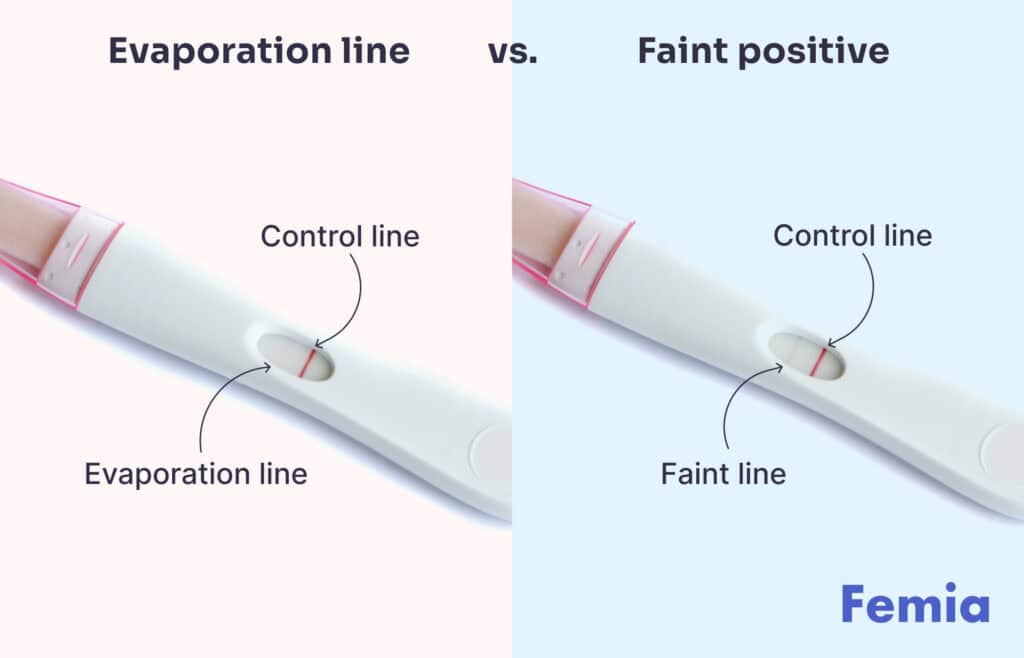
An evaporation line is essentially a “false signal” generated by the physical properties of the test medium rather than a biochemical reaction. In the world of technology, we might refer to this as “noise” in the system.
Dehydration and Chemical Sedimentation
The evaporation line occurs as the urine sample begins to dry on the nitrocellulose membrane. When the liquid evaporates, the chemical composition of the remaining residue changes. This can leave behind a faint, colorless, or grayish streak in the area where the antibodies are located. Unlike a “positive” result, which is the product of a specific dye-binding reaction, an evap line is a structural artifact—a physical indentation or a collection of dried reagents that becomes visible once the “carrier” (the liquid) is removed.
Why Analog Interfaces Lead to User Interpretation Errors
The primary technical challenge with analog pregnancy tests is the “signal-to-noise ratio.” Because these tests rely on human eyesight to interpret a chemical reaction, the threshold for a “positive” result can be subjective. Factors such as ambient lighting, the user’s visual acuity, and the timing of the reading can lead to “false positives” when a user mistakes an evaporation line for a faint positive result. Most manufacturers specify a strict “read window” (usually 3 to 10 minutes), after which the structural integrity of the chemical signal is no longer guaranteed.
Digital Pregnancy Tests: Solving the Binary Outcome Problem with Optical Sensors

To address the limitations of human interpretation and the confusion caused by evap lines, the tech industry introduced digital pregnancy tests. These devices represent a significant upgrade in user interface (UI) design for home diagnostics.
Photometric Analysis and Internal Circuitry
A digital pregnancy test contains the same lateral flow strip as an analog one, but it adds a layer of electronic hardware. Inside the plastic casing, you will find a small processor, a battery, and a series of LEDs and photosensors. Instead of the user looking for a line, the device uses “photometric analysis.” The LEDs shine light through the nitrocellulose membrane, and the photosensors measure how much light is absorbed at the test and control lines.
Eliminating the Grey Area: LCD vs. Traditional Ink
The internal computer translates the intensity of the light absorption into a binary output. If the light absorption reaches a pre-programmed threshold, the processor triggers the LCD screen to display the words “Pregnant” or “Yes.” If the threshold is not met, it displays “Not Pregnant.” This removes the “evap line” from the user’s equation entirely. Even if an evaporation line begins to form as the test dries, the digital sensor has already completed its reading during the optimal window and locked the result on the screen, providing a much higher level of diagnostic “UX” (User Experience).
The Rise of AI-Powered Diagnostic Apps in Home Testing
While digital hardware is effective, it is also expensive and contributes to electronic waste. The next frontier in solving the “evap line” problem lies in software—specifically, the integration of Artificial Intelligence and Computer Vision via smartphone apps.
Computer Vision and Image Processing for Line Detection
Modern FemTech apps like Premom, Flo, and Glow are utilizing the high-resolution cameras on smartphones to act as diagnostic scanners. When a user takes a photo of a traditional analog test, the app’s computer vision algorithms analyze the image. The software can adjust for shadows, white balance, and perspective distortion to determine if a line is a true “dye-based” positive or a colorless “evap line.”
These algorithms work by analyzing pixel density. A true positive result will have a specific color signature (usually pink or blue) and a uniform distribution of pixels. In contrast, an evap line often lacks color saturation and appears as a localized change in texture rather than a chemical reaction. By using software to interpret the hardware, tech companies are providing lab-grade precision to the average consumer.
Machine Learning Models in Early Pregnancy Detection
Furthermore, these apps use machine learning models trained on millions of images of pregnancy tests. These models become increasingly accurate at identifying “faint lines” that occur very early in a pregnancy, distinguishing them from “noise” or “artifacts” (evap lines). This is a prime example of how big data is being used to refine the accuracy of personal health diagnostics.
Future Trends in Personal Health Technology
As we look toward the future of home diagnostics, the focus is shifting toward “connected health” and miniaturization. The goal is to move beyond the binary “yes/no” of a pregnancy test and toward a comprehensive data-driven approach to fertility.
Lab-on-a-Chip (LOC) and Next-Gen Home Diagnostics
The next generation of this technology is “Lab-on-a-Chip.” LOC technology integrates several laboratory functions on a single integrated circuit only millimeters to a few square centimeters in size. This would allow for the simultaneous detection of multiple hormones (hCG, LH, Estrogen, Progesterone) with unprecedented sensitivity. By using electronic biosensors instead of paper-based lateral flow, the concept of an “evaporation line” will eventually become obsolete, replaced by precise numerical data transmitted via Bluetooth to a user’s digital health record.
Data Privacy and the Ethics of FemTech
With the shift from analog sticks to AI-powered apps and connected devices, a new technical challenge emerges: data security. When a diagnostic result moves from a plastic stick to a cloud-based server, the privacy of that data becomes paramount. The tech industry is currently navigating the complexities of HIPAA compliance and end-to-end encryption to ensure that sensitive reproductive health data remains in the hands of the user.
In conclusion, while the evaporation line is a frustrating artifact of 20th-century chemical engineering, it has paved the way for a 21st-century revolution in FemTech. From the development of optical sensors in digital tests to the application of computer vision in smartphone apps, technology is successfully bridging the gap between biological signals and digital certainty. As we move toward more integrated and intelligent diagnostic tools, the ambiguity of the “faint line” will soon be a relic of the past, replaced by the clarity of data-driven insights.
aViewFromTheCave is a participant in the Amazon Services LLC Associates Program, an affiliate advertising program designed to provide a means for sites to earn advertising fees by advertising and linking to Amazon.com. Amazon, the Amazon logo, AmazonSupply, and the AmazonSupply logo are trademarks of Amazon.com, Inc. or its affiliates. As an Amazon Associate we earn affiliate commissions from qualifying purchases.