
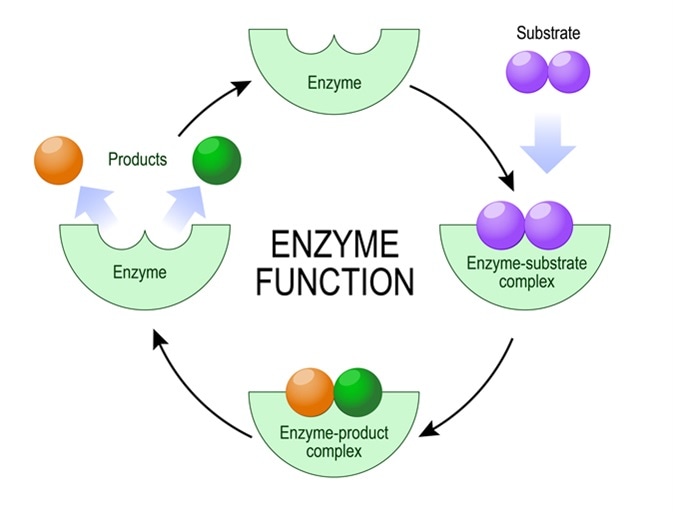
The intricate mechanisms of life, from the simplest single-celled organisms to the complex human body, are powered by an army of microscopic helpers. These tireless workers, known as enzymes, are the unsung heroes of countless biological processes. But what exactly is an enzyme’s function? In essence, enzymes are biological catalysts, proteins that dramatically speed up the rate of chemical reactions essential for life, without being consumed in the process. They are the indispensable architects and engineers of our cellular machinery, enabling everything from digestion and energy production to DNA replication and muscle contraction.
While the primary focus of their function is biological, understanding enzymes has profound implications that ripple across various domains, including technology, business strategy, and even financial innovation. This article will delve into the fundamental role of enzymes and then explore how their principles of efficiency, specificity, and catalytic power can be understood and applied metaphorically to the world of tech, brand building, and financial endeavors.
The Biochemical Marvels: Unpacking Enzyme Function at its Core
At the heart of every living cell, a symphony of chemical reactions is constantly taking place. These reactions are the bedrock of all life processes, providing energy, building essential molecules, and eliminating waste. However, many of these reactions would occur far too slowly to sustain life without the intervention of enzymes.
The Catalytic Powerhouse: Accelerating Life’s Reactions
Enzymes act as catalysts, meaning they lower the activation energy required for a chemical reaction to occur. Imagine trying to push a boulder over a hill. The activation energy is the effort needed to get the boulder to the top. Enzymes effectively create a smaller, easier-to-navigate path, allowing the reaction to proceed with significantly less energy input and at a much faster rate. Without enzymes, most of the biochemical reactions in our bodies would take years, centuries, or even millennia to complete, rendering life as we know it impossible.
For instance, the enzyme carbonic anhydrase, found in our red blood cells, can process over a million molecules of carbon dioxide per second. This incredible speed is crucial for efficiently transporting carbon dioxide from our tissues to our lungs for exhalation. Similarly, digestive enzymes like amylase, protease, and lipase break down complex food molecules into smaller, absorbable units, a process that would otherwise be excruciatingly slow and inefficient.
The Lock and Key: Specificity as a Defining Trait
A hallmark of enzyme function is their remarkable specificity. Each enzyme is designed to catalyze a particular reaction or a small group of closely related reactions. This specificity arises from the enzyme’s unique three-dimensional structure, which includes a region called the active site. The active site is a precisely shaped pocket that can bind to a specific molecule, known as the substrate. This binding is often described by the “lock and key” model, where the substrate (the key) fits perfectly into the active site of the enzyme (the lock).
This exquisite specificity ensures that only the intended reactions occur, preventing cellular chaos and maintaining order within the biochemical network. It’s like having a specialized tool for every job; a screwdriver won’t effectively tighten a bolt, and similarly, an enzyme designed to break down carbohydrates won’t interfere with protein synthesis. This targeted action is critical for the intricate coordination of metabolic pathways, where multiple reactions must occur in a specific sequence.
The Dynamic Nature: Regulation and Adaptation
Enzyme function is not static; it is highly regulated and adaptable. Cells can control enzyme activity in various ways, responding to changing conditions and needs. This regulation can involve:
- Activation and Inhibition: Enzymes can be turned on or off by the binding of other molecules. Activators enhance enzyme activity, while inhibitors reduce or block it. This allows cells to fine-tune metabolic rates and respond to nutrient availability or cellular signals.
- Allosteric Regulation: Some enzymes have an allosteric site, separate from the active site, where regulatory molecules can bind. This binding can change the shape of the active site, altering the enzyme’s affinity for its substrate and thus its activity.
- Covalent Modification: Enzymes can be chemically modified by the addition or removal of functional groups, such as phosphate groups. This can alter their activity, stability, or location within the cell.
- Enzyme Synthesis and Degradation: Cells can control the production and breakdown of enzymes, further regulating the overall level of enzymatic activity.
This dynamic control is essential for maintaining cellular homeostasis, adapting to environmental changes, and responding to developmental cues.
Metaphorical Enzymes: Driving Innovation in Tech, Brand, and Money
While enzymes are fundamentally biological entities, their core principles of efficiency, specificity, and catalytic power offer powerful metaphors for understanding and driving innovation in seemingly disparate fields like technology, brand building, and finance.
Tech: The Algorithmic Accelerators
In the realm of technology, algorithms and AI models function as the metaphorical enzymes. Just as enzymes accelerate biological reactions, algorithms accelerate computational processes, analyze vast datasets, and enable complex tasks.
The AI Catalyst: Driving Efficiency and Automation
Artificial intelligence, particularly machine learning algorithms, acts as a powerful catalyst for technological advancement. These algorithms can process information and identify patterns at speeds far exceeding human capabilities. Think of natural language processing (NLP) models as enzymes that break down complex linguistic structures, enabling machines to understand and generate human language. Recommendation engines on streaming services or e-commerce platforms are akin to enzymes that catalyze the process of identifying user preferences and suggesting relevant content or products, vastly improving user experience and engagement.
In the field of software development, tools that automate code generation, testing, or deployment function as enzymatic accelerators. They reduce the time and effort required to build and release software, allowing for faster iteration and innovation. Similarly, in cybersecurity, AI-powered threat detection systems act as enzymes that rapidly identify and neutralize malicious activities, protecting digital assets.
The Precision Engine: Specificity in Digital Solutions
The specificity of enzyme function translates to the precision of technological solutions. Well-designed software applications and AI models are tailored to specific problems, much like enzymes are specific to their substrates. A facial recognition algorithm, for example, is a highly specialized “enzyme” designed to identify specific facial features. A trading algorithm in finance is an “enzyme” designed to execute trades based on predefined market conditions.
This specificity is crucial for developing effective and reliable technologies. It prevents unintended consequences and ensures that digital tools perform their intended functions accurately. The development of niche AI tools, for instance, exemplifies this principle. These tools are designed to tackle very specific tasks, from medical image analysis to content creation, acting as specialized catalysts for particular industries.
The Adaptive Architecture: Evolving Digital Ecosystems

The regulated nature of enzyme function mirrors the dynamic and adaptive architecture of modern technology. Software platforms and AI systems are not static; they are constantly updated, refined, and retrained. This is analogous to the allosteric regulation or covalent modification of enzymes. For example, machine learning models are continuously trained on new data, allowing them to adapt and improve their performance over time, similar to how enzyme activity can be modulated by environmental factors.
Furthermore, the modular design of many tech systems, where different components can be activated or deactivated as needed, reflects the regulated synthesis and degradation of enzymes. This adaptability allows technological ecosystems to respond to changing user demands, emerging threats, and new technological breakthroughs, ensuring their continued relevance and effectiveness.
Brand: The Narrative Architects and Identity Builders
In the world of branding, the principles of enzymes can be observed in the strategic development and consistent execution of a brand’s identity and messaging.
The Strategic Catalyst: Fueling Market Engagement
A strong brand acts as a catalyst for market engagement and customer loyalty. A well-defined brand strategy, much like an enzyme, lowers the “activation energy” for consumers to connect with a product or service. It simplifies decision-making by creating a clear and compelling value proposition. Think of iconic brand logos or taglines as highly efficient “enzymes” that trigger immediate recognition and positive associations.
Effective marketing campaigns, when strategically designed, act as catalysts that accelerate brand awareness and drive consumer interest. They break down the barriers of indifference and create momentum for brand adoption. The development of compelling brand stories and narratives can also be seen as an enzymatic process, transforming raw information into engaging and memorable connections with the target audience.
The Targeted Message: Specificity in Brand Communication
Brand messaging, when executed effectively, exhibits a remarkable specificity, similar to enzyme-substrate binding. A brand must communicate its unique value proposition to its target audience in a way that resonates deeply. This requires a precise understanding of the audience’s needs, desires, and pain points. A brand that tries to be everything to everyone will likely fail, much like an enzyme that is not specific would lead to chaotic reactions.
Personal branding, in particular, relies heavily on specificity. An individual’s personal brand is their unique enzyme, designed to catalyze opportunities and build meaningful connections within their professional sphere. The consistent delivery of specialized skills and a clear personal message are key to its effectiveness. Corporate identity, too, is built on the foundation of specific values and a defined market niche, ensuring its communication is focused and impactful.
The Evolving Identity: Adapting to Market Dynamics
Just as enzymes are regulated and adapt to cellular needs, successful brands are not static; they evolve and adapt to market dynamics. This involves strategic adjustments to brand messaging, product offerings, and customer engagement strategies. A brand that fails to adapt, much like an enzyme whose activity is inhibited, risks becoming obsolete.
Case studies of successful brand turnarounds often highlight how companies have “re-engineered” their brand identity, much like modifying an enzyme’s active site, to better suit changing consumer preferences or competitive landscapes. This adaptability is crucial for long-term brand health and sustained market relevance.
Money: The Financial Accelerators and Value Builders
The principles of enzyme function can even be applied to the complex world of finance, particularly in understanding efficient financial strategies and investment vehicles.
The Investment Catalyst: Accelerating Wealth Growth
Financial tools and investment strategies can be viewed as metaphorical enzymes that catalyze wealth growth. Just as enzymes accelerate chemical reactions, well-chosen investments accelerate the accumulation of capital. Compound interest, for instance, is a powerful “enzymatic” force that fuels exponential growth over time.
Financial advisors and platforms that offer personalized investment recommendations act as catalysts, simplifying the complex process of financial planning and decision-making for individuals. They help to lower the “activation energy” required for people to start investing and build their financial future. Online income streams and side hustles can also be seen as enzymatic processes, where invested time and effort are catalytically converted into financial returns.
The Specific Allocation: Precision in Financial Decisions
Financial success often hinges on making specific and informed decisions, much like the specificity of enzyme action. Choosing the right investment vehicles, for example, requires understanding their specific risk-return profiles and how they align with individual financial goals. A diversified investment portfolio, with assets allocated to different sectors and asset classes, demonstrates this specificity, minimizing risk by not relying on a single “enzymatic” reaction.
Business finance also benefits from this principle. A company’s financial strategy must be precisely tailored to its operational needs and market position, ensuring that capital is allocated efficiently to drive growth and profitability. Financial tools that provide detailed analytics and projections act as “enzymes,” enabling more precise and informed financial decision-making.
The Dynamic Portfolio: Adapting to Market Fluctuations
The financial markets are inherently dynamic, and successful investors must adapt their strategies accordingly, much like enzymes respond to changing cellular environments. A well-managed investment portfolio is not a set-it-and-forget-it affair; it requires ongoing monitoring and adjustments.
This adaptability can be seen in strategies like rebalancing a portfolio to maintain desired asset allocations, or shifting investments in response to economic trends. Financial planning tools that offer real-time market analysis and forecasting allow individuals and businesses to make these adaptive adjustments, ensuring their financial “enzymes” remain effective in a constantly evolving landscape.

Conclusion: The Ubiquitous Influence of Enzymatic Principles
Enzymes, in their biological essence, are the foundational catalysts of life, enabling the intricate dance of biochemical reactions that sustain all living organisms. Their functions of acceleration, specificity, and dynamic regulation are not merely confined to the microscopic world of cells; they provide a powerful lens through which to understand and drive progress in technology, branding, and finance.
By recognizing the metaphorical “enzymes” at play in these fields – the algorithms that accelerate innovation, the precise messaging that builds brands, and the financial strategies that grow wealth – we can better harness their power. Understanding the fundamental principles of enzyme function empowers us to design more efficient technologies, build more resonant brands, and forge more robust financial futures, ultimately contributing to a more dynamic and prosperous world.
aViewFromTheCave is a participant in the Amazon Services LLC Associates Program, an affiliate advertising program designed to provide a means for sites to earn advertising fees by advertising and linking to Amazon.com. Amazon, the Amazon logo, AmazonSupply, and the AmazonSupply logo are trademarks of Amazon.com, Inc. or its affiliates. As an Amazon Associate we earn affiliate commissions from qualifying purchases.