
In the vast, interconnected world of modern software, applications rarely exist in isolation. They communicate, share data, and leverage functionalities from one another, forming complex ecosystems that power everything from your social media feed to global financial transactions. At the heart of this intricate web of communication lies the Application Programming Interface, or API. And within every API, there’s a crucial concept that dictates exactly where and how these interactions occur: the endpoint.
For many developers and tech enthusiasts, the term “endpoint” is commonplace. Yet, its precise meaning, anatomy, and significance can sometimes remain abstract. Simply put, an endpoint is a specific location where an API can be accessed by a client application. It’s the point of interaction in an API, defining where resources lie and the operations that can be performed on them. Think of it as the specific address and contact number for a particular service or information source that an application wants to interact with. Understanding endpoints is not just a technicality; it’s fundamental to designing, consuming, and securing robust, scalable, and efficient software systems. This article will delve deep into what an API endpoint is, its components, types, and the best practices for working with them, offering a professional and insightful guide to this cornerstone of modern development.
The Foundational Role of APIs in Modern Software
Before dissecting the endpoint, it’s essential to appreciate the broader context of APIs. APIs are the silent workhorses that enable disparate software components to talk to each other, forming the backbone of virtually every digital experience we have today. They are contracts that specify how one piece of software can interact with another, defining the methods and data formats for communication.
Bridging Applications and Services
APIs act as intermediaries, allowing different software applications to exchange information and functionality. Imagine a weather app that needs to pull real-time weather data; it doesn’t have its own sensors or weather stations. Instead, it makes a request to a weather service API, which provides the necessary data in a structured format. This abstraction allows developers to build complex applications by composing services, rather than reinventing every single component. This modularity speeds up development, reduces redundancy, and fosters innovation by making functionalities reusable.
The Client-Server Model Explained
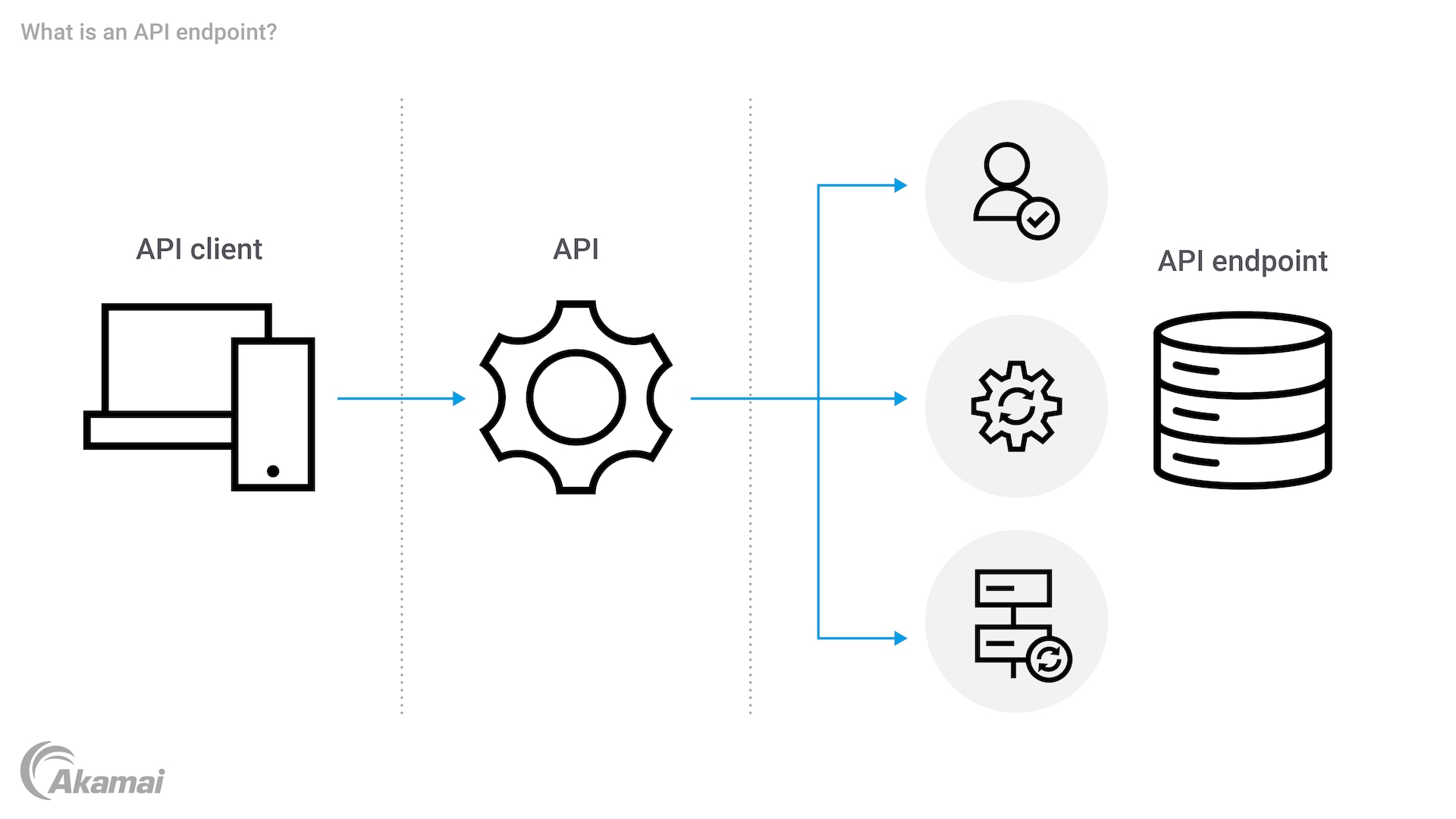
The vast majority of API interactions operate within a client-server model. In this setup, a “client” (e.g., a mobile app, a web browser, another server) sends a request to a “server” (which hosts the API and its resources). The server processes the request, performs the necessary operations (like fetching data from a database), and then sends a “response” back to the client. The endpoint is the specific address on the server that the client targets with its request. It’s the door through which the client enters to make its specific inquiry or command.
Why Interoperability Matters
The ability of different systems to work together seamlessly – interoperability – is paramount in today’s digital landscape. APIs facilitate this by providing standardized interfaces. Without them, every integration would require custom, one-off solutions, leading to massive inefficiencies, increased costs, and technological silos. Interoperability, driven by well-defined APIs and their endpoints, allows businesses to integrate third-party services, offer richer user experiences, and build scalable architectures that can adapt to changing demands and new technologies. From microservices architectures to cloud-native applications, APIs are the glue that holds these distributed systems together.
Deconstructing the API Endpoint
At its core, an API endpoint is a specific URL that represents a particular resource or function that an API exposes. It’s the precise location where a client sends its request and expects a response. But an endpoint is more than just a URL; it’s a combination of the URL and the HTTP method used to interact with it.
Definition and Analogy
An API endpoint can be defined as one end of a communication channel. When an API interacts with another system, the touchpoints of this communication are considered endpoints. For a client application, it’s the specific address where it can find and interact with a particular piece of data or functionality.
Consider a library. If the entire library is the API, then an endpoint is like a specific catalog entry or a section within the library dedicated to a particular subject. To find books on “history,” you go to the “History” section. To find books by a specific author, you look up that author in the catalog. Similarly, an endpoint like /products might give you a list of all products, while /products/{id} might give you details for a specific product. Each distinct piece of information or functionality has its own specific address—its endpoint.
Anatomy of an Endpoint URL
A typical API endpoint URL consists of several key components:
-
Protocol: This specifies the communication method, almost universally
HTTPorHTTPS(for secure communication).HTTPSis crucial for protecting data in transit.- Example:
https://
- Example:
-
Domain (or Host): This is the server address where the API is hosted. It identifies the service provider.
- Example:
api.example.com
- Example:
-
Base Path: This often indicates the specific API or a version of the API.
- Example:
/v1
- Example:
-
Path Segment (or Resource Path): This is the core part of the endpoint, identifying the specific resource or collection of resources being accessed. It’s often hierarchical.
- Example:
/usersor/users/123
- Example:
-
Query Parameters: Optional key-value pairs appended to the URL after a
?, used to filter, sort, or paginate results.- Example:
?status=active&limit=10
- Example:
Combining these, a full endpoint URL might look like: https://api.example.com/v1/users/123?status=active. Here, the client is requesting details for the user with ID 123, possibly with an additional filter for active status (though for a specific ID, this parameter might be redundant depending on API design).
Verbs and Actions: HTTP Methods
While the URL tells you where the resource is, the HTTP method (often called an HTTP verb) tells you what action you want to perform on that resource. The most common HTTP methods are:
-
GET: Retrieves data from a specified resource. It should not have any side effects on the server.
-
Example:
GET /users(Get all users) -
Example:
GET /users/123(Get user with ID 123)
-
-
POST: Submits data to a specified resource, often resulting in the creation of a new resource.
- Example:
POST /users(Create a new user)
- Example:
-
PUT: Updates an existing resource, or creates it if it doesn’t exist, by replacing the entire resource with the new data.
- Example:
PUT /users/123(Update user with ID 123 completely)
- Example:
-
PATCH: Partially updates an existing resource.
- Example:
PATCH /users/123(Update only specific fields of user with ID 123)
- Example:
-
DELETE: Deletes a specified resource.
- Example:
DELETE /users/123(Delete user with ID 123)
- Example:
The combination of the URL and the HTTP method forms the complete API request, dictating the exact interaction with the server.
Request and Response Cycles
Every interaction with an API endpoint follows a request-response cycle. A client sends an HTTP request to an endpoint, which typically includes:
-
HTTP Method: (e.g., GET, POST)
-
Endpoint URL: (e.g.,
https://api.example.com/v1/users) -
Headers: Metadata about the request (e.g.,
Content-Type,Authorizationtokens). -
Body (for POST/PUT/PATCH): The data being sent to the server, usually in JSON or XML format.
Upon receiving the request, the server processes it and sends back an HTTP response, which includes:
-
Status Code: A numerical code indicating the outcome (e.g., 200 OK, 201 Created, 404 Not Found, 500 Internal Server Error).
-
Headers: Metadata about the response.
-
Body: The data requested by the client, or confirmation of an action, typically in JSON or XML format.
This cyclical exchange of structured messages via endpoints is how all modern distributed applications communicate.

Types of Endpoints and Their Use Cases
While the fundamental concept of an endpoint remains consistent, its implementation and the underlying architectural style can vary significantly, leading to different “types” of endpoints tailored for specific use cases and design philosophies.
RESTful Endpoints
Representational State Transfer (REST) is an architectural style for designing networked applications. RESTful APIs are the most common type of web service today. Their endpoints adhere to REST principles, primarily being stateless and resource-based. Each endpoint typically represents a resource (e.g., /products, /users), and HTTP methods are used to perform standard CRUD (Create, Read, Update, Delete) operations on those resources. RESTful endpoints are characterized by their clean, predictable URLs and their extensive use of standard HTTP features. They are highly scalable and widely adopted for web services due to their simplicity and flexibility.
GraphQL Endpoints
GraphQL is a query language for APIs and a runtime for fulfilling those queries with your existing data. Unlike REST, which typically requires multiple endpoints to fetch different types of related data, GraphQL APIs often expose a single endpoint. Clients send complex queries to this single endpoint, specifying exactly what data they need, and the server responds with precisely that data. This “fetch exactly what you need” approach minimizes over-fetching and under-fetching of data, making GraphQL popular for applications with complex data requirements or limited bandwidth, such as mobile apps.
SOAP Endpoints
Simple Object Access Protocol (SOAP) is an older, protocol-based approach for web services. SOAP APIs typically use XML for message formatting and rely on more rigid, contract-based communication defined by Web Services Description Language (WSDL) files. SOAP endpoints are often associated with enterprise-level applications, legacy systems, and environments that require strict security and transaction compliance. While less common for new web services compared to REST, they are still prevalent in industries like banking, telecommunications, and healthcare. SOAP endpoints are typically a single URL that all requests hit, with the specific operation defined within the XML request body.
Webhook Endpoints
While REST, GraphQL, and SOAP describe how clients make requests to servers, webhooks represent a paradigm shift: the server makes a request to a client. A webhook endpoint is essentially a URL provided by a client application where it wants to receive automated notifications or data from another service when a specific event occurs. Instead of the client constantly polling an API for updates, the server “pushes” information to the client’s registered webhook endpoint when something relevant happens (e.g., a payment is processed, a new user signs up, a document is updated). Webhooks are crucial for building real-time, event-driven architectures.
Practical Examples Across Industries
Endpoints are ubiquitous:
-
Social Media: When you post a tweet, your client app sends a
POSTrequest to Twitter’s/tweetsendpoint. When you view your feed, it makes aGETrequest to a/timelineendpoint. -
E-commerce: Adding an item to a cart might involve a
POSTrequest to/cart/items. Retrieving product details uses aGETrequest to/products/{id}. -
Payment Gateways: Processing a payment often involves a
POSTrequest to an endpoint like/payments/chargewith payment details in the body. -
Cloud Services: Managing virtual machines, databases, or storage buckets in cloud providers like AWS or Azure is entirely done via API endpoints.
Every interaction you have with a modern digital service, from streaming video to sending an email, likely involves one or more API endpoint interactions behind the scenes.
Best Practices for Endpoint Design and Management
Effective endpoint design is critical for building APIs that are intuitive, robust, secure, and performant. Poorly designed endpoints can lead to developer frustration, security vulnerabilities, and scalability issues.
Intuitive Naming Conventions
Endpoint URLs should be descriptive, consistent, and predictable. They should clearly indicate the resource being accessed and follow logical naming conventions.
-
Use plural nouns for collections (e.g.,
/users,/products). -
Use singular nouns for individual resources with an identifier (e.g.,
/users/123,/products/ABC). -
Avoid verbs in resource paths (e.g., instead of
/getAllUsers, useGET /users). Actions should be handled by HTTP methods. -
Use kebab-case for multi-word paths (e.g.,
/order-itemsinstead of/orderItems).
Consistent naming makes an API easier to understand and use without extensive documentation.
Versioning Strategies
As APIs evolve, endpoints and their underlying resources may change. Versioning allows you to introduce breaking changes without disrupting existing client applications. Common strategies include:
-
URL Versioning: Including the version number directly in the URL (e.g.,
/v1/users,/v2/users). This is straightforward but can lead to URL bloat. -
Header Versioning: Specifying the API version in a custom HTTP header (e.g.,
Accept-Version: v1). This keeps URLs cleaner but can be less discoverable. -
Content Negotiation: Using the
Acceptheader to specify the desired media type and version (e.g.,Accept: application/vnd.example.v1+json).
Regardless of the strategy, clear communication and support for older versions for a reasonable period are crucial.
Security Considerations
Endpoints are access points to your data and functionality, making security paramount.
-
Authentication: Verifying the identity of the client making the request (e.g., API keys, OAuth 2.0, JSON Web Tokens (JWT)).
-
Authorization: Determining what resources an authenticated client is allowed to access or what actions they can perform (role-based access control).
-
HTTPS/SSL/TLS: Always use
HTTPSto encrypt communication between client and server, protecting data from eavesdropping and tampering. -
Input Validation: Sanitize and validate all incoming data to prevent injection attacks and ensure data integrity.
-
Rate Limiting: Restricting the number of requests a client can make within a given timeframe to prevent abuse, DDoS attacks, and ensure fair usage.
-
Error Handling: Provide clear, informative error messages and appropriate HTTP status codes without revealing sensitive internal details.
Documentation is Key
A well-documented API is a usable API. Comprehensive documentation for each endpoint is essential for developers to understand how to interact with it.
-
Endpoint Description: Clearly explain what each endpoint does.
-
HTTP Methods: List supported methods for each endpoint.
-
Request Parameters/Body: Describe all required and optional parameters, their data types, and examples.
-
Response Structure: Detail the format of successful responses, including data types and examples.
-
Error Codes: Document possible error responses and their meanings.
Tools like Swagger/OpenAPI, Postman, and ReadMe.io help automate and standardize API documentation, making it discoverable and interactive.
Performance and Scalability
Efficient endpoint design contributes significantly to API performance and scalability.
-
Minimize Data Transfer: Only return necessary data. Allow clients to specify fields they need if possible (e.g., GraphQL or sparse fieldsets in REST).
-
Caching: Implement caching mechanisms to store frequently accessed data, reducing server load and improving response times.
-
Pagination: For endpoints returning large collections, implement pagination (e.g.,
?page=1&limit=10) to avoid overwhelming clients and servers with massive datasets. -
Asynchronous Operations: For long-running tasks, design endpoints to initiate the task asynchronously and provide a way for the client to poll for status or receive a webhook notification upon completion.

Conclusion
API endpoints are far more than just URLs; they are the precisely defined doorways through which the modern digital world communicates. From retrieving a user’s profile to processing a complex financial transaction, every interaction within interconnected software systems flows through these vital communication points. Understanding their anatomy, the HTTP methods that govern their actions, and the different architectural styles that define them is fundamental for anyone involved in software development, architecture, or digital strategy.
The principles of good endpoint design – intuitive naming, robust versioning, stringent security measures, thorough documentation, and a focus on performance – are not mere suggestions but necessities for building APIs that are reliable, scalable, and a pleasure to work with. As technology continues to evolve and interconnectedness deepens, the importance of well-crafted endpoints will only grow, remaining a cornerstone in the ongoing construction of the digital future. By mastering the art and science of API endpoints, developers and organizations can unlock the full potential of their software, fostering innovation and delivering exceptional digital experiences.
aViewFromTheCave is a participant in the Amazon Services LLC Associates Program, an affiliate advertising program designed to provide a means for sites to earn advertising fees by advertising and linking to Amazon.com. Amazon, the Amazon logo, AmazonSupply, and the AmazonSupply logo are trademarks of Amazon.com, Inc. or its affiliates. As an Amazon Associate we earn affiliate commissions from qualifying purchases.