
The question “what is an average income in the United States?” is more than just a curiosity; it’s a fundamental benchmark for understanding one’s personal financial standing and the broader economic health of the nation. This article delves into the complexities of average income, moving beyond simple numbers to explore what these figures truly represent, how they are calculated, and what they mean for individuals navigating the diverse landscape of the U.S. economy. We’ll approach this from the interconnected perspectives of technology, branding, and personal finance, recognizing that in today’s world, all these elements play a crucial role in shaping income potential and financial well-being.

Decoding the Averages: Median vs. Mean Income
When we talk about “average income,” it’s crucial to understand that there isn’t just one number. Two primary statistical measures are used to represent central tendencies in income data: the mean income and the median income. Both offer valuable insights, but they paint different pictures of financial reality for the majority of Americans.
The Mean: An Arithmetic Average
The mean income is what most people envision when they hear “average.” It’s calculated by summing up all the incomes in a given population and then dividing by the number of individuals or households in that population.
-
How it’s calculated: Imagine you have five people with incomes of $30,000, $40,000, $50,000, $60,000, and $200,000. The mean income would be ($30,000 + $40,000 + $50,000 + $60,000 + $200,000) / 5 = $80,000.
-
The impact of outliers: The significant drawback of the mean is its susceptibility to extreme values, often referred to as “outliers.” In the example above, the single individual earning $200,000 drastically pulls up the average for the entire group. This is precisely what happens at a national level. A small number of exceptionally high earners can significantly inflate the mean income, making it appear higher than what the majority of the population actually earns. Therefore, the mean often presents an inflated picture of typical income.
The Median: The Middle Ground
The median income represents the income of the individual or household exactly in the middle of the income distribution, when all incomes are ranked from lowest to highest. This means that half of the population earns less than the median income, and half earns more.
-
How it’s calculated: Using the same five individuals from the previous example, the incomes ranked are $30,000, $40,000, $50,000, $60,000, and $200,000. The median income is the middle value, which is $50,000.
-
A more representative picture: The median is generally considered a more robust and representative measure of “average” income for the general population because it is not distorted by extreme wealth or poverty. It reflects the income level that divides the population into two equal halves, giving a better sense of what is typical.
Why the Distinction Matters for You
When you see headlines about “average income in the U.S.,” it’s vital to ask whether they are referring to the mean or the median. For the average American looking to gauge their financial situation, the median income is almost always the more relevant and informative figure. It provides a realistic benchmark against which individuals and households can compare their earnings and assess their financial standing within their community and the nation as a whole.
Exploring the Data: Current U.S. Income Averages
As of recent data (typically reported annually by government agencies like the U.S. Census Bureau), the figures for both mean and median income provide a snapshot of the American financial landscape. It’s important to note that these numbers can fluctuate year by year due to economic conditions, inflation, and changes in employment.
Median Household Income
The median household income is a commonly cited statistic. It refers to the income of all individuals living in a housing unit, regardless of whether they are related. This metric is important because many households rely on the combined earnings of multiple members.
-
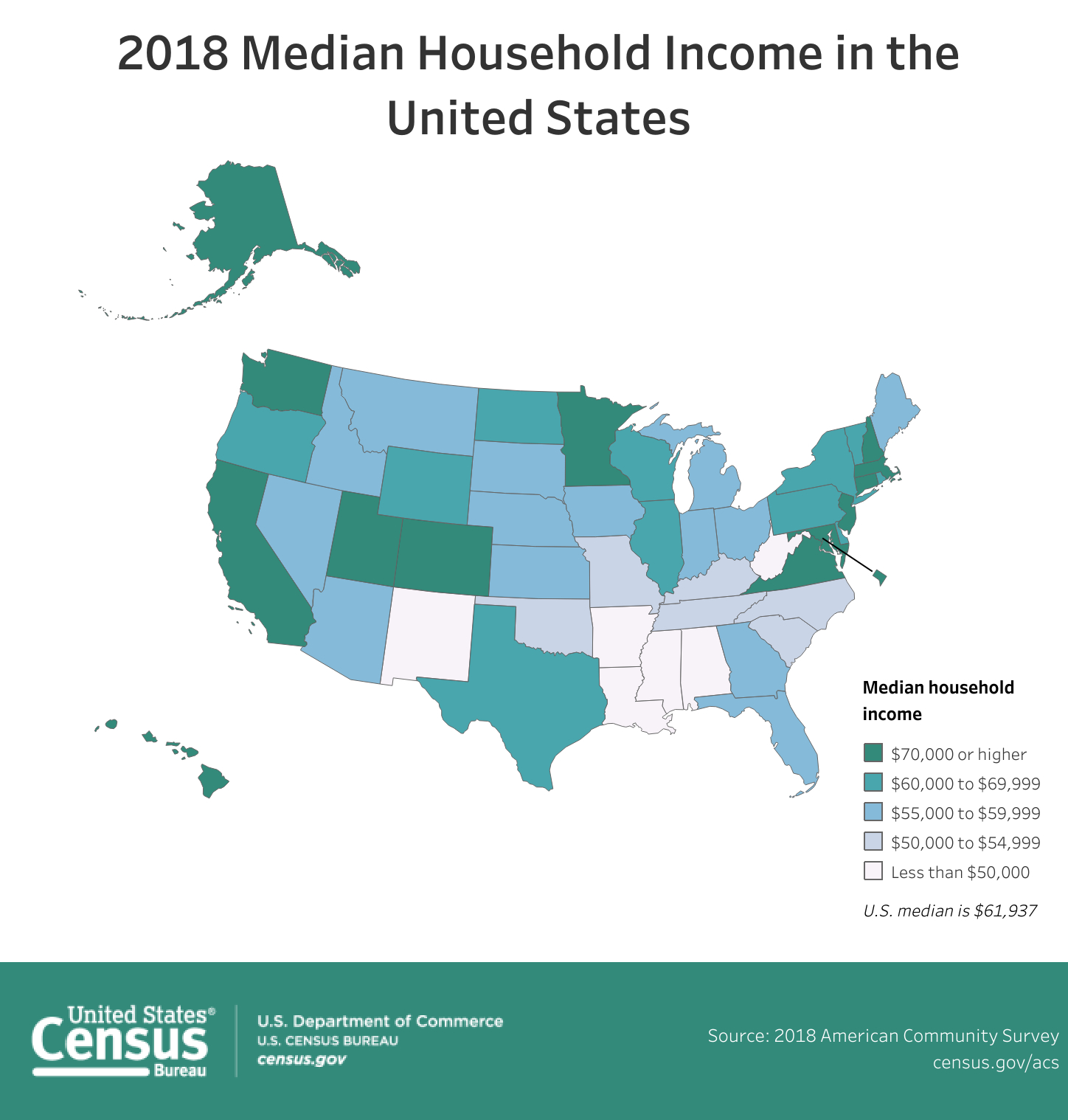
Recent Trends: Typically, the U.S. Census Bureau releases data on household income. For instance, in recent years, the median household income has often been reported in the range of $70,000 to $75,000. However, this figure can vary significantly based on the specific year of data collection and the methodology used.
-
What it means: A median household income of, say, $74,000 means that half of all U.S. households earned less than this amount, and half earned more. This provides a solid benchmark for understanding the financial reality of the “middle” of the American population.
Median Personal Income
Beyond household income, it’s also useful to look at median personal income, which refers to the income of individuals. This can be further broken down by factors like age, gender, and employment status.
-
Individual Earnings: The median personal income for full-time, year-round workers tends to be higher than the overall median personal income because it excludes individuals who work part-time, seasonally, or are unemployed. Recent figures often place the median personal income for full-time, year-round workers in the range of $50,000 to $60,000.
-
Understanding the Nuances: It’s crucial to differentiate between household and personal income. A high household income might be achieved through the combined efforts of two working adults, while a lower personal income might reflect the earnings of a single individual or someone in a lower-paying profession.
Mean Income: The Higher End
While less representative for the majority, the mean income figures are also tracked. These figures are significantly higher due to the influence of high earners.
- Illustrative Difference: If the median household income is around $74,000, the mean household income could easily be $100,000 or more, depending on the distribution of incomes. This stark difference underscores the importance of understanding which average is being presented.
Factors Influencing Income Averages
The “average income” in the U.S. is not a static number; it’s a dynamic reflection of numerous interconnected factors. From technological advancements to individual branding strategies and the pursuit of online income, several elements shape where you fall within the financial spectrum.
The Role of Technology and Digital Literacy
In the 21st century, technology is a paramount driver of income potential. The types of jobs available, the skills required, and the very nature of work are being reshaped by digital advancements.
- High-Demand Tech Fields: Sectors like software development, data science, artificial intelligence (AI), cybersecurity, and cloud computing consistently offer some of the highest earning potentials. Professionals with specialized skills in these areas are in high demand, leading to competitive salaries and often exceeding the national average income.
- AI Tools and Productivity: The rise of AI tools is a double-edged sword. While some roles might be automated, new opportunities emerge for those who can leverage AI to enhance their productivity and creativity. Individuals adept at using AI for tasks ranging from content creation to data analysis can command higher rates and achieve greater efficiency, thus boosting their earning capacity.
- Digital Security and Productivity: A strong understanding of digital security is no longer just an IT concern; it’s a foundational skill. Protecting data and systems can be a lucrative career path, and for any professional, a robust digital presence and efficient use of productivity apps can lead to better job performance and career advancement, indirectly impacting income.
- Online Income and Side Hustles: Technology has democratized income generation. Platforms for freelancing, online courses, e-commerce, and content creation have opened up avenues for individuals to earn income beyond traditional employment. These “side hustles” can supplement primary incomes or even become full-time revenue streams, especially for those who effectively brand themselves online.
The Power of Personal Branding and Marketing
In today’s competitive job market, simply having skills isn’t always enough. How you present yourself – your personal brand – can significantly influence your income.
- Defining Your Brand: Your personal brand is the unique combination of your skills, experience, values, and personality that you project to the world. A strong personal brand makes you memorable, trustworthy, and desirable to employers, clients, or customers.
- Strategic Marketing: Effectively marketing your personal brand involves showcasing your expertise through various channels. This includes maintaining a professional online presence (e.g., LinkedIn, a personal website), networking, speaking at industry events, and creating valuable content that demonstrates your knowledge.
- Corporate Identity and Reputation: For businesses and organizations, a strong corporate identity and positive reputation are directly linked to financial success. This translates into higher customer loyalty, premium pricing power, and increased investor confidence, ultimately contributing to higher overall company earnings, which can trickle down to employee compensation.
- Case Studies and Demonstrating Value: To effectively build a brand, you need to demonstrate your value. Case studies that highlight successful projects and quantifiable achievements are powerful tools for proving your worth and justifying higher compensation.
Navigating Personal Finance and Business Growth
Understanding your finances and making smart investment decisions is critical for not only reaching but also exceeding average income levels.
- Personal Finance Management: Effective personal finance management involves budgeting, saving, and managing debt wisely. Individuals who are financially literate are better equipped to make informed decisions about their money, which can lead to greater wealth accumulation over time.
- Investing for Growth: Investing in stocks, bonds, real estate, or other assets is a key strategy for growing wealth beyond income from employment. Understanding different investment vehicles, risk tolerance, and long-term financial goals is essential for maximizing returns.
- Online Income and Side Hustles as Opportunities: As mentioned earlier, technology facilitates new income streams. Identifying and capitalizing on online income opportunities and side hustles can significantly boost your overall earnings. This requires an entrepreneurial mindset, market research, and effective execution.
- Business Finance and Scalability: For entrepreneurs and business owners, sound financial management is paramount. Understanding business finance, cash flow, profitability, and strategies for scaling operations are crucial for increasing revenue and, consequently, personal income derived from the business.
Making Sense of Your Income: Beyond the Averages
The figures for average income in the United States provide a valuable framework, but they are just a starting point. What truly matters is understanding your personal financial situation in relation to these benchmarks and actively working to improve it.
Factors Affecting Your Personal Income
Beyond national averages, your individual income is shaped by a multitude of factors:
- Industry and Occupation: Certain industries and specific job roles inherently command higher salaries due to demand, required skill sets, and profitability.
- Location: Cost of living and economic opportunities vary significantly by geographic region. Major metropolitan areas often have higher average incomes but also higher expenses.
- Experience and Education: Higher levels of education and years of experience generally correlate with higher earning potential.
- Negotiation Skills: The ability to effectively negotiate salary and benefits can make a significant difference over your career.
- Economic Conditions: Recessions, inflation, and overall economic growth or contraction can impact employment opportunities and wage growth.
Strategies for Increasing Your Income
Understanding the factors that influence income empowers you to take proactive steps to improve your financial standing.
- Skill Development and Lifelong Learning: Continuously acquiring new skills, particularly in high-demand fields like technology, and staying abreast of industry trends is crucial. Online courses, certifications, and further education can all contribute to increased earning potential.
- Strategic Career Moves: Don’t be afraid to explore new job opportunities, seek promotions, or even switch industries if it aligns with your long-term financial goals.
- Building a Strong Personal Brand: Invest time in developing and promoting your personal brand. This can open doors to better job prospects, freelance work, and consultancy opportunities.
- Exploring Online Income and Side Hustles: Identify ways to supplement your primary income through online platforms, freelancing, or even starting a small business.
- Financial Literacy and Smart Investing: Educate yourself about personal finance and investing. Even small, consistent investments can grow significantly over time.
- Networking: Building and nurturing professional relationships can lead to valuable insights, mentorship, and job referrals.

The Broader Economic Context
Understanding average income also provides a lens through which to view the broader U.S. economy. Income inequality, the impact of automation, and the future of work are all topics deeply intertwined with income statistics. By understanding the numbers and the forces that shape them, you are better equipped to navigate your own financial journey and contribute to informed discussions about economic policy and progress.
In conclusion, while the question “what is an average income in the United States?” can be answered with specific figures, its true value lies in the deeper understanding it provides. By considering both median and mean incomes, and by recognizing the influence of technology, branding, and personal finance strategies, individuals can gain a more accurate picture of their financial standing and chart a course toward greater financial well-being.
aViewFromTheCave is a participant in the Amazon Services LLC Associates Program, an affiliate advertising program designed to provide a means for sites to earn advertising fees by advertising and linking to Amazon.com. Amazon, the Amazon logo, AmazonSupply, and the AmazonSupply logo are trademarks of Amazon.com, Inc. or its affiliates. As an Amazon Associate we earn affiliate commissions from qualifying purchases.