
In the world of software development, functions are the building blocks of any application. They represent reusable chunks of logic that perform specific tasks, from calculating a mortgage payment to rendering a pixel on a screen. However, for a function to be truly useful, it often needs information from the outside world to act upon. This is where the concept of an “argument” comes into play.
To the uninitiated, the term “argument” might evoke images of a heated debate. In computer science, however, an argument is a vital piece of data passed into a function, procedure, or routine. Understanding how arguments work—and the nuances of how they are handled by different programming languages—is a fundamental milestone for any aspiring developer or tech enthusiast. This guide explores the definition, types, and best practices surrounding arguments in code.

The Technical Anatomy: Parameters vs. Arguments
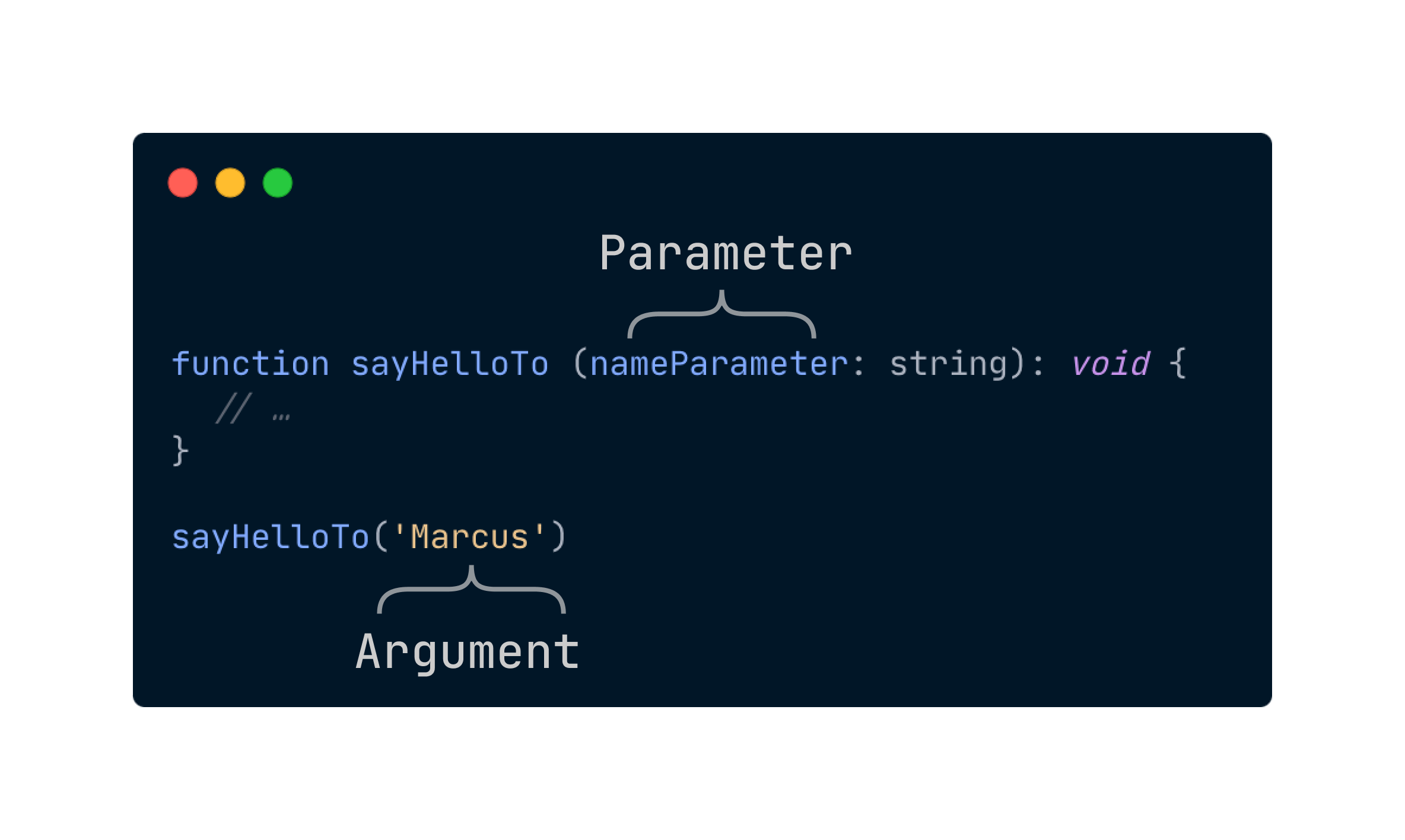
Before diving into the complexities of data handling, it is essential to clarify a common point of confusion: the difference between a parameter and an argument. While many developers use these terms interchangeably in casual conversation, they represent two distinct phases of the same process.
Defining Parameters as Blueprints
A parameter is a variable listed in the definition of a function. Think of it as a placeholder or a “label” for the data the function expects to receive. When you write a function to calculate the area of a rectangle, you might define it with two parameters: width and height. These parameters act as local variables within the function’s scope, waiting to be filled with actual values.
Arguments: The Real-World Data
An argument, on the other hand, is the actual value that is passed to the function when it is called (invoked). If you call your area function with the values 5 and 10, then 5 and 10 are the arguments. In short: parameters exist in the function’s declaration, while arguments exist in the function’s execution.
How Data Flows into Functions
When a program executes a function call, the runtime environment maps the provided arguments to the function’s parameters. This process creates a bridge between different parts of a program, allowing data to flow dynamically through various modules. This “data injection” is what makes software interactive; without arguments, functions would be static, performing the exact same operation every time regardless of external input.
Common Types of Arguments in Modern Programming
As programming languages have evolved, so have the ways we pass data into functions. Different languages offer various syntax styles to improve code readability, flexibility, and safety.
Positional Arguments
Positional arguments are the most common type. In this model, the order of the arguments matters. The first argument passed corresponds to the first parameter defined, the second to the second, and so on. While simple, positional arguments can become confusing if a function requires five or six different inputs, as the developer must remember the exact sequence to avoid errors.
Keyword and Named Arguments
To solve the “mystery” of positional arguments, many languages (like Python, Swift, and C#) support keyword or named arguments. This allows the developer to specify which parameter an argument belongs to by name, regardless of the order. For example, calculate_area(height=10, width=5) is much clearer than calculate_area(10, 5), especially for complex functions where the purpose of a number might not be immediately obvious.
Default Arguments and Optional Parameters
Sometimes, a piece of data is the same most of the time. Default arguments allow developers to assign a fallback value to a parameter if no argument is provided during the function call. This simplifies the user experience for other developers using your code, as they only need to provide “special” values when they want to override the default behavior.
Variadic Arguments (Args and Kwargs)
There are instances where you don’t know how many arguments will be passed to a function. For example, a function that sums a list of numbers should be able to handle two numbers or two hundred. Variadic arguments (often denoted as *args or ...rest) allow functions to accept an indefinite number of inputs, packaging them into an array or list for the function to process.
The Mechanics of Data Transfer: Pass-by-Value vs. Pass-by-Reference
One of the most critical concepts in computer science is how a programming language actually “hands over” an argument to a function. This is not just a syntax choice; it has significant implications for memory management and application performance.
Pass-by-Value: Safety through Copies
In a pass-by-value system, the language creates a copy of the argument’s data and gives that copy to the function. Because the function is working with a duplicate, any changes it makes to the parameter do not affect the original variable outside the function. This is common with “primitive” data types like integers and booleans in languages like Java and C. It offers safety because it prevents functions from accidentally modifying data they shouldn’t.
Pass-by-Reference: Efficiency through Memory Addresses
Pass-by-reference takes a different approach. Instead of copying the data, the program passes the memory address (a pointer) of the actual variable. This means the function is working with the “real” data. If the function modifies a parameter, the change is reflected globally. This is highly efficient for large datasets, such as massive arrays or complex objects, because copying them would consume significant CPU and RAM.
The Hybrid Approach in High-Level Languages
Many modern languages, such as Python and JavaScript, use a “pass-by-sharing” or “call-by-object-sharing” model. In these environments, everything is an object. When you pass an argument, you are passing a reference to the object, but the reference itself is passed by value. This can lead to nuanced behavior: you can modify the contents of a list passed as an argument, but you cannot reassign the entire list variable to a new object and expect the change to persist outside the function.
Best Practices for Writing Clean and Scalable Code
Understanding how arguments work technically is only half the battle. The other half is knowing how to use them effectively to create maintainable, professional-grade software.
The Principle of Least Knowledge
A common mistake among junior developers is passing too much information into a function. The “Principle of Least Knowledge” suggests that a function should only have access to the specific data it needs to perform its job. If you have a User object with fifty properties, but your function only needs the User's email, you should pass the string email as an argument rather than the entire object. This makes the function easier to test and reduces the risk of unintended side effects.
Limiting the Number of Arguments
Clean code experts, such as Robert C. Martin (author of Clean Code), argue that the ideal number of arguments for a function is zero (nullary), followed by one (unary) or two (binary). Three arguments (tertiary) should be avoided where possible, and more than three requires a very strong justification. When a function has too many arguments, it becomes difficult to understand and prone to bugs. In such cases, it is often better to group the arguments into a single object or configuration hash.
Type Hinting and Documentation
In dynamically typed languages like JavaScript or Python, it can be unclear what kind of data an argument should be. Is “age” a number (25) or a string ("25")? Using type hints (e.g., Python’s type annotations or TypeScript) allows developers to explicitly state the expected type of an argument. This documentation-as-code approach catches errors during development rather than at runtime, saving hours of debugging.
Beyond the Basics: Higher-Order Functions and Callbacks
In advanced software engineering, arguments are not limited to simple data like strings and numbers. One of the most powerful features of modern programming is the ability to pass a function as an argument to another function.
Functions as First-Class Citizens
When a language treats functions as “first-class citizens,” it means they can be stored in variables and passed around just like any other piece of data. A function that takes another function as an argument is known as a “Higher-Order Function.” This is the foundation of functional programming and is widely used in event-driven environments like web development.
The Role of Callbacks
A “callback” is a function passed as an argument to be executed after another task is completed. For example, when fetching data from an API, you might pass a callback function that tells the program: “Once the data arrives, use this function to display it on the screen.” This allows for asynchronous execution, ensuring that the entire program doesn’t “freeze” while waiting for a slow network response.
Lambda Expressions and Anonymous Functions
To keep code concise, developers often use “lambda” expressions—small, anonymous functions created on the fly to be used as arguments. Instead of defining a whole new function just to filter a list, you can write a one-line lambda and pass it directly. This makes the logic more readable by keeping the operation close to where it is actually used.

Conclusion
Arguments are far more than just “inputs” in a program; they are the connective tissue that allows separate pieces of logic to communicate and collaborate. From the simple passing of an integer to the complex orchestration of higher-order functions, arguments define how data flows through a system.
By mastering the distinction between parameters and arguments, understanding the nuances of memory management (value vs. reference), and adhering to clean-coding principles, developers can write code that is not only functional but also elegant and scalable. As software continues to grow in complexity, the ability to design clear, concise, and efficient argument structures remains one of the most vital skills in the technologist’s toolkit.
aViewFromTheCave is a participant in the Amazon Services LLC Associates Program, an affiliate advertising program designed to provide a means for sites to earn advertising fees by advertising and linking to Amazon.com. Amazon, the Amazon logo, AmazonSupply, and the AmazonSupply logo are trademarks of Amazon.com, Inc. or its affiliates. As an Amazon Associate we earn affiliate commissions from qualifying purchases.