
In the intricate landscape of human anatomy, where every structure plays a vital role, the aponeurosis often operates as an unsung hero. Far from a mere biological curiosity, understanding the aponeurosis is becoming increasingly critical for advancements across numerous technological domains, from sophisticated medical imaging and AI-driven diagnostics to the cutting-edge design of biomechanical prosthetics and bio-inspired robotics. These broad, flat sheets of fibrous connective tissue serve as crucial anchors and conduits for muscle forces, embodying principles of strength, flexibility, and load distribution that engineers and software developers are now meticulously studying and replicating in technological solutions.

The Core Biological Function: A Foundation for Technological Application
To fully grasp its technological implications, one must first comprehend the aponeurosis from a foundational biological perspective. It is more than just a passive anatomical component; it is an active participant in movement and stability, providing invaluable insights into natural design that tech innovators strive to emulate or augment.
Anatomical Definition and Role
An aponeurosis is essentially a broad, flat sheet of dense fibrous connective tissue that serves a primary role in attaching muscles to other structures, most commonly bones or other muscles. Unlike tendons, which are typically cord-like and attach individual muscles to bone, aponeuroses are expansive and sheet-like, often covering large areas or forming part of a complex muscular wall. Their robust, collagen-rich composition provides exceptional tensile strength, enabling them to transmit significant contractile forces from muscle belly to the skeletal system or to distribute these forces across broad areas. This mechanical efficiency is a key reason why aponeuroses are of immense interest in biomechanical engineering and materials science, where the goal is to design materials with similar strength-to-weight ratios and force transmission capabilities. Understanding the anisotropic nature and mechanical properties of various aponeuroses is foundational for developing accurate digital models and physical prototypes in fields like prosthetic design and robotic manipulation.
Key Characteristics and Types
Aponeuroses possess distinct characteristics that differentiate them and inform technological applications. Their fibrous architecture is typically organized in parallel bundles of collagen fibers, optimized to resist tension in specific directions. This highly organized structure offers valuable lessons for composite material design and micro-architectural engineering. They are relatively avascular and aneural compared to muscle tissue, meaning they have a limited blood supply and nerve innervation. This characteristic affects their healing potential, a factor critical for medical technology firms developing regenerative therapies or advanced surgical repair techniques.
Several types of aponeuroses exist, each with unique structural and functional roles:
- Investing aponeuroses: These surround muscles or groups of muscles, forming compartments, such as the deep fascia of the thigh or arm. Engineers study these for insights into creating flexible yet supportive exoskeletons or wearable tech.
- Muscular aponeuroses: These are direct extensions of muscle fibers, like those in the abdominal wall (e.g., external oblique aponeurosis), which form a robust yet flexible enclosure, crucial for core stability. Robotics engineers explore similar multi-layered, force-distributing structures for soft robotics.
- Digital aponeuroses: Found in the hands and feet (e.g., palmar and plantar aponeuroses), these protect underlying structures and help maintain arch integrity. Their intricate load-bearing design provides blueprints for advanced haptic feedback systems and ergonomically designed personal devices.
The varying mechanical properties and architectural arrangements of these types provide diverse models for material science and computational modeling in tech.
Common Sites and Clinical Relevance
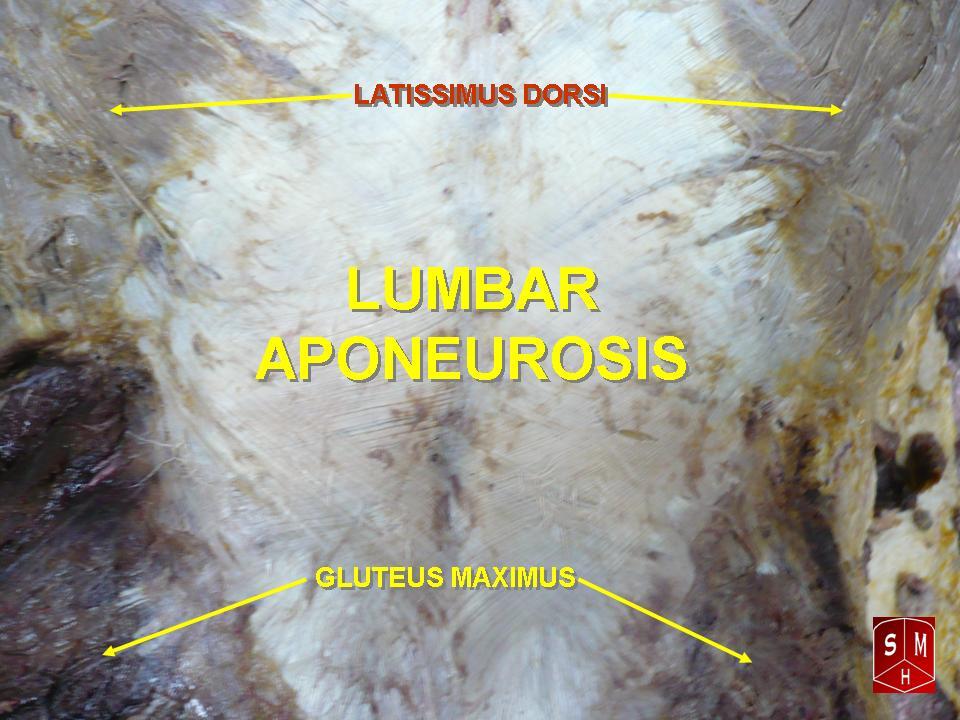
Aponeuroses are pervasive throughout the body. Prominent examples include the galea aponeurotica of the scalp, the thoracolumbar fascia in the back, the aponeuroses of the abdominal wall, and the palmar and plantar aponeuroses in the hands and feet. Injuries to these structures—such as tears, strains, or inflammatory conditions like plantar fasciitis—can be debilitating. The clinical challenges associated with aponeurotic pathologies drive significant innovation in medical technology. From high-resolution diagnostic imaging to robotic-assisted surgical repair and advanced rehabilitation devices, tech solutions are continually being developed to improve diagnosis, treatment, and recovery outcomes. Engineers and medical device manufacturers must deeply understand the biomechanics of aponeuroses to create effective interventions that integrate seamlessly with the body’s natural mechanics.
Aponeuroses in Medical Technology & Diagnostics
The ability to accurately visualize, analyze, and understand the state of aponeurotic tissues is paramount for clinical decision-making and underscores a rapidly evolving frontier in medical technology.
Advanced Imaging Techniques: Visualizing the Unseen
Traditional imaging methods often struggle to resolve the intricate details of aponeuroses due to their dense, fibrous nature. However, advancements in diagnostic technology are overcoming these limitations. High-resolution Ultrasound has become a cornerstone, offering real-time, dynamic assessment of aponeurotic integrity, thickness, and movement during muscle contraction. This non-invasive technique, often coupled with AI-driven image enhancement, allows clinicians to detect subtle tears, inflammatory changes, or calcifications with unprecedented clarity. Magnetic Resonance Imaging (MRI), particularly with advanced sequences like Diffusion Tensor Imaging (DTI) or specialized sequences for connective tissue, provides detailed anatomical and even microstructural information about collagen fiber orientation within aponeuroses. These imaging breakthroughs are not just about seeing better; they are about generating data that can be processed by machine learning algorithms for more precise diagnostic interpretations, identifying patterns indicative of injury or disease earlier and more accurately than human interpretation alone.
AI-Powered Diagnostics and Predictive Analytics
The sheer volume and complexity of data generated by advanced imaging necessitate sophisticated computational tools. Artificial intelligence, particularly deep learning, is revolutionizing how aponeurotic pathologies are diagnosed and managed. AI algorithms are trained on vast datasets of aponeurotic scans (ultrasound, MRI) to identify subtle morphological changes, quantify tissue strain, and even predict the likelihood of injury or the efficacy of various treatments. For instance, AI can assist in automatically segmenting aponeurotic structures, identifying regions of interest, and flagging potential abnormalities that might be missed by the human eye. Furthermore, predictive analytics models are being developed to assess an individual’s risk of developing conditions like plantar fasciitis based on biometric data, activity levels, and aponeurotic characteristics, paving the way for personalized preventative strategies. This fusion of imaging data and AI brings a new level of precision and foresight to musculoskeletal health.

Digital Twins and Personalized Medicine
The concept of a “digital twin” — a virtual replica of a physical system or person — is finding powerful applications in understanding aponeuroses. By integrating patient-specific imaging data, biomechanical parameters, and clinical history, digital twins of aponeurotic systems can be created. These virtual models allow for the simulation of various stresses, movements, and therapeutic interventions in a non-invasive environment. Surgeons can pre-plan complex repairs, assessing the biomechanical impact of different approaches before ever making an incision. For patients, this translates to highly personalized treatment plans, optimized for their unique anatomy and pathology. This paradigm shift, driven by advanced computational modeling and simulation software, promises to enhance surgical outcomes, accelerate rehabilitation, and tailor medical interventions to an unprecedented degree.
Biomechanics, Robotics, and Prosthetics: Engineering Human-Like Systems
The inherent mechanical genius of aponeuroses offers profound lessons for engineers striving to design machines that mimic, augment, or replace biological functions.
Mimicking Natural Movement: The Aponeurotic Blueprint
The sophisticated force transmission and distribution capabilities of aponeuroses serve as an ideal blueprint for biomimetic engineering. Engineers studying these structures gain insights into how to efficiently transfer power, manage stress, and ensure structural integrity in dynamic systems. For example, the broad, multi-directional collagen fibers in certain aponeuroses inspire the design of advanced composite materials used in aerospace or high-performance sports equipment, aiming for lightweight yet incredibly strong and flexible components. In robotics, understanding how aponeuroses help modulate muscle force and provide passive stiffness is crucial for creating more fluid, energy-efficient, and robust movements. Replicating the viscoelastic properties of aponeurotic tissue in synthetic materials can lead to robots that interact with their environment more safely and naturally.
Soft Robotics and Bio-Inspired Design
The field of soft robotics, which focuses on creating robots from compliant materials similar to biological tissues, draws heavily on the principles embodied by aponeuroses. Unlike rigid robots, soft robots can deform, stretch, and twist, making them safer for human interaction and more adaptable to unstructured environments. Aponeuroses, with their blend of flexibility and tensile strength, offer a compelling model for designing robotic actuators and structural components that can transmit force while maintaining deformability. Researchers are exploring how multi-layered “synthetic aponeuroses” could be integrated into soft robotic limbs to provide both structural support and channels for pneumatic or hydraulic actuation, leading to highly articulate and adaptable robotic systems for applications ranging from delicate surgical procedures to exploration in confined spaces.
Enhancing Prosthetic and Exoskeleton Functionality
For individuals with limb loss or mobility impairments, advanced prosthetics and exoskeletons offer a pathway to improved quality of life. The design of these devices is deeply informed by an understanding of human biomechanics, including the role of aponeuroses. Modern prosthetic sockets, for instance, are designed to distribute pressure evenly across residual limbs, mimicking the natural load-bearing function of fascial and aponeurotic layers to prevent discomfort and injury. In actuated prosthetics and exoskeletons, the challenge is to integrate artificial structures that can seamlessly transfer forces and provide feedback, much like natural connective tissues. Bio-inspired designs for artificial tendons and aponeuroses within these devices aim to create systems that not only provide mechanical support but also allow for a more intuitive and natural range of motion, improving both performance and user comfort. Machine learning algorithms are often employed to interpret electromyographic (EMG) signals from residual muscles, using these signals to predict the desired movements and activate prosthetic components in a manner that mirrors the natural synergy between muscle and aponeurosis.
Future Tech Horizons: Regenerative Medicine and Smart Implants
The ongoing exploration of aponeuroses also opens new avenues for future technological breakthroughs, particularly in regenerative medicine and the development of intelligent implantable devices.
Tissue Engineering and Bio-Scaffolds
The field of tissue engineering seeks to repair or replace damaged tissues using biological and synthetic components. For aponeurotic injuries, this involves developing bio-scaffolds that can guide cellular regeneration and restore mechanical integrity. Technologies like 3D bioprinting are being leveraged to create custom scaffolds with precise architectures that mimic the natural collagen organization of aponeuroses. These scaffolds, often seeded with a patient’s own cells, aim to encourage the formation of new, functional aponeurotic tissue, offering a more robust and lasting repair than traditional surgical methods. This technology holds immense promise for chronic conditions and severe injuries that currently have limited treatment options, moving beyond simply patching tissue to truly regenerating it.
Sensor Integration for Real-Time Monitoring
The next generation of medical devices will integrate smart sensors directly into or near aponeurotic tissues for continuous, real-time monitoring. Imagine tiny, biocompatible sensors embedded in a repaired aponeurosis, wirelessly transmitting data on tissue strain, inflammation markers, or healing progress to a smartphone app or clinician’s dashboard. Such technology could provide early warning of re-injury, optimize rehabilitation protocols, and personalize treatment adjustments based on objective, continuous data. These smart implants could leverage nanotechnology and advanced materials science to be minimally invasive, highly durable, and capable of long-term data acquisition, transforming the proactive management of musculoskeletal health.
The Role of Aponeuroses in Rehabilitation Tech
Rehabilitation technology is increasingly sophisticated, and aponeuroses play a key role in its development. Devices ranging from advanced haptic feedback systems that guide therapeutic exercises to wearable sensors that monitor movement quality and load distribution are all designed with an understanding of how forces are transmitted through structures like aponeuroses. Virtual reality (VR) and augmented reality (AR) are also emerging as powerful tools, allowing patients to engage in guided exercises that provide immediate feedback on their movements, ensuring proper biomechanics during recovery from aponeurotic injuries. By integrating real-time feedback loops and personalized exercise regimens based on aponeurotic function, these technologies aim to accelerate recovery, reduce the risk of re-injury, and enhance long-term functional outcomes.
aViewFromTheCave is a participant in the Amazon Services LLC Associates Program, an affiliate advertising program designed to provide a means for sites to earn advertising fees by advertising and linking to Amazon.com. Amazon, the Amazon logo, AmazonSupply, and the AmazonSupply logo are trademarks of Amazon.com, Inc. or its affiliates. As an Amazon Associate we earn affiliate commissions from qualifying purchases.