
While the immediate thought when encountering the title “What is an Acute Isosceles Triangle?” might be confined to a high school geometry classroom, the principles it embodies and the logic it requires have surprising relevance across the domains of technology, branding, and finance. Understanding fundamental concepts, even seemingly simple ones, builds a crucial foundation for dissecting complex systems, devising effective strategies, and making sound financial decisions. In today’s rapidly evolving digital landscape, where innovation is driven by logical frameworks and precise execution, a grasp of basic geometric principles can offer valuable parallels.
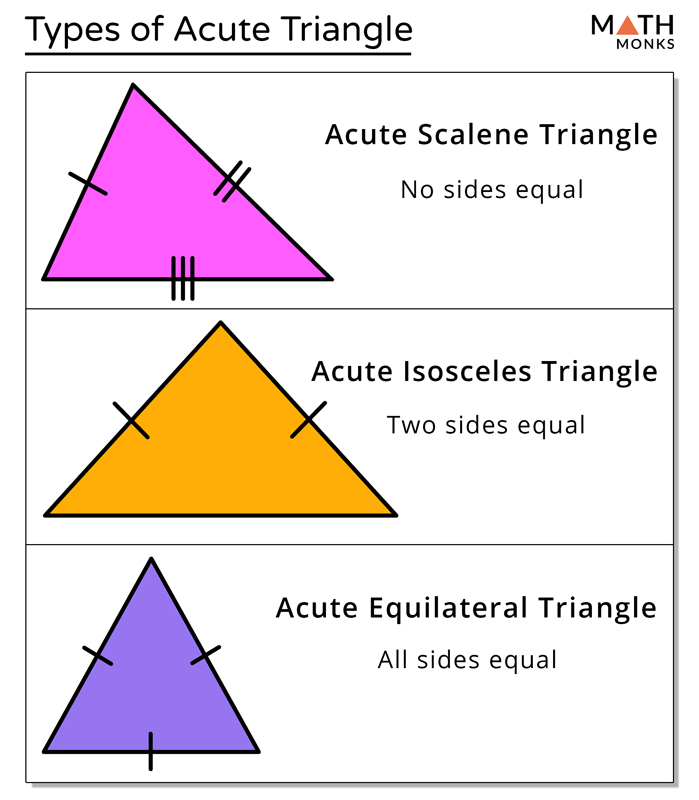
This article will delve into the definition and characteristics of an acute isosceles triangle, but we will also explore how the underlying concepts – classification, properties, and relationships – can be metaphorically applied to the dynamic worlds of tech trends, brand building, and financial planning. We’ll look at how identifying “acute” angles in technological adoption or “isosceles” symmetry in brand messaging can lead to more informed decisions and potentially greater success.
Deconstructing the Geometry: The Anatomy of an Acute Isosceles Triangle
Let’s begin by dissecting the term itself. A triangle, at its core, is a polygon with three edges and three vertices. The nature of these edges and angles dictates the type of triangle it is.
The “Isosceles” Component: Symmetry and Equality
The term “isosceles” originates from Greek, meaning “equal legs.” In the context of a triangle, this translates to having at least two sides of equal length. These two equal sides are often referred to as the “legs” of the triangle. The third side, which is not necessarily equal to the other two, is called the “base.”
The equality of the sides in an isosceles triangle has a direct consequence on its angles. The two angles opposite the equal sides are also equal. These are known as the “base angles.” The third angle, opposite the base, is called the “vertex angle.” This inherent symmetry is a key characteristic and is fundamental to understanding its geometric properties.
Think of this symmetry in a business context. A strong brand often possesses a certain symmetry in its messaging and visual identity. A consistent corporate identity, for instance, is like the equal sides of an isosceles triangle – it creates a predictable and recognizable structure. Similarly, a well-executed marketing campaign often has a symmetrical flow, where different channels and messages reinforce each other, creating a cohesive experience for the consumer.
The “Acute” Component: Angles Less Than Ninety Degrees
The term “acute” refers to the measure of the angles within the triangle. An acute angle is an angle that measures less than 90 degrees. A triangle is classified as an “acute triangle” if all of its interior angles are acute. This means each of the three angles measures between 0 and 90 degrees.
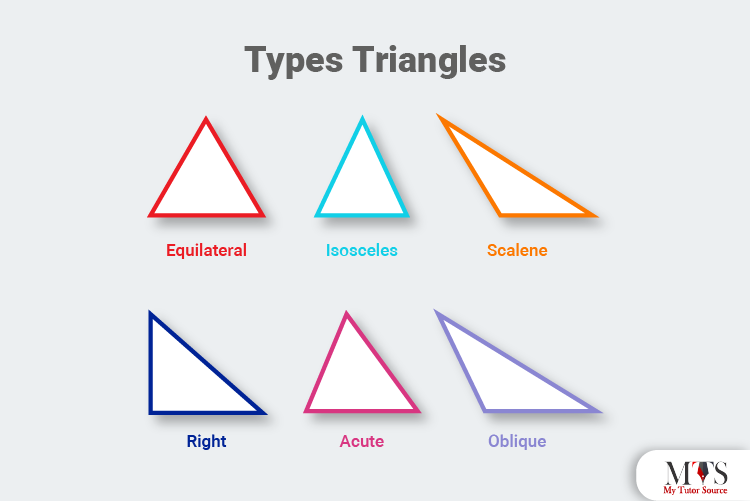
This distinction is important when compared to other triangle classifications:
- Right Triangle: Contains one angle that measures exactly 90 degrees.
- Obtuse Triangle: Contains one angle that measures greater than 90 degrees.
So, an “acute isosceles triangle” is a triangle that possesses both qualities: it has at least two sides of equal length, and all three of its interior angles are less than 90 degrees.
The concept of “acute” angles can also be applied metaphorically. In the tech world, for example, we often talk about “early adopters” and the adoption curve. A technology that is quickly and widely embraced might be considered “acute” in its adoption trajectory. Conversely, a technology that faces significant hurdles or slower integration might not be considered as “acute” in its development or market penetration.
Putting It Together: The Acute Isosceles Triangle in Detail
An acute isosceles triangle, therefore, has the following defining characteristics:
- Two equal sides (legs).
- Two equal angles (base angles).
- All three angles are less than 90 degrees.
The sum of the interior angles of any triangle is always 180 degrees. In an acute isosceles triangle, let the two equal angles be represented by ‘x’ and the vertex angle by ‘y’. We know that:
2x + y = 180°
Since all angles must be acute, this means:
- x < 90°
- y < 90°
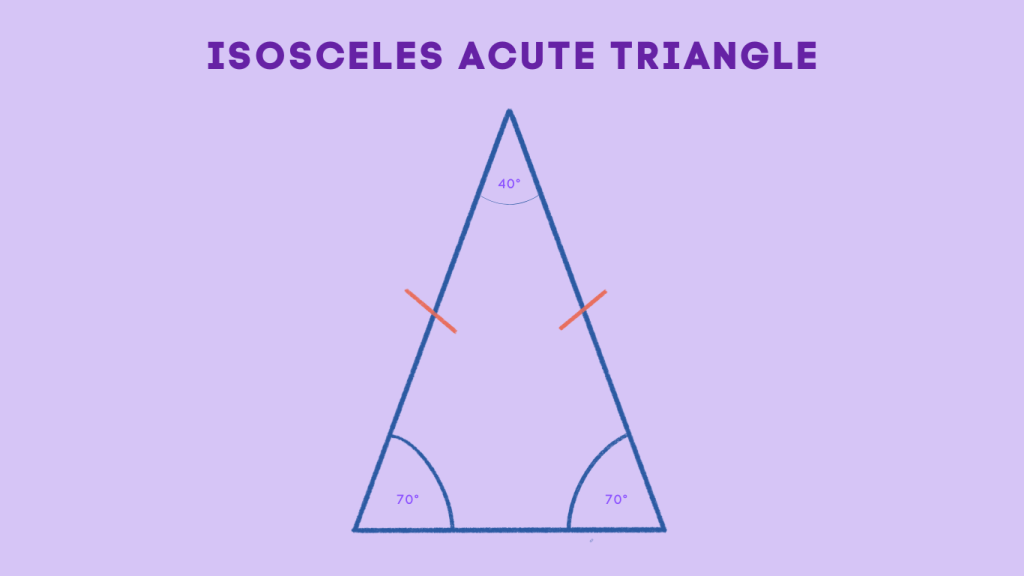
This imposes constraints on the possible values of the angles. For instance, if the vertex angle ‘y’ were 90 degrees, then 2x = 90 degrees, making x = 45 degrees. This would be an acute isosceles right triangle, which is technically possible and still fits the definition. However, if the vertex angle ‘y’ were greater than 90 degrees, it would become an obtuse isosceles triangle. If one of the base angles ‘x’ were 90 degrees, then 2x would be 180 degrees, leaving no room for the vertex angle ‘y’ to be a positive value.
The Value of Precision: Why Distinguishing Triangle Types Matters
Just as precisely defining geometric shapes is crucial for accurate calculations and constructions, understanding the nuances of different triangle types is important for applying the correct theorems and properties. This precision translates directly into our professional lives, especially in fields that rely on data, strategy, and analysis.
In Technology: Identifying Trends and Patterns
The tech world is characterized by its relentless pace and constant evolution. Identifying emerging trends, understanding the adoption lifecycle of new technologies, and predicting future developments all require a keen eye for detail and the ability to categorize.
An “acute” technology might represent a breakthrough that quickly gains traction, its “angles” of adoption sharp and its impact immediate. An “isosceles” aspect in technology could refer to a foundational principle or architecture that is widely adopted and remains a stable, symmetrical element across various applications. For example, the widespread adoption of certain programming paradigms or network protocols creates a kind of “isosceles” foundation upon which newer, more varied technologies are built.
Consider AI tools. The rapid development and widespread adoption of generative AI models illustrate an “acute” technological leap. The underlying principles of neural networks and machine learning, which have been refined over decades, can be seen as an “isosceles” foundation supporting this rapid advancement. Understanding the “angles” of AI development – how fast new capabilities are emerging and how widely they are being integrated – is critical for businesses to remain competitive. This involves discerning if a new AI tool represents a minor incremental improvement (perhaps a small angle) or a fundamental shift (a sharper, more impactful angle).
Furthermore, digital security relies heavily on understanding angles and boundaries. Firewalls and encryption protocols create defined “sides” and “angles” of protection, ensuring that data flows within expected parameters. A breach might be likened to an “obtuse” angle forming where it shouldn’t, allowing unauthorized access.
In Branding: Symmetry, Identity, and Reach
Brand strategy is fundamentally about creating a cohesive and recognizable identity. The concept of isosceles, with its inherent symmetry, is deeply relevant here.
A strong personal brand or corporate identity is like an isosceles triangle – it has a clear, consistent core (the base angles) and a distinct point of focus or mission (the vertex angle). The equal sides represent the consistent messaging, visual identity, and customer experience that a brand delivers across all touchpoints. When a brand’s values are consistently reflected in its products, services, and communication, it creates a sense of reliability and trust, much like the predictable angles of an isosceles triangle.
Consider brand architecture. A company might have a parent brand (the vertex) with several sub-brands (the legs) that are all distinct yet clearly related. This symmetrical structure ensures that customers understand the overarching brand while also appreciating the unique offerings of each sub-brand.
The “acute” nature of branding can refer to the sharpness and impact of a marketing campaign or the speed at which a brand can adapt to market changes. A campaign that captures the zeitgeist and generates immediate buzz is an “acute” success. Conversely, a brand that is slow to react to emerging trends or shifting consumer preferences might be seen as having “obtuse” angles in its strategic planning, leading to missed opportunities.
Understanding the competitive landscape also involves analyzing the “angles” of competitor strategies. Identifying where competitors are strong (“acute” advantages) and where they might be vulnerable (“obtuse” weaknesses) is crucial for developing a winning brand strategy.
In Money: Financial Acumen and Investment Strategies
Personal finance and business finance are intricate systems governed by principles of growth, risk, and return. The geometric analogies, while abstract, can offer valuable perspectives.
When we talk about “acute” financial decisions, we might be referring to timely and advantageous investment opportunities that offer a high potential for return in a short period. For example, investing in a rapidly growing startup or capitalizing on a fleeting market trend could be considered an “acute” financial play. However, such plays often come with higher risk, akin to the sharp angles of an acute triangle.
The “isosceles” nature of financial planning can be seen in the balance and symmetry required for a stable financial future. A well-diversified investment portfolio, for instance, aims for a balance between risk and reward. Savings, investments, and debt management should ideally work in harmony, creating a symmetrical financial structure. A personal financial plan that dedicates equal importance to saving for retirement, managing current expenses, and investing for growth exhibits this kind of financial “isosceles” symmetry.
In business finance, understanding the “angles” of cash flow is paramount. When revenue consistently exceeds expenses, and cash is flowing smoothly, it represents a healthy, perhaps “acute,” financial situation. Conversely, a business struggling with cash flow might be experiencing “obtuse” angles, where liabilities outweigh assets or expenses are unexpectedly high. Financial tools, like spreadsheets and budgeting software, help to map out these angles, ensuring that financial decisions are made with clear understanding.
The concept of financial prudence often involves avoiding “obtuse” risks – those that are obvious but ignored, leading to significant losses. Instead, a focus on “acute” opportunities, carefully assessed and strategically pursued, can lead to greater financial success. This requires a deep understanding of the “angles” of risk and reward, just as a geometer understands the properties of triangles.
Conclusion: Geometry as a Foundation for Modern Success
While the title “What is an Acute Isosceles Triangle?” may seem niche, the underlying principles of classification, precision, and understanding relationships are universally applicable. In the fast-paced realms of technology, branding, and finance, the ability to dissect information, identify key characteristics, and understand the interplay of different elements is paramount.
By recognizing the symmetry in isosceles shapes and the sharpness of acute angles, we can develop more nuanced approaches to innovation, build stronger brands, and make more informed financial decisions. Whether it’s evaluating a new AI tool, crafting a compelling brand narrative, or planning for financial security, a foundational understanding of logical structures and precise definitions provides a valuable framework for navigating the complexities of our modern, interconnected world. The geometrician’s eye for detail and logic is, in essence, a crucial asset for anyone seeking success in the 21st century.
aViewFromTheCave is a participant in the Amazon Services LLC Associates Program, an affiliate advertising program designed to provide a means for sites to earn advertising fees by advertising and linking to Amazon.com. Amazon, the Amazon logo, AmazonSupply, and the AmazonSupply logo are trademarks of Amazon.com, Inc. or its affiliates. As an Amazon Associate we earn affiliate commissions from qualifying purchases.