
An abscess is a localized collection of pus within a tissue, organ, or confined space in the body. Think of it as the body’s immune system creating a defensive barrier around an infection to prevent it from spreading. While the term “abscess” might sound intimidating, understanding what it is, why it forms, and how it’s treated is crucial for recognizing potential health issues and seeking timely medical attention.
Often a visible or palpable lump, an abscess can occur almost anywhere in or on the body. It’s a common response to bacterial infections, but can also be caused by other microorganisms like fungi or parasites. The formation of an abscess is a complex biological process aimed at containing and neutralizing an invading pathogen.

The Body’s Internal Defense Mechanism: How Abscesses Form
When harmful microorganisms invade the body, the immune system springs into action. White blood cells, particularly neutrophils, are dispatched to the site of infection. These cells engulf and destroy the invading pathogens. However, if the infection is particularly virulent or the immune response is overwhelmed, the battle can lead to the formation of pus.
Pus is a thick, yellowish or greenish fluid composed of dead and dying white blood cells, dead tissue, and the microorganisms causing the infection. The body effectively walls off this mixture, creating an abscess. This “sac” or capsule helps to contain the infection, preventing it from spreading throughout the bloodstream and causing a more severe, systemic illness like sepsis.
Stages of Abscess Development: From Initial Infection to Mature Abscess
The development of an abscess typically progresses through several stages. Initially, there’s an infection, where bacteria or other pathogens enter the body. This might occur through a break in the skin, such as a cut or puncture wound, or it can originate internally from an infected organ or structure.
Following the initial infection, the body mounts an inflammatory response. The area becomes red, swollen, warm, and painful – the classic signs of inflammation. This is the immune system gathering its forces.
As the infection continues, pus formation begins. White blood cells are actively fighting the pathogens, and their dead bodies, along with liquefied tissue and bacteria, accumulate.
Finally, the abscess matures. The body forms a fibrous capsule around the collection of pus, effectively isolating it. This capsule is the distinct, often palpable, lump that characterizes an abscess. While the abscess serves a protective function by containing the infection, it also creates a localized environment where bacteria can thrive and multiply, making it difficult for the immune system to eradicate them fully without intervention.
Common Locations and Types of Abscesses: Where They Appear and What They Look Like
Abscesses can manifest in a wide variety of locations, both externally on the skin and internally within the body’s organs and tissues. The appearance and symptoms of an abscess often depend on its location and the type of infection.
Superficial Abscesses: The Visible Signs of Infection
Superficial abscesses are those that form in or under the skin. These are often the most readily noticeable and are typically caused by bacteria, most commonly Staphylococcus aureus.
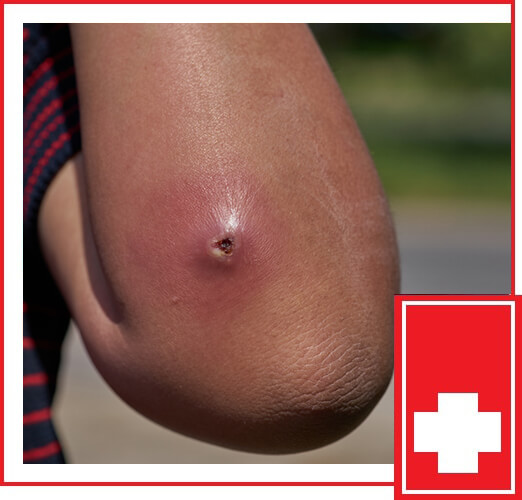
- Boils (Furuncles): These are small, painful, pus-filled bumps that develop around a hair follicle or oil gland. They typically start as a red, tender bump and can grow larger, eventually developing a visible head of pus.
- Carbuncles: A carbuncle is essentially a cluster of interconnected boils. They are larger, deeper, and more painful than a single boil and can be accompanied by fever and chills.
- Skin Abscesses: These are more generalized collections of pus in the skin and subcutaneous tissue, often resulting from a minor injury or an infected ingrown hair. They can vary in size from a small pea to a golf ball or larger.
Deep or Internal Abscesses: The Silent Threats Within
Internal abscesses are more challenging to diagnose as they are not visible externally. They can form in various organs and body cavities, often arising from a pre-existing infection or injury.
- Dental Abscesses: These occur at the root of a tooth or in the gums and are a common complication of tooth decay or gum disease. They can cause severe tooth pain, swelling in the jaw or face, and fever.
- Perianal Abscesses: These form near the anus and can cause intense pain, swelling, and discomfort in the anal region. They are often associated with fissures or other anal conditions.
- Liver Abscesses: These can develop due to bacterial or parasitic infections spreading to the liver. Symptoms can include fever, abdominal pain, jaundice, and chills.
- Brain Abscesses: A serious condition, a brain abscess is a collection of pus within the brain tissue, usually caused by bacterial or fungal infections spreading from other parts of the body. Symptoms can include headache, fever, neurological deficits (like weakness or vision problems), and seizures.
- Appendiceal Abscesses: These can form as a complication of appendicitis, where the appendix becomes inflamed and infected.
- Lung Abscesses: These are pus-filled cavities in the lungs, often resulting from bacterial pneumonia, aspiration of foreign material, or other lung infections. Symptoms may include cough, fever, chest pain, and coughing up bloody or foul-smelling sputum.
The specific appearance of an abscess can also vary. While many are clearly defined and palpable, some can be more diffuse and harder to pinpoint. Internal abscesses, in particular, often require medical imaging techniques to identify and assess their size and location.
Diagnosis and Treatment of Abscesses: When to Seek Medical Help and What to Expect
Recognizing the signs and symptoms of an abscess is the first step towards effective treatment. If you suspect you have an abscess, it’s crucial to seek medical attention from a healthcare professional. Self-treating an abscess can be dangerous and may lead to complications.
Recognizing the Symptoms: What to Look For
The symptoms of an abscess can range from mild to severe and often include:

- Pain: This is usually localized to the affected area and can be throbbing or constant.
- Swelling: The area around the abscess will likely be noticeably swollen.
- Redness: The skin over the abscess may appear red and inflamed.
- Warmth: The affected area may feel warmer to the touch than the surrounding skin.
- Fever and Chills: Especially with larger or deeper abscesses, systemic symptoms like fever and chills can occur.
- Tenderness: The area will be sensitive to touch.
- Fluctuance: A classic sign of a mature abscess is fluctuance, meaning the pus inside can be felt to move or shift under the skin when gently palpated.
For internal abscesses, symptoms will depend on the location. For instance, a dental abscess might cause severe toothache and facial swelling, while a liver abscess could lead to jaundice and abdominal pain.
Medical Intervention: Draining and Antibiotics
The primary treatment for an abscess is drainage. A healthcare professional will make a small incision to allow the pus to drain out. This procedure is often performed under local anesthesia and provides immediate relief from pain and pressure. Draining the abscess removes the source of infection and allows the body to begin healing.
Following drainage, or in cases where drainage is not immediately feasible, antibiotics are often prescribed. Antibiotics help to kill the bacteria that caused the infection and prevent it from spreading. The type of antibiotic will depend on the likely causative organism and the location of the abscess.
Home Care and Prevention: Managing the Aftermath
After an abscess has been drained and treated, proper home care is essential for healing and preventing recurrence.
- Keep the area clean: Gently wash the wound with soap and water.
- Apply warm compresses: Warm compresses can help to promote further drainage and soothe the area.
- Follow your doctor’s instructions: Adhere strictly to the prescribed course of antibiotics and any wound care instructions provided.
- Monitor for signs of infection: Watch for any increase in pain, redness, swelling, or fever, and contact your doctor if these symptoms reappear.
Preventing abscesses involves good hygiene practices and prompt attention to minor injuries. Keeping skin clean, avoiding unnecessary skin punctures, and treating cuts and scrapes properly can significantly reduce the risk of developing superficial abscesses. For internal abscesses, managing underlying health conditions like diabetes or gum disease is crucial.
Beyond the Medical: How the Concept of an “Abscess” Might Resonate in Other Domains
While the primary understanding of an “abscess” is medical, the concept of a localized, contained problem that requires specific intervention can extend metaphorically to other fields, particularly those that the website focuses on: Technology, Brand, and Money.
Tech: Unpacking Software Glitches and Security Vulnerabilities
In the realm of technology, an “abscess” could be likened to a persistent software bug or a deeply embedded security vulnerability. Just as a medical abscess is a localized pocket of infection, a software bug can be a flaw in code that causes a specific, often frustrating, malfunction. If left unaddressed, these bugs can “infect” other parts of the software, leading to wider system instability.
AI tools that exhibit biased outputs or produce inaccurate information could be seen as having an “abscess” in their training data or algorithms. The “pus” in this scenario might be flawed logic or biased information, which, if not identified and “drained” through model refinement or data correction, can lead to the perpetuation of misinformation or unfair outcomes.
Digital security often deals with “abscesses” in the form of malware or network breaches. A successful cyberattack can create a localized “pocket” of compromised data or system control that, if not swiftly contained and eradicated, can spread and cause widespread damage. The “immune system” in this context is the cybersecurity infrastructure, constantly working to identify and neutralize these threats.
Brand: Addressing Reputational Damage and Internal Inconsistencies
In the world of brand strategy and marketing, an “abscess” could represent a significant reputational crisis or an internal inconsistency that undermines a brand’s identity. Similar to a festering infection, a negative public perception or a discrepancy between a brand’s stated values and its actual actions can fester and grow, impacting customer trust and loyalty.
A poorly executed marketing campaign that backfires, or a corporate identity that is out of sync with its target audience, can be viewed as an “abscess” within the brand’s overall structure. It’s a localized issue that, if not addressed surgically through strategic repositioning, transparent communication, and corrective actions, can lead to a systemic decline in brand health. Case studies of brand failures often highlight these “abscesses” that were allowed to fester.
Money: Managing Financial Anomalies and Business Inefficiencies
Within the domain of money, an “abscess” can be interpreted as a persistent financial anomaly, an overlooked business inefficiency, or a specific area of personal finance that is draining resources.
For business finance, a recurring operational leak, an underperforming department, or a poorly managed debt could be considered an “abscess.” These are localized problems that, if not surgically addressed through financial audits, restructuring, or strategic investment, can negatively impact the overall financial health of the company. The goal is to “drain” these inefficiencies and “heal” the financial structure.
In personal finance, an uncontrolled spending habit, an excessive debt burden on a specific loan, or an underperforming investment could be seen as a financial “abscess.” These are specific areas that, if left unchecked, can drain an individual’s resources and prevent them from achieving their financial goals. Utilizing financial tools and seeking advice can be the equivalent of medical intervention to address these issues.
Conclusion: Proactive Identification and Intervention for Optimal Health
Whether in the medical context or metaphorically in technology, brand, or money, the concept of an abscess underscores the importance of proactive identification and timely intervention. An abscess, in its most literal sense, is a signal that something is wrong and needs attention. Ignoring it can lead to more severe complications.
By understanding the formation, symptoms, and treatment of medical abscesses, individuals can be better equipped to seek help when needed. Similarly, by recognizing how the underlying principles of an abscess – a contained problem requiring specific action – can apply to technological, brand, and financial contexts, individuals and organizations can navigate challenges more effectively, ensuring the health and resilience of their endeavors. Just as a physician aims to drain and heal a physical abscess, so too should we strive to address and rectify localized issues in our digital lives, brands, and financial landscapes to foster growth and sustainability.
aViewFromTheCave is a participant in the Amazon Services LLC Associates Program, an affiliate advertising program designed to provide a means for sites to earn advertising fees by advertising and linking to Amazon.com. Amazon, the Amazon logo, AmazonSupply, and the AmazonSupply logo are trademarks of Amazon.com, Inc. or its affiliates. As an Amazon Associate we earn affiliate commissions from qualifying purchases.