
In the intricate tapestry of modern technology, where every component, from the smallest microchip to the largest display panel, plays a critical role, the underlying materials are often unsung heroes. Among these, amorphous solids stand out as a class of materials whose unique properties are not just beneficial, but often indispensable to the gadgets, screens, and systems we interact with daily. Far from the rigid, predictable world of crystals, amorphous solids present a fascinating realm of atomic disorder that paradoxically yields highly ordered and reliable technological performance.
To truly appreciate the pervasive influence of amorphous solids, one must delve into their fundamental nature, understand how they differ from their crystalline counterparts, and explore the myriad ways their distinct characteristics are harnessed across a spectrum of technological applications. This exploration is not merely academic; it is an investigation into the very fabric of innovation, revealing how materials science, specifically the understanding and manipulation of amorphous structures, continues to push the boundaries of what is possible in the tech world.
The Fundamental Nature of Amorphous Solids in Technology
At its core, an amorphous solid is a material that lacks the long-range, periodic atomic arrangement characteristic of crystalline solids. Imagine the difference between a meticulously stacked pile of bricks (crystalline) and a random heap of sand (amorphous). While both are solid, their internal structures are profoundly different. This distinction isn’t just a matter of academic interest; it dictates a material’s physical, electrical, and optical properties, making amorphous solids uniquely suited for certain technological roles.
Beyond Crystalline: Defining Disordered Structures
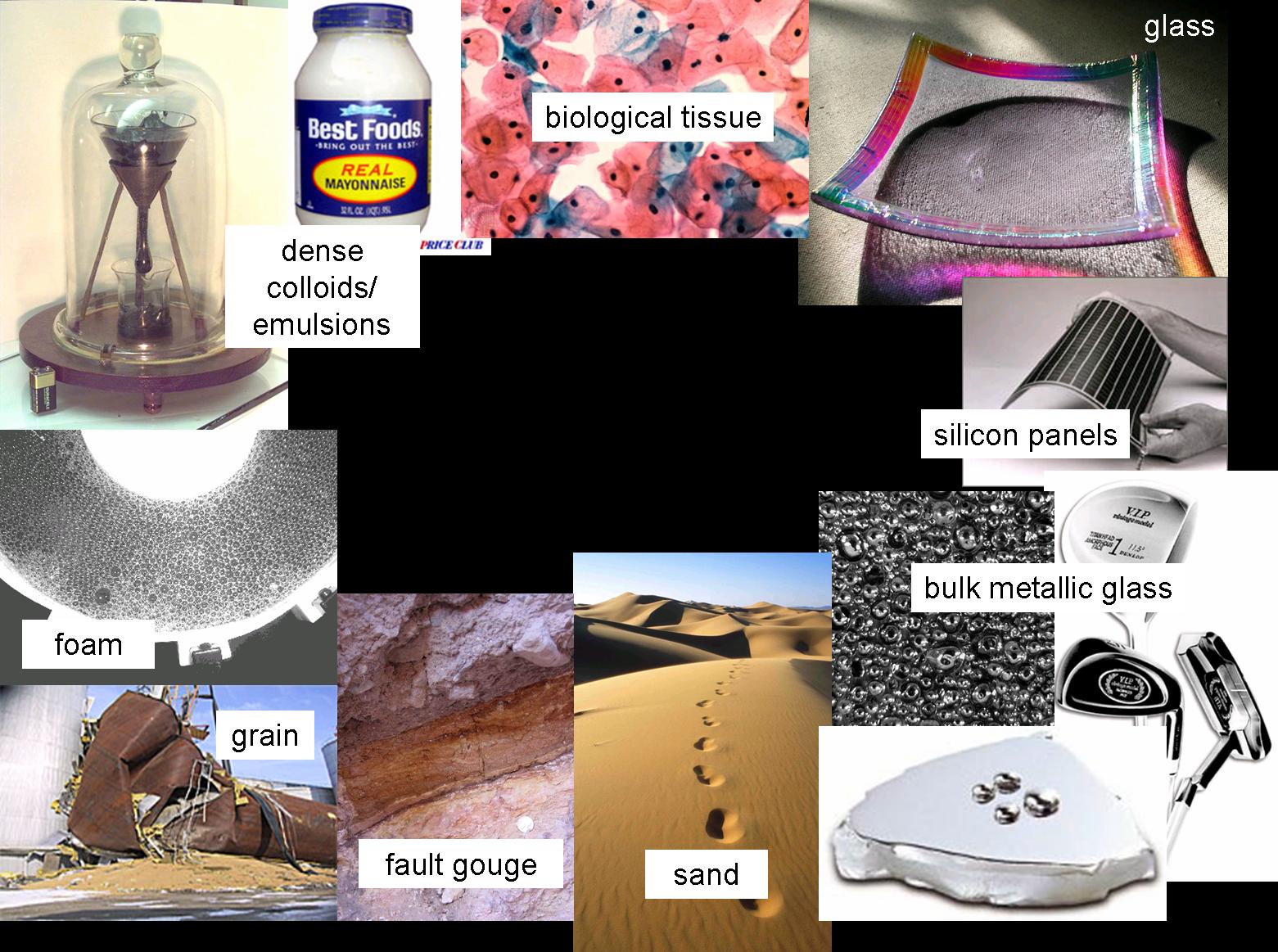
Unlike crystals, where atoms, ions, or molecules are arranged in a highly ordered, repeating lattice extending throughout the material, amorphous solids exhibit only short-range order. This means that while a local grouping of atoms might show some regularity, this pattern does not propagate predictably over larger distances. Think of glass, the quintessential amorphous solid. Its atoms are randomly packed, but with a certain density and local bonding that defines its solid state. This structural disorder is often frozen into the material during rapid cooling from a liquid or vapor phase, preventing atoms from organizing into a crystal lattice. Other common examples include many polymers (plastics, rubber), gels, and some metallic alloys, all of which are critical to various tech sectors. The absence of grain boundaries and defects often found in polycrystalline materials can be a significant advantage, leading to enhanced mechanical or optical properties.
Key Characteristics Shaping Technological Applications
The structural disarray of amorphous solids bestows upon them a distinct set of characteristics that are highly valued in technological applications:
-
Isotropic Properties: Due to their uniform, disordered structure, amorphous materials often exhibit isotropic properties, meaning their physical characteristics (like electrical conductivity, refractive index, or mechanical strength) are the same in all directions. This is a considerable advantage in designing components where directional performance variation could be problematic, such as display screens or optical lenses.
-
Lack of a Sharp Melting Point: Unlike crystalline solids that transition sharply from solid to liquid at a precise melting point, amorphous solids soften gradually over a range of temperatures, becoming increasingly viscous before flowing as a liquid. This “glass transition temperature” is crucial for manufacturing processes like glass blowing, molding plastics, or drawing optical fibers, allowing for flexible shaping and processing.
-
Transparency: Many amorphous solids, particularly glasses, possess excellent optical transparency across various wavelengths due to the absence of crystal grain boundaries and light-scattering defects. This makes them ideal for display technologies, lenses, and optical communication.
-
Tailorable Properties: The absence of a fixed crystal lattice allows for greater flexibility in modifying the material’s composition and processing conditions to fine-tune its properties. This customizability is invaluable for developing materials with specific electrical, thermal, or mechanical attributes for niche tech applications.
-
Low Cost and Scalability: In many cases, amorphous materials can be manufactured using simpler, lower-cost processes (e.g., vapor deposition, melt quenching) compared to the slow and energy-intensive methods required for growing large, high-quality single crystals. This makes them economically viable for mass production of tech gadgets.
Where Amorphous Solids Power Our Digital World
The impact of amorphous solids on technology is ubiquitous, touching nearly every aspect of our digital lives. From the screens we tap to the data we transmit, these materials provide the foundational integrity and performance for countless innovations.
Displays and Optoelectronics: The Glass Revolution
Perhaps the most obvious and impactful application of amorphous solids is in displays. The glass used in smartphone screens, televisions, and computer monitors is a prime example. Its transparency, scratch resistance, and ability to be manufactured into thin, large sheets are directly attributable to its amorphous nature. Furthermore, the active layers within these displays often utilize amorphous semiconductors, such as amorphous silicon (a-Si). Amorphous silicon thin-film transistors (TFTs) are the backbone of active-matrix liquid crystal displays (AMLCDs) and organic light-emitting diode (OLED) screens, providing the necessary switching elements for individual pixels. Without a-Si, the high-resolution, vibrant displays we take for granted would be far more complex and costly to produce.
Beyond displays, optical fibers—the circulatory system of the internet—are typically made of highly purified amorphous silica glass. Their unparalleled transparency and ability to transmit light signals over vast distances with minimal loss are critical to global telecommunications, enabling high-speed data transfer that powers cloud computing, streaming services, and the entire digital economy.
Semiconductors and Memory: Flexible and Next-Gen Devices
While crystalline silicon dominates the semiconductor industry, amorphous semiconductors are carving out their own crucial niche, particularly in applications requiring flexibility, large area coverage, or specific electronic properties. Amorphous silicon, as mentioned, is vital for display backplanes. However, other amorphous oxide semiconductors (AOS), such as indium gallium zinc oxide (IGZO), are gaining traction for next-generation displays and flexible electronics due to their higher electron mobility compared to a-Si, allowing for faster and more power-efficient devices.
Amorphous solids also play a pivotal role in advanced memory technologies. Phase-change memory (PCM), a promising candidate for future non-volatile memory, relies on materials like chalcogenide glasses (e.g., GeSbTe). These materials can rapidly switch between amorphous (high resistance) and crystalline (low resistance) states, encoding data based on their atomic arrangement. This technology offers high speed, high density, and excellent endurance, making it a strong contender for applications in everything from persistent memory for servers to on-device AI accelerators.
Energy Storage and Conversion: Batteries and Solar Cells
In the pursuit of sustainable technology, amorphous solids are making significant contributions to energy solutions. Amorphous silicon is widely used in thin-film solar cells. While less efficient than traditional crystalline silicon cells, they are often cheaper to produce, more flexible, and can be integrated into unconventional surfaces, expanding the potential for solar energy capture.
Moreover, amorphous materials are being investigated for advanced battery technologies. Amorphous solid electrolytes are a key area of research for all-solid-state batteries, promising enhanced safety, higher energy density, and longer cycle life compared to conventional liquid electrolytes. The structural flexibility of amorphous materials can sometimes accommodate the volumetric changes that occur during charging and discharging cycles more effectively, mitigating degradation issues.
The Technological Advantages and Challenges of Amorphous Materials

The adoption of amorphous solids in technology is a testament to their inherent advantages, yet their unique nature also presents specific challenges that engineers and material scientists continuously strive to overcome.
Manufacturing Flexibility and Cost-Effectiveness
The lack of strict crystallographic requirements often simplifies the manufacturing process for amorphous materials. Techniques like sputtering, chemical vapor deposition (CVD), melt spinning, and rapid quenching can produce thin films or bulk materials quickly and at scale. This processing flexibility translates directly into lower manufacturing costs for many components, making advanced technologies more accessible and affordable. For instance, the ability to deposit amorphous silicon over large areas at relatively low temperatures is what makes large-format displays economically viable. Furthermore, the absence of grain boundaries in amorphous films can lead to more uniform device performance, reducing variability in manufacturing.
Tailoring Properties for Specific Tech Needs
The disordered nature of amorphous solids provides a wide canvas for material scientists to fine-tune properties. By varying composition, introducing dopants, or adjusting processing parameters, the electrical, optical, and mechanical characteristics can be precisely engineered. For example, in optical fibers, controlling the concentration of dopants in amorphous silica changes its refractive index, enabling the creation of core-cladding structures that guide light efficiently. In phase-change memory, the specific ratios of germanium, antimony, and tellurium dictate the switching speed and stability. This ability to tailor material properties without being constrained by a rigid crystal structure is a powerful tool for innovation, allowing the development of materials perfectly optimized for specific technological functions, from high-performance transparent conductors to specialized coatings.
Overcoming Instability and Performance Limits
Despite their advantages, amorphous solids do present challenges. Their inherent structural disorder can sometimes lead to thermodynamic instability, meaning they may tend to crystallize over time, especially at elevated temperatures. This can affect long-term device reliability and performance, particularly in high-temperature operating environments or for technologies requiring extreme longevity. For example, stability against crystallization is a critical factor in phase-change memory design.
Another challenge relates to controlling defects. While amorphous materials avoid grain boundary defects, they can still contain intrinsic defects (e.g., dangling bonds in amorphous silicon) that can trap charge carriers, reducing electronic mobility or increasing power consumption. Advanced deposition techniques and post-processing treatments are constantly being developed to mitigate these issues and improve material quality. Furthermore, the intrinsic disorder can sometimes lead to lower carrier mobilities compared to high-quality crystalline semiconductors, limiting their use in ultra-high-speed computing applications.
Emerging Tech Trends Driven by Amorphous Solid Innovation
The story of amorphous solids in technology is far from over; it’s a dynamic field experiencing continuous innovation, particularly as new tech trends emerge.
Wearable Tech and Flexible Electronics
The demand for wearable gadgets, bendable displays, and conformable sensors is pushing the boundaries of material science, and amorphous solids are at the forefront. Their ability to be deposited as thin films on flexible substrates (like plastics) and their inherent resistance to mechanical stress (due to the absence of brittle crystal planes) make them ideal for these applications. Flexible OLEDs, for instance, rely heavily on amorphous oxide semiconductors for their TFT backplanes, enabling devices that can bend, fold, and even stretch without compromising functionality. This opens avenues for smart textiles, rollable screens, and integrated health monitoring systems.
Advanced Sensing and IoT Devices
The Internet of Things (IoT) relies on a vast network of sensors and low-power devices. Amorphous materials are critical for developing next-generation sensors that are compact, energy-efficient, and can be mass-produced. Amorphous oxide semiconductors, for example, are being explored for gas sensors and biosensors due to their sensitivity and compatibility with low-temperature processing. The optical transparency of amorphous glass also makes it vital for optical sensors and lidar systems integral to autonomous vehicles and robotics. New amorphous alloys are also being investigated for their unique magnetic properties, enabling smaller, more efficient inductors and transformers in power electronics.
Towards Sustainable Tech: Recycling and New Composites
As the tech industry grapples with sustainability, amorphous materials offer opportunities. Research into biodegradable amorphous polymers and advanced recycling techniques for amorphous electronic waste is gaining momentum. Furthermore, the development of amorphous metal alloys (metallic glasses) as high-strength, corrosion-resistant, and lightweight alternatives to traditional crystalline metals offers promise for more durable and energy-efficient components in future tech, reducing material consumption and extending product lifecycles.
The Future of Amorphous Solids in Tech: A Frontier of Innovation
The journey of amorphous solids from scientific curiosity to technological cornerstone continues. Their role is set to expand further as computational power and material science techniques advance.
AI-Driven Material Design and Discovery
Artificial intelligence and machine learning are revolutionizing material discovery. By analyzing vast datasets of material properties and structures, AI can predict novel amorphous compositions with desired characteristics, drastically accelerating the R&D cycle. This includes designing new amorphous semiconductors with enhanced mobility, glasses with unprecedented strength, or amorphous coatings with specific functional attributes. This computational approach allows for the exploration of a much larger compositional space than traditional experimental methods, potentially unlocking materials with properties previously thought impossible.

Nanotechnology and Quantum Applications
At the nanoscale, the distinction between amorphous and crystalline can become even more nuanced and powerful. Amorphous nanoparticles and thin films exhibit unique quantum effects that are being explored for advanced computing, spintronics, and quantum sensing. The structural flexibility of amorphous materials also makes them attractive for integrating with emerging quantum technologies, where precise control over atomic arrangement might be too challenging or detrimental. As we push the boundaries of miniaturization and explore new paradigms like neuromorphic computing, the unique “tunable disorder” of amorphous solids may yet reveal entirely new avenues for technological advancement.
In conclusion, amorphous solids are not merely a footnote in materials science; they are fundamental to the existence and advancement of much of modern technology. From the display on your smartphone to the internet cables beneath the oceans, their unique disordered structure provides distinct advantages in manufacturing, performance, and innovation. As we continue to demand more from our gadgets and systems, the exploration and exploitation of amorphous materials will undoubtedly remain a critical frontier in the ever-evolving landscape of technological progress.
aViewFromTheCave is a participant in the Amazon Services LLC Associates Program, an affiliate advertising program designed to provide a means for sites to earn advertising fees by advertising and linking to Amazon.com. Amazon, the Amazon logo, AmazonSupply, and the AmazonSupply logo are trademarks of Amazon.com, Inc. or its affiliates. As an Amazon Associate we earn affiliate commissions from qualifying purchases.