
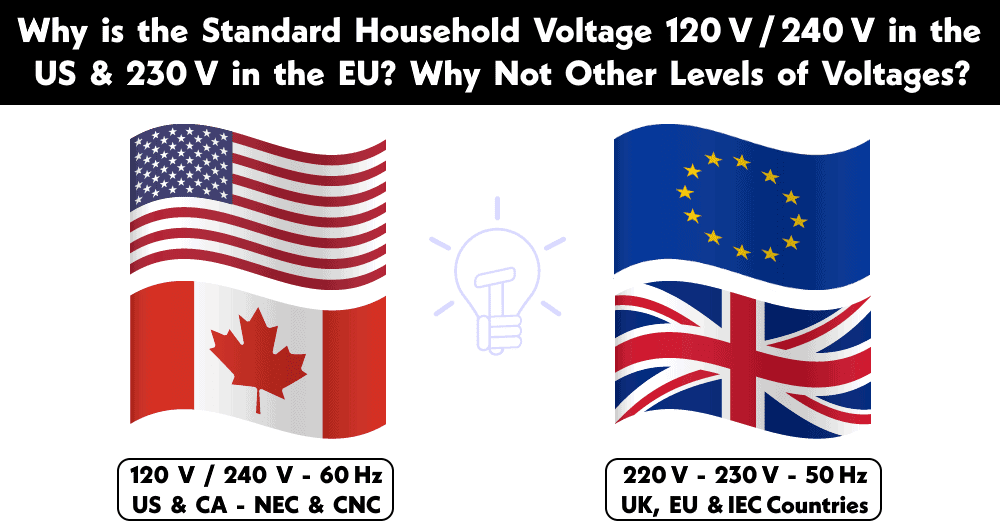
In the realm of global technology and electrical engineering, few things are as fundamental—yet as frequently misunderstood—as the regional standards for power delivery. For anyone operating in the tech space, whether as a hardware developer, an IT professional, or a consumer of high-end electronics, understanding the nuances of “American Voltage” is critical. While much of the world has converged on a 230V/50Hz standard, North America maintains a unique system: 120V at 60Hz.
This article explores the technical foundations of American voltage, the engineering logic behind the 60Hz frequency, and the implications these standards have for modern hardware, digital security, and the future of smart grid technology.
The Engineering Behind the 120V/60Hz Standard
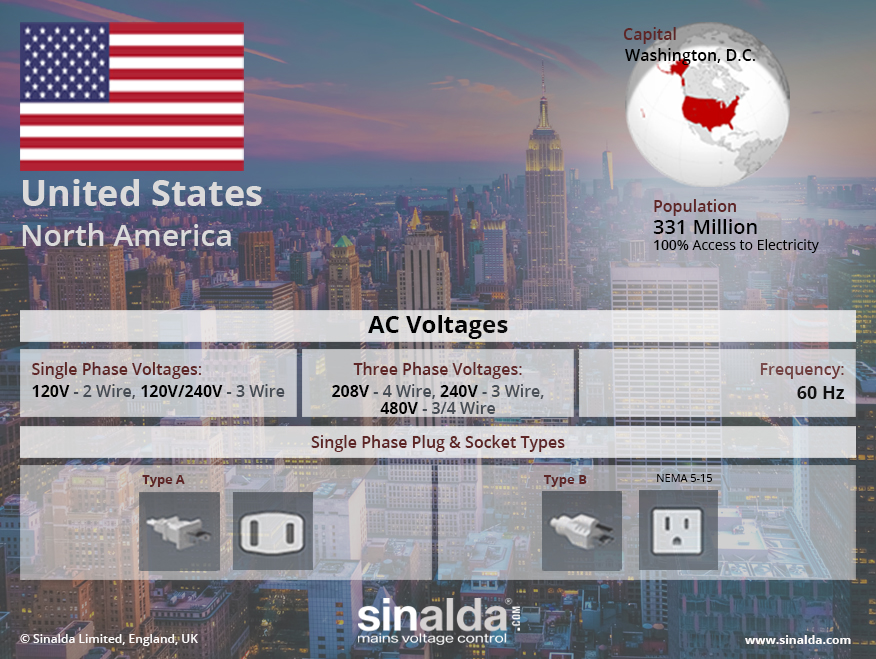
To understand American voltage, one must look at the technical architecture of the North American power grid. The standard residential supply is officially categorized as 120V (though it is often referred to colloquially as 110V or 115V). This voltage operates at a frequency of 60Hz, meaning the current reverses direction 60 times per second.
The War of Currents: Tesla vs. Edison
The origins of American voltage are rooted in the late 19th-century “War of Currents” between Thomas Edison’s Direct Current (DC) and Nikola Tesla’s Alternating Current (AC). Edison’s initial DC systems ran at 110V, a choice influenced by the limitations of early incandescent lamp filaments. When AC eventually triumphed due to its ability to be stepped up to high voltages for long-distance transmission via transformers, the 110V-120V standard was preserved to maintain compatibility with existing light bulb technology.
Tesla’s influence was most felt in the frequency. He determined that 60Hz was the most efficient frequency for AC motors and lighting, as it was high enough to prevent visible flickering in lamps but low enough to minimize reactive power losses in transmission lines.
The Split-Phase Distribution System
Unlike the three-phase systems common in European residential sectors, the North American system utilizes a “split-phase” design. A transformer outside a home typically takes a high-voltage distribution line and steps it down to 240V across two “hot” wires, with a center-tapped neutral wire. This allows a single household to access two different levels of power: 120V for standard electronics (using one hot wire and the neutral) and 240V for high-demand appliances like HVAC systems or EV chargers (using both hot wires).
Technical Implications for Modern Gadgets and Hardware
For the modern tech ecosystem, the primary challenge of American voltage lies in hardware compatibility and power conversion efficiency. The internal components of computers, smartphones, and IoT devices do not run on 120V AC; they require low-voltage DC (usually 3.3V, 5V, or 12V).
Switched-Mode Power Supplies (SMPS)
The bridge between the American wall outlet and a digital device is the Switched-Mode Power Supply (SMPS). Unlike old-fashioned heavy transformers, an SMPS uses high-frequency switching to convert AC to DC with incredible efficiency. Most modern tech hardware features “Universal Voltage” capabilities, labeled as 100V–240V, 50/60Hz. These devices are engineered to detect the input voltage and adjust their switching duty cycle accordingly. However, for devices without universal power supplies—such as certain high-end audio equipment or specialized industrial tools—running a 230V device on American 120V can lead to total malfunction or “brownout” conditions that damage sensitive circuits.
The Role of Transformers and Voltage Converters
In scenarios where hardware is not “dual-voltage,” engineers must employ step-up or step-down transformers. A step-up transformer utilizes electromagnetic induction to increase the 120V American supply to 230V. However, these tools introduce their own technical hurdles, such as heat dissipation and electromagnetic interference (EMI), which can degrade the performance of high-fidelity tech components. Furthermore, a transformer only changes the voltage, not the frequency. Running a 50Hz-rated motor on a 60Hz American line causes the motor to spin 20% faster, potentially leading to mechanical failure.
Smart Grids and the Future of American Voltage Distribution
As we move further into the digital age, the way American voltage is managed is undergoing a massive technological shift. The traditional “analog” grid is being replaced by the Smart Grid, which uses AI and IoT sensors to monitor voltage levels in real-time.
IoT and Real-Time Voltage Monitoring
Voltage is rarely a constant 120V; it fluctuates based on the load. In high-density tech hubs like Silicon Valley or Northern Virginia’s Data Center Alley, even a minor “sag” in voltage can disrupt server operations. Modern smart meters and IoT-enabled circuit breakers now provide granular data to utility providers. These devices use edge computing to analyze “power quality”—measuring total harmonic distortion (THD) and voltage transients. This data allows for “Volt-VAR Optimization,” where software automatically adjusts the voltage across the network to reduce energy waste and improve the lifespan of connected hardware.
Renewable Energy Integration and Voltage Stability
The transition to renewable energy sources like solar and wind introduces new technical challenges for American voltage stability. Solar panels produce DC power, which must be converted to AC via inverters. If thousands of homes in a neighborhood are pushing solar-generated power back into the grid, the local voltage can spike above the 120V threshold. To mitigate this, next-generation “Smart Inverters” are being deployed. These devices use complex algorithms to modulate their output, effectively acting as stabilizers that help the grid maintain its 60Hz heartbeat despite the intermittent nature of green energy.
Safety Standards and Digital Protection Mechanisms
High-tech equipment requires more than just the right voltage; it requires “clean” power. The American electrical landscape is governed by strict technical standards to ensure that voltage delivery does not compromise digital security or hardware integrity.
Grounding Systems and Surge Protection
A critical component of American electrical tech is the three-prong NEMA 5-15 plug. The third prong is the “ground,” a safety path that directs excess current away from the device and into the earth. For data centers and server rooms, grounding is not just a safety feature—it is a digital requirement. Improper grounding can lead to “ground loops,” which introduce electrical noise into data lines, causing bit errors and hardware latency.
Furthermore, because American 120V systems are susceptible to lightning strikes and grid switching transients, surge protection technology is a multi-billion dollar niche within the tech industry. Advanced Metal Oxide Varistors (MOVs) and Gas Discharge Tubes (GDTs) are integrated into high-end PDUs (Power Distribution Units) to clamp excessive voltage before it reaches the delicate silicon of a CPU.
Compliance and Certification (UL and Beyond)
In the United States, the technical viability of any voltage-consuming product is validated by Underwriters Laboratories (UL). A UL certification ensures that a tech product can safely handle the 120V/60Hz environment, including potential “over-voltage” scenarios. For hardware startups and global tech firms, achieving these certifications is a rigorous process involving thermal testing, insulation resistance checks, and fault-simulation. This regulatory framework ensures that as American voltage evolves with the grid, the devices we rely on remain both safe and operational.

Conclusion: The Resilient Standard
While the 120V/60Hz standard was born in an era of vacuum tubes and telegrams, it has proven remarkably resilient in the age of artificial intelligence and cloud computing. The technical sophistication of the North American grid lies not in the raw numbers, but in the layers of technology—from Switched-Mode Power Supplies to AI-driven Smart Grids—that bridge the gap between high-voltage transmission and the micro-voltages required by modern transistors.
Understanding American voltage is more than a lesson in history; it is an essential piece of technical literacy for anyone navigating the global technology landscape. As we look toward a future defined by electric vehicles and decentralized energy, the “American Voltage” standard will continue to be the foundational infrastructure upon which the next generation of digital innovation is built.
aViewFromTheCave is a participant in the Amazon Services LLC Associates Program, an affiliate advertising program designed to provide a means for sites to earn advertising fees by advertising and linking to Amazon.com. Amazon, the Amazon logo, AmazonSupply, and the AmazonSupply logo are trademarks of Amazon.com, Inc. or its affiliates. As an Amazon Associate we earn affiliate commissions from qualifying purchases.