
Amazon Virtual Private Cloud (VPC) stands as a foundational service within the Amazon Web Services (AWS) ecosystem, offering users a deeply customizable and isolated networking environment. At its core, an Amazon VPC is a logically isolated section of the AWS cloud where you can launch AWS resources in a virtual network that you define. Imagine having your own dedicated data center within AWS, complete with your chosen IP address ranges, subnets, route tables, and network gateways. This fundamental isolation and control are what make VPC indispensable for building secure, scalable, and highly available applications in the cloud.
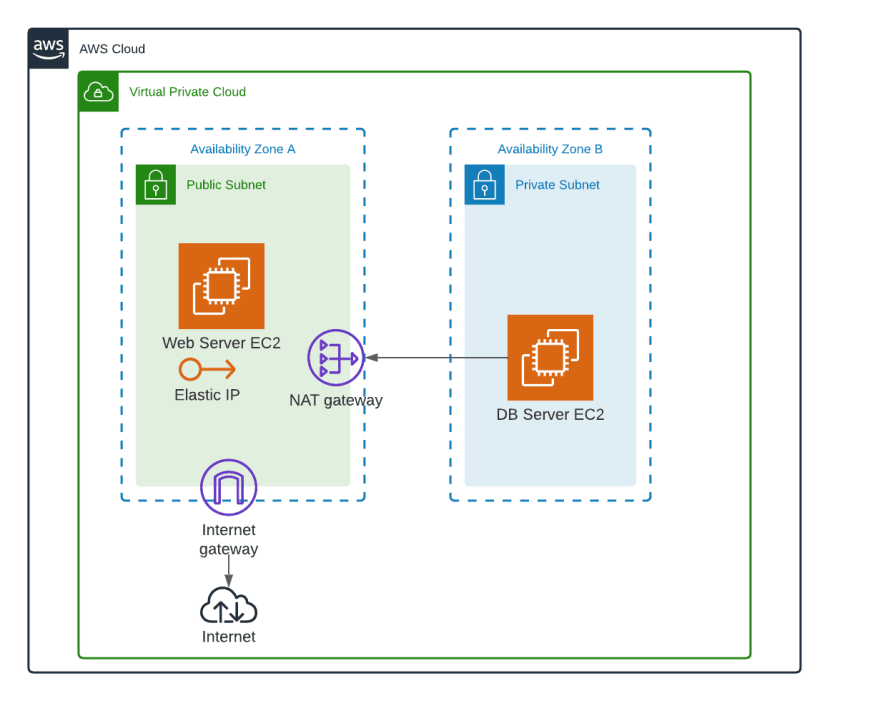
The concept of a VPC emerged from the need for greater control and security in multi-tenant cloud environments. While AWS manages the underlying physical infrastructure, VPC empowers users to sculpt their virtual network topology, mimicking traditional on-premises networks with granular precision. This capability is crucial for organizations that demand strict network segmentation, adherence to compliance standards, or seamless integration with their existing data centers.
Understanding the Fundamentals of Cloud Networking
To grasp the significance of Amazon VPC, it’s essential to understand the paradigm shift from traditional on-premises networking to cloud networking. In a traditional setup, businesses physically own and manage all network hardware, from routers and switches to firewalls and servers. This provides absolute control but comes with significant capital expenditure, maintenance overhead, and scalability challenges.
Cloud computing, conversely, abstracts away much of this physical infrastructure. AWS provides a vast global network infrastructure, and services like EC2 instances, RDS databases, and Lambda functions run within this shared environment. Without VPC, all your resources would exist on a single, flattened network, potentially exposing them to a broader attack surface and making logical separation difficult.
Amazon VPC resolves this by providing a layer of virtual isolation. It carves out a private, software-defined network space exclusively for your AWS account. This means your virtual network is entirely separate from other AWS customers’ networks, even though they might share the same physical hardware. This separation is fundamental to establishing robust security postures and designing complex, multi-tiered application architectures. You gain the benefits of cloud scalability and elasticity while retaining the network control previously associated only with private data centers.
Core Components and How They Work
Building an effective network within a VPC involves understanding its various interconnected components. Each plays a critical role in defining the network’s topology, connectivity, and security.
VPC and Subnets
The VPC itself is the overarching container, defined by a Classless Inter-Domain Routing (CIDR) block (e.g., 10.0.0.0/16). This block dictates the total range of private IP addresses available within your virtual network.
Within a VPC, you segment your network into one or more subnets. A subnet is a range of IP addresses in your VPC, residing within a single Availability Zone (AZ). Dividing a VPC into multiple subnets across different AZs is a cornerstone of building highly available and fault-tolerant applications.
Subnets are typically categorized as:
- Public Subnets: These subnets are configured to allow direct inbound and outbound internet access, typically hosting web servers, load balancers, or other resources that need to be publicly reachable.
- Private Subnets: These subnets restrict direct internet access, making them ideal for sensitive resources like databases, application servers, or internal APIs. They can still initiate outbound connections to the internet (e.g., for updates) via NAT Gateways.
IP Addressing
Resources launched within a VPC use private IP addresses from the VPC’s CIDR block. These addresses are not routable over the internet.
- Public IP Addresses: AWS automatically assigns a public IP address to instances in a public subnet if configured to do so. This address changes if the instance is stopped and started.
- Elastic IP Addresses (EIPs): These are static, public IP addresses that you can allocate to your AWS account and associate with an instance or network interface. EIPs are valuable for resources that require a fixed public IP address for consistent external connectivity, such as a NAT Gateway or an instance that serves as a bastion host.
Route Tables
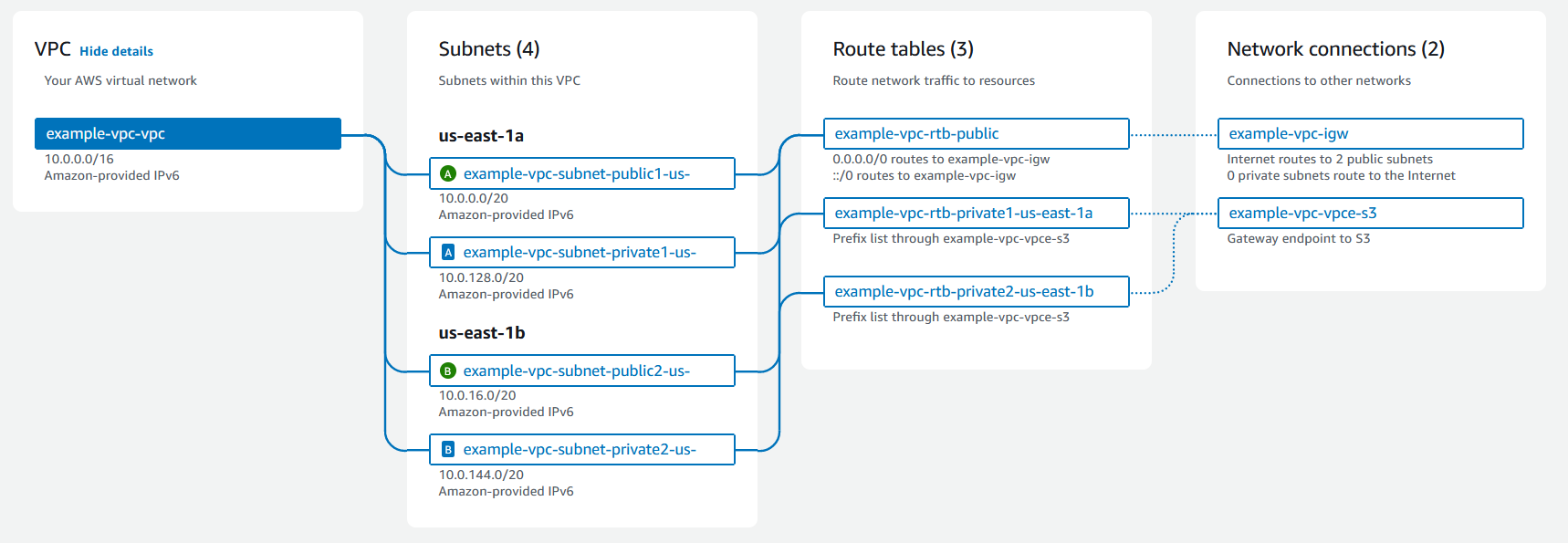
Route tables contain a set of rules, called routes, that determine where network traffic from your subnets is directed. Each subnet in your VPC must be associated with a route table.
- The main route table is automatically created with your VPC.
- You can create custom route tables and associate them with specific subnets to implement distinct routing policies.
- A common route in a public subnet’s route table points all internet-bound traffic (0.0.0.0/0) to an Internet Gateway.
Internet Gateways (IGW)
An Internet Gateway (IGW) is a horizontally scaled, redundant, and highly available VPC component that allows communication between your VPC and the internet. It acts as a target for internet-routable traffic in your route tables and performs Network Address Translation (NAT) for instances that have public IP addresses. Without an IGW attached to your VPC and a corresponding route in a subnet’s route table, resources in that subnet cannot directly access the internet or be accessed from it.
NAT Gateways and NAT Instances
For resources in private subnets that need to initiate outbound connections to the internet (e.g., to download updates, integrate with third-party APIs) but should not be directly accessible from the internet, a NAT Gateway (Network Address Translation Gateway) or a NAT instance is used.
- NAT Gateway: This is an AWS-managed service, offering higher bandwidth, better availability, and less administrative overhead compared to a NAT instance. It resides in a public subnet and uses an Elastic IP address to route traffic from private subnets to the internet.
- NAT Instance: This is an EC2 instance configured to perform NAT. It requires more management and scaling considerations but offers greater control.
DHCP Option Sets
DHCP Option Sets define the domain name, domain name servers, and NTP servers for your VPC. While AWS provides a default set, you can customize these to meet specific requirements, such as integrating with your corporate DNS.
Security Groups and Network ACLs (NACLs)
AWS provides two layers of network security within your VPC:
- Security Groups: These act as virtual firewalls for instances (at the Elastic Network Interface (ENI) level). They are stateful, meaning if you send an outbound request, the inbound response is automatically allowed. Security groups allow you to specify inbound and outbound rules for specific protocols, ports, and source/destination IP addresses or other security groups. They operate at the instance level.
- Network Access Control Lists (NACLs): These are stateless firewalls that operate at the subnet level. NACLs have both
ALLOWandDENYrules, processed in order by rule number. Because they are stateless, if you allow an inbound rule, you must explicitly allow the corresponding outbound rule. NACLs provide a broader, coarser-grained layer of security compared to security groups.
Key Benefits of Utilizing Amazon VPC
The strategic implementation of Amazon VPC yields numerous advantages for organizations leveraging the AWS cloud.
Network Isolation and Enhanced Security
The primary benefit is unparalleled network isolation. Your VPC is a private cloud within the AWS infrastructure, ensuring that your resources are logically separated from other customers. This isolation, combined with granular control over network traffic through security groups and NACLs, significantly reduces the attack surface and helps meet stringent security and compliance requirements (e.g., HIPAA, PCI DSS). You have full command over inbound and outbound traffic, allowing you to create multi-layered defenses.
Customization and Flexibility
Amazon VPC offers an extraordinary degree of customization. You can design your network topology to precisely match your application architecture and operational needs. This includes defining custom IP address ranges, creating public and private subnets, configuring routing policies, and establishing complex network pathways. This flexibility allows for robust network segmentation, separating development, testing, and production environments, or isolating different application tiers within a single environment.
Scalability and High Availability
By distributing subnets across multiple Availability Zones within a region, VPC enables the creation of highly available and fault-tolerant architectures. Should one AZ experience an outage, your application can continue to operate from resources in other AZs. Furthermore, VPC scales effortlessly with your needs, allowing you to expand your IP address space, add more subnets, and accommodate growing traffic demands without re-architecting your entire network.
Hybrid Connectivity
For enterprises with existing on-premises data centers, VPC facilitates seamless hybrid cloud strategies. AWS provides services like AWS Direct Connect and AWS Site-to-Site VPN that enable secure, private connections between your on-premises network and your VPC. This allows for unified network management, data migration, and the extension of corporate networks into the cloud, ensuring consistent security policies and simplified resource access.
Practical Applications and Use Cases
Amazon VPC is the bedrock for virtually every significant workload deployed on AWS. Its versatility makes it suitable for a wide array of practical applications.
Hosting Multi-Tier Web Applications
A classic use case involves deploying multi-tier web applications. Typically, web servers and load balancers reside in public subnets, allowing internet users to access them. Application servers and databases, which contain sensitive data, are placed in private subnets, completely shielded from direct internet exposure. Communication between these tiers is carefully controlled through security groups, ensuring that only necessary traffic flows between them. NAT Gateways enable private resources to fetch updates or connect to external services while maintaining their isolation.
Secure Backend Services and Data Lakes
Organizations often use VPCs to host secure backend services, internal APIs, data processing pipelines, and large-scale data lakes. These environments demand stringent security, and a private VPC provides the necessary isolation. Access can be restricted to specific IP ranges or through secure VPN connections from corporate networks, ensuring that sensitive data and internal applications are protected from unauthorized access.
Development, Testing, and Staging Environments
VPCs are ideal for creating isolated development, testing, and staging environments. Each environment can have its own VPC, preventing accidental interference or data leakage between them. This isolation ensures that changes made in development do not impact production and provides a consistent testing ground that closely mirrors the production setup without sharing network resources.
Disaster Recovery and Business Continuity
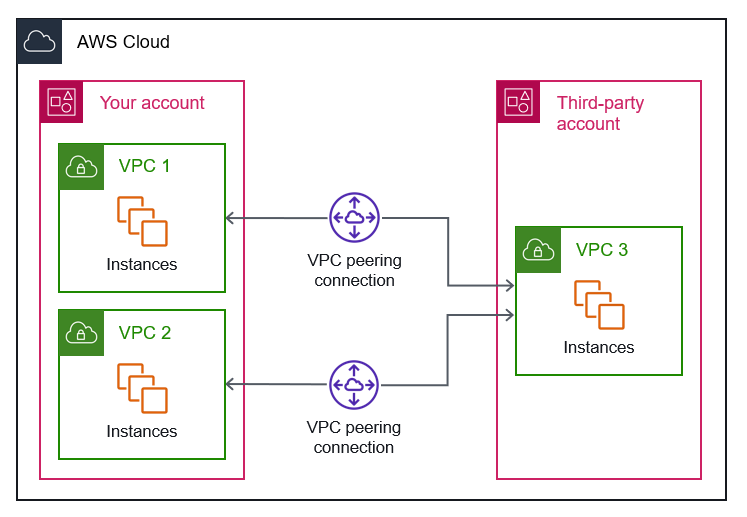
For robust disaster recovery strategies, organizations often replicate their entire VPC infrastructure, including compute, storage, and networking configurations, in a separate AWS region or Availability Zone. If a primary region fails, resources in the disaster recovery VPC can be activated, ensuring business continuity with minimal downtime. VPC peering can also be used to connect VPCs across regions or accounts for data replication and cross-region connectivity.
Configuring and Managing Your VPC Environment
Managing a VPC involves careful planning and continuous monitoring. When initially setting up a VPC, meticulous consideration of IP addressing schemes, subnetting strategies, and routing policies is paramount to avoid future network complexities. Tools like the AWS Management Console, AWS Command Line Interface (CLI), AWS SDKs, and infrastructure-as-code services like AWS CloudFormation are used to provision and manage VPC resources.
Monitoring network activity within your VPC is critical for security and troubleshooting. VPC Flow Logs capture information about the IP traffic going to and from network interfaces in your VPC. These logs can be published to Amazon CloudWatch Logs or Amazon S3, providing invaluable data for identifying anomalous traffic patterns, diagnosing connectivity issues, and ensuring compliance.
In conclusion, Amazon VPC is more than just a network service; it’s the secure canvas upon which modern cloud architectures are painted. By providing a logically isolated, highly customizable, and robust networking environment, it empowers businesses to build secure, scalable, and resilient applications that meet the most demanding technical and regulatory requirements in the cloud. Understanding its components and benefits is essential for any technical professional working with AWS.
aViewFromTheCave is a participant in the Amazon Services LLC Associates Program, an affiliate advertising program designed to provide a means for sites to earn advertising fees by advertising and linking to Amazon.com. Amazon, the Amazon logo, AmazonSupply, and the AmazonSupply logo are trademarks of Amazon.com, Inc. or its affiliates. As an Amazon Associate we earn affiliate commissions from qualifying purchases.