
In the dynamic world of technology, where data reigns supreme, the ability to efficiently display, manage, and interact with large datasets is paramount. Whether you’re a developer building complex business applications, a data analyst sifting through market trends, or a project manager tracking crucial metrics, the way data is presented can make or break user experience and operational effectiveness. This is where specialized tools come into play, and among them, AG Grid stands out as a leading contender in the realm of enterprise-grade data tables.
But what exactly is AG Grid, and why has it become such a vital component for so many businesses and developers? This article will dive deep into the essence of AG Grid, exploring its core functionalities, its technological underpinnings, and its significant impact across various domains, from tech development to brand perception and even financial management.
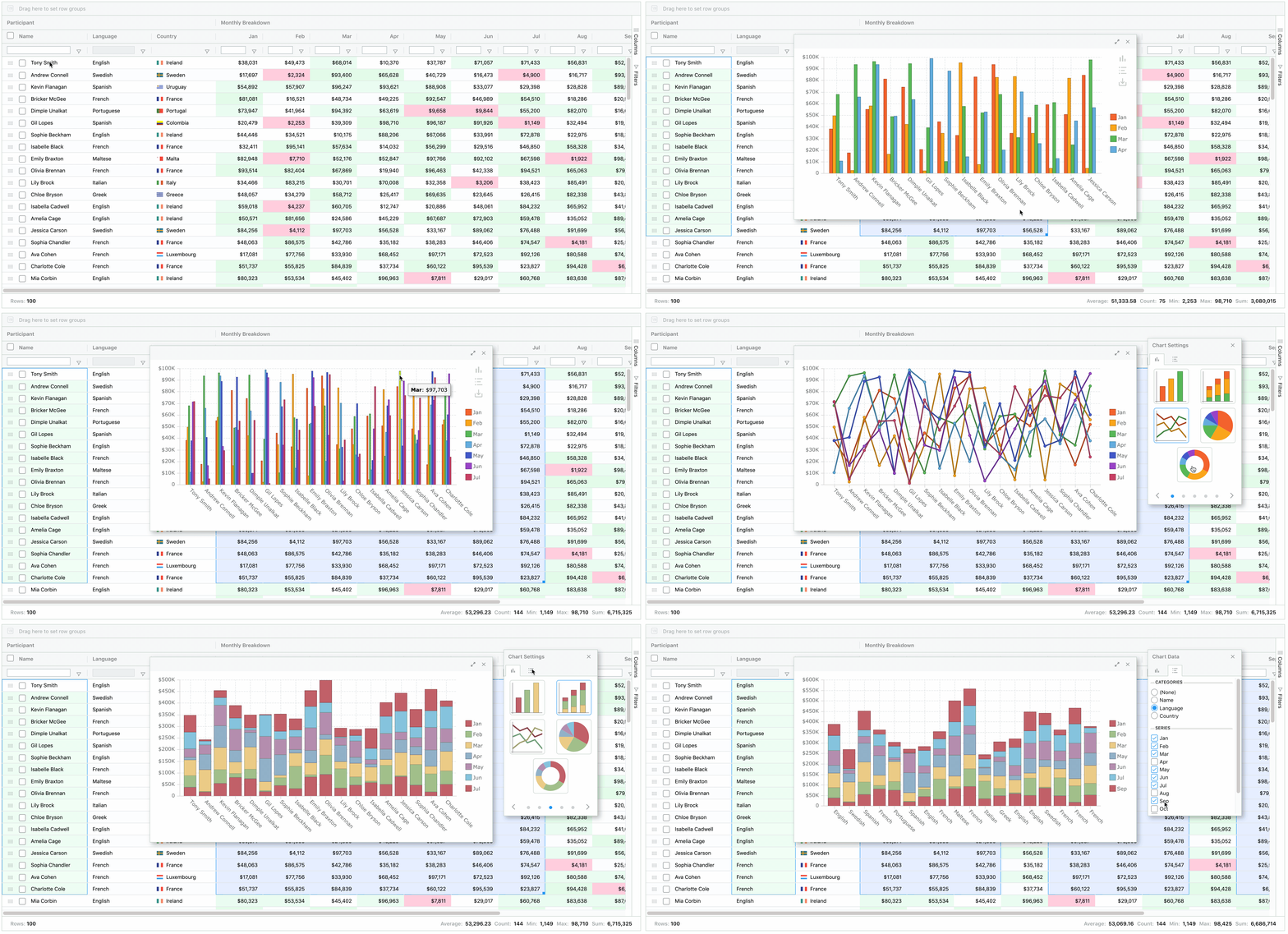
AG Grid: The Foundation of Powerful Data Interfaces
At its heart, AG Grid is a feature-rich, JavaScript-based data grid component designed for building sophisticated user interfaces that handle tabular data. Think of it as the ultimate toolkit for developers looking to create web applications that display, sort, filter, group, and edit vast amounts of information with speed and agility. It’s not just a simple table; it’s a highly customizable and performant engine that powers critical functionalities in enterprise software.
The Core of AG Grid: Performance and Functionality
The primary driver behind AG Grid’s popularity is its unwavering focus on performance and an extensive feature set. In the world of web development, especially when dealing with potentially millions of rows, performance isn’t just a nice-to-have; it’s a fundamental requirement. AG Grid tackles this head-on with techniques like virtualization, which means it only renders the rows and columns that are currently visible on the screen. This drastically reduces the DOM (Document Object Model) complexity, leading to lightning-fast load times and smooth scrolling, even with enormous datasets.
Beyond raw speed, AG Grid offers a breathtaking array of features that empower developers to build highly interactive and functional data displays:
- Sorting and Filtering: Essential for any data table, AG Grid provides intuitive and powerful sorting and filtering options. Users can easily sort columns alphabetically, numerically, or by date, and apply complex filters with multiple criteria, ensuring they can pinpoint the exact data they need.
- Row Grouping and Aggregation: For analytical purposes, the ability to group rows based on common values and then aggregate the data within those groups (e.g., summing sales per region) is invaluable. AG Grid makes this a seamless experience for users.
- Editing Capabilities: AG Grid supports inline editing, allowing users to directly modify data within the grid. This can be configured with various cell editors for different data types, enhancing productivity and reducing the need for separate forms.
- Column Management: Users can resize, reorder, and pin columns, tailoring the view to their specific needs. Developers can also define column properties, including data formatting, cell renderers, and editors.
- Data Export: The ability to export data in various formats like CSV, Excel, and even PDF is crucial for reporting and further analysis. AG Grid offers robust export functionalities.
- Master-Detail View: For hierarchical data, AG Grid’s master-detail feature allows users to expand a row to reveal more detailed information in a sub-grid, providing a comprehensive view without clutter.
- Server-Side Operations: To handle extremely large datasets that cannot be loaded into the browser all at once, AG Grid supports server-side operations for sorting, filtering, grouping, and pagination. This ensures that even the most massive datasets can be managed effectively.
- Customization and Theming: AG Grid is highly customizable, allowing developers to tailor its appearance and behavior to match their brand’s identity. This includes extensive theming options and the ability to create custom cell renderers and editors.
This comprehensive feature set makes AG Grid a go-to solution for applications requiring robust data handling, from financial trading platforms and inventory management systems to customer relationship management (CRM) tools and scientific data visualization dashboards.
The Technological Pillars of AG Grid
AG Grid is built on a solid foundation of modern web technologies, prioritizing flexibility and developer experience.
Framework Agnosticism and Integration
One of AG Grid’s most significant strengths is its framework agnosticism. While it can be used with plain JavaScript, it also offers seamless integration with popular front-end frameworks like:
- React: AG Grid provides dedicated React components, making integration straightforward for React developers.
- Angular: Similar to React, there are Angular modules and components for easy implementation.
- Vue.js: AG Grid offers a Vue.js wrapper, ensuring a smooth developer experience for Vue projects.
This flexibility means that AG Grid can be adopted into a wide range of existing projects and development stacks without requiring a complete overhaul of the technology choices. This is a critical factor for businesses looking to enhance their current applications without significant disruption.
The Power of Web Components
Under the hood, AG Grid leverages the power of Web Components. This standardized approach to creating reusable custom HTML elements allows AG Grid to function independently of any specific framework, enhancing its interoperability and long-term maintainability. Developers can confidently integrate AG Grid, knowing it’s built on a future-proof technology.
Enterprise-Grade Features and Support
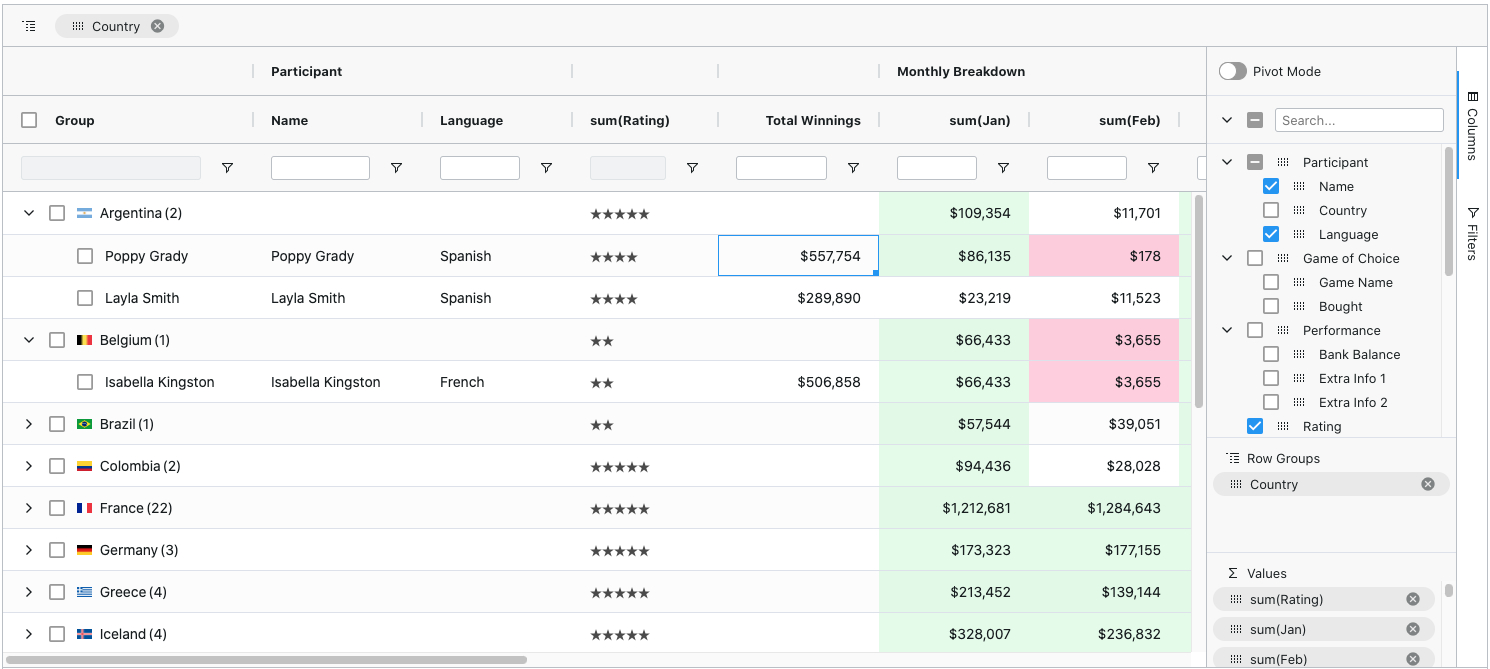
AG Grid is available in two main editions: Community and Enterprise.
- AG Grid Community: This free, open-source version provides a substantial set of core features, making it an excellent choice for many projects.
- AG Grid Enterprise: This paid version unlocks advanced features essential for complex business applications. These include features like Server-Side Row Model (SSRM) for massive datasets, Row Grouping with aggregation, Master/Detail, and advanced charting capabilities. The Enterprise edition also comes with dedicated support, which is invaluable for mission-critical applications where downtime is not an option.
This tiered approach allows businesses to start with the free version and scale up to the Enterprise edition as their needs evolve, providing a cost-effective and adaptable solution.
AG Grid’s Impact Across Domains
The utility of AG Grid extends far beyond just the technical implementation. Its capabilities have a tangible impact on various aspects of a business, including its brand perception, operational efficiency, and even its financial outcomes.
Boosting Tech Innovation and User Experience
For the Tech sector, AG Grid is a game-changer. Developers can now build data-intensive applications that were previously cumbersome or impossible to create efficiently.
- AI Tools and Applications: As AI models generate increasingly large datasets for training and analysis, AG Grid provides the interface to explore and understand these outputs. Developers building AI platforms can offer users intuitive ways to visualize and interact with AI-generated data.
- Software Development: Any business application that involves managing lists, tables, or complex data structures benefits immensely from AG Grid. This includes ERP systems, CRMs, project management tools, and more. The ability to create performant and feature-rich interfaces directly translates to better software products.
- Productivity and Digital Security: Imagine a cybersecurity dashboard that needs to display millions of threat events in real-time. AG Grid can handle this, allowing security analysts to quickly identify patterns, filter out noise, and respond effectively. Similarly, productivity apps that manage tasks, calendars, or resources can leverage AG Grid for a superior user experience.
By enabling developers to create visually appealing, highly interactive, and exceptionally fast data interfaces, AG Grid directly contributes to enhanced user experience, which in turn drives adoption and customer satisfaction for software products.
Shaping Brand Identity and Trust
The Brand aspect of AG Grid’s influence is subtle but significant. The quality and professionalism of a web application’s interface directly reflect on the brand it represents.
- Corporate Identity and Design: A clunky, slow, or feature-lacking data table can detract from even the most well-designed corporate identity. AG Grid, with its extensive theming and customization options, allows businesses to create data interfaces that are not only functional but also aesthetically aligned with their brand guidelines. This consistency reinforces brand recognition and professionalism.
- Case Studies and Reputation: Companies that leverage AG Grid often showcase their advanced data capabilities in their case studies. Demonstrating a sophisticated and user-friendly way to handle client data or complex project information can enhance their reputation as technologically advanced and customer-centric organizations. A smooth data experience builds trust.
- Marketing and Customer Engagement: For businesses that offer data-driven insights as part of their service, the clarity and interactivity of these insights are crucial. AG Grid can power dashboards that clients interact with, making complex data digestible and actionable. This can lead to increased customer engagement and loyalty.
Ultimately, a polished and performant data presentation, facilitated by tools like AG Grid, contributes to a positive brand image, fostering trust and demonstrating a commitment to quality.
Driving Financial Efficiency and Insight
The impact of AG Grid on Money matters is multifaceted, affecting both personal and business finance.
- Personal Finance and Investing: Individuals managing their investments often deal with large volumes of stock data, portfolio performance, and market trends. A well-designed grid can make tracking these crucial financial metrics easier, aiding in informed investment decisions.
- Online Income and Side Hustles: For those running online businesses or managing multiple income streams, tracking revenue, expenses, and sales data is vital. AG Grid can power dashboards that provide real-time insights into financial performance, helping entrepreneurs optimize their strategies.
- Business Finance and Financial Tools: This is where AG Grid truly shines in the financial domain. Businesses rely heavily on accurate and accessible financial data. AG Grid can be the backbone of:
- Financial Reporting Tools: Generating detailed financial reports with drill-down capabilities.
- Budgeting and Forecasting Software: Allowing finance teams to manipulate and analyze budgets efficiently.
- Trading Platforms: Displaying real-time market data, order books, and trade histories with extreme speed and precision.
- Inventory and Supply Chain Management: Tracking vast amounts of stock, order fulfillment, and cost data to optimize logistics and reduce waste.
By enabling businesses to visualize and interact with their financial data more effectively, AG Grid contributes to better decision-making, improved operational efficiency, and ultimately, enhanced profitability. The ability to quickly identify cost-saving opportunities or revenue-generating trends can have a direct and positive impact on a company’s bottom line.

Conclusion: AG Grid – More Than Just a Table
In conclusion, “What is AG Grid?” is a question that leads to a much broader understanding of modern web application development and its impact. AG Grid is not merely a technical component; it’s a strategic enabler. It empowers developers to build robust, high-performance data interfaces that are essential for businesses operating in today’s data-driven world.
From accelerating technological innovation and enhancing user experiences to solidifying brand identity and driving financial efficiency, AG Grid’s influence is profound and far-reaching. Whether you’re a software engineer looking to build the next generation of enterprise applications, a business leader aiming to leverage data for competitive advantage, or an individual seeking to better understand and manage your own financial landscape, the power of an intelligent, efficient, and feature-rich data grid like AG Grid is undeniable. It’s a testament to how specialized tools can democratize complex data interactions and unlock new possibilities across the spectrum of technology, brand, and finance.
aViewFromTheCave is a participant in the Amazon Services LLC Associates Program, an affiliate advertising program designed to provide a means for sites to earn advertising fees by advertising and linking to Amazon.com. Amazon, the Amazon logo, AmazonSupply, and the AmazonSupply logo are trademarks of Amazon.com, Inc. or its affiliates. As an Amazon Associate we earn affiliate commissions from qualifying purchases.