
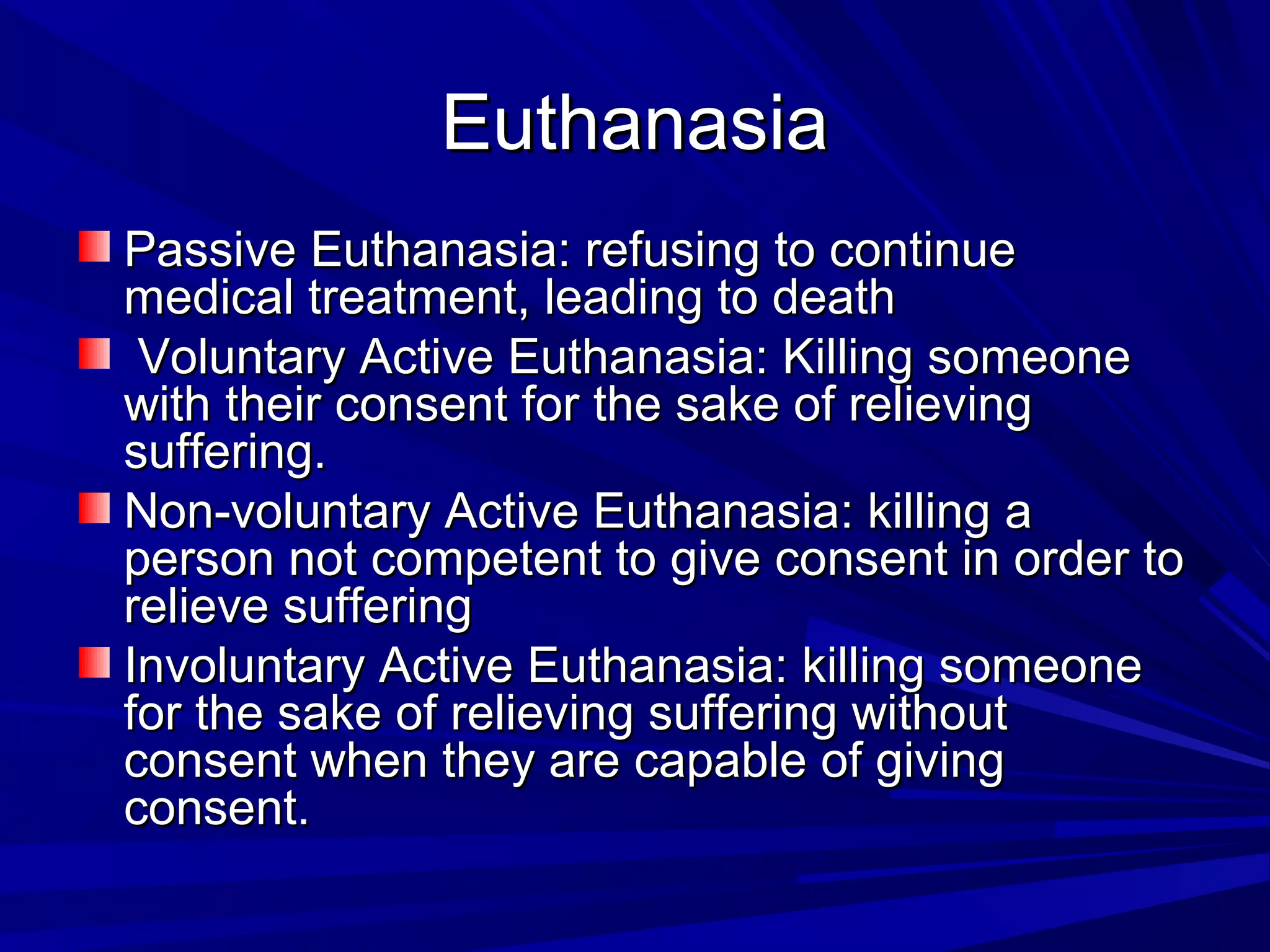
The intersection of medical ethics and personal finance is perhaps nowhere more poignant or complex than in the discussion of active euthanasia. While the term is traditionally debated within the halls of philosophy and medicine, it has increasingly become a focal point for financial planners, estate attorneys, and economists. Active euthanasia—the deliberate act of a medical professional administering a lethal substance to a patient to end suffering—carries profound implications for the global “death care” economy and individual wealth management.
In the world of personal finance and investment, active euthanasia represents a shift in how we approach the “final quarter” of a financial lifecycle. It challenges traditional insurance models, alters estate preservation strategies, and creates a unique niche in the burgeoning “Death-Tech” and healthcare investment sectors. Understanding the financial mechanics of this practice is essential for high-net-worth individuals and financial strategists navigating the legal landscapes of various jurisdictions.

The Economic Logic of End-of-Life Choices
From a strictly economic perspective, the final months of life are often the most expensive. In many developed nations, a significant portion of a person’s lifetime healthcare spending occurs in the last six months of their existence. Active euthanasia, where legal and chosen, fundamentally alters this expenditure curve, presenting a shift in how generational wealth is preserved or dissipated.
Cost-Benefit Analysis in Long-Term Care
The financial burden of chronic, terminal illness can be catastrophic for family estates. Long-term care facilities, specialized nursing, and palliative treatments can cost upwards of $10,000 to $20,000 per month. For many families, these costs are not merely a drain on liquid assets but a systemic liquidation of a lifetime of savings and investments.
When a patient opts for active euthanasia, the “burn rate” of their capital is halted. From a financial management standpoint, this allows for a predictable cessation of liabilities. This is not to suggest that the decision is ever purely financial, but the economic relief provided to the surviving beneficiaries is a measurable variable in the wealth transfer equation.
Impact on Estate Preservation
Estate preservation is the cornerstone of legacy planning. The primary “enemy” of a robust estate is the depletion of assets via medical debt. Active euthanasia allows individuals to exercise a form of “strategic exit” from their financial lives. By choosing a specific timeline, individuals can ensure that their remaining assets are distributed to heirs or charitable causes according to a fixed plan, rather than being eroded by unpredictable and often futile medical interventions. This degree of predictability is highly valued in sophisticated financial planning, as it mitigates the risk of an estate falling into insolvency before the passing of the benefactor.
Insurance and Legal Financial Frameworks
The relationship between life insurance and active euthanasia is one of the most technical areas of modern personal finance. Historically, insurance companies viewed any form of self-shortened life as “suicide,” which often triggered exclusion clauses, rendering the policy void. However, as active euthanasia (often legally categorized under Medical Aid in Dying or MAID) becomes legalized in more jurisdictions, the insurance industry has been forced to adapt.
Life Insurance Implications and Clauses
In jurisdictions where active euthanasia is legal, such as the Netherlands, Belgium, or Canada, many life insurance providers have updated their policies to distinguish between “suicide” and “medical aid in dying.” In many cases, if the procedure is performed following all legal protocols, it is treated as a natural death from the underlying terminal illness.
For the policyholder, this means the death benefit remains intact for their beneficiaries. From an investment perspective, this ensures that the “return on investment” of years of premium payments is realized. However, investors and policyholders must remain vigilant about the “contestability period” and specific jurisdictional language that might allow an insurer to deny a claim.
The Role of Medico-Legal Financial Advisors
A new class of financial professionals is emerging: the medico-legal financial advisor. These specialists work at the intersection of healthcare directives and wealth management. Their role is to audit a client’s financial portfolio to ensure that a choice for active euthanasia does not trigger unintended tax consequences or beneficiary disqualifications. They analyze how the timing of death impacts capital gains taxes, the step-up in basis for inherited assets, and the mandatory distributions of retirement accounts.
Active Euthanasia as a Business Sector: The Rise of “Death-Tech” FinTech
The legalization of active euthanasia in various parts of the world has birthed a specialized economy. This isn’t just about the medical procedure itself; it’s about the infrastructure, digital tools, and service industries that support a planned end-of-life. Investors are beginning to eye this sector as part of a broader “silver economy” investment strategy.
Investment Trends in Assisted Dying Services
In countries like Switzerland, organizations providing assisted dying services operate under specific economic models. While many are non-profits, the surrounding support ecosystem—travel agencies specializing in “death tourism,” specialized legal firms, and private clinics—represents a growing market. For investors, this niche offers a low-correlation asset class. The demand for these services is largely independent of market cycles, driven instead by demographic shifts and legislative changes.
Global Market Disruption in the Funeral and Care Industries
The traditional funeral industry, valued at billions of dollars globally, is facing disruption. Active euthanasia often coincides with a preference for non-traditional end-of-life celebrations and “green burials.” Furthermore, the hospice and palliative care industry—a major sector for healthcare real estate investment trusts (REITs)—must adjust its business models. If a significant percentage of terminal patients choose to shorten their care duration, the occupancy rates and revenue-per-patient metrics for long-term care facilities will require radical recalibration.
Strategic Financial Planning for a Dignified Exit
For the individual investor or the family patriarch/matriarch, the concept of active euthanasia must be integrated into a comprehensive financial plan long before a terminal diagnosis is ever received. This is a matter of business-like preparation for the inevitable.
Wealth Management and Philanthropic Legacies
Active euthanasia allows for “living giving.” When an individual knows their timeline, they can oversee the distribution of their wealth while they are still compos mentis. This can have significant tax advantages. By gifting assets to heirs or private foundations before the medical procedure, individuals can reduce the taxable size of their estate. It also provides the psychological “dividend” of seeing one’s capital put to work for the benefit of others, a luxury that sudden or protracted natural death often precludes.
Navigating Tax Liabilities in Different Jurisdictions
The financial “exit tax” varies wildly by geography. In some jurisdictions, the cost of the procedure and the associated legal filings can be deducted as a medical expense, potentially offsetting high income in the final year of life. However, if an individual travels to a foreign country (like Switzerland) for the procedure, the tax implications of their “residency” at the time of death can become a nightmare for executors.
Proactive financial planning involves setting up offshore trusts or specific accounts that are triggered by a certificate of death, regardless of the cause. This ensures that the liquidity needed for immediate post-death expenses—legal fees, body repatriation, and estate taxes—is available without the delay of probate.

The Future of the “Final Dividend”
The conversation surrounding active euthanasia is moving out of the shadows of the hospital room and into the boardrooms of wealth management firms. As society continues to prioritize autonomy and efficiency, the economic framework of end-of-life will continue to evolve.
For the modern investor, active euthanasia represents the ultimate exercise in risk management—the ability to control the timing and manner of one’s departure to protect the financial integrity of their legacy. Whether viewed through the lens of personal finance, insurance risk, or broader economic trends, the “business of dying” is being redefined. In this new era, a dignified exit is not just a moral choice; it is a strategic financial decision that ensures a lifetime of labor is not lost in the final weeks of medical uncertainty.
aViewFromTheCave is a participant in the Amazon Services LLC Associates Program, an affiliate advertising program designed to provide a means for sites to earn advertising fees by advertising and linking to Amazon.com. Amazon, the Amazon logo, AmazonSupply, and the AmazonSupply logo are trademarks of Amazon.com, Inc. or its affiliates. As an Amazon Associate we earn affiliate commissions from qualifying purchases.