
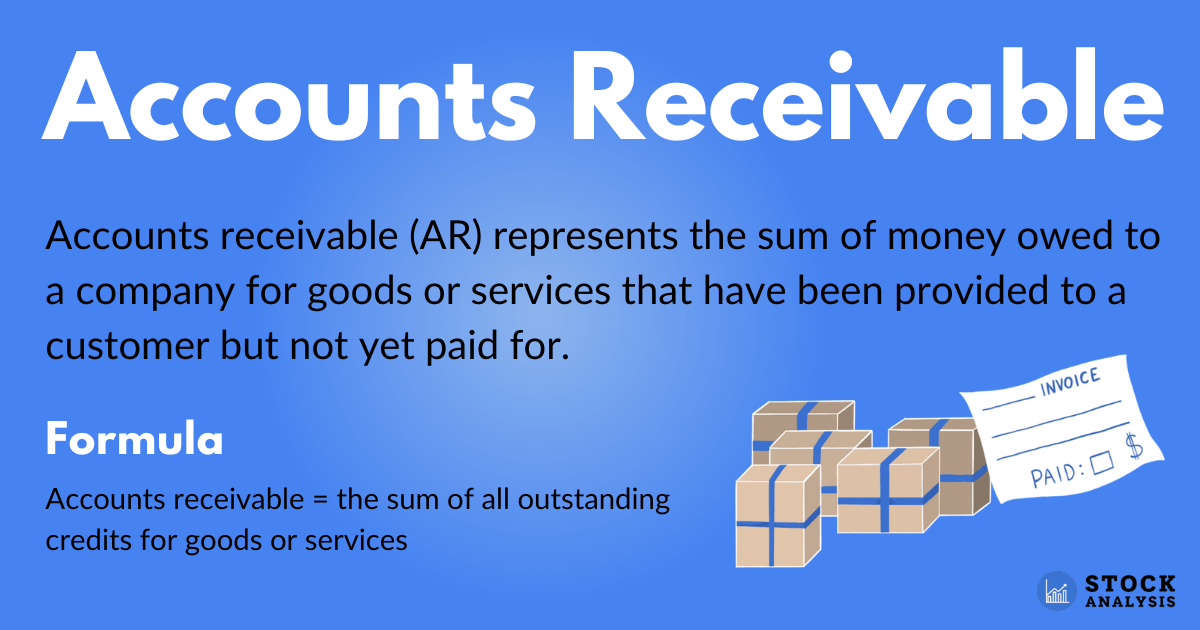
Accounts receivable (AR) is a fundamental concept in business finance, representing the money owed to a company by its customers for goods or services that have been delivered or used but not yet paid for. Essentially, it’s the sum of all outstanding invoices issued by a business. Understanding AR is crucial for any organization, regardless of its size or industry, as it directly impacts a company’s cash flow, liquidity, and overall financial health. In the realm of business finance, AR functions as a short-term asset on a company’s balance sheet, signifying revenue that is expected to be collected within a year, or often, much sooner.

The Core Definition and Significance of Accounts Receivable
At its heart, accounts receivable represents a form of short-term financing provided by a business to its customers. When a company extends credit to a customer, allowing them to purchase goods or services on account, it is essentially lending money. This practice is common in business-to-business (B2B) transactions, where longer payment terms are often the norm to facilitate sales and build strong customer relationships. For instance, a manufacturing company might sell its products to a retailer on 30-day payment terms, meaning the retailer has 30 days from the invoice date to remit payment. During this period, the value of those unpaid invoices constitutes the manufacturer’s accounts receivable.
The significance of AR cannot be overstated. It is a vital component of a company’s working capital, which is the difference between current assets and current liabilities. Healthy working capital is essential for day-to-day operations, enabling businesses to meet their immediate financial obligations, such as paying suppliers, salaries, and operating expenses. Conversely, poor management of accounts receivable can lead to a cash crunch, hindering a company’s ability to function and grow.
Understanding the Accounts Receivable Cycle
The AR cycle encompasses all the steps involved in managing the money owed to a business. It typically begins with the sale of goods or services on credit.
1. Sales and Invoicing:
This is the genesis of AR. Once a sale is made and credit is extended, an invoice is generated. This document serves as a formal request for payment and should clearly state the products or services provided, the amount due, the payment terms (e.g., Net 30, due upon receipt), and the due date. Accurate and timely invoicing is paramount to a smooth AR process. Errors in invoices can lead to delays in payment or disputes, further complicating the collection process.
2. Credit Approval and Risk Assessment:
Before extending credit, businesses often conduct a credit check on new customers to assess their creditworthiness. This involves evaluating factors such as their payment history, financial stability, and overall credit risk. Establishing clear credit policies and procedures helps mitigate the risk of non-payment and bad debts. Companies may set credit limits for customers, determining the maximum amount of credit that can be extended. This proactive approach helps protect the business from potential losses.
3. Payment Collection:
Once an invoice is issued, the responsibility shifts to the customer to make the payment by the due date. The AR department is responsible for tracking outstanding invoices and following up on payments. This can involve sending payment reminders, making phone calls, and, in cases of persistent non-payment, engaging in more assertive collection efforts. The efficiency of the collection process directly impacts how quickly the company can convert its sales into actual cash.
4. Cash Application:
Upon receiving a payment from a customer, the cash must be applied correctly to the outstanding invoice(s). This involves matching the payment received with the specific invoices it’s intended to cover. Proper cash application is critical for maintaining accurate AR records and ensuring that all outstanding balances are up-to-date. Mismatched payments or unapplied cash can lead to confusion and reporting inaccuracies.
5. Account Reconciliation and Reporting:
Regular reconciliation of AR accounts is essential to ensure accuracy. This involves comparing the AR ledger with the general ledger and identifying any discrepancies. Financial reports, such as an aged accounts receivable report, are generated to provide insights into the status of outstanding balances, including how old the receivables are. This information is vital for financial analysis, forecasting, and strategic decision-making.
The Impact of Accounts Receivable on Cash Flow
The most significant impact of accounts receivable on a business is its direct effect on cash flow. Cash flow is the movement of money into and out of a company. Accounts receivable represents money that is owed to the company but has not yet been received. Therefore, a high level of accounts receivable can indicate a significant portion of the company’s revenue is tied up and not readily available for use.
1. Liquidity and Working Capital Management:
A healthy AR balance that is collected in a timely manner contributes positively to liquidity – the company’s ability to meet its short-term obligations. Conversely, if receivables are aging (meaning they are becoming progressively older and harder to collect), it can severely impair liquidity. This can force a business to seek external financing, such as loans, to cover operational costs, incurring additional interest expenses. Effective working capital management hinges on optimizing the AR cycle to ensure that cash is flowing in as efficiently as possible.
2. The Cost of Carrying Receivables:
There’s an inherent cost associated with carrying accounts receivable. These costs include:
- Administrative Costs: The expenses involved in managing the AR process, such as salaries for AR staff, software, and office supplies.
- Financing Costs: If a company needs to borrow money to cover expenses due to slow AR collection, it incurs interest charges.
- Bad Debt Expenses: The ultimate cost when a receivable is deemed uncollectible and written off as a bad debt. This directly impacts the company’s profitability.

3. Impact on Profitability:
While AR represents earned revenue, it doesn’t represent actual cash in hand until collected. A large AR balance can distort a company’s reported profitability. A company might show high revenues, but if these revenues are not collected, the business can still face financial distress. The ultimate goal is to convert these sales into usable cash, which then directly contributes to the bottom line through reinvestment or distribution.
Strategies for Effective Accounts Receivable Management
Effective AR management is not just about collecting money; it’s about building a robust system that minimizes risk, optimizes cash flow, and supports business growth.
1. Clear Credit Policies and Procedures:
Establishing and consistently enforcing clear credit policies is the first line of defense. This includes defining credit terms, setting credit limits, and outlining the process for credit checks. Regular review and updating of these policies are necessary to adapt to changing economic conditions and customer behaviors.
2. Efficient Invoicing and Billing:
Accuracy and timeliness in invoicing are paramount. This means ensuring that all invoices are correct, detailed, and sent out promptly after the sale. Implementing electronic invoicing systems can significantly speed up this process and reduce errors. Clear payment instructions and due dates on invoices are essential.
3. Proactive Collection Efforts:
A proactive approach to collections is more effective than reacting to overdue accounts. This involves:
- Payment Reminders: Sending automated or personalized reminders before invoices become due.
- Follow-up Calls and Emails: Systematically contacting customers whose invoices are approaching or have passed their due dates.
- Early Intervention: Addressing potential payment issues early on to prevent them from escalating. Offering flexible payment arrangements where appropriate can be beneficial.
4. Utilizing Technology and Financial Tools:
Modern technology offers powerful tools for AR management. Accounting software, enterprise resource planning (ERP) systems, and specialized AR automation platforms can streamline the entire process. These tools can automate tasks like invoice generation, payment reminders, and cash application, freeing up valuable human resources for more strategic activities. They also provide real-time visibility into AR aging and customer payment patterns, enabling better decision-making.
5. Dispute Resolution:
A smooth AR process includes a well-defined procedure for handling customer disputes. Promptly and effectively resolving disputes can prevent them from delaying payments and damaging customer relationships. Having clear communication channels and a dedicated point of contact for disputes is crucial.
6. Bad Debt Management:
While aiming to minimize bad debts is a primary objective, businesses must have a strategy for managing them when they occur. This includes establishing criteria for writing off uncollectible debts and understanding the tax implications. Regularly analyzing the causes of bad debts can help refine credit policies and collection strategies.
The Broader Financial Implications of Accounts Receivable
Beyond the immediate impact on cash flow and operations, accounts receivable has broader implications for a company’s financial reporting, investor relations, and overall valuation.
1. Financial Statement Presentation:
Accounts receivable is reported on the balance sheet as a current asset. Its valuation is typically at its net realizable value, which is the gross amount of receivables less an allowance for doubtful accounts (an estimate of uncollectible amounts). The accuracy of AR reporting directly influences key financial ratios, such as the current ratio (current assets / current liabilities) and the quick ratio (excluding inventory from current assets), which are used by investors and creditors to assess a company’s financial health.
2. Investor and Creditor Confidence:
Investors and creditors scrutinize a company’s AR to gauge its operational efficiency and the quality of its customer base. A consistently high AR balance that is collected in a timely manner signals strong financial management and a healthy business. Conversely, a growing proportion of aged receivables can be a red flag, suggesting potential issues with sales quality, credit policies, or collection effectiveness. This can negatively impact a company’s ability to secure financing or attract investment.
3. Impact on Key Financial Ratios:
Several important financial ratios are directly influenced by accounts receivable:
- Accounts Receivable Turnover Ratio: This ratio measures how efficiently a company collects its receivables. It’s calculated as Net Credit Sales / Average Accounts Receivable. A higher turnover ratio generally indicates more efficient collection.
- Days Sales Outstanding (DSO): This is the average number of days it takes for a company to collect payment after a sale has been made. It’s calculated as (Average Accounts Receivable / Net Credit Sales) * Number of Days in Period. A lower DSO is desirable.
Monitoring and improving these ratios are critical for demonstrating financial strength and operational excellence to stakeholders.
4. Strategic Decision-Making:
Understanding the dynamics of accounts receivable can inform broader strategic decisions. For example, a company experiencing high levels of AR and struggling with cash flow might reconsider its credit policies, explore options for early payment discounts to customers, or investigate factoring or securitization of its receivables as a means to access cash more quickly. Conversely, a company with very low AR and a fast collection cycle might consider whether it’s being too restrictive with its credit terms, potentially missing out on sales opportunities.
In conclusion, accounts receivable is far more than just a line item on a financial statement; it’s a critical operational and financial lever. Its effective management is essential for ensuring a healthy cash flow, maintaining liquidity, supporting profitability, and ultimately, fostering sustainable business growth. By understanding its intricacies and implementing robust management strategies, businesses can transform this inherent aspect of commerce into a powerful tool for financial success.
aViewFromTheCave is a participant in the Amazon Services LLC Associates Program, an affiliate advertising program designed to provide a means for sites to earn advertising fees by advertising and linking to Amazon.com. Amazon, the Amazon logo, AmazonSupply, and the AmazonSupply logo are trademarks of Amazon.com, Inc. or its affiliates. As an Amazon Associate we earn affiliate commissions from qualifying purchases.