
Accounting is often referred to as the “language of business.” For entrepreneurs, investors, and individuals managing personal wealth, understanding this language is not merely a technical requirement—it is a strategic necessity. At its core, accounting is the systematic process of recording, summarizing, analyzing, and reporting financial transactions. It provides a clear picture of financial health, enabling stakeholders to make informed decisions based on data rather than intuition.
In the realm of money management and business finance, accounting serves as the bridge between raw data and actionable intelligence. Without it, the financial world would lack the transparency and consistency required for global trade, investment, and growth. To truly master the flow of money, one must first understand the framework that governs it.
The Foundation of Financial Clarity: Defining Accounting
While many people use the terms “bookkeeping” and “accounting” interchangeably, they represent different stages of financial management. Bookkeeping is the administrative task of recording daily transactions—the “what” and “when” of money moving in and out. Accounting, however, is the higher-level process of interpreting that data to provide insights into a company’s or individual’s financial position.
The Role of Accounting in Business Finance
In a business context, accounting fulfills three primary functions: stewardship, analysis, and compliance. Stewardship involves tracking assets and liabilities to ensure that resources are being used efficiently and are protected from fraud or mismanagement. Analysis allows business owners to identify trends, such as rising costs or seasonal revenue spikes, which informs future budgeting and scaling strategies. Finally, compliance ensures that the entity meets its legal obligations to tax authorities and regulatory bodies.
Accounting as a Tool for Personal Wealth and Investing
For the individual investor or the professional managing a “side hustle,” accounting principles are equally vital. By applying accounting logic to personal finance, one can track “net worth” (assets minus liabilities) and “cash flow” (income minus expenses). Understanding these metrics is the first step toward achieving financial independence. Whether you are analyzing a stock’s balance sheet or managing your own rental property, accounting provides the metrics needed to evaluate profitability and risk.
The Accounting Cycle: From Transaction to Financial Statement
The process follows a logical sequence known as the accounting cycle. It begins with the identification of a transaction, followed by entry into a journal, and then posting to a general ledger. At the end of a period, a trial balance is prepared, adjustments are made, and finally, the three major financial statements are produced: the Balance Sheet, the Income Statement, and the Cash Flow Statement. These documents are the final products that tell the story of a financial entity’s performance.
The Pillars of Financial Reporting: Core Accounting Principles
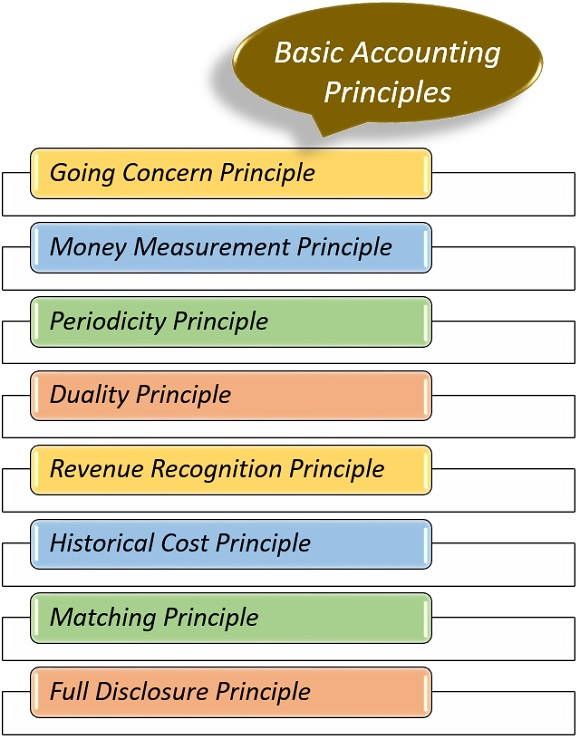
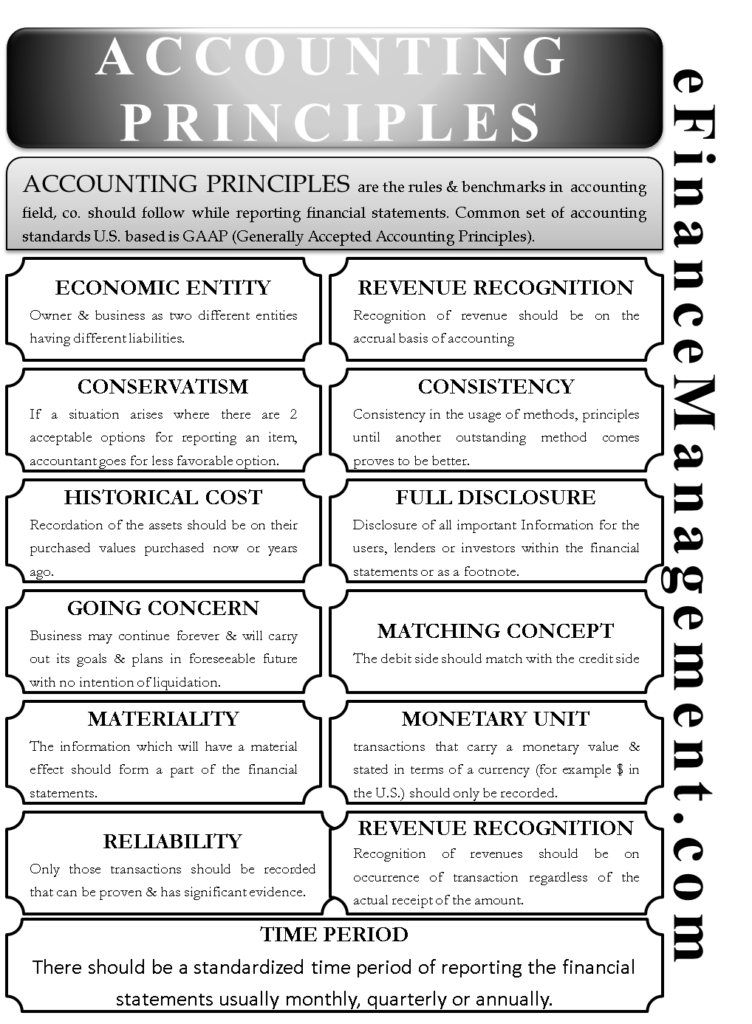
To ensure that financial information is reliable and comparable across different organizations, the world of finance relies on a set of standardized rules known as accounting principles. These are not merely suggestions; they are the bedrock of trust in the global marketplace. Without these “rules of the road,” a company could easily manipulate its numbers to appear more profitable than it actually is.
The Entity Principle and the Periodicity Assumption
The Entity Principle dictates that the finances of a business must be kept entirely separate from the personal finances of its owners. This is a common pitfall for new entrepreneurs who treat their business bank account as a personal fund. Keeping them separate is crucial for accurate tax reporting and liability protection.
The Periodicity Assumption, meanwhile, requires that financial activity be reported over specific, consistent intervals (such as monthly, quarterly, or annually). This allows investors to compare performance over time, identifying whether a business is growing or shrinking.
The Accrual Principle vs. Cash Basis Accounting
One of the most important concepts in money management is the distinction between cash and accrual accounting.
- Cash Accounting: Records transactions only when money physically changes hands. It is simple but often fails to reflect the long-term reality of a business.
- Accrual Accounting: Records revenue when it is earned and expenses when they are incurred, regardless of when the cash is received.
Most professional businesses use the accrual method because it provides a more accurate picture of profitability. For instance, if you perform a service in December but aren’t paid until January, accrual accounting recognizes that income in December, matching it against the work performed.
Revenue Recognition and the Matching Principle
The Revenue Recognition Principle states that revenue should be recognized when the service or product is delivered, not necessarily when the invoice is paid. This prevents companies from “padding” their stats by counting future sales as current income.
Closely related is the Matching Principle, which dictates that expenses must be matched to the revenues they helped generate. If you spend $5,000 on inventory in June but don’t sell it until July, the expense should ideally be recognized in July to accurately reflect the profit margin of those specific sales.
Navigating Global Standards: GAAP vs. IFRS
In the world of international finance and big-ticket investing, it is important to know which “rulebook” a company is following. There are two primary frameworks used globally: Generally Accepted Accounting Principles (GAAP) and International Financial Reporting Standards (IFRS).
Understanding GAAP (The U.S. Standard)
GAAP is the standard adopted by the U.S. Securities and Exchange Commission (SEC) for all publicly traded companies in the United States. It is a rules-based system, meaning it provides specific, detailed instructions for almost every financial scenario. GAAP is designed to provide a high level of consistency and transparency for American investors, ensuring that a “dollar of profit” in a tech company is calculated the same way as a “dollar of profit” in a manufacturing firm.
Understanding IFRS (The Global Standard)
IFRS is used in over 140 countries, including most of the European Union, Canada, and Australia. Unlike the rules-based approach of GAAP, IFRS is principles-based. This means it provides general guidelines and allows for more professional judgment in how transactions are reported. The goal of IFRS is to create a common global language for financial reporting, making it easier for investors to compare companies across international borders.
Why the Difference Matters for Investors
For those involved in stock market investing or international business finance, these differences are significant. For example, the way inventory is valued or how research and development costs are treated can vary between GAAP and IFRS. Understanding these nuances allows an investor to “normalize” financial statements when comparing a U.S. company to a European competitor, ensuring they are truly comparing apples to apples.
The Strategic Value of Accounting in Wealth Management
Beyond compliance and taxes, accounting is a powerful tool for strategic wealth creation. It shifts the focus from “how much money am I making?” to “how much money am I keeping, and how hard is it working for me?”
Budgeting and Variance Analysis
Accounting provides the historical data necessary for effective budgeting. By looking at past financial statements, an individual or business can set realistic targets for the future. Variance analysis—the process of comparing actual results to the budget—is where the real insight happens. If your “Marketing” expense is 20% over budget, accounting helps you investigate why and determine if that extra spend resulted in a proportional increase in revenue.
Debt Management and Leverage
Accounting principles help in assessing the health of a “Balance Sheet.” In business finance, debt is often used as “leverage” to accelerate growth. However, accounting ratios—such as the Debt-to-Equity ratio—tell us when a business is becoming over-leveraged. For the personal investor, understanding these same principles can prevent the trap of “bad debt” (high-interest consumer debt) while optimizing “good debt” (low-interest mortgages or business loans used to acquire appreciating assets).
Tax Optimization as a Financial Strategy
Taxation is one of the largest expenses any successful person or business will face. Proper accounting allows for sophisticated tax planning. By understanding concepts like depreciation (the gradual writing off of an asset’s value) and tax credits, one can legally and ethically minimize their tax liability. This isn’t about evasion; it’s about using accounting principles to ensure you aren’t paying more than your fair share, thereby keeping more capital available for reinvestment.
The Evolution of Accounting: Leveraging Modern Financial Tools
In the modern era, accounting has moved away from dusty ledgers and green eyeshades. Technology has transformed accounting into a real-time stream of financial data, making it more accessible than ever for the average person to manage their money with professional-grade precision.
The Rise of Cloud-Based Financial Systems
Tools like QuickBooks, Xero, and specialized personal finance apps have automated many of the “principles” discussed earlier. These platforms can automatically apply the matching principle, track depreciation, and generate cash flow statements with the click of a button. For side hustlers and small business owners, this reduces the barrier to entry for high-level financial management, allowing them to focus on growth while the software handles the structural integrity of their data.
Data Analytics and Predictive Accounting
We are entering an era of “predictive accounting.” By using historical data and AI-driven tools, accounting systems can now forecast future cash flow gaps or identify anomalies in spending before they become crises. This proactive approach to money management allows for better decision-making. Instead of looking at a report of what happened last month, modern accounting allows us to see what is likely to happen next month.

Conclusion: Accounting as the Key to Financial Mastery
Whether you are managing a multinational corporation, a growing side hustle, or your own retirement portfolio, accounting is the foundation upon which your financial house is built. By understanding what accounting is—a system of recording and interpretation—and adhering to core accounting principles, you gain a level of control over your money that “gut feeling” can never provide.
Accounting brings discipline to spending, clarity to investing, and transparency to reporting. In the pursuit of wealth and financial stability, it is the most valuable tool in your arsenal. By mastering the principles of accounting, you don’t just track your money; you command it.
aViewFromTheCave is a participant in the Amazon Services LLC Associates Program, an affiliate advertising program designed to provide a means for sites to earn advertising fees by advertising and linking to Amazon.com. Amazon, the Amazon logo, AmazonSupply, and the AmazonSupply logo are trademarks of Amazon.com, Inc. or its affiliates. As an Amazon Associate we earn affiliate commissions from qualifying purchases.