
Air conditioning has become an indispensable technology, transforming homes, offices, and vehicles into comfortable sanctuaries against the heat. At the heart of every AC system, silently facilitating this marvel of modern comfort, lies a crucial chemical compound: the refrigerant. Often overlooked, refrigerant is the very lifeblood of an air conditioner, enabling the transfer of heat from inside your space to the outside environment. Without it, your sophisticated AC unit is merely a fan. Understanding what AC refrigerant is, how it functions, its various types, and its broader implications is key to appreciating the technology that cools our world.

Refrigerant is a specialized fluid, or more accurately, a gas at room temperature, that undergoes phase changes (from liquid to gas and back again) within a sealed AC system. These phase changes are fundamental to its ability to absorb and release heat, thereby cooling a designated area. This complex yet elegant thermodynamic cycle is what makes air conditioning possible, and the refrigerant is the indispensable medium through which this cycle operates. Far from being a simple cool air generator, an air conditioner is a sophisticated heat pump, and the refrigerant is its working fluid, constantly circulating to move thermal energy against a temperature gradient.
The Core Mechanism of Cooling: How Refrigerant Works
To grasp the essence of AC refrigerant, one must first comprehend the fundamental principles of the refrigeration cycle. This closed-loop system allows refrigerant to continuously absorb heat from an indoor space and dissipate it outdoors, creating a cycle of cooling.
The Refrigeration Cycle Explained
The refrigeration cycle, powered by electricity, involves four primary components: the evaporator, the compressor, the condenser, and the expansion valve (or metering device). The refrigerant travels through these components in a continuous loop, changing its state at specific points to facilitate heat transfer.
-
Evaporation (Indoor Unit): The cycle begins in the evaporator coil, located inside your home or car. Here, the refrigerant is in a low-pressure, low-temperature liquid state. As warm air from the room passes over the evaporator coil, the refrigerant absorbs heat from the air. This absorbed heat causes the liquid refrigerant to boil and transform into a low-pressure, low-temperature gas (vapor). This process, known as evaporation, is endothermic, meaning it draws heat from the surroundings—the air in your room—thereby cooling it.
-
Compression (Outdoor Unit): The now gaseous refrigerant, laden with heat, then flows to the compressor, situated in the outdoor unit. The compressor is the powerhouse of the AC system, increasing the pressure and temperature of the refrigerant vapor significantly. This high-pressure, high-temperature gas is now primed to release its absorbed heat.
-
Condensation (Outdoor Unit): From the compressor, the hot, high-pressure gas moves to the condenser coil, also located in the outdoor unit. As ambient air (typically cooler than the superheated refrigerant gas) flows over the condenser coils, the refrigerant releases its heat to the outside environment. This heat loss causes the gas to condense back into a high-pressure, high-temperature liquid. This process, condensation, is exothermic, meaning it releases heat to the surroundings.
-
Expansion (Between Units): The high-pressure liquid refrigerant then travels towards the expansion valve. This valve serves as a metering device, restricting the flow of the liquid refrigerant and causing a sudden drop in its pressure. This rapid depressurization also leads to a significant drop in temperature, preparing the refrigerant to re-enter the evaporator coil as a low-pressure, low-temperature liquid, ready to absorb more heat and restart the cycle.
Phase Changes and Heat Transfer
The magic of refrigerant lies in its specific thermodynamic properties, particularly its low boiling point and high latent heat of vaporization. Latent heat refers to the energy absorbed or released during a phase change (like boiling or condensing) without a change in temperature. When the refrigerant evaporates in the indoor coil, it absorbs a large amount of latent heat from the indoor air, cooling it down. Conversely, when it condenses in the outdoor coil, it releases that latent heat to the outside air. This efficient transfer of latent heat, facilitated by the refrigerant’s phase changes, is what makes modern air conditioning so effective. The refrigerant acts as a heat transfer medium, continually moving thermal energy from one place to another.
Key Components: Compressor, Condenser, Expansion Valve, Evaporator
While the refrigerant is the working fluid, its performance is entirely dependent on the synergy of the system’s mechanical components:
-
Compressor: The “pump” of the system, it raises the pressure and temperature of the refrigerant gas.
-
Condenser Coil: Where the high-pressure gas releases heat to the outside and condenses into a liquid.
-
Expansion Valve (or Capillary Tube): Reduces the pressure and temperature of the liquid refrigerant before it enters the evaporator.
-
Evaporator Coil: Where the low-pressure liquid absorbs heat from the indoor air and evaporates into a gas.
Each component plays a critical role in manipulating the refrigerant’s state to achieve efficient heat exchange.
A Spectrum of Substances: Types of AC Refrigerants
The history of AC refrigerants is a story of technological advancement driven by environmental awareness. Early refrigerants, while effective, were found to have detrimental effects on the planet. This led to a continuous search for safer and more sustainable alternatives.
CFCs and HCFCs: The Ozone Depletion Legacy
The earliest synthetic refrigerants, notably chlorofluorocarbons (CFCs) like R-12, were revolutionary in their time. They were non-flammable, non-toxic, and highly efficient. However, in the 1970s and 80s, scientists discovered that CFCs, when released into the atmosphere, rose to the stratosphere and depleted the ozone layer, which protects Earth from harmful ultraviolet radiation. This discovery led to the development of hydrochlorofluorocarbons (HCFCs), such as R-22 (Freon), as a transitional substitute. HCFCs have a lower ozone depletion potential (ODP) than CFCs, but still posed a significant threat. The Montreal Protocol, an international treaty signed in 1987, initiated a global phase-out of CFCs and later HCFCs, marking a pivotal moment in environmental policy and technological shift.
HFCs: A Transitional Solution
Hydrofluorocarbons (HFCs), such as R-410A and R-134a, emerged as the primary replacements for HCFCs. HFCs contain no chlorine atoms, meaning they have an ozone depletion potential (ODP) of zero. This was a significant step forward in protecting the ozone layer. For decades, R-410A became the standard refrigerant in new residential and commercial AC systems. While HFCs solved the ozone problem, it soon became clear that they presented another environmental challenge: a high Global Warming Potential (GWP). Many HFCs are potent greenhouse gases, trapping thousands of times more heat in the atmosphere than carbon dioxide over a 100-year period. This realization spurred another wave of research and regulatory action.
HFOs and Natural Refrigerants: The Future of Eco-Friendly Cooling
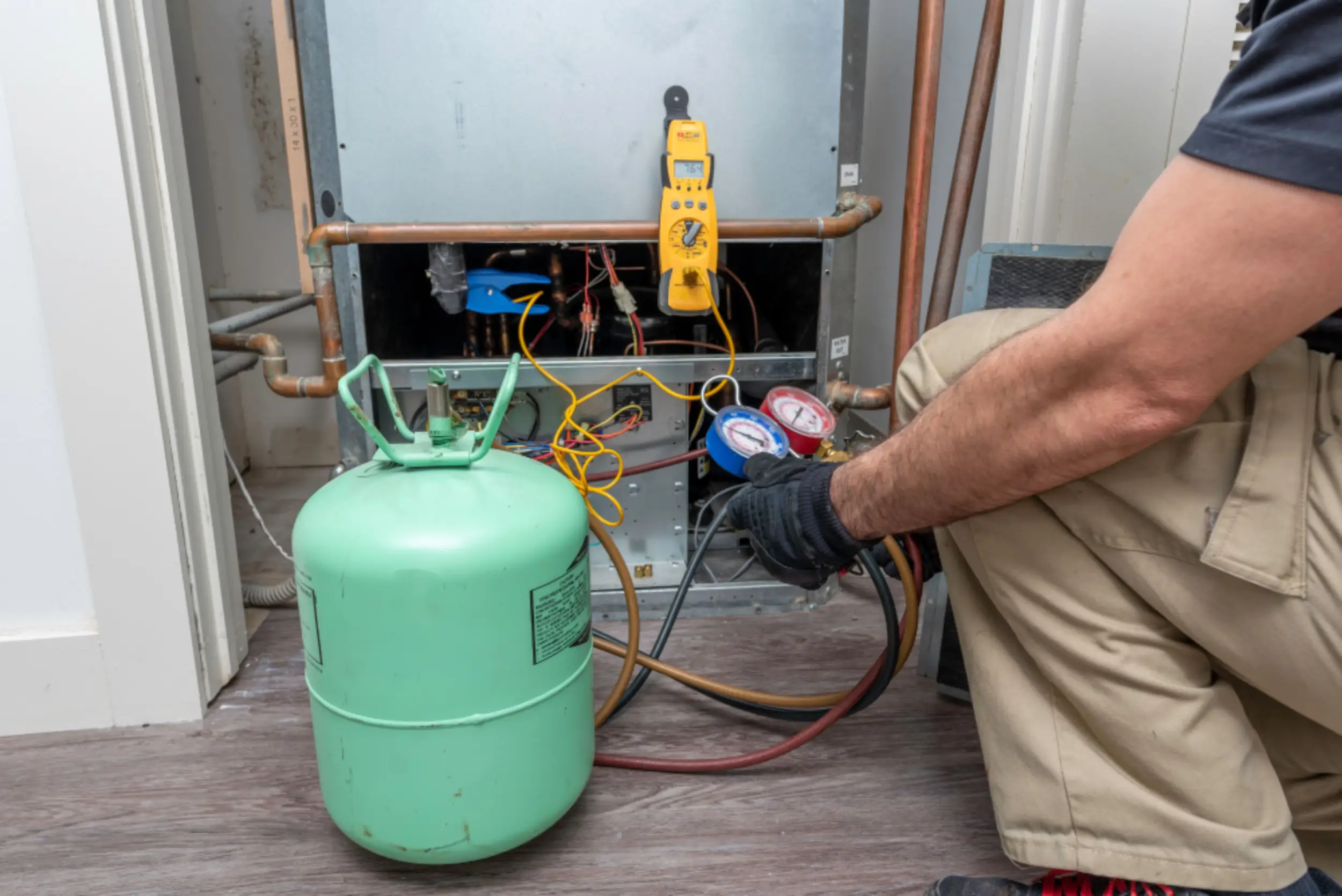
The ongoing quest for environmentally benign refrigerants has led to the development and adoption of hydrofluoroolefins (HFOs) and a renewed interest in natural refrigerants.
-
HFOs (e.g., R-1234yf, R-1234ze): These refrigerants are characterized by their extremely low GWP, often comparable to that of CO2, and an ODP of zero. They are designed to break down rapidly in the atmosphere, significantly reducing their climate impact. HFOs are increasingly being adopted in automotive air conditioning and are finding their way into stationary AC systems.
-
Natural Refrigerants (e.g., Propane R-290, Ammonia R-717, CO2 R-744): These substances occur naturally in the environment and have very low GWP values. Propane (R-290), for instance, is highly efficient and has a GWP of just 3. Ammonia (R-717) is a traditional refrigerant known for its excellent thermodynamic properties, primarily used in industrial applications due to its toxicity. Carbon dioxide (R-744) is another natural refrigerant gaining traction, especially in commercial refrigeration and certain heat pump applications, despite requiring higher operating pressures. The main challenges with natural refrigerants often involve flammability (propane), toxicity (ammonia), or high operating pressures (CO2), requiring specialized system designs and safety protocols.
Blends and Their Specific Applications
Beyond single-component refrigerants, many AC systems utilize refrigerant blends. These are mixtures of two or more different refrigerants, carefully formulated to achieve specific thermodynamic properties, such as a desired temperature glide (the difference between the boiling and condensing temperatures at a constant pressure) or improved efficiency over a wider range of operating conditions. R-410A, for example, is a blend of R-32 and R-125. The development of new blends continues, aiming to combine the best attributes of various chemicals to create refrigerants that are efficient, safe, and environmentally friendly.
Beyond the Basics: Environmental Impact and Regulatory Landscape
The journey of refrigerant development is intricately linked with our understanding of climate change and environmental stewardship. The choice of refrigerant extends far beyond cooling efficiency, encompassing critical global environmental concerns.
Global Warming Potential (GWP) and Ozone Depletion Potential (ODP)
Two key metrics define the environmental impact of refrigerants:
-
Ozone Depletion Potential (ODP): Measures a substance’s ability to deplete the stratospheric ozone layer, relative to R-11 (which has an ODP of 1). CFCs and HCFCs have positive ODP values, while HFCs and HFOs have an ODP of 0.
-
Global Warming Potential (GWP): Measures how much heat a greenhouse gas traps in the atmosphere over a specific time horizon (usually 100 years), relative to carbon dioxide (which has a GWP of 1). High-GWP refrigerants contribute significantly to climate change if released into the atmosphere.
The shift from CFCs/HCFCs to HFCs, and now towards HFOs and natural refrigerants, directly reflects a global effort to minimize both ODP and GWP. This evolution is a testament to the power of international cooperation and scientific research in addressing complex environmental challenges through technological innovation.
International Protocols and National Regulations
The phase-out of harmful refrigerants has been largely driven by international agreements and subsequent national legislation:
-
The Montreal Protocol (1987): The most successful environmental treaty to date, it orchestrated the global phase-out of ozone-depleting substances (ODS) like CFCs and HCFCs.
-
The Kigali Amendment (2016) to the Montreal Protocol: This crucial amendment targets HFCs, recognizing their high GWP, and mandates their phasedown on a global scale. It sets a legally binding commitment for countries to reduce HFC production and consumption by 80-85% over the next few decades.
-
EPA Regulations (USA): The U.S. Environmental Protection Agency implements regulations under the Clean Air Act, governing the production, import, handling, and disposal of refrigerants, aligning with international protocols. Programs like the Significant New Alternatives Policy (SNAP) program evaluate and approve substitutes for ODS and high-GWP refrigerants.
-
F-Gas Regulation (European Union): The EU has one of the most stringent regulations for fluorinated greenhouse gases (F-gases), including HFCs. It sets specific targets for GWP reduction, bans the use of certain high-GWP refrigerants in new equipment, and emphasizes leak prevention and proper recovery.
These regulations profoundly impact the AC industry, driving innovation towards new, more environmentally friendly refrigerant technologies and stricter handling practices.
Maintenance, Safety, and the Future of AC Refrigeration
Proper handling and maintenance of refrigerants are paramount, not only for system efficiency and longevity but also for environmental protection and human safety.
Proper Handling and Professional Servicing
Refrigerant is not a “consumable” item that needs regular topping up like fuel or engine oil. If your AC system is low on refrigerant, it indicates a leak. Adding refrigerant without addressing the leak is merely a temporary fix and allows harmful gases to escape into the atmosphere. Due to the complex nature of the chemicals, the high pressures involved, and the regulatory requirements, only certified professionals should handle refrigerants. Technicians are trained in safe handling, leak detection, proper recovery, recycling, and disposal of refrigerants, minimizing environmental harm and ensuring system integrity. DIY kits for refrigerant recharging are often ineffective and can lead to overcharging or using the wrong type of refrigerant, causing severe damage to the unit and releasing harmful gases.
Risks of DIY and Counterfeit Refrigerants
Attempting to recharge an AC system yourself or using unverified “top-up” products carries significant risks.
-
System Damage: Using the wrong refrigerant or an incorrect charge can cause compressor failure, line blockages, and other expensive damages.
-
Environmental Harm: Improper venting of refrigerants contributes to ozone depletion or global warming.
-
Safety Hazards: Some refrigerants are flammable, while others can cause frostbite on contact or release toxic fumes if mishandled.
-
Counterfeit Products: The market for counterfeit refrigerants is a serious concern. These products often contain dangerous mixtures of chemicals, including highly flammable hydrocarbons, posing extreme safety risks (explosions, fires) and severe damage to AC systems. Always ensure a certified professional is using legitimate, branded refrigerants.

Innovations in Refrigerant Technology and System Design
The future of AC refrigeration is dynamic, driven by the twin imperatives of efficiency and environmental sustainability.
-
Continued Refrigerant Evolution: Research and development continue to focus on new HFOs and improved natural refrigerant systems that balance efficiency, safety, and minimal environmental impact. The goal is to find “drop-in” replacements or design systems optimized for these next-generation fluids.
-
Smart AC Systems: Integration with smart home technologies allows for more precise control, predictive maintenance, and optimized energy consumption. These systems can monitor refrigerant levels and system performance, alerting users to potential issues before they become critical.
-
Efficiency Gains: Manufacturers are constantly innovating compressor technologies (e.g., variable-speed compressors), heat exchanger designs, and overall system architectures to extract maximum cooling power with minimum energy input, further reducing the overall carbon footprint of air conditioning.
-
Heat Pump Technology: The expansion of reversible heat pump technology, which uses refrigerants to both heat and cool a space, represents a significant step towards decarbonizing heating, further amplifying the importance of eco-friendly refrigerants.
In conclusion, AC refrigerant is not merely a chemical; it is the linchpin of modern air conditioning technology. Its evolution reflects a compelling narrative of technological innovation, environmental awareness, and global cooperation. From early, ozone-depleting compounds to today’s low-GWP alternatives, the journey of refrigerant development continues, shaping not only the comfort of our indoor environments but also the health of our planet. Understanding this crucial component empowers us to make informed choices, advocate for sustainable practices, and appreciate the intricate technology that keeps us cool.
aViewFromTheCave is a participant in the Amazon Services LLC Associates Program, an affiliate advertising program designed to provide a means for sites to earn advertising fees by advertising and linking to Amazon.com. Amazon, the Amazon logo, AmazonSupply, and the AmazonSupply logo are trademarks of Amazon.com, Inc. or its affiliates. As an Amazon Associate we earn affiliate commissions from qualifying purchases.