
In the realm of personal finance and wealth management, the term “abundance” is frequently used, yet it is often misunderstood as a vague, purely spiritual concept. However, when we strip away the metaphysical layers, the “abundance meaning” in a financial context refers to a specific psychological framework and a set of strategic behaviors that prioritize growth, resourcefulness, and long-term value over fear and immediate consumption.
To understand abundance is to understand the difference between someone who manages money and someone who builds wealth. While scarcity focuses on the limitations of a fixed pie, abundance recognizes that through innovation, investment, and strategic planning, the pie itself can be expanded. This article explores the multi-faceted meaning of abundance within the niche of money, personal finance, and wealth creation, providing a roadmap for shifting from a survivalist mindset to one of true financial prosperity.
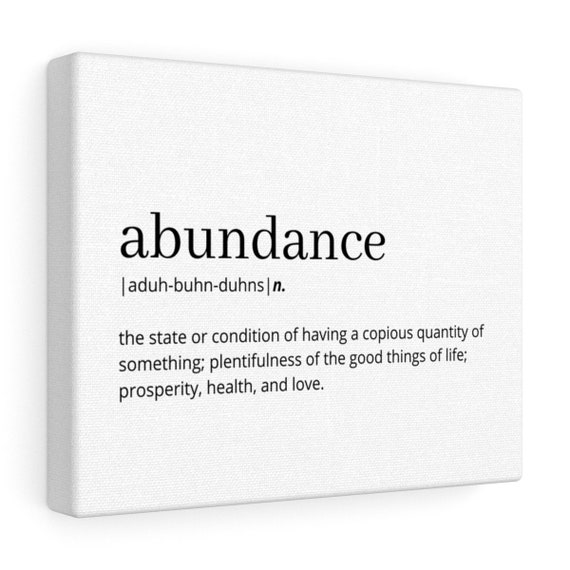
The Psychology of Wealth: Defining the Abundance Mindset
At its core, the meaning of abundance begins in the mind. In financial circles, this is often referred to as the “Abundance Mindset,” a term popularized by Stephen Covey and later adopted by financial coaches worldwide. This mindset is the foundational building block for any successful investment strategy or business venture.
Shifting from Scarcity to Plenty
A scarcity mindset is rooted in the belief that resources are permanently limited. In personal finance, this manifests as “hoarding” behavior, an irrational fear of market volatility, and a reluctance to invest in oneself or one’s business because of the risk of loss. People operating from scarcity often miss out on high-yield opportunities because they are hyper-focused on protecting the small amount they already have.
Conversely, the abundance meaning in finance implies that there are always new opportunities for those who are prepared to see them. It doesn’t mean being reckless; rather, it means recognizing that money is a tool that can be used to generate more money. When you view the economy through the lens of abundance, a market downturn isn’t a catastrophe; it’s a “sale” on valuable assets.
The Role of Financial Emotional Intelligence
Abundance is also tied to emotional intelligence. High-net-worth individuals often practice a form of “detachment” from their capital. They understand that money flows. By practicing gratitude for current assets—no matter how small—an individual reduces the cortisol-driven stress that leads to poor, impulsive financial decisions. This emotional stability allows for “rational abundance,” where one can evaluate risks with a clear head, knowing that their value is not tied solely to their bank balance, but to their ability to create and provide value to the marketplace.
Wealth Generation: Turning Abundance into Scalable Income
Understanding the meaning of abundance requires looking beyond the traditional 9-to-5 paycheck. True abundance is found in scalability and the decoupling of time from income. In the world of money, this translates to building systems that work independently of your physical presence.
Diversifying Income Streams
One of the most practical applications of an abundance strategy is the cultivation of multiple income streams. Relying on a single source of income is a scarcity-based risk. An abundance-focused individual looks at their skills and assets and asks, “How can I leverage these across different platforms?”
This might include:
- Dividend-Producing Stocks: Turning liquid capital into a source of quarterly cash flow.
- Digital Real Estate: Creating blogs, courses, or software that generate passive income.
- Side Hustles with High Upside: Engaging in consulting or freelance work that has the potential to scale into a full-scale agency.
The Compound Effect and Long-Term Value
Abundance is a long game. The “meaning” here is found in the mathematical miracle of compounding. Those who understand abundance do not seek “get-rich-quick” schemes. Instead, they understand that a small seed planted today—whether it’s $100 in an index fund or two hours spent learning a new trade—will grow exponentially over time. Abundance is the patience to let the compound interest of your efforts and your investments reach their full potential without pruning them too early due to fear or impatience.
Strategic Resource Management: The Architecture of Financial Plenty

To live a life of abundance, one must master the art of resource management. This isn’t just about budgeting; it’s about the strategic allocation of capital to ensure that your financial ecosystem remains self-sustaining and ever-expanding.
Investment as an Act of Growth
In a scarcity model, spending money is seen as losing money. In an abundance model, spending is often reframed as “reinvesting.” Whether it is paying for a premium financial tool, hiring a tax strategist, or investing in a high-quality education, the abundance meaning emphasizes the Return on Investment (ROI).
Strategic resource management involves:
- Asset Allocation: Balancing your portfolio between high-growth assets (like tech stocks or crypto) and wealth-preservation assets (like bonds or real estate).
- Tax Optimization: Understanding that keeping more of what you earn is a faster way to abundance than simply earning more.
- Capital Efficiency: Using leverage wisely to increase your buying power without over-extending your risk profile.
Building Generational Wealth
A key component of financial abundance is the transition from “me” to “we.” Abundance is not just about personal comfort; it is about creating a surplus that outlives the individual. This involves estate planning, setting up trusts, and teaching financial literacy to the next generation. By viewing wealth as a legacy rather than a temporary stash of cash, you align yourself with the true meaning of abundance: the creation of a permanent, positive impact on your family and community.
Overcoming the Scarcity Trap in Modern Finance
Despite our best efforts, the modern financial landscape is designed to trigger our scarcity instincts. Inflation, fluctuating interest rates, and the 24-hour news cycle are all geared toward making us feel that there is “not enough.” To maintain a state of abundance, one must develop specific defenses against these “scarcity traps.”
Navigating Market Volatility with Confidence
When the market dips, the scarcity-minded investor sells at the bottom, driven by the fear that prices will never recover. The abundance-minded investor, however, understands the cyclical nature of the economy. They have a “margin of safety” (a cash reserve) that allows them to stay the course or even buy more when others are selling in a panic. The meaning of abundance in a recession is the presence of mind to see a recovery before it happens.
The Myth of the “Fixed Pie” in Business
Many professionals struggle with abundance because they view their colleagues or competitors as threats. This is the “Zero-Sum Game” fallacy. In a business finance context, abundance means recognizing that the market is constantly expanding. New technologies create new niches; new problems create new demands for solutions. By collaborating rather than just competing, and by focusing on creating unique value, businesses can find “blue oceans” of profitability where competition is irrelevant.
Practical Tools for Managing a Life of Abundance
To ground the concept of abundance in reality, we must look at the tools and habits that facilitate financial growth. You cannot manage what you do not measure, and abundance requires meticulous management.
Digital Finance Ecosystems and Automation
In the modern age, abundance is facilitated by technology. Using automated investment platforms (Robo-advisors), high-yield savings accounts, and comprehensive budgeting apps allows an individual to put their financial growth on autopilot. Automation removes the “decision fatigue” that often leads to scarcity-based spending. When your savings and investments are moved before you even see your paycheck, you are forced to live within a framework of planned abundance.
Reinvesting in Personal Capital
The most important asset in any abundance strategy is the individual. Your “human capital”—your skills, network, and health—is the engine that drives your financial capital.
- Education: Continually upgrading your skills ensures that your “earning power” remains high regardless of the economic climate.
- Networking: Abundance is often found in “who” you know as much as “what” you know. High-value networks provide access to private deals, job opportunities, and mentorship.
- Health: There is no abundance without the vitality to enjoy it. Strategic spending on nutrition, fitness, and preventative healthcare is a high-ROI investment in your long-term wealth-building capacity.

Conclusion: Abundance as a Choice and a Strategy
The “abundance meaning” is ultimately a synthesis of mindset and mechanics. It is the choice to believe in the possibility of growth and the strategic discipline to execute the plans that make that growth a reality. In the world of money and personal finance, abundance is not a destination you reach; it is a way of traveling.
By rejecting the limitations of scarcity, diversifying income, managing resources strategically, and avoiding the psychological traps of the modern economy, anyone can begin to build a life of financial plenty. It starts with a simple shift in perspective: seeing money not as something to be feared and hoarded, but as an abundant resource to be managed, invested, and grown for the betterment of oneself and the world.
aViewFromTheCave is a participant in the Amazon Services LLC Associates Program, an affiliate advertising program designed to provide a means for sites to earn advertising fees by advertising and linking to Amazon.com. Amazon, the Amazon logo, AmazonSupply, and the AmazonSupply logo are trademarks of Amazon.com, Inc. or its affiliates. As an Amazon Associate we earn affiliate commissions from qualifying purchases.