
Absinthe, often shrouded in mystique and historical controversy, conjures images of bohemian artists, Parisian cafes, and a potent, emerald-green spirit. But beyond the folklore, what precisely goes into this enigmatic beverage? To understand absinthe, we need to delve into its core components, the meticulous process of its creation, and how this has evolved over time. While the website’s primary focus might be on technology, branding, and finance, exploring the composition of absinthe offers a fascinating intersection with the principles of formulation, quality control, and even the “brand” of absinthe itself – its reputation and historical impact.
The Foundation: A Trio of Botanicals
At its heart, absinthe is a spirit distilled from neutral grain alcohol, infused with a carefully selected blend of botanicals. While variations exist, three key ingredients form the bedrock of most authentic absinthes:
Grand Wormwood (Artemisia absinthium)
This is the defining ingredient, giving absinthe its characteristic name and its notorious reputation. Grand wormwood is a perennial herb native to Europe and Asia, known for its intensely bitter flavor. It contains thujone, a chemical compound that was once believed to be responsible for absinthe’s hallucinogenic properties. While modern absinthe production significantly limits thujone levels to comply with legal regulations, the herb remains crucial for absinthe’s complex, bitter, and herbaceous aroma and taste.
The presence of wormwood in absinthe is deeply rooted in historical medicinal practices. For centuries, wormwood was used in various herbal remedies for digestive ailments and as a tonic. Its inclusion in absinthe likely stemmed from this established medicinal role, gradually transitioning into a recreational spirit. The cultivation and sourcing of high-quality grand wormwood are critical for a superior absinthe. Factors like soil quality, harvesting time, and drying methods all influence the final botanical profile.
Anise (Pimpinella anisum)
Anise, a flowering plant in the parsley family, is responsible for the distinctive, liquorice-like flavor and aroma that is a hallmark of absinthe. When absinthe is prepared with water (the traditional “louche”), the essential oils from the anise, along with those from fennel, become suspended, creating a milky opacity. This visual transformation is as much a part of the absinthe experience as its taste.
The strong, sweet, and aromatic nature of anise complements the bitterness of wormwood, creating a balanced and complex flavor profile. Without anise, absinthe would lose its characteristic aroma and much of its distinctive character. The quality of the anise seeds, whether they are whole or crushed, and the duration of their maceration or distillation also play a significant role in the final taste.
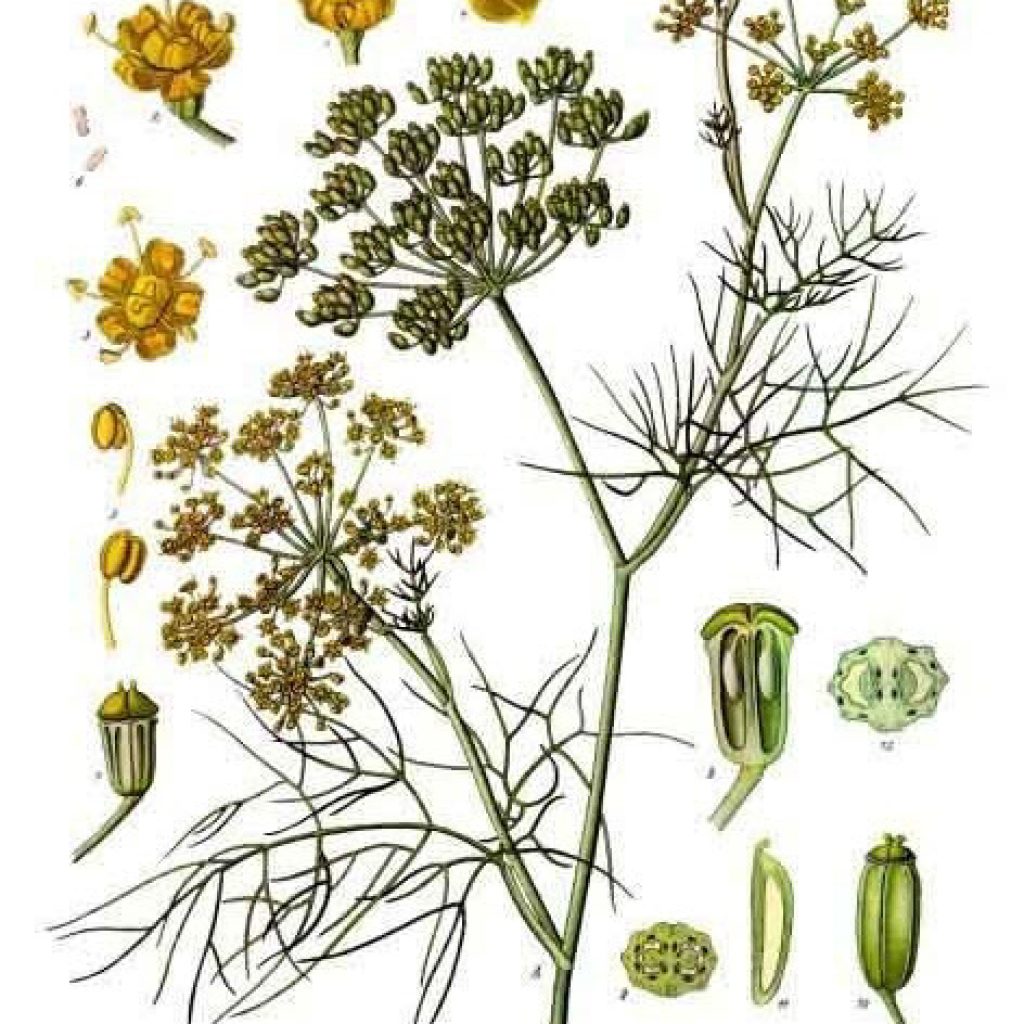
Florence Fennel (Foeniculum vulgare var. dulce)
Florence fennel, often distinguished from other varieties by its sweeter, more pronounced liquorice notes, is the third essential botanical. It works in tandem with anise to create the signature “Verte” flavor that many associate with absinthe. While anise provides the dominant liquorice note, fennel adds a softer, more aromatic sweetness, rounding out the flavor profile and preventing it from becoming overly sharp.
The specific variety of fennel used, and its preparation (seeds or sometimes the bulb), can subtly influence the final taste. Some producers prefer sweeter, more anise-forward fennel, while others opt for a slightly more herbaceous and peppery profile. The interplay between anise and fennel is a delicate art, and the ratio of these two botanicals is a closely guarded secret for many absinthe distilleries.
Beyond the Big Three: Secondary Botanicals and Their Role

While wormwood, anise, and fennel form the aromatic core, many absinthes feature a supporting cast of secondary botanicals. These additions, though present in smaller quantities, can significantly enhance the complexity and nuance of the final spirit. Their inclusion speaks to the artisanal nature of absinthe production, allowing distillers to craft unique flavor profiles and differentiate their brands.
Common Supporting Botanicals and Their Contributions:
- Hyssop (Hyssopus officinalis): This aromatic herb contributes a slightly bitter, minty, and peppery note, adding another layer of complexity to the herbal profile. It’s often used in small amounts to brighten the overall flavor.
- Lemon Balm (Melissa officinalis): Known for its bright, citrusy, and slightly floral aroma, lemon balm adds a refreshing lift to the spirit, balancing the heavier herbal and anise notes.
- Star Anise (Illicium verum): While distinct from the common anise seed, star anise also provides a strong liquorice flavor, but with a more pungent and spicier nuance. Its inclusion can deepen the anise character.
- Angelica Root (Angelica archangelica): This root offers an earthy, slightly musky, and subtly bitter flavor that adds depth and grounding to the spirit. It’s often used to contribute to the mouthfeel and complexity.
- Coriander (Coriandrum sativum): Coriander seeds can impart a delicate citrusy and slightly spicy note, adding a refreshing contrast to the dominant herbal flavors.
- Cardamom (Elettaria cardamomum): This fragrant spice can introduce warm, aromatic, and slightly camphoraceous notes, adding an exotic touch to the absinthe’s flavor profile.
The selection and proportion of these secondary botanicals are where a distiller’s artistry truly shines. They can be used to achieve specific flavor targets, whether it’s a more floral and citrusy absinthe, or one with deeper, earthier undertones. The process of selecting and blending these ingredients is akin to a perfumer crafting a complex fragrance or a chef developing a signature dish – it requires a deep understanding of how individual components interact and contribute to the overall sensory experience.
The Distillation Process: Unlocking the Essence
The journey from raw botanicals to finished absinthe is a fascinating process, typically involving two main stages: maceration and distillation. This method, refined over centuries, is crucial for extracting the desired flavors and aromas while ensuring the spirit’s purity and potency.
Maceration and Distillation: A Two-Step Transformation
-
Maceration: The process begins with steeping a portion of the botanicals (often the grand wormwood, anise, and fennel) in a high-proof neutral spirit, typically derived from grain. This steeping period, known as maceration, allows the alcohol to extract the essential oils, flavors, and aromas from the plant matter. The duration of maceration is critical; too short and the flavors will be weak, too long and the spirit can become overly bitter or develop undesirable qualities.
-
Distillation: After maceration, the mixture is transferred to a still. The botanicals from the maceration are often strained out, and the spirit is distilled. During distillation, the alcohol and volatile aromatic compounds evaporate, rise, and are then condensed back into a liquid form. Crucially, some of the “holy trinity” botanicals (wormwood, anise, and fennel) are often placed in a perforated basket within the still, allowing their vapors to pass through the alcohol as it distills. This method, known as “vapor infusion” or “in-situ maceration,” imparts a more delicate and nuanced flavor compared to directly distilling with the macerated botanicals.
The type of still used, often a copper pot still, can also influence the final character of the absinthe. Copper is known for its ability to remove sulfur compounds, contributing to a cleaner and smoother spirit. The skill of the distiller in controlling the distillation process – including the cut points (determining which parts of the distillate are kept) – is paramount to achieving a balanced and high-quality absinthe.
Coloring and Finishing: The Final Touches
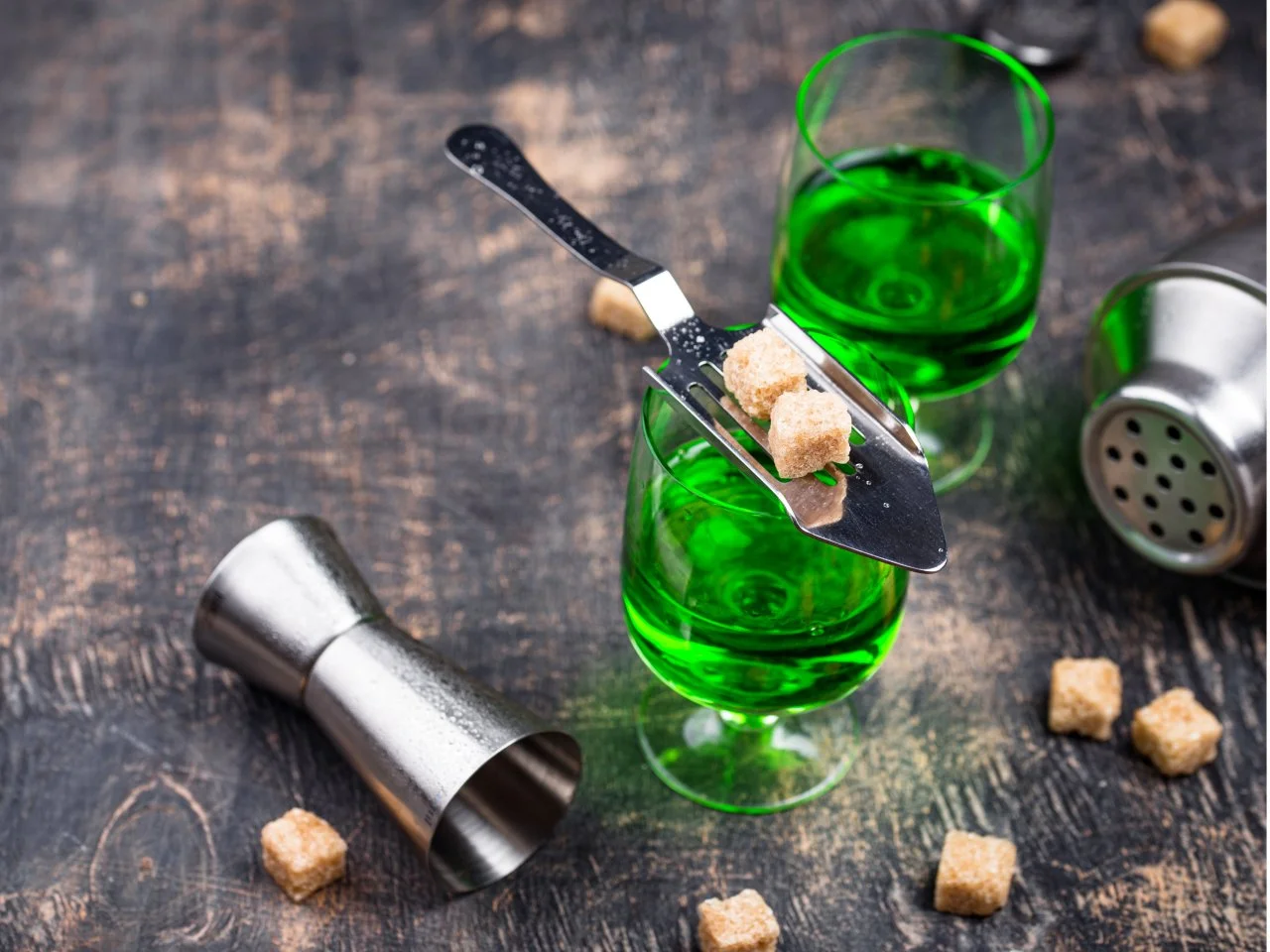
Once distilled, the spirit is typically clear and highly alcoholic. The iconic green hue of absinthe is usually achieved through a secondary maceration and coloring process:
- Coloring Maceration: A blend of primarily green herbs, such as petite wormwood, hyssop, and lemon balm, is macerated in the clear distillate. This process imparts the characteristic emerald-green color, along with subtle additional herbal notes.
- Aging (Optional): Some absinthes, particularly those intended to be enjoyed neat or with minimal dilution, undergo a period of aging. This aging can be in glass or stainless steel, allowing the flavors to meld and mellow, resulting in a smoother and more integrated spirit. While not as common as in spirits like whiskey or rum, aging can add another dimension to premium absinthe.
- Bottling: The final absinthe is typically bottled at a relatively high proof, often between 50% and 75% alcohol by volume (ABV). This high alcohol content is necessary to preserve the delicate essential oils and ensure the spirit’s longevity.
The final product is a complex spirit, born from a precise interplay of plant matter, alcohol, and skilled craftsmanship. Understanding what goes into absinthe reveals not just its ingredients but also the history and tradition that have shaped its production into an art form.
aViewFromTheCave is a participant in the Amazon Services LLC Associates Program, an affiliate advertising program designed to provide a means for sites to earn advertising fees by advertising and linking to Amazon.com. Amazon, the Amazon logo, AmazonSupply, and the AmazonSupply logo are trademarks of Amazon.com, Inc. or its affiliates. As an Amazon Associate we earn affiliate commissions from qualifying purchases.