
Anti-lock Braking Systems (ABS) have transformed the landscape of motorcycle safety, evolving from high-end luxury features to essential technology found on a vast array of modern two-wheelers. As motorcycles continue to serve as both high-performance tools and practical modes of transport, the integration of advanced electronics has become the industry standard for risk mitigation. Understanding how ABS functions, the hardware involved, and the implications for the modern rider is critical for anyone looking to navigate the intersection of mechanics and rider safety.
The Mechanical Anatomy of Motorcycle ABS
At its core, an Anti-lock Braking System is a sophisticated electronic enhancement that monitors wheel speed and regulates braking pressure to prevent wheel lock-up during hard deceleration. Unlike a standard hydraulic braking system, which relies entirely on the rider’s input, an ABS-equipped motorcycle functions as an active participant in the braking process.
The Sensor Suite and Control Module
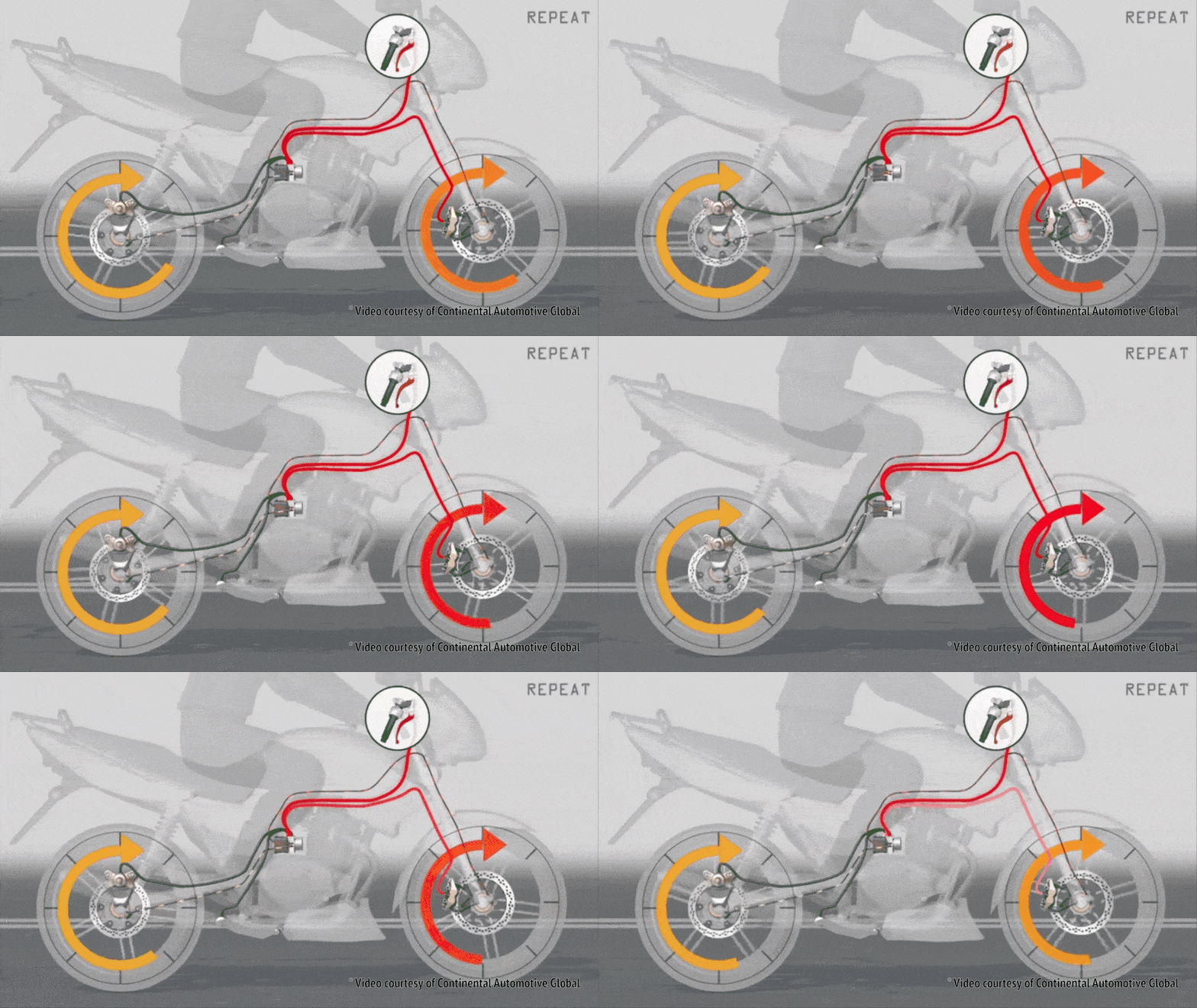
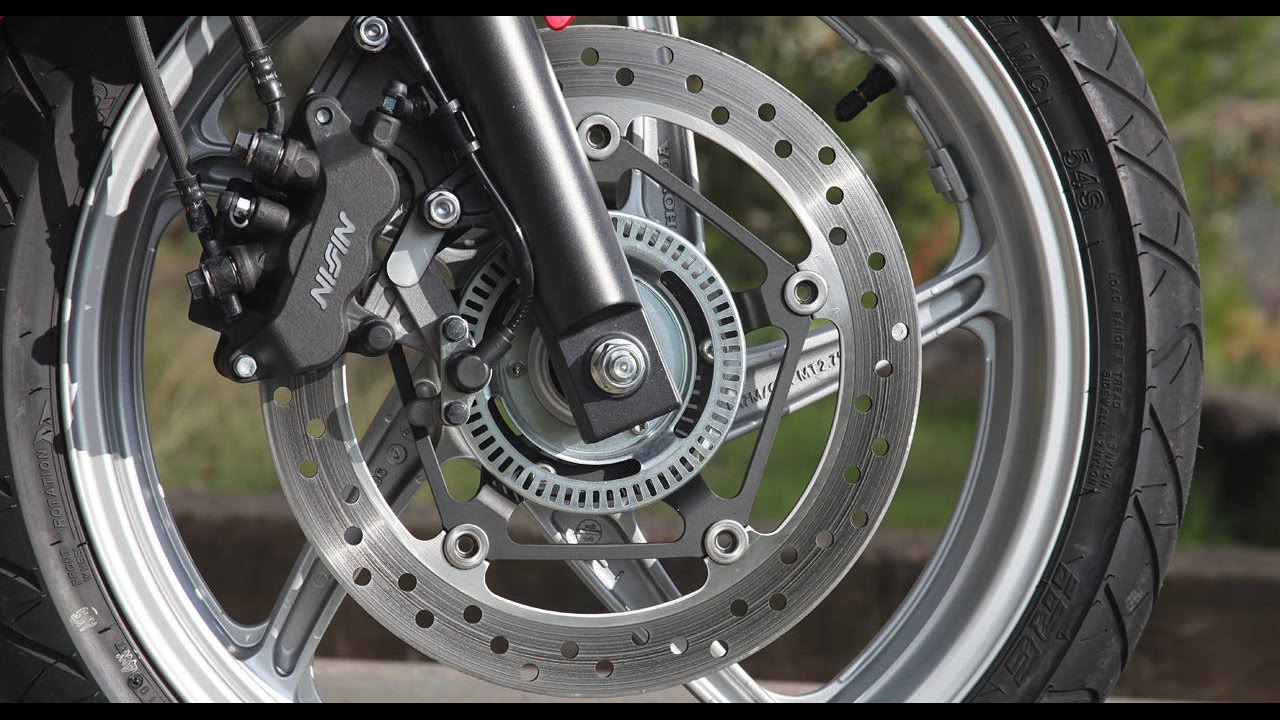
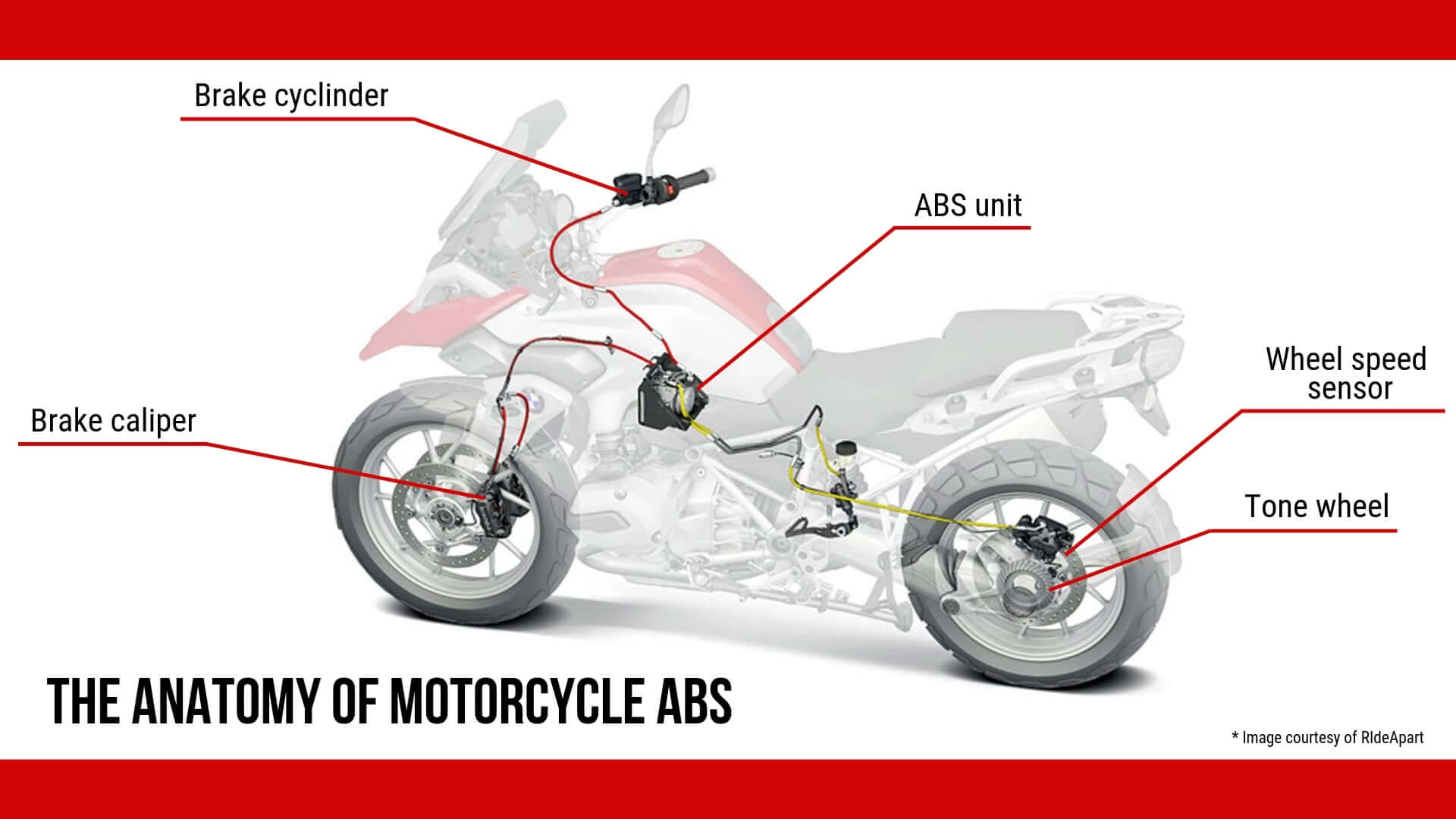
The efficacy of an ABS system relies on a network of high-frequency components that operate in milliseconds. Each wheel is equipped with a slotted tone ring and an inductive wheel-speed sensor. These components continuously track the rotational velocity of the front and rear wheels. This data is fed into an Electronic Control Unit (ECU), the brain of the system, which monitors for discrepancies.
When the ECU detects that a wheel’s speed is dropping disproportionately fast compared to the vehicle’s speed—a primary indicator of an impending lock-up—it initiates a corrective cycle. This happens far faster than any human can react, often cycling the pressure dozens of times per second to keep the tire at the threshold of maximum grip.
Hydraulic Modulation
The heart of the hardware lies in the hydraulic modulator. This unit sits between the master cylinder (the lever or pedal) and the brake calipers. When the system detects a potential lock-up, the modulator utilizes solenoid valves to instantly reduce, hold, or re-apply hydraulic pressure. By rapidly modulating this pressure, the system ensures that the tire continues to rotate, allowing the rider to maintain traction and, crucially, steering control.
The Physics of Stopping: Why ABS Matters
To understand the value of ABS, one must first understand the physics of a motorcycle tire. A tire provides the most traction when it is rolling. Once a tire begins to skid, the friction coefficient drops significantly, and the tire loses its ability to provide lateral stability.
Maintaining Directional Control
The most dangerous scenario for a motorcyclist during an emergency stop is a front-wheel lock-up. When the front tire stops rotating, the gyroscopic stability of the wheel vanishes, and the tire loses its grip on the road surface. This almost invariably leads to a low-side crash, where the bike slides out from underneath the rider.
By preventing the wheel from locking, ABS ensures that the front tire remains rotating and in contact with the pavement. This allows the rider to keep the motorcycle upright and, more importantly, allows them to steer around a hazard while applying maximum braking force. In a panic situation, the ability to maneuver while braking is often the difference between a near-miss and a collision.
Optimal Braking on Variable Surfaces
Modern street riding rarely involves perfect, dry asphalt. Surfaces often vary between polished concrete, painted road markings, oil patches, and wet tarmac. Each of these surfaces presents a different friction coefficient. A rider attempting to threshold-brake manually in a panic often lacks the sensitivity to adjust pressure for these shifting conditions. ABS, however, is agnostic to the surface; it adjusts its modulation based on the actual speed of the wheels, providing an optimized braking performance regardless of the road condition.
The Evolution of Intelligent Braking
As technology has progressed, the standard “Basic ABS” has given way to more complex, multi-layered systems. The current state of the art involves the integration of Inertial Measurement Units (IMUs), which move beyond simple wheel-speed monitoring to provide a three-dimensional understanding of the motorcycle’s orientation.
Cornering ABS: The Next Frontier
Cornering ABS, also known as lean-sensitive ABS, is perhaps the most significant advancement in motorcycle safety in the last decade. In the past, applying heavy front brake while leaned over in a corner would cause the bike to “stand up” and push wide, often forcing the rider off the road.
By integrating a six-axis IMU, the system calculates the bike’s lean angle, pitch, and yaw. It then adjusts the ABS intervention accordingly. If a rider brakes mid-corner, the system modulates the pressure to allow the rider to maintain their line without the motorcycle snapping upright or the front tire washing out. This technology has brought race-track levels of braking control to the average street rider.
Rear-Wheel Lift Mitigation
On many sport-oriented motorcycles, aggressive front braking can lead to “stoppies” or rear-wheel lift. While this might be a stunt-rider’s goal, in an emergency, it reduces total contact patch area and can lead to a loss of control. Modern ABS systems now incorporate rear-wheel lift mitigation, which senses if the rear tire is starting to lose contact with the road and intelligently bleeds off front brake pressure to keep both tires planted, ensuring the shortest possible stopping distance.
Myths, Misconceptions, and Rider Education
Despite the overwhelming clinical evidence in favor of ABS, some traditionalists remain skeptical. These misconceptions are often rooted in older, clunky systems or a misunderstanding of how the technology interfaces with rider technique.
The Myth of Longer Stopping Distances
A frequent argument against ABS is that a “skilled rider” can stop faster than an ABS-equipped bike. While it is theoretically possible for an expert rider to stop a motorcycle marginally faster on a clean, dry track in controlled conditions, this does not translate to the real world. Real-world emergency stops involve panic, target fixation, and uneven surfaces. In these environments, the system’s ability to react in milliseconds outweighs any advantage a human might have. ABS ensures that the rider hits the “best” stopping performance almost every time, whereas a human rider will have wildly inconsistent results under stress.
The Importance of Proper Input
It is essential to clarify that ABS is not a replacement for proper braking technique; it is a safety net. Modern riders should still be trained to apply brakes progressively. In fact, many advanced ABS systems are designed to provide feedback to the rider—often felt as a slight pulsing in the lever—which acts as an educational tool, letting the rider know they are approaching the limit of the tire’s grip.
Maintenance and Digital Security
As a piece of technical hardware, ABS requires attention. The hydraulic fluid used in ABS systems is susceptible to moisture absorption, which can cause internal corrosion in the delicate valves of the modulator. Regular brake fluid flushes are non-negotiable for the longevity of the system. Furthermore, as bikes become more digital, the software that governs these systems becomes a point of concern. Manufacturers now issue firmware updates to optimize ABS performance, much like an operating system update for a computer. Keeping a bike’s software current is becoming an essential part of modern motorcycle maintenance.
Conclusion: The New Standard
The transition toward universal ABS on motorcycles represents a pivotal moment in automotive history. By bridging the gap between human error and mechanical potential, ABS has fundamentally altered the risk profile of motorcycling. It is no longer a peripheral luxury but a core technology that defines the capability and safety of the modern machine. Whether for the daily commuter navigating slick city streets or the sport rider pushing limits on a mountain pass, ABS provides the confidence that only comes from knowing the technology is working in the background to keep the rubber on the road. As we look toward the future of motorcycling, the integration of such advanced electronic interventions ensures that the industry remains focused on a singular goal: making the ride not only more exciting but significantly safer.
aViewFromTheCave is a participant in the Amazon Services LLC Associates Program, an affiliate advertising program designed to provide a means for sites to earn advertising fees by advertising and linking to Amazon.com. Amazon, the Amazon logo, AmazonSupply, and the AmazonSupply logo are trademarks of Amazon.com, Inc. or its affiliates. As an Amazon Associate we earn affiliate commissions from qualifying purchases.