
The humble wood screw, a seemingly simple piece of hardware, represents a sophisticated blend of material science, mechanical engineering, and precision manufacturing. Far from being a static, unchanging component, the wood screw has evolved over centuries, continually refined to meet ever-growing demands for strength, durability, and ease of use in construction and fabrication. Understanding what a wood screw truly is involves delving into its fundamental design principles, the technological advancements in its production, and its symbiotic relationship with the power tools that drive it. It is a testament to applied technology, optimizing the joining of two or more pieces of wood to create robust, lasting structures.
The Engineering Behind the Fastener
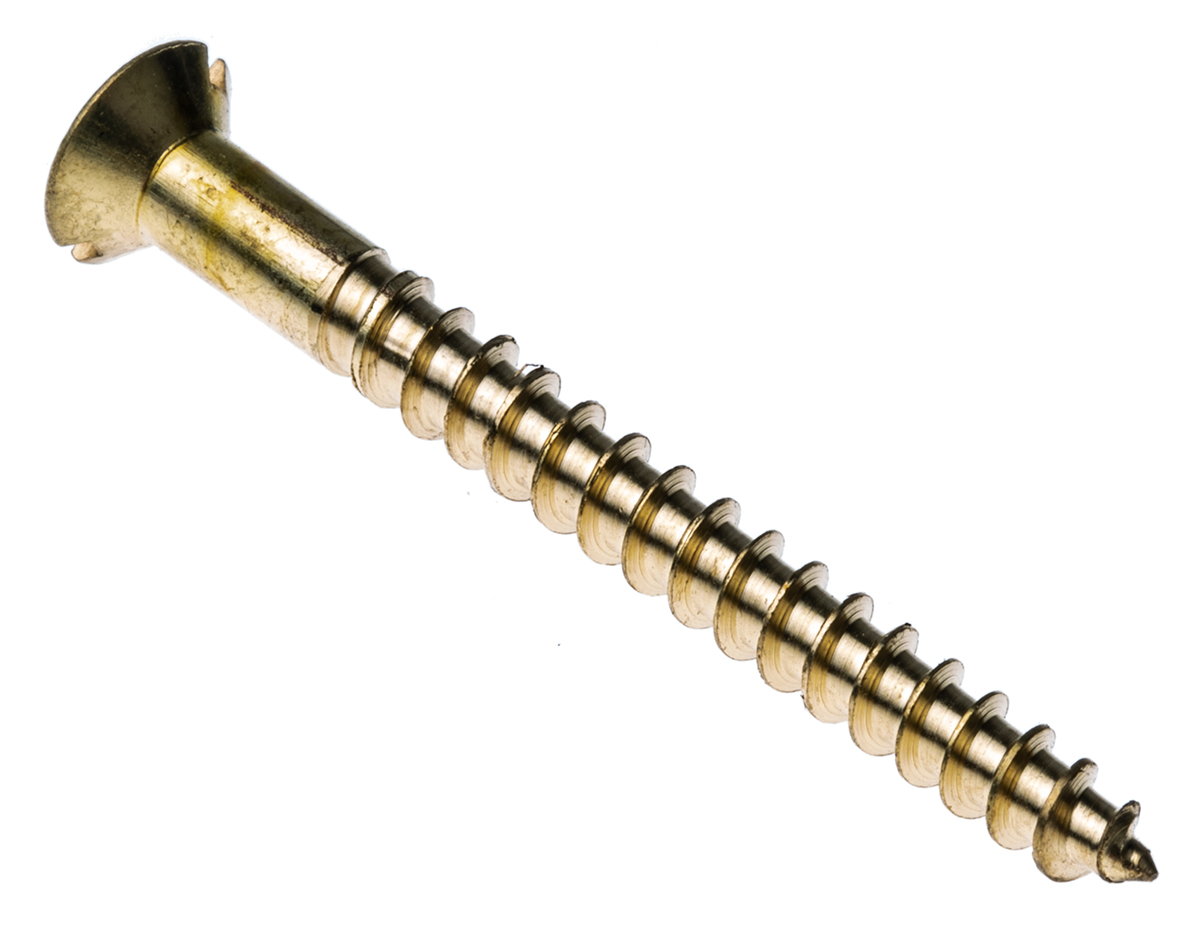
At its core, a wood screw is a threaded fastener specifically designed to create its own mating thread in wood. Unlike a bolt that requires a pre-tapped hole or a nut, a wood screw relies on its tapered point and aggressive thread profile to draw itself into the material, creating a strong mechanical bond as it rotates. This self-tapping capability is a marvel of engineering, balancing material displacement with rotational force to achieve optimal pull-out resistance and shear strength.
Material Science and Durability
The performance of a wood screw begins with its material composition. Historically made from steel, modern wood screws often incorporate various alloys and coatings to enhance their properties. Carbon steel remains prevalent due to its strength and cost-effectiveness, but stainless steel versions offer superior corrosion resistance, crucial for outdoor applications or use with treated lumber which can accelerate corrosion in standard steel. Specialized coatings, such as zinc plating, ceramic coatings, or polymer blends, provide additional protection against rust, reduce friction during installation, and sometimes even impart self-lubricating properties. The precise metallurgical composition and heat treatment processes are critical technological factors determining a screw’s hardness, ductility, and resistance to snapping or stripping under torque. Engineers carefully select these materials and treatments to ensure the screw can withstand the shear forces when driven and the long-term loads it will experience in service.
Thread Design: Grip and Strength
The thread is arguably the most critical engineered feature of a wood screw. Its geometry—including pitch (threads per inch), major diameter, minor diameter, thread angle, and helix angle—is meticulously designed to achieve optimal grip and pull-out resistance in various wood species. Coarse threads are common, providing substantial wood displacement and a strong hold, especially in softer woods. Some advanced designs feature partial threads or specialized “serrated” threads near the tip to reduce splitting, while others incorporate a “cutter” or “auger” tip that pre-drills a small amount of material, further minimizing splitting and reducing driving torque. The consistent uniformity and sharpness of these threads, achieved through precise rolling or cutting manufacturing processes, are essential for reliable engagement with the wood fibers, distributing stress evenly and preventing premature stripping.
Head Types and Drive Systems
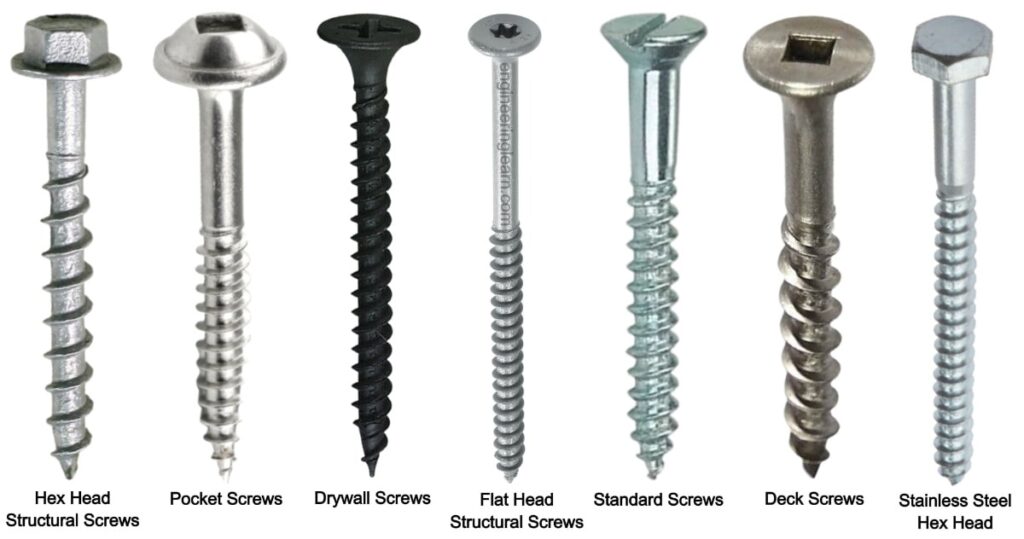
The head of a wood screw is the interface through which torque is applied, and its design has seen significant technological advancements. Early screws featured slotted heads, which were prone to cam-out and stripping, especially with manual screwdrivers. The invention of the Phillips head in the 1930s, followed by Pozidriv, Torx (star drive), and square drive (Robertson) systems, represented significant leaps in drive technology. These modern drive systems are engineered to improve torque transfer, reduce cam-out, and allow for greater driving speeds, particularly with power tools. Each head type has specific advantages: Torx, for instance, offers superior torque transmission and virtually eliminates cam-out, making it ideal for high-power driving applications. Furthermore, the shape of the head itself – flat (countersunk), pan, round, or washer head – is designed for specific aesthetic and functional requirements, influencing how the screw sits flush with the material surface or distributes clamping force over a wider area. These design choices are crucial for both the structural integrity and the finish of the final assembly.
Evolution and Innovation in Fastener Technology

The journey of the wood screw from a crude, handmade fastener to a highly engineered component reflects a broader narrative of industrial innovation. Early screws were individually cut and filed, making them expensive and inconsistent. The development of screw-making machinery in the 18th and 19th centuries revolutionized production, allowing for mass manufacturing with greater precision. This mechanization was the first major technological leap.
Specialized Wood Screw Applications
Modern wood screws are not one-size-fits-all. Innovation has led to a proliferation of specialized designs tailored for specific applications, showcasing focused engineering. Decking screws, for example, are often made from corrosion-resistant materials, have self-drilling points, and include aggressive threads to resist the expansion and contraction of outdoor wood. Cabinetry screws feature fine threads, a robust head that resists stripping, and often a smaller head diameter to be less obtrusive. Construction screws, designed for structural applications, boast high shear strength, often have a washer head for increased bearing surface, and are engineered to replace lag bolts in many scenarios, providing faster installation. Even within these categories, specific coatings or tip designs are optimized for different wood types, from softwoods and hardwoods to engineered wood products like MDF and particleboard, each presenting unique challenges for fastener engagement.
Smart Fasteners and Future Trends
While a wood screw might seem far removed from cutting-edge tech, the principles of advanced materials and smart systems are beginning to influence fastener design. Research into self-healing coatings that can repair minor damage, or screws incorporating sensors for structural health monitoring, represents the frontier. Imagine screws that could report stress levels or environmental conditions, providing data crucial for predictive maintenance in large timber structures. Though still largely in research phases, these concepts illustrate how even the most basic components can be integrated into the broader ecosystem of smart infrastructure and IoT (Internet of Things), extending the technological relevance of fasteners beyond their mechanical function.
The Interplay with Modern Power Tools
The true potential and performance of modern wood screws are fully realized when paired with contemporary power tools. The technological advancements in drilling and driving equipment have pushed the boundaries of what screws can achieve and how efficiently they can be installed.
Driving Technology: Impact Drills and Torque Control
The widespread adoption of cordless impact drivers and drills has been a game-changer for wood screw installation. Impact drivers, with their unique hammering action, deliver powerful rotational force in short, rapid bursts, allowing screws to be driven with significantly less effort and less risk of cam-out, even in dense materials. This technology has necessitated the development of stronger, more robust screw heads and shanks capable of withstanding the immense torque and impact forces. Advanced drills feature electronic torque control settings, allowing users to precisely limit the driving force to prevent over-tightening, stripping the screw head, or damaging the wood. Brushless motor technology in these tools further enhances efficiency, power, and battery life, creating a highly optimized system for fastener application.
Automated Fastening Systems
For large-scale construction or manufacturing, automated fastening systems represent the pinnacle of wood screw application technology. Robotic arms equipped with specialized screw-driving attachments can precisely place and drive thousands of screws with unparalleled speed and accuracy. These systems often utilize collated screws (screws joined together in strips or coils) for rapid feeding. From prefabricated timber frame construction to furniture assembly lines, automation reduces labor costs, improves consistency, and significantly boosts productivity. The integration of CAD/CAM software allows engineers to design complex assemblies where screw placement is precisely mapped, and robots execute these instructions flawlessly, demonstrating how digital design and robotic technology converge to enhance the use of even fundamental components like wood screws.
In conclusion, a wood screw is far more than just a piece of metal. It is a carefully engineered product, born from centuries of innovation and continually refined by advancements in material science, manufacturing precision, and power tool technology. Its seemingly simple design belies a complex interplay of forces and materials, making it an indispensable component in countless applications, a silent workhorse of modern construction and fabrication, and a quiet testament to the enduring power of applied technology.
aViewFromTheCave is a participant in the Amazon Services LLC Associates Program, an affiliate advertising program designed to provide a means for sites to earn advertising fees by advertising and linking to Amazon.com. Amazon, the Amazon logo, AmazonSupply, and the AmazonSupply logo are trademarks of Amazon.com, Inc. or its affiliates. As an Amazon Associate we earn affiliate commissions from qualifying purchases.