
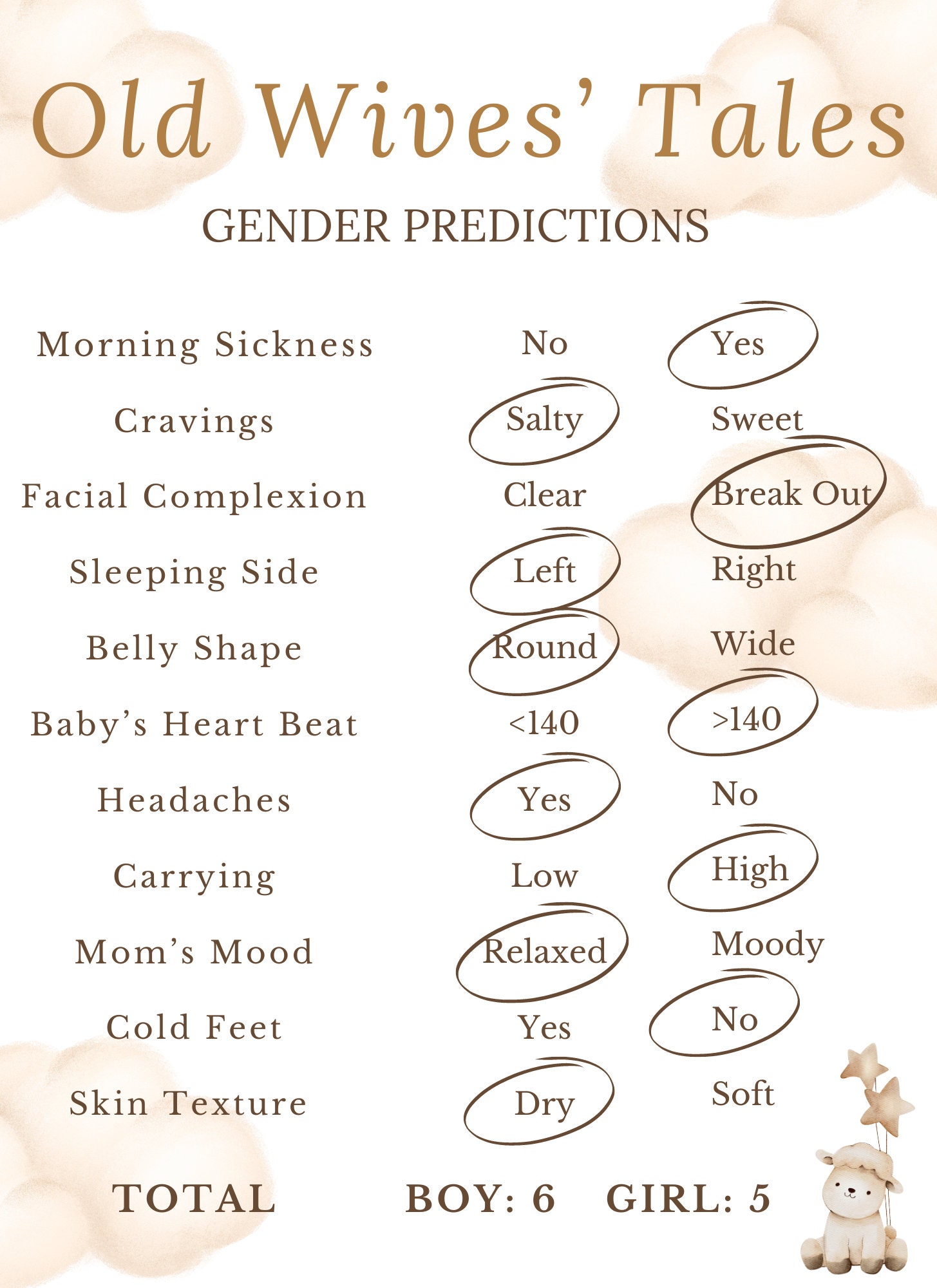
In the traditional sense, an “old wives’ tale” refers to a type of folklore—a superstitious claim or a piece of traditional wisdom passed down through generations, often regarding health, luck, or domestic life. While many of these tales are harmless or even charming, the concept takes on a much more dangerous form when applied to the world of personal finance. In the context of money, a “wives’ tale” is a piece of outdated, anecdotal, or logically flawed advice that persists despite changes in the economic landscape.

These financial myths often sound like common sense. They are frequently delivered by well-meaning family members or peers who believe they are sharing timeless truths. However, in a globalized economy defined by inflation, digital assets, and complex tax codes, clinging to these tales can be the difference between financial freedom and perpetual struggle. To build a robust modern portfolio, one must learn to distinguish between enduring principles and the financial “wives’ tales” that no longer serve the modern investor.
The Anatomy of a Financial Wives’ Tale
Financial folklore doesn’t emerge from a vacuum. Most of these myths were actually “truths” at a specific point in history. To understand why they persist, we must look at the psychological and historical roots of how we process money management advice.
The Psychology of Heritage Wealth Advice
Human beings are wired to trust information passed down from elders. This is an evolutionary survival mechanism; if your ancestors survived by following certain rules, those rules are perceived as safe. In finance, this manifests as “Heritage Wealth Advice.” If your grandfather built a comfortable life by never taking out a loan and putting every spare dollar into a local savings account, your brain is predisposed to view that as the “correct” way to handle money. However, this ignores the fact that your grandfather likely lived in an era of higher interest rates for savers and significantly lower costs of living relative to wages.
Why Outdated Information Persists in Modern Markets
The primary reason financial wives’ tales persist is “Cognitive Inertia.” The world moves faster than the collective consciousness. For example, the idea that a college degree is a guaranteed ticket to the middle class was a bedrock truth for forty years. As the cost of education skyrocketed and the job market shifted toward specialized skills and tech-literacy, the ROI of a general degree plummeted. Yet, the “wives’ tale” persists because the generation currently giving the advice (parents and grandparents) experienced the old reality. They are offering a map to a city that has been completely redesigned.
Common Real Estate Myths: Is Your Home Truly an Asset?
Perhaps no area of finance is as plagued by wives’ tales as real estate. For decades, the mantra has been that “buying a home is the best investment you will ever make.” While homeownership can be a component of a healthy financial life, the idea that it is a primary investment vehicle is a myth that requires rigorous deconstruction.
The “Rent is Throwing Money Away” Fallacy
This is the quintessential financial wives’ tale. The logic suggests that because you aren’t building equity, your monthly rent check is a total loss. However, this ignores “unrecoverable costs” associated with homeownership. Property taxes, homeowners’ association (HOA) fees, mortgage interest, and maintenance are all “thrown away” money that never goes toward equity. In many high-cost urban markets, the unrecoverable cost of owning a home is actually higher than the cost of renting a similar property. Renting provides flexibility and caps your monthly housing liability, whereas a mortgage is the minimum you will pay each month.
Factoring in Opportunity Cost and Maintenance
A true asset puts money in your pocket; a liability takes money out. Unless you are renting out a portion of your home, your primary residence is technically a liability. The wives’ tale of “homes always go up in value” ignores the opportunity cost of the down payment. If you take $100,000 and put it into a house, you are betting that the home’s appreciation will outperform the stock market. Historically, the S&P 500 has outperformed residential real estate appreciation over long horizons. By debunking the myth that “homeownership is always better,” investors can make more rational decisions about where to park their capital for maximum growth.
Stock Market Superstitions and the Retail Investor

The volatility of the stock market breeds superstition. When people feel they lack control, they turn to “wives’ tales” to find a sense of order. Unfortunately, these superstitions often lead to “buy high, sell low” behaviors that devastate portfolios.
The Myth of “Timing the Market”
Many amateur investors believe in the wives’ tale that you should wait for the “perfect time” to buy. They believe they can predict the bottom of a crash or the peak of a bull run. Data consistently shows that “time in the market” beats “timing the market.” By waiting on the sidelines for a dip that may never come, investors miss out on the most explosive days of growth. Modern financial strategy emphasizes Dollar Cost Averaging (DCA)—investing a fixed amount regularly regardless of price—to mitigate the risks of human emotion and market volatility.
Diversification vs. Concentration: The “Safe Bet” Delusion
Another common myth is the idea of the “Safe Bet”—the belief that one should put all their money into a “stable” blue-chip company or a specific industry they “understand.” This is often framed as “putting all your eggs in one basket and watching the basket.” While concentration can lead to massive wealth if you are lucky, it violates the fundamental rule of risk management. A true financial professional knows that the only “free lunch” in investing is diversification. Relying on the wives’ tale of a “sure thing” stock is a gamble, not a strategy.
Credit and Debt: Traditional Wisdom vs. Modern Reality
Debt is often viewed through a moral lens rather than a mathematical one. Many old wives’ tales regarding money suggest that all debt is inherently evil and should be avoided at all costs. In the modern financial ecosystem, this perspective is not only outdated—it’s a hindrance to wealth creation.
The Fear of Credit Cards
The traditional advice often given to young people is: “Don’t get a credit card; it’s a trap.” While it’s true that high-interest consumer debt is a trap, avoiding credit cards entirely prevents an individual from building a credit score. In the modern economy, your credit score is a financial passport. It determines your ability to rent an apartment, get a lower insurance premium, and access low-interest loans for business ventures. Viewing credit cards as a tool for points, protection, and credit-building—rather than a source of “extra money”—is the shift from folklore to financial literacy.
Good Debt vs. Bad Debt: A Critical Distinction
The “all debt is bad” wives’ tale fails to distinguish between consumer debt and leverage. Bad debt is used to purchase depreciating assets (like clothes or electronics) at high interest rates. Good debt—or leverage—is used to acquire appreciating assets or to scale a business. For example, taking a low-interest loan to expand a profitable business can result in a return on investment (ROI) far higher than the interest cost of the loan. Understanding that debt is a tool, not a character flaw, is essential for high-level wealth management.
Building a Modern Financial Strategy Beyond the Folklore
To move past the era of financial wives’ tales, investors must transition from anecdotal decision-making to data-driven strategy. This requires a commitment to continuous learning and an openness to the idea that “what worked for Dad” might not work in a digital, inflationary age.
Leveraging Data Over Anecdote
The antidote to the wives’ tale is the spreadsheet. When faced with financial advice, ask for the data. What is the historical return? What are the tax implications? What is the inflation-adjusted growth? By quantifying financial decisions, you strip away the emotional and superstitious layers that lead to poor choices. Professional investors rely on back-testing and Monte Carlo simulations rather than “gut feelings” or traditional sayings.
The Role of Automation in Avoiding Emotional Bias
The greatest enemy of a sound financial plan is the human brain. We are prone to panic, greed, and the urge to follow the crowd—all of which are fueled by the “wives’ tales” of the moment (such as the “Fear Of Missing Out” or FOMO in crypto or tech bubbles). By automating your finances—setting up automatic transfers to savings, automated investment contributions, and bill payments—you remove the opportunity for “folklore” to influence your actions. Automation ensures that you stick to a logical plan even when the cultural narrative suggests you should do something different.
In conclusion, while “old wives’ tales” may have a place in our cultural heritage, they have no place in a modern brokerage account. By identifying these myths—whether they concern the “safety” of a home, the “evil” of debt, or the “timing” of the market—you can clear the path toward a strategy based on the realities of the 21st-century economy. Real wealth isn’t built on slogans; it is built on logic, discipline, and the courage to ignore the folklore of the past.
aViewFromTheCave is a participant in the Amazon Services LLC Associates Program, an affiliate advertising program designed to provide a means for sites to earn advertising fees by advertising and linking to Amazon.com. Amazon, the Amazon logo, AmazonSupply, and the AmazonSupply logo are trademarks of Amazon.com, Inc. or its affiliates. As an Amazon Associate we earn affiliate commissions from qualifying purchases.