
In the landscape of modern instrumentation, few tools have undergone a more profound digital transformation than the wind vane. While the traditional image of a rooster perched atop a barn remains etched in the collective consciousness, the contemporary reality of this device is a sophisticated piece of hardware integrated into complex data ecosystems. In a world increasingly driven by the Internet of Things (IoT), renewable energy, and hyper-local meteorological data, understanding what a wind vane is requires looking beyond its mechanical roots and into its role as a high-precision digital sensor.

At its core, a wind vane is an instrument designed to measure the direction of the wind. However, in the context of 21st-century technology, it is a critical component of “anemometry”—the science of measuring wind speed and direction. This data is the lifeblood of industries ranging from aerospace and precision agriculture to autonomous maritime navigation and smart city infrastructure.
The Evolution of Directional Sensors: From Mechanics to Microchips
The journey of the wind vane from a simple physical indicator to a high-tech sensor is a testament to our advancing capabilities in hardware engineering. The fundamental principle—an asymmetrical shape that aligns itself with the path of least resistance—remains the same, but the methods by which that movement is recorded have evolved significantly.
From Classical Mechanics to Digital Precision
Early wind vanes relied on visual observation. Today, a digital wind vane utilizes complex internal mechanisms to translate physical rotation into digital signals. Most modern industrial vanes use an optical encoder or a magnetic Hall-effect sensor. An optical encoder uses a light source and a disc with patterns to determine the exact degree of rotation, offering high resolution and accuracy. Conversely, Hall-effect sensors measure the change in magnetic fields as the vane rotates. These technologies eliminate the friction and wear-and-tear associated with older mechanical potentiometers, allowing for a longer lifespan and more reliable data in extreme environments.
The Anatomy of a Modern Electronic Wind Vane
A professional-grade wind vane is a marvel of materials science and electrical engineering. The “tail” or fin is typically constructed from lightweight, UV-stabilized polymers or carbon fiber to ensure sensitivity to even the slightest breeze. The shaft is supported by high-grade stainless steel ball bearings, often shielded or sealed to prevent ingress from dust and moisture. Internally, the device contains a circuit board that processes the raw rotational data, often converting it into standardized communication protocols like Modbus, SDI-12, or 4-20mA signals for easy integration with data loggers.
Integration within the Internet of Things (IoT) Ecosystem
The true power of the modern wind vane is realized when it is connected. No longer an isolated tool, the wind vane is now a node in a vast network of environmental sensors, contributing to a holistic understanding of our physical environment through the Internet of Things (IoT).
Smart Weather Stations and Home Automation
In the consumer and semi-professional tech space, wind vanes have become integral parts of smart home weather stations. These devices leverage Wi-Fi or low-power wide-area networks (LPWAN) like LoRaWAN to stream real-time data to the cloud. For a tech-savvy homeowner, this means more than just knowing which way the wind is blowing. Integration with home automation platforms (like Home Assistant or Apple HomeKit) allows for reactive programming: retractable awnings can be pulled in automatically if high-speed winds are detected from a specific direction, or irrigation systems can be adjusted based on wind-chill and evaporation data.
Industrial IoT (IIoT) Applications in Renewable Energy
Perhaps the most critical technological application of the wind vane is in the wind energy sector. Every wind turbine in a modern wind farm is equipped with a sophisticated anemometry suite. These wind vanes provide the essential data needed for “yaw control”—the mechanism that rotates the entire turbine head to face the wind. By precisely aligning the blades with the wind direction, the system maximizes energy capture and reduces structural stress. In this context, the wind vane is not just a sensor; it is a critical input for the AI-driven control systems that manage the stability of the power grid.
Data Processing and Algorithmic Interpretation
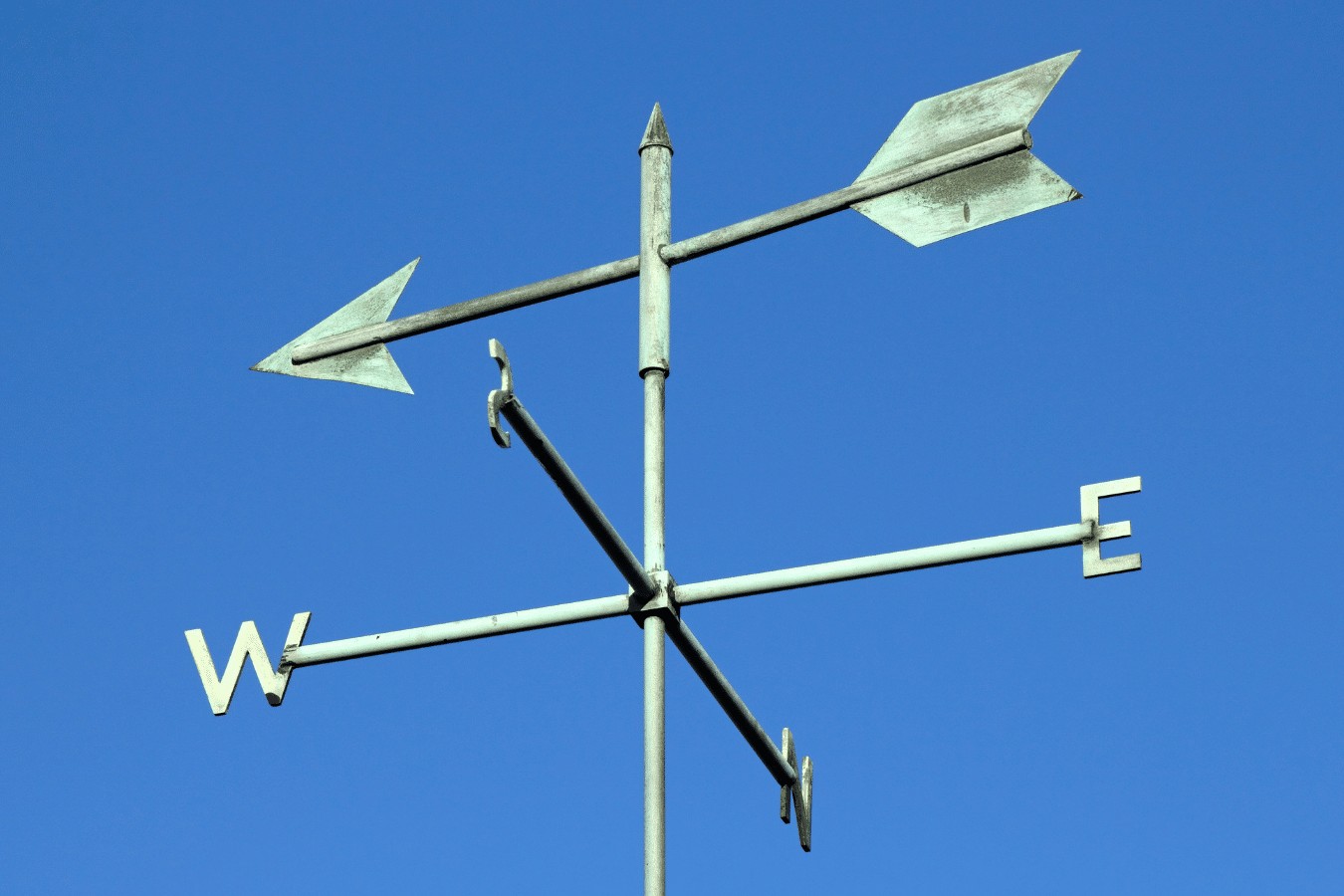
Collecting wind direction data is only the first step. The tech niche thrives on what happens after the sensor records a measurement. Wind is inherently turbulent, and raw data from a wind vane can be “noisy,” fluctuating rapidly within a small arc.
Raw Data to Actionable Insights: The Software Layer
Modern wind vanes are often paired with sophisticated software stacks that perform on-device or cloud-based data smoothing. Using algorithms like the “unit vector method” or “circular mean,” software can filter out instantaneous gusts to provide a stable, meaningful average of wind direction over a set period (usually 2, 5, or 10 minutes). This processed data is then surfaced via APIs, allowing developers to build custom dashboards, alert systems, or historical archives.
Minimizing Signal Noise: Smoothing and Calibration Algorithms
Precision is paramount in professional meteorology. Tech companies specializing in sensor manufacturing implement advanced calibration routines to account for “dead bands”—the tiny area where a sensor might have difficulty reporting (usually near the 359/0-degree mark). Through firmware-level logic, modern sensors can “wrap around” this point seamlessly, providing a full 360-degree range of motion without data drops. Furthermore, advanced digital filters like the Kalman filter are used in high-end applications to predict movement and compensate for mechanical inertia, ensuring the digital output matches reality as closely as possible.
Critical Applications in Specialized Tech Sectors
Beyond simple weather reporting, the wind vane—and the directional data it provides—is a cornerstone of several cutting-edge technological fields.
Aerospace and Avionics: Beyond Simple Direction
In the aerospace industry, understanding relative wind direction is vital for flight safety and efficiency. While large aircraft use “alpha vanes” to measure the angle of attack, unmanned aerial vehicles (UAVs) and drones often use miniaturized versions of directional sensors to maintain stability. This data is fed directly into the flight controller’s PID (Proportional-Integral-Derivative) loops, allowing the drone to tilt and compensate for crosswinds in real-time, ensuring steady hover and precise GPS positioning.
Autonomous Marine Navigation and Robotics
The maritime industry is currently undergoing a digital revolution with the development of autonomous ships and robotic sailing vessels. For these machines, a wind vane is a primary navigation sensor. Integrated with GPS and IMU (Inertial Measurement Unit) data, the wind vane allows the onboard computer to calculate “true wind” versus “apparent wind.” This distinction is critical for autonomous pathfinding, allowing the vessel to optimize its sail or hull position to navigate efficiently without human intervention.
The Future of Anemometry and Directional Sensing
As we look toward the future, the technology behind wind direction measurement is moving away from moving parts entirely. The next generation of “wind vanes” may not look like vanes at all.
Ultrasonic and Laser-Based Alternatives
Solid-state technology is the new frontier. Ultrasonic anemometers use sound waves to measure wind speed and direction. By measuring the “time of flight” of sonic pulses between three or four transducers, these devices can calculate wind direction with incredible precision and zero mechanical lag. Because they have no moving parts, they are virtually maintenance-free and can operate in environments where traditional vanes would freeze or break. Similarly, LiDAR (Light Detection and Ranging) technology is being used to measure wind direction at a distance by bouncing laser beams off airborne particles, a high-tech solution for surveying potential wind farm sites.

AI-Driven Predictive Modeling
The final evolution of wind vane technology lies in the marriage of hardware and Artificial Intelligence. By feeding historical data from networks of digital wind vanes into machine learning models, meteorologists and data scientists are developing predictive capabilities that were previously impossible. We are moving from a reactive state—measuring the wind as it happens—to a predictive state, where AI can forecast hyper-local wind shifts minutes or hours in advance. This is a game-changer for flight safety, wildfire management, and urban planning.
In conclusion, while the name “wind vane” remains rooted in history, the device itself has become a high-performance digital instrument. It is a fundamental component of the modern tech stack, bridging the gap between the chaotic natural world and the precise requirements of digital systems. Whether it is optimizing the output of a multi-megawatt wind turbine or helping a hobbyist automate their smart home, the wind vane stands as a silent, essential sentinel in the world of technology.
aViewFromTheCave is a participant in the Amazon Services LLC Associates Program, an affiliate advertising program designed to provide a means for sites to earn advertising fees by advertising and linking to Amazon.com. Amazon, the Amazon logo, AmazonSupply, and the AmazonSupply logo are trademarks of Amazon.com, Inc. or its affiliates. As an Amazon Associate we earn affiliate commissions from qualifying purchases.