
In an increasingly connected world, reliable and ubiquitous internet access within our homes and offices is no longer a luxury but a fundamental necessity. From streaming high-definition content and engaging in video conferences to powering smart home devices and supporting remote work, our digital lives demand robust network infrastructure. Yet, for many, the reality of home Wi-Fi often falls short, plagued by frustrating dead zones, inconsistent speeds, and dropped connections. Enter the “WiFi Pod”—a term that has become synonymous with a transformative solution to these pervasive networking challenges.
A WiFi pod, more accurately described as a component of a mesh Wi-Fi system, represents a significant evolution from the traditional single-router setup. Instead of relying on one central device to broadcast a signal across an entire property, a mesh system employs multiple interconnected nodes (the “pods”) that work together to create a single, unified, and expansive Wi-Fi network. These pods intelligently communicate with each other, dynamically routing data to ensure optimal performance and seamless coverage across every corner of a space, effectively banishing the dreaded Wi-Fi dead zone into obsolescence. This article will delve into the intricacies of what a WiFi pod truly is, how it functions, its myriad benefits, and what to consider when integrating this advanced technology into your digital ecosystem.

The Evolution of Home Networking: From Single Routers to Mesh Systems
To fully appreciate the significance of WiFi pods, it’s crucial to understand the limitations of previous home networking paradigms and how mesh technology emerged as a superior alternative. For decades, the standard approach involved a single wireless router attempting to cover an entire residence.
The Limitations of Traditional Routers
Traditional Wi-Fi routers operate as a solitary hub, broadcasting a wireless signal from a fixed point. While effective for smaller apartments or homes with open layouts, this setup quickly encounters obstacles in larger or more complex environments. Walls, floors, furniture, and even household appliances can act as signal blockers, attenuating the Wi-Fi signal and creating “dead zones” where connectivity is poor or non-existent.
Furthermore, a single router often struggles with signal degradation over distance. The further you move from the router, the weaker the signal becomes, leading to reduced speeds and unreliable connections. Users often attempted to combat this by purchasing more powerful routers or using range extenders. While range extenders could boost a signal, they typically did so by creating separate networks, requiring devices to manually switch between them, and often resulted in a halved bandwidth for devices connected through the extender. This fragmented approach introduced complexity and often failed to deliver a truly seamless experience.
The Birth of Mesh WiFi and the Role of Pods
The limitations of traditional setups spurred innovation, leading to the development of mesh Wi-Fi systems. Inspired by enterprise-level networking solutions, mesh Wi-Fi scales down this sophisticated technology for consumer use. At its core, a mesh Wi-Fi system consists of a main router (often called the “primary node” or “gateway pod”) connected to your internet modem, and several satellite nodes (the “WiFi pods” or “extender pods”) strategically placed throughout your home.
Unlike range extenders that simply repeat a signal, WiFi pods communicate intelligently with each other and the primary node. They form a robust, self-healing, and self-optimizing network where each pod acts as both a transmitter and a receiver, extending the network’s reach without creating multiple SSIDs (network names) or significant performance drops. This fundamental shift ensures that your devices are always connected to the strongest available signal, regardless of their location within the mesh network.
Understanding WiFi Pods: Architecture and Operation
Delving deeper into the mechanics reveals the sophisticated engineering behind these seemingly simple devices. WiFi pods are more than just signal boosters; they are intelligent network components designed for optimal performance and user experience.
How Mesh WiFi Works: The Intelligent Network
In a mesh Wi-Fi system, the pods don’t just broadcast a signal; they actively manage the network. When your device (a smartphone, laptop, smart TV) tries to connect, the mesh system automatically directs it to the pod providing the strongest and most stable signal. This process is seamless and invisible to the user, ensuring a consistent connection as you move around your home.
The pods communicate with each other using dedicated wireless channels, often a third band (tri-band systems) separate from the 2.4 GHz and 5 GHz bands used by your devices. This backhaul connection is crucial for maintaining high speeds across the entire network, preventing the bandwidth reduction common with traditional range extenders. If one pod goes offline, the others automatically reroute traffic, ensuring network resilience and continuous service—a feature known as self-healing.
Key Components and Technologies within a Pod
Each WiFi pod is essentially a mini-router, packed with advanced technology:
-
Multiple Radios and Antennas: Pods typically feature multiple internal antennas and radios to transmit and receive signals across different frequency bands (2.4 GHz and 5 GHz, sometimes a third dedicated 5 GHz band for backhaul).
-
MU-MIMO (Multi-User Multiple-Input Multiple-Output): This technology allows the pod to communicate with multiple devices simultaneously rather than sequentially, significantly improving efficiency and reducing latency, especially in homes with many connected devices.
-
Beamforming: This intelligent feature directs the Wi-Fi signal towards connected devices rather than broadcasting it indiscriminately in all directions. This focused approach strengthens the signal, improves range, and enhances performance.
-
Processor and Memory: Like any network device, pods contain a CPU and RAM to manage network traffic, process data, and run their operating system, enabling intelligent features like automatic channel selection and load balancing.
-
Ethernet Ports: While designed for wireless connectivity, many pods include one or more Ethernet ports, allowing you to hardwire devices (like gaming consoles or desktop PCs) for maximum speed and stability, or even use an Ethernet backhaul for increased reliability between pods.
Key Benefits of Deploying WiFi Pods
The architectural advantages of mesh Wi-Fi systems translate into tangible benefits for the end-user, fundamentally transforming the home internet experience.
Eliminating Dead Zones and Extending Coverage
The most immediate and apparent benefit of WiFi pods is their ability to blanket an entire property with robust Wi-Fi coverage. By strategically placing multiple pods, even large or multi-story homes with challenging layouts can achieve consistent signal strength in every room, including basements, attics, and outdoor areas like patios. This comprehensive coverage eradicates frustrating dead zones, ensuring uninterrupted connectivity for all devices, everywhere.
Seamless Roaming and Consistent Performance
Unlike traditional setups where devices might cling to a weak signal from a distant router or require manual switching between different networks, mesh systems with WiFi pods offer seamless roaming. As you move around your home, your device automatically and imperceptibly switches its connection to the nearest and strongest pod. This “hand-off” process is so smooth that you won’t experience drops during video calls or buffering while streaming. Moreover, the intelligent routing and dedicated backhaul channels ensure that consistent high speeds are maintained throughout the entire network, regardless of which pod your device is connected to.
Simplified Setup, Management, and Scalability
Setting up a mesh Wi-Fi system is remarkably straightforward, often managed through an intuitive smartphone app. The app guides you through placing the pods and connecting them, typically requiring minimal technical expertise. Once established, managing the network is equally simple, allowing users to monitor connected devices, set up guest networks, implement parental controls, and perform firmware updates with ease. Furthermore, mesh systems are inherently scalable. If you expand your home or find a new area with weak signal, you can simply add another WiFi pod to extend the network’s reach further, without having to replace your entire setup.
Choosing and Optimizing Your WiFi Pod System
With various mesh Wi-Fi systems available, selecting the right one and optimizing its performance requires careful consideration.
Factors to Consider Before Purchase
When investing in a WiFi pod system, several factors should guide your decision:
-
Home Size and Layout: Estimate the square footage you need to cover and consider the number of floors and walls. Most systems specify the area their kits can cover. A 2-pack might be good for a medium home, while a 3-pack or more is better for larger or multi-story residences.
-
Internet Speed: Ensure the mesh system can support your internet service provider’s (ISP) speed. Look for systems that are Wi-Fi 6 (802.11ax) compatible, especially if you have gigabit internet, as this standard offers higher throughput and efficiency. Wi-Fi 6E and Wi-Fi 7 (802.11be) are newer standards offering even greater capabilities.
-
Number of Devices: If your home has many connected devices (smart home gadgets, multiple streaming devices, gaming consoles), opt for a system with strong processing power, MU-MIMO, and potentially tri-band support to handle the load efficiently.
-
Ethernet Ports: Decide if you need Ethernet ports on the satellite pods for hardwiring devices or for a wired backhaul connection between pods.
-
Advanced Features: Consider features like robust parental controls, QoS (Quality of Service) for prioritizing traffic, robust security protocols, and easy guest network management, depending on your needs.
-
Cost: Mesh systems vary widely in price. Determine your budget, but remember that investing in a good system can significantly improve your overall internet experience.
Placement Strategies for Optimal Coverage
Proper placement of your WiFi pods is critical for maximizing performance.
-
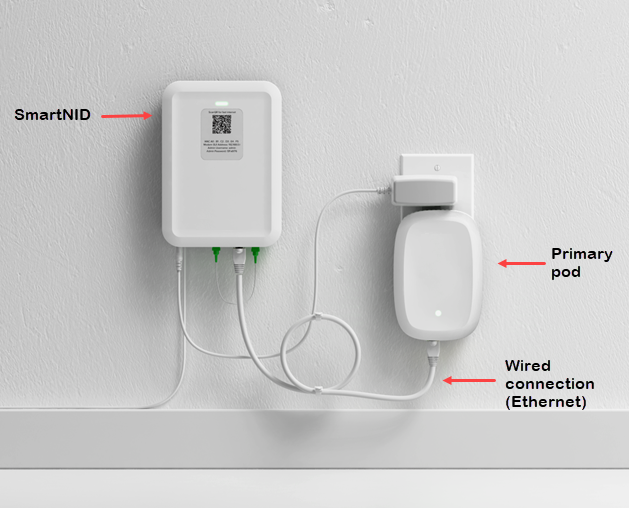
Central Node First: Place the primary pod (connected to your modem) in a relatively central location in your home, ideally in an open area, free from obstructions.
-
Even Spacing: Distribute the satellite pods evenly around your home, ensuring each pod is within good range of another pod or the primary node. Avoid placing pods too close together, as this can create unnecessary interference.
-
Line of Sight: While mesh systems are designed to penetrate obstacles, try to minimize them where possible. Avoid placing pods behind large appliances, thick walls, or in enclosed cabinets.
-
Mid-Way Points: For dead zones, place a pod roughly halfway between the primary node (or another pod) and the area needing coverage.
-
Elevate: Placing pods on a shelf or desk rather than directly on the floor can improve signal propagation.
-
Use the App: Most mesh systems come with an app that helps you determine optimal placement by indicating signal strength between pods. Utilize this feature during setup.
Security Considerations
As with any network device, security is paramount. Ensure your WiFi pod system supports:
-
WPA3 Encryption: The latest and most secure Wi-Fi Protected Access protocol.
-
Automatic Firmware Updates: Ensures your system always has the latest security patches.
-
Firewall and Intrusion Detection: Basic network security features to protect against external threats.
-
Guest Networks: Isolate guest devices from your main network for added security.
-
Strong Passwords: Always use complex, unique passwords for your Wi-Fi network and admin access.
Future Trends in Mesh WiFi Technology
The evolution of WiFi pods and mesh systems is far from over. As our reliance on seamless connectivity grows and new technologies emerge, mesh networks are poised to become even more sophisticated and integrated.
Wi-Fi 6E, Wi-Fi 7, and Beyond
Current high-end mesh systems leverage Wi-Fi 6 (802.11ax) for improved speed and efficiency. The next frontier is Wi-Fi 6E, which introduces the 6 GHz band, offering even more bandwidth and less interference, particularly beneficial for the dedicated backhaul between pods. Wi-Fi 7 (802.11be), or “Extremely High Throughput (EHT),” is already on the horizon, promising revolutionary speeds, lower latency, and increased capacity through advanced features like Multi-Link Operation (MLO) and larger channel bandwidths. Future WiFi pods will naturally incorporate these standards, pushing the boundaries of wireless performance.
Enhanced AI and Machine Learning Integration
Future WiFi pods will likely feature even more advanced AI and machine learning capabilities. These intelligent algorithms will optimize network performance by predicting traffic patterns, dynamically adjusting channel selection to avoid interference, and proactively identifying and mitigating potential issues. They could learn device usage habits, prioritize bandwidth for critical applications (e.g., video conferencing during work hours), and adapt network settings in real-time for an even more personalized and efficient experience.
Deeper Smart Home Integration
As the smart home ecosystem continues to expand, WiFi pods are becoming central to its operation. Future iterations will likely feature deeper integration with smart home protocols (like Matter or Thread), potentially acting as smart home hubs themselves. This could simplify device setup, improve responsiveness, and create a truly unified platform for managing all your connected gadgets, from lighting and thermostats to security cameras and entertainment systems, all underpinned by the robust mesh network.
Sustainable and Energy-Efficient Designs
With growing environmental consciousness, future WiFi pod designs will likely focus on greater energy efficiency. Innovations in chip design, power management protocols, and potentially even energy harvesting technologies could lead to pods that consume less power while delivering superior performance, contributing to a more sustainable digital future.
In conclusion, a WiFi pod is much more than just a piece of hardware; it’s a critical component of a mesh Wi-Fi system designed to deliver an unparalleled home networking experience. By intelligently extending coverage, ensuring seamless performance, and simplifying management, these devices have become essential tools for navigating the demands of our increasingly connected lives. As technology continues to advance, WiFi pods will undoubtedly evolve, offering even greater speed, intelligence, and integration, solidifying their role as the backbone of the modern smart home.
aViewFromTheCave is a participant in the Amazon Services LLC Associates Program, an affiliate advertising program designed to provide a means for sites to earn advertising fees by advertising and linking to Amazon.com. Amazon, the Amazon logo, AmazonSupply, and the AmazonSupply logo are trademarks of Amazon.com, Inc. or its affiliates. As an Amazon Associate we earn affiliate commissions from qualifying purchases.