
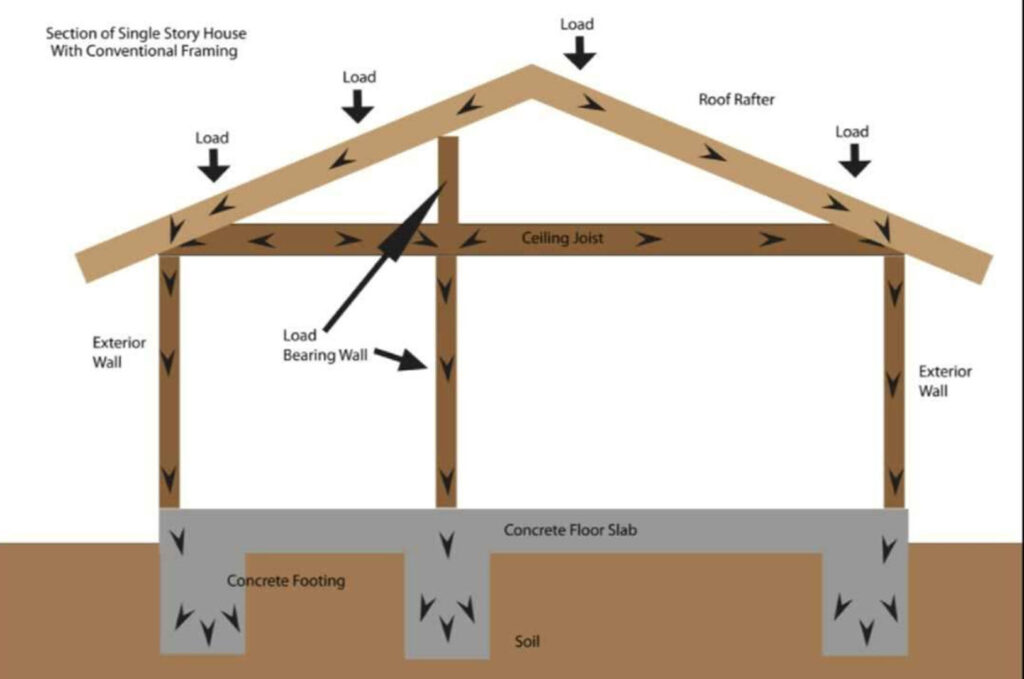
In the world of civil engineering, a weight-bearing wall is a structural element that carries the weight of the elements above it, transferring that load down to the foundation. If you remove it without proper reinforcement, the entire building risks a catastrophic collapse. In the rapidly evolving landscape of technology, software architects and lead developers have adopted this terminology to describe the critical, foundational components of a digital ecosystem.
When we ask, “What is a weight-bearing wall?” in a technological context, we are referring to the core codebases, database schemas, and infrastructure protocols that support the entire weight of an application’s functionality. Understanding these structural pillars is essential for scaling, maintaining security, and ensuring that “renovations”—or software updates—don’t bring the entire system down.

Defining the Digital Foundation: The Architectural Metaphor
In modern software development, not all code is created equal. Some components are “partition walls”—they provide features, user interface elements, or non-essential services that can be changed or removed with minimal impact on the system’s overall stability. Others, however, are the “weight-bearing walls.” These are the components that, if modified or deleted, would cause cascading failures across the entire stack.
Identifying Critical Infrastructure
A weight-bearing wall in technology is defined by its dependencies. In a microservices architecture, this might be the central service registry or the primary authentication layer. In a monolithic application, it is often the core business logic or the global state management. Identifying these walls requires a deep audit of how data flows through a system. If a single point of failure exists where multiple downstream services rely on its uptime and data integrity, you have located a weight-bearing structure.
The Cost of Structural Failure
The primary reason we identify these walls is to manage risk. In physical construction, structural failure leads to physical danger; in tech, it leads to massive downtime, data breaches, and loss of revenue. When a developer inadvertently “cuts into” a weight-bearing wall—perhaps by changing a fundamental data type in a shared library—they may trigger bugs in systems they didn’t even know existed. Understanding where these walls reside allows engineering teams to implement stricter testing, more rigorous code reviews, and better redundancy around the most vital parts of the software.
Locating the Weight-Bearing Walls in Your Tech Stack
To manage a complex digital product, you must map out where the load is being carried. Most software systems share a few common weight-bearing structures that require specific attention and careful handling during the development lifecycle.
Core Database Schemas
Perhaps the most significant weight-bearing wall in any application is the database schema. While the application code (the “paint and furniture”) can be swapped out relatively easily, the underlying data structure is deeply embedded. Changing a primary key, altering a relationship between tables, or migrating from a relational to a non-relational database is an exercise in structural engineering. The weight of every historical record and every active user session rests on these schemas.
Identity and Access Management (IAM)
In an era of heightened digital security, IAM systems have become critical structural components. These systems manage who can see what and who can do what. If the IAM layer fails or is poorly designed, the security of the entire application is compromised. Because almost every other component of the tech stack must “check in” with the identity provider, this service becomes a weight-bearing wall that supports the integrity of the entire user experience and the company’s regulatory compliance.
Legacy API Integrations
Often, the “weight” of a system is carried by older, legacy components that have become the glue for newer features. These legacy APIs often lack documentation, yet they remain weight-bearing because so many modern features have been built on top of them. Engineers often fear touching these “load-bearing” APIs because the original architects have moved on, and the potential for a “structural collapse” (system-wide outage) is high.

The Danger of Technical Debt: Compromising the Structure
In the tech industry, the pressure to deliver features quickly often leads to “architectural shortcuts.” This is the digital equivalent of removing a supporting beam to make room for a wider doorway. This accumulation of shortcuts is known as technical debt, and it directly threatens the weight-bearing walls of your software.
When “Fast” Becomes “Fragile”
When teams prioritize speed over structural integrity, they often bypass standard protocols for the sake of a release deadline. They might hard-code configurations or create “tight coupling” between services. Over time, these shortcuts place more weight on parts of the system that weren’t designed to carry it. A weight-bearing wall that was designed to support 10,000 concurrent users may start to “crack” when forced to support 100,000, especially if the underlying code hasn’t been reinforced through refactoring.
Signs of a Weakening Foundation
How do you know if your software’s weight-bearing walls are failing? The signs are often subtle before they become catastrophic:
- Regressions: Fixing a bug in one area consistently breaks something in a seemingly unrelated area.
- Deployment Fear: The team is hesitant to deploy changes to the core codebase because they are unsure of the side effects.
- Performance Latency: As more “weight” (features and users) is added, the core services slow down disproportionately, indicating that the foundation can no longer handle the load.
Refactoring and Renovation: Safely Modifying the Core
Just because a wall is weight-bearing doesn’t mean it can never be moved or improved. However, doing so requires “temporary shoring”—strategic engineering practices that allow you to replace a foundational component while the system remains operational.
The Strangler Fig Pattern
One of the most effective ways to renovate a weight-bearing wall in tech is the “Strangler Fig” pattern. Instead of tearing down the old wall all at once (a risky “rip and replace” strategy), you build a new structure alongside it. Gradually, you migrate traffic and responsibilities from the old component to the new one. Once the new “wall” is successfully carrying the entire load, the old one can be safely decommissioned. This ensures that the application remains “up” and stable throughout the renovation.
Implementing Microservices without Collapse
Many organizations attempt to move from a monolithic architecture to microservices to increase agility. In this process, the monolith is the ultimate weight-bearing wall. Decomposing it requires careful planning to ensure that the new, distributed services can support the load. This involves using API gateways and message brokers to act as new structural supports while the central monolith is dismantled. Without this careful transition, the move to microservices can lead to a “distributed monolith,” which has all the fragility of the old system with none of the benefits of the new.
Future-Proofing: Building Sustainable Systems
To build a piece of technology that lasts, architects must be intentional about where they place their weight-bearing walls. Future-proofing is not about building a system that never changes, but about building a system that is easy to change.
Documentation as a Structural Blueprint
In construction, blueprints tell you exactly where the load-bearing beams are. In software, documentation serves the same purpose. High-quality documentation, including architectural decision records (ADRs), allows future developers to understand why a certain component is critical. It marks the weight-bearing walls so that a developer three years from now doesn’t accidentally remove a vital piece of code while trying to optimize the UI.
Modularization and Loose Coupling
The best way to manage weight-bearing walls is to minimize their number. Through modularization and “loose coupling,” you can design a system where components are more independent. By using standardized interfaces and abstraction layers, you ensure that even if one “wall” needs to be replaced, the rest of the building is supported by other independent structures. This creates a “resilient” architecture that can withstand the weight of growth and the winds of technological change.
In conclusion, knowing “what is a weight-bearing wall” is the difference between a software system that scales gracefully and one that collapses under its own complexity. By identifying these critical components, respecting their importance, and following rigorous engineering practices during “renovations,” tech leaders can ensure their digital infrastructure remains solid, secure, and ready for the future.
aViewFromTheCave is a participant in the Amazon Services LLC Associates Program, an affiliate advertising program designed to provide a means for sites to earn advertising fees by advertising and linking to Amazon.com. Amazon, the Amazon logo, AmazonSupply, and the AmazonSupply logo are trademarks of Amazon.com, Inc. or its affiliates. As an Amazon Associate we earn affiliate commissions from qualifying purchases.