
In the vast and ever-evolving landscape of digital technology, web applications have become the bedrock of online interaction. From e-commerce platforms and social media networks to sophisticated enterprise systems and productivity tools, almost every digital service we engage with daily is a web application. Building these applications from the ground up, however, is a monumental task fraught with repetitive challenges, security concerns, and the need for robust architectural patterns. This is where web application frameworks step in, transforming the arduous process of development into an efficient, structured, and often more secure endeavor.
At its core, a web application framework is a software library that provides a standard way to build and deploy web applications. It offers a structured foundation, a set of tools, libraries, and methodologies that streamline the development process, allowing developers to focus on the unique features and business logic of their applications rather than reinventing the wheel for common functionalities. Think of it as a comprehensive toolkit and a blueprint combined, giving developers the necessary components and a guided approach to construct complex digital structures with greater speed and reliability.
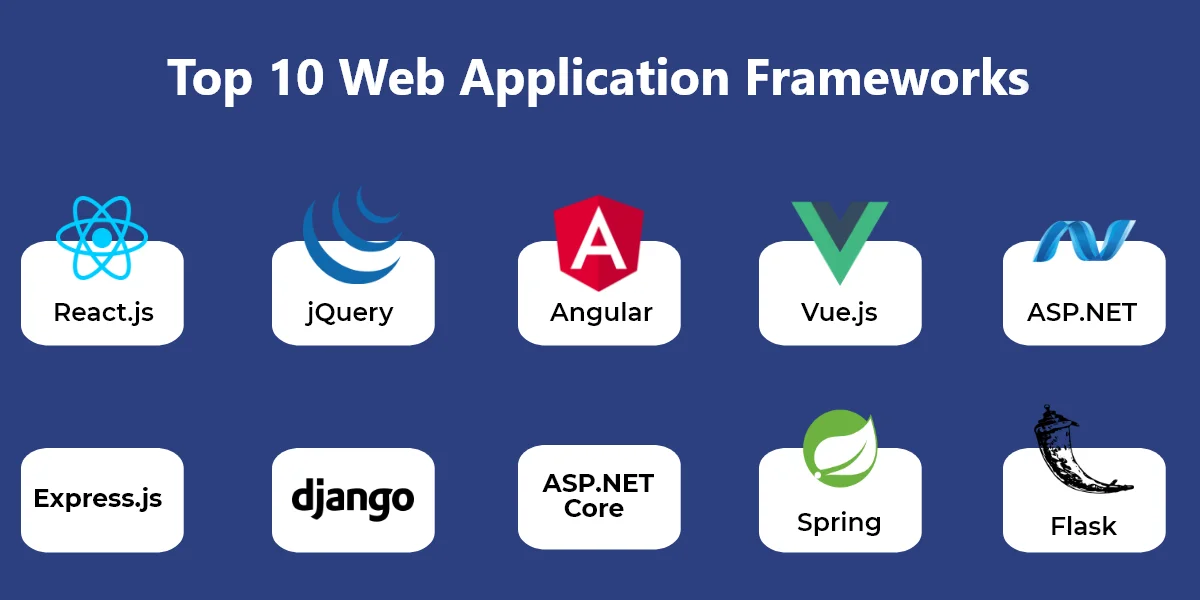
The Core Concept: Deconstructing Web Application Frameworks
Understanding what a web application framework truly entails requires a deeper dive into its definition, the problems it solves, and its fundamental architectural components. It’s more than just a collection of helper functions; it’s a philosophical approach to software development that prioritizes convention over configuration, efficiency over raw coding, and collaboration over isolated efforts.
Defining the Framework: Beyond Just Libraries
While a library is a collection of pre-written code that developers can call upon to perform specific tasks (e.g., a date formatting library), a framework dictates the overall structure and flow of an application. The crucial distinction lies in the concept of “inversion of control.” With a library, your code calls the library’s functions. With a framework, the framework calls your code. It provides the skeletal structure, and you fill in the business logic and custom features within its predefined architecture. This inversion of control is what gives frameworks their power, enforcing consistency and guiding developers through best practices without them having to explicitly define every architectural decision. They provide a standardized structure for handling HTTP requests, managing databases, authenticating users, and rendering user interfaces, among many other common web application tasks.
The Problem They Solve: Bridging Complexity and Efficiency
Building a web application involves a multitude of layers and concerns. Developers need to manage routing HTTP requests to the correct functions, interact with databases, handle user authentication and authorization, validate input, manage sessions, process forms, secure against common vulnerabilities (like SQL injection or cross-site scripting), and render dynamic content to the user’s browser. Trying to implement all these features from scratch for every project is not only time-consuming but also prone to errors and security loopholes.
Web application frameworks tackle this complexity head-on by providing pre-built solutions and abstractions for these common challenges. They standardize development patterns, offer sensible defaults, and integrate various tools and libraries, significantly reducing the amount of boilerplate code developers need to write. This acceleration of development doesn’t come at the cost of quality; instead, it often enhances it by embedding established best practices and security measures into the framework’s core.
Key Components and Architectural Patterns
Most web application frameworks, especially those for server-side development, adhere to certain architectural patterns to organize their components. The most prevalent of these is the Model-View-Controller (MVC) pattern.
-
Model: Represents the data and business logic of the application. It interacts with the database, retrieves, stores, and manipulates data, and enforces business rules.
-
View: Responsible for presenting the data to the user. It’s typically the user interface (UI) layer, which renders information in a human-readable format, often HTML, CSS, and JavaScript.
-
Controller: Acts as an intermediary between the Model and the View. It receives user input (e.g., an HTTP request), processes it, interacts with the Model to retrieve or update data, and then selects the appropriate View to display the results.
Beyond MVC, frameworks also include a suite of components such as:
-
Routing Mechanisms: To map URLs to specific functions or controllers.
-
Database Abstraction Layers (ORMs – Object-Relational Mappers): To interact with databases using object-oriented code instead of raw SQL.
-
Templating Engines: To generate dynamic HTML content.
-
Authentication and Authorization Modules: To manage user login, registration, and access control.
-
Security Features: Built-in protections against common web vulnerabilities.
-
Testing Tools: Support for writing automated tests for the application.
Why Developers Embrace Frameworks: Advantages and Benefits
The widespread adoption of web application frameworks is not accidental. They offer a compelling suite of advantages that benefit individual developers, development teams, and the overall quality of software projects. From accelerating project timelines to fostering maintainable codebases, frameworks are instrumental in modern web development.
Boosting Development Speed and Productivity
The most immediate benefit of using a framework is the significant increase in development speed. By providing ready-to-use modules for common features like user authentication, database interaction, and form handling, developers can avoid writing repetitive code. This boilerplate reduction means more time can be dedicated to implementing unique business logic and innovative features, rather than reinventing foundational components. Furthermore, frameworks often come with command-line tools and code generators that automate tasks, scaffold new projects, and simplify deployment, further amplifying productivity.
Ensuring Code Quality and Maintainability
Frameworks enforce consistent coding standards and architectural patterns (like MVC). This standardization makes code easier to read, understand, and maintain, especially in team environments. When all developers adhere to the same structure, onboarding new team members becomes smoother, and debugging or extending existing features is less challenging. The structured nature of frameworks also encourages modularity and separation of concerns, leading to cleaner, more organized, and higher-quality codebases that are less prone to “spaghetti code.”
Enhancing Security and Scalability
Security is paramount in web applications, and frameworks offer a significant advantage here. They often include built-in protections against common web vulnerabilities such as SQL injection, cross-site scripting (XSS), cross-site request forgery (CSRF), and insecure direct object references. These protections are rigorously tested and maintained by large communities, making them generally more robust than custom-implemented solutions. Regarding scalability, while frameworks themselves don’t inherently make an application scalable, they provide the structural foundation and tools that facilitate building scalable architectures. Their modularity allows for easier integration with performance optimization techniques, caching systems, and distributed computing patterns.
Fostering Community and Support
Popular web application frameworks boast large, active communities. This translates into extensive documentation, numerous tutorials, online forums, and readily available third-party libraries and plugins. When developers encounter an issue or need to implement a specific feature, the likelihood of finding a solution or a helpful resource within the community is very high. This vibrant ecosystem provides invaluable support, accelerating problem-solving and fostering continuous learning among developers.
A Glimpse into the Ecosystem: Popular Frameworks and Their Paradigms
The world of web application frameworks is rich and diverse, with options catering to various programming languages, development philosophies, and project requirements. They generally fall into categories based on whether they primarily handle server-side logic, client-side interactions, or attempt to cover both.
Server-Side Powerhouses: Python, Ruby, PHP, Node.js
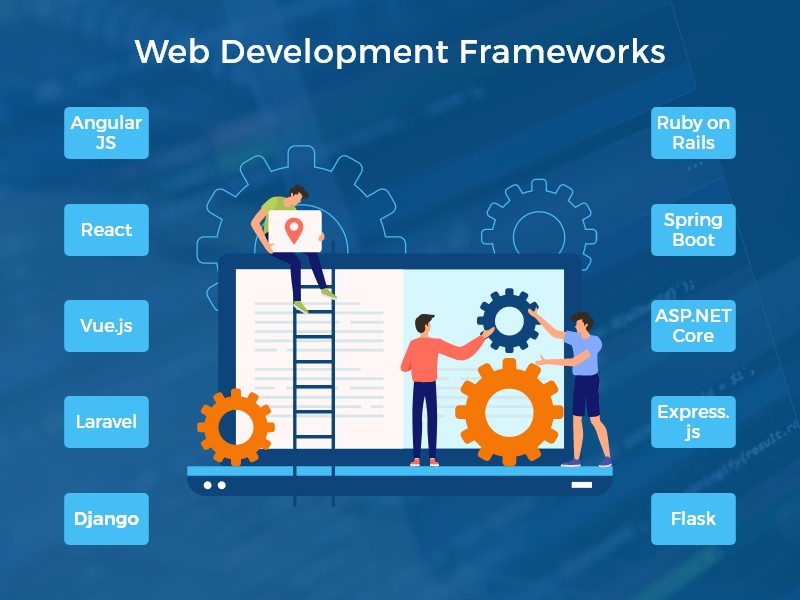
Server-side frameworks manage the backend logic, database interactions, user authentication, and serving of web pages. They are crucial for dynamic content generation and data processing.
-
Python:
-
Django: A “batteries-included” framework, meaning it comes with almost everything you need out of the box (ORM, admin panel, authentication). It’s known for rapid development and is favored for complex, data-driven applications.
-
Flask: A “microframework,” offering a minimalist core that is highly extensible. Developers choose Flask for smaller projects or when they need more control over the components they integrate.
-
-
Ruby:
- Ruby on Rails (Rails): Famous for its “convention over configuration” philosophy and boosting developer productivity. Rails significantly influenced many other frameworks and is ideal for quick prototyping and full-stack development.
-
PHP:
-
Laravel: One of the most popular PHP frameworks, known for its elegant syntax, robust features, and extensive ecosystem. It’s often compared to Rails for its developer experience.
-
Symfony: A highly modular and flexible framework that powers many large-scale applications and content management systems. It emphasizes reusability and component-based architecture.
-
-
Node.js (JavaScript):
-
Express.js: A minimalist and flexible Node.js web application framework that provides a robust set of features for web and mobile applications. It’s often used for building APIs and single-page applications.
-
NestJS: A progressive Node.js framework for building efficient, reliable, and scalable server-side applications, often leveraging TypeScript and an architecture inspired by Angular.
-
Client-Side Innovators: JavaScript (React, Angular, Vue.js)
Client-side (or frontend) frameworks primarily run in the user’s browser, handling the user interface and user experience. They enable the creation of rich, interactive single-page applications (SPAs).
-
React (by Facebook): A JavaScript library (often used as a framework) for building user interfaces, particularly for single-page applications. It’s component-based and known for its declarative approach to UI development and virtual DOM, which optimizes rendering performance.
-
Angular (by Google): A comprehensive, opinionated framework for building complex enterprise-grade single-page applications. It’s TypeScript-based and provides a structured approach with features like data binding, routing, and form validation built-in.
-
Vue.js: A progressive framework for building user interfaces. It’s designed to be incrementally adoptable, meaning developers can use just a part of it and integrate it into existing projects. It’s known for its ease of learning and flexibility.
Full-Stack Blends: The All-in-One Approach
Some frameworks or ecosystems blur the lines, offering solutions that span both client-side and server-side development. While not a single framework, concepts like the JAMstack (JavaScript, APIs, Markdown) and frameworks like Next.js (for React) or Nuxt.js (for Vue) allow developers to leverage their client-side framework skills to also handle server-side rendering, API routes, and static site generation, creating a more unified development experience.
Choosing the Right Framework: Considerations for Your Project
With such a diverse array of web application frameworks available, selecting the right one for a specific project can be a daunting task. The “best” framework is always subjective and depends entirely on the unique context and requirements of your project.
Project Scope and Requirements
The size and complexity of your application are critical factors. For small projects or simple APIs, a microframework like Flask or Express.js might be sufficient and prevent unnecessary overhead. For large-scale, data-intensive applications with many features, a full-featured framework like Django, Laravel, or Angular might be more appropriate due to their “batteries-included” nature and robust toolsets. Consider if you need rapid prototyping, heavy database integration, real-time capabilities, or complex user interfaces.
Developer Familiarity and Team Expertise
The existing skill set of your development team is perhaps the most practical consideration. It’s generally more efficient to use a framework that your team is already proficient in. Learning a new framework mid-project can introduce delays and a steep learning curve. If starting fresh, consider the learning curve of the framework and the availability of talent in the job market for that technology stack.
Performance, Scalability, and Ecosystem
Evaluate the framework’s performance characteristics. While most modern frameworks are highly optimized, specific needs (e.g., extremely high-traffic applications, real-time data processing) might favor certain technologies. Investigate the framework’s ability to support scalability requirements as your application grows. Furthermore, assess the robustness of its ecosystem: how many third-party libraries, tools, and integrations are available? A rich ecosystem can significantly extend the framework’s capabilities and accelerate development.
Community Support and Long-Term Viability
A strong and active community is a significant asset. It indicates good documentation, continuous updates, bug fixes, and a readily available pool of knowledge for troubleshooting. Research the framework’s release cycle, community activity, and the backing it receives (e.g., from major companies) to gauge its long-term viability and ensure it will be maintained and supported into the future.
The Future of Web Application Frameworks: Evolution and Trends
The web development landscape is constantly evolving, and web application frameworks are at the forefront of this change. Several key trends are shaping their future, promising even more efficient, powerful, and developer-friendly tools.
Serverless Integration and Cloud-Native Development
The rise of serverless architectures (like AWS Lambda, Azure Functions, Google Cloud Functions) is influencing how frameworks are designed and utilized. Frameworks are increasingly offering better integration with serverless platforms, allowing developers to deploy individual functions or microservices without managing underlying servers. This shift towards cloud-native development emphasizes containerization (e.g., Docker, Kubernetes) and microservices, with frameworks adapting to support these distributed architectures more seamlessly.
Microservices and API-First Architectures
As applications grow in complexity, the monolithic architecture often gives way to microservices – smaller, independent services that communicate via APIs. Frameworks are evolving to better support building and managing these individual microservices, often focusing on API development (RESTful, GraphQL) and providing tools for inter-service communication and deployment. This modular approach allows for greater flexibility, scalability, and independent deployment of components.
Enhanced Developer Experience (DX)
Framework creators are increasingly prioritizing Developer Experience (DX). This means focusing on intuitive APIs, clear documentation, powerful command-line interfaces (CLIs), intelligent defaults, and integrated development environments (IDEs) support. The goal is to reduce cognitive load for developers, speed up repetitive tasks, and make the development process more enjoyable and productive. Features like hot module reloading, robust testing utilities, and improved error handling are all part of this trend.

Progressive Web Apps (PWAs) and Universal Rendering
Frameworks are also enhancing their capabilities to support Progressive Web Apps (PWAs), which combine the best features of web and mobile apps, offering offline capabilities, push notifications, and app-like experiences. Additionally, universal or isomorphic rendering – the ability to render client-side frameworks on the server – is becoming more common. This improves initial page load times and search engine optimization (SEO) for SPAs, blending the benefits of server-side rendering with client-side interactivity.
In conclusion, web application frameworks are indispensable tools in modern software development. They abstract away complexity, enforce best practices, and provide a robust foundation upon which innovative and scalable web applications can be built. As technology continues its relentless march forward, these frameworks will undoubtedly continue to evolve, empowering developers to create the next generation of digital experiences with greater efficiency and sophistication.
aViewFromTheCave is a participant in the Amazon Services LLC Associates Program, an affiliate advertising program designed to provide a means for sites to earn advertising fees by advertising and linking to Amazon.com. Amazon, the Amazon logo, AmazonSupply, and the AmazonSupply logo are trademarks of Amazon.com, Inc. or its affiliates. As an Amazon Associate we earn affiliate commissions from qualifying purchases.