
Navigating the landscape of business finance requires a meticulous approach to documentation, especially when it comes to payroll taxes and annual reporting. For many small to mid-sized business owners, the acronyms associated with the Internal Revenue Service (IRS) and the Social Security Administration (SSA) can feel like an endless alphabet soup. However, among the various documents required at the end of a fiscal year, the W-3 form stands as one of the most critical.
Commonly referred to as the “Transmittal of Wage and Tax Statements,” the W-3 form serves as a summary document that aggregates the information found on all your employees’ W-2 forms. While employees are familiar with the W-2, the W-3 is strictly an employer’s responsibility. Understanding how this form works, why it is necessary, and how to file it correctly is essential for maintaining financial compliance and avoiding the stinging penalties associated with reporting errors.
Understanding the W-3 Form: The Basics of Wage Transmittal
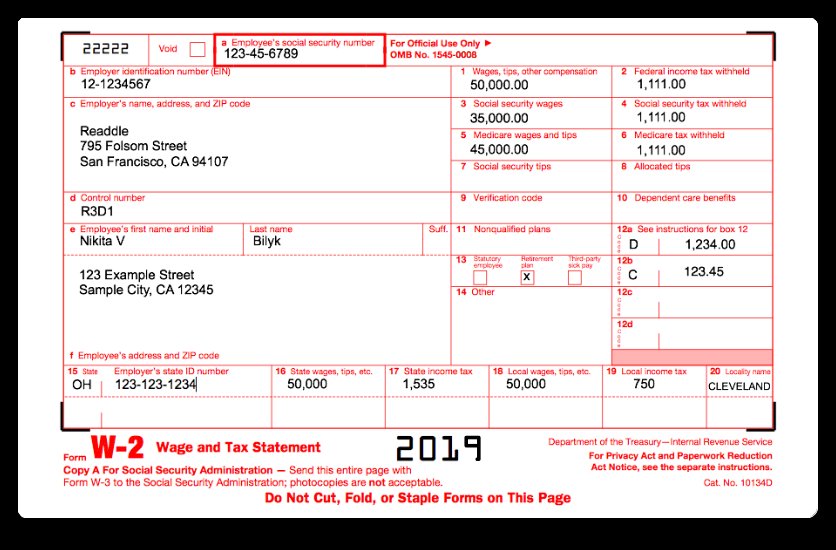
To understand the W-3, one must first understand its relationship with the W-2. Every year, employers are required to provide their employees with a Form W-2, which details their total earnings, tax withholdings, and contributions to Social Security and Medicare. However, the government also needs a “cover sheet” that totals all these individual forms into a single, cohesive report. This is the W-3.
Definition and Purpose
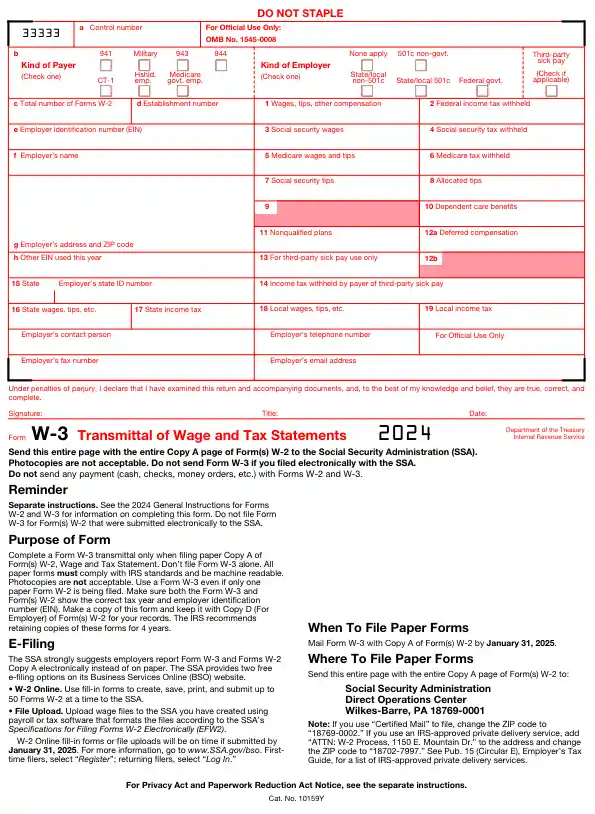
The W-3 is a summary form that reports the total amount of all wages, tips, and other compensation paid to all employees during a calendar year. It also summarizes the total federal income tax withheld, Social Security wages, and Medicare wages. Unlike the W-2, which is distributed to employees and filed with the government, the W-3 is sent exclusively to the Social Security Administration. The SSA uses this data to track the earnings of individuals and ensure that the correct amounts are credited to their Social Security records.
The Relationship Between W-2 and W-3 Forms
Think of the W-2 as a receipt for an individual transaction and the W-3 as the end-of-day register report. If a company has ten employees, it will generate ten W-2 forms. The W-3 form will then add up the totals from those ten W-2s. For the IRS and SSA, the W-3 acts as a reconciliation tool. If the totals on your W-3 do not match the sum of the W-2s you submitted, or if they do not align with your quarterly Form 941 filings, it triggers a red flag for a potential audit.
Key Components of the W-3 Form: A Line-by-Line Breakdown
The W-3 form is structured to mirror the boxes found on the W-2 form. This intentional design makes it easier for business owners or payroll departments to aggregate data. Ensuring that each box is filled out accurately is the cornerstone of sound business finance management.
Employer Information and Control Numbers
The top portion of the form focuses on the identity of the business. This includes the Employer Identification Number (EIN), the legal name of the business, and the business address. Box b (Kind of Payer) and Box h (Kind of Employer) are particularly important as they categorize the type of entity filing the form—whether it is a 941 filer, a household employer, or a non-profit organization.
Financial Totals: Wages, Tips, and Taxes
The core of the W-3 consists of numbered boxes that correspond directly to the W-2.
- Box 1 (Wages, tips, other compensation): This represents the total taxable compensation paid to all employees.
- Box 2 (Federal income tax withheld): The total amount of federal income tax you took out of your employees’ paychecks throughout the year.
- Box 3 and 5 (Social Security and Medicare wages): These boxes show the total wages subject to these specific taxes. Because Social Security has a wage base limit and Medicare does not, these totals often differ from the total in Box 1.
- Box 4 and 6 (Social Security and Medicare tax withheld): These reflect the total employee portion of these taxes.
Identifying the Payer Class
Box b requires the employer to check a box indicating what type of forms are being transmitted. Most private-sector businesses will check “941,” referring to the Employer’s Quarterly Federal Tax Return. This classification is vital for the SSA to cross-reference the annual totals with the quarterly reports submitted to the IRS throughout the fiscal year.
Filing Requirements and Deadlines for Business Owners
In the realm of personal and business finance, timing is everything. Missing a filing deadline for tax documents can lead to interest charges and penalties that erode a company’s bottom line. The W-3 is no exception to this rule.

Who Needs to File?
Any employer who is required to file one or more Form W-2 must also file a Form W-3. This applies even if you only have one employee. If you are a self-employed individual with no employees, you generally do not need to file a W-3. However, if you have incorporated your business and pay yourself a salary as an employee (a common practice for S-Corp owners), you are required to file a W-2 and a W-3 for yourself.
Important Dates to Remember
The deadline for filing Form W-3 (along with Copy A of all W-2s) is January 31st of the year following the tax year being reported. For example, wages paid in 2023 must be reported by January 31, 2024. It is important to note that this is the same deadline for providing W-2s to your employees. This alignment is designed to ensure that the government has the same information that the taxpayers are using to file their individual income tax returns.
Electronic vs. Paper Filing
While the IRS once allowed smaller businesses to file paper forms, recent regulations have moved aggressively toward electronic filing. As of 2024, the threshold for mandatory electronic filing has been significantly lowered. If you are filing 10 or more information returns (which includes W-2s, 1099s, etc., in aggregate), you must file electronically. Even if you fall below this threshold, electronic filing is highly recommended. It provides an immediate receipt of submission, reduces the risk of manual data entry errors by the SSA, and accelerates the processing time.
Common Mistakes to Avoid When Filing Form W-3
Errors on a W-3 form are more than just clerical nuisances; they can lead to significant financial discrepancies that take months to resolve. Accuracy is the best defense against regulatory scrutiny.
Reconciliation Discrepancies
One of the most common mistakes is a failure to reconcile the W-3 with the quarterly Form 941 filings. Throughout the year, businesses report their payroll taxes every three months on Form 941. At the end of the year, the sum of those four 941s should equal the totals on the W-3. If they don’t, the IRS will likely send a notice (Notice CP253) requesting an explanation. Common causes for these discrepancies include voided checks that weren’t accounted for or manual adjustments made at the end of the year without updating the quarterly records.
Incorrect EIN or Business Information
It may seem basic, but a significant number of forms are rejected due to an incorrect Employer Identification Number. Using a Social Security Number instead of an EIN, or using an EIN from a previous or different business entity, will cause the SSA to reject the filing. Similarly, ensure the business name matches exactly what is on file with the IRS.
Missed Deadlines and Penalties
The financial cost of filing late can be steep. Penalties for late filing of W-2s and W-3s are calculated per form and increase based on how late the filing is. If the IRS deems the failure to file was due to “intentional disregard” of the rules, the penalties can exceed several hundred dollars per form with no maximum cap, which can be devastating for a small business’s cash flow.
Why Accuracy in W-3 Reporting Matters for Your Business Finance
Filing the W-3 is not just about staying on the right side of the law; it is a critical component of professional financial management and data integrity.
Ensuring Compliance with the Social Security Administration (SSA)
The primary recipient of the W-3 is the SSA, not the IRS. The SSA uses the data from your W-3 and W-2s to ensure that every worker in the United States receives the proper credit toward their future retirement and disability benefits. From a corporate responsibility standpoint, accurate filing ensures your employees’ long-term financial security is protected.
Impact on Audit Risk and Financial Audits
From a business finance perspective, the W-3 is a primary document analyzed during a financial audit. Whether it is an internal audit, a bank audit for a loan application, or an IRS audit, the W-3 serves as a verified record of labor costs. Discrepancies in these forms can lead to questions regarding a company’s internal controls and the reliability of its financial statements. By maintaining rigorous standards for W-3 accuracy, business owners demonstrate fiscal transparency and operational excellence.
Leveraging Modern Financial Tools
In today’s financial landscape, manual entry of W-3 forms is becoming a relic of the past. Most modern payroll and accounting software platforms automatically generate the W-3 based on the payroll data processed throughout the year. These tools serve as a “financial safety net,” performing automated checks to ensure the math adds up before the form is submitted. Investing in these financial tools is often a cost-effective strategy for businesses looking to minimize risk and streamline their annual tax obligations.
In conclusion, while the W-3 form may appear to be just another piece of paperwork, it is a vital summary of a company’s annual financial activity. By understanding its purpose, adhering to strict filing deadlines, and ensuring that every dollar reported aligns with other tax filings, business owners can protect their enterprise from unnecessary financial penalties and maintain a clear, compliant record of their most significant expense: their people.
aViewFromTheCave is a participant in the Amazon Services LLC Associates Program, an affiliate advertising program designed to provide a means for sites to earn advertising fees by advertising and linking to Amazon.com. Amazon, the Amazon logo, AmazonSupply, and the AmazonSupply logo are trademarks of Amazon.com, Inc. or its affiliates. As an Amazon Associate we earn affiliate commissions from qualifying purchases.