
In the vast and often complex landscape of investment opportunities, certain financial instruments stand out for their simplicity, efficiency, and broad appeal. Among these, the VOO, or the Vanguard S&P 500 ETF, has carved out a significant niche, becoming a cornerstone for countless investors ranging from novices to seasoned professionals. Far from a niche product, VOO represents a fundamental approach to investing that aligns with principles of diversification, low cost, and long-term growth. Understanding VOO isn’t just about knowing an acronym; it’s about grasping a powerful tool that embodies a core philosophy of smart, accessible wealth building.
At its heart, VOO is an exchange-traded fund (ETF) designed to track the performance of the S&P 500 Index. This seemingly straightforward objective belies its profound impact on investment strategies. For those seeking exposure to the broad U.S. stock market without the complexities and higher costs associated with actively managed funds or individual stock picking, VOO offers an elegant solution. It pools money from numerous investors to buy a portfolio of stocks that mirror the S&P 500, providing instant diversification across 500 of America’s largest and most influential companies. This article will delve into the intricacies of VOO, exploring its definition, advantages, how it integrates into a portfolio, and crucial considerations for investors.
Unpacking VOO: The Vanguard S&P 500 ETF
To truly appreciate VOO, it’s essential to break down its components: what it is, what it tracks, and the underlying mechanism of an ETF. These elements combine to create a powerful investment vehicle that is both easy to understand and highly effective.
Definition and Core Purpose
VOO is an exchange-traded fund offered by Vanguard, one of the world’s largest and most respected investment management companies, renowned for its low-cost indexing philosophy. Its core purpose is to provide investors with exposure to the performance of the S&P 500 Index. This means that when you invest in VOO, you are effectively buying a tiny fractional ownership in 500 of the largest publicly traded companies in the United States, weighted by market capitalization. The fund aims to replicate the index’s returns, minus a very small expense ratio, providing a market-beta exposure that has historically been a robust engine for long-term wealth creation.
Unlike actively managed funds, where fund managers constantly buy and sell stocks in an attempt to outperform the market, VOO is passively managed. Its strategy is to simply mirror the S&P 500 Index. This passive approach is a key differentiator, contributing significantly to its low operating costs and predictable performance relative to its benchmark.
The S&P 500 Index: VOO’s Benchmark
The S&P 500 Index is arguably the most widely recognized benchmark for large-cap U.S. equities and a key indicator of the health of the American economy. Created by Standard & Poor’s, it comprises 500 leading publicly traded companies chosen by a committee based on criteria such as market size, liquidity, and sector representation. While commonly referred to as the “top 500 companies,” its selection isn’t strictly based on size alone; it aims for a comprehensive representation of the U.S. economy.
The S&P 500 is a market-capitalization-weighted index, meaning companies with larger market values have a greater impact on the index’s performance. For instance, giants like Apple, Microsoft, Amazon, and Alphabet (Google) account for a substantial portion of the index’s overall weighting. By tracking this index, VOO offers investors a slice of America’s economic engine, encompassing a diverse array of sectors including technology, healthcare, financials, consumer discretionary, and industrials.
Exchange-Traded Funds (ETFs) Explained
VOO belongs to a category of investment vehicles known as Exchange-Traded Funds (ETFs). ETFs are similar to mutual funds in that they pool money from investors to invest in a diversified portfolio of securities (stocks, bonds, commodities, etc.). However, their key distinguishing feature is that they trade on stock exchanges throughout the day, much like individual stocks. This provides investors with greater flexibility and liquidity compared to traditional mutual funds, which are typically bought and sold only once a day after the market closes, based on their net asset value (NAV).
The structure of an ETF allows for creations and redemptions of shares by institutional investors, which helps keep the ETF’s market price closely aligned with the underlying value of its holdings. This mechanism, known as arbitrage, is crucial for maintaining the efficiency and fair pricing of ETFs. For individual investors, this means they can buy or sell VOO shares at any point during market hours, just as they would with a share of Apple or Coca-Cola.
Why Investors Choose VOO: Key Advantages
The popularity of VOO isn’t accidental; it stems from a confluence of advantages that align perfectly with sound investment principles, particularly for long-term wealth accumulation.
Diversification at Your Fingertips
One of VOO’s most compelling benefits is the instant, broad diversification it provides. By owning VOO, an investor gains exposure to 500 different companies across numerous sectors of the U.S. economy. This significantly reduces company-specific risk compared to investing in individual stocks. If one company performs poorly, its impact on the overall VOO portfolio is mitigated by the performance of the other 499 companies. This level of diversification, often difficult and costly to achieve by buying individual stocks, is delivered effortlessly through a single VOO share.
This broad exposure not only smooths out individual company volatility but also captures the overall growth of the U.S. economy over time. Instead of trying to pick winners, VOO bets on the collective success of America’s largest corporations.
Low-Cost Investing: The Vanguard Philosophy
Vanguard pioneered the concept of low-cost indexing, and VOO is a prime example of this philosophy in action. VOO boasts an exceptionally low expense ratio (e.g., 0.03% annually), meaning that only a tiny fraction of an investor’s assets is consumed by management fees each year. This is significantly lower than many actively managed mutual funds, which can charge 0.50% to over 1% annually, and even some other broad-market ETFs.
The impact of low fees cannot be overstated, especially over long investment horizons. Even seemingly small differences in expense ratios can translate into tens or hundreds of thousands of dollars in lost returns due to compounding. Vanguard’s commitment to returning more value to investors through minimal fees is a cornerstone of VOO’s appeal.
Simplicity and Accessibility
For many investors, especially those new to the market, the sheer volume of choices and the complexity of financial analysis can be daunting. VOO cuts through this complexity. It offers a straightforward “set it and forget it” approach to investing in the broad market. There’s no need to research individual companies, analyze financial statements, or fret over market timing (though dollar-cost averaging is often recommended).
Its accessibility is also a major draw. VOO can be bought and sold through virtually any brokerage account, often with zero commission fees. This ease of access, combined with its simple premise, makes it an ideal core holding for retirement accounts (IRAs, 401(k)s) and taxable brokerage accounts alike.
Historical Performance and Long-Term Growth Potential
Historically, the S&P 500 Index has delivered robust returns over the long term, averaging around 10-12% annually, though past performance is not indicative of future results. By tracking this index, VOO offers investors a direct participation in this historical trend. While markets experience inevitable ups and downs, the long-term trajectory of the S&P 500 has been upward, driven by economic growth, corporate innovation, and earnings expansion.
For investors with a long-term horizon (many years or decades), VOO provides a compelling avenue for capital appreciation. Its diversified nature and low cost allow the power of compounding to work effectively, helping build significant wealth over time.
How VOO Fits into an Investment Portfolio
VOO isn’t just a standalone product; it’s a versatile component that can be integrated into various portfolio strategies, serving different roles depending on an investor’s goals and risk tolerance.
Core Holding for Long-Term Investors
For many, VOO serves as the central pillar or “core holding” of their investment portfolio. Its broad diversification and low cost make it an excellent foundation upon which other investments can be built. A strategy often recommended by financial advisors is to allocate a significant portion of a portfolio (e.g., 60-80%) to a broad market index fund like VOO, particularly for younger investors with long horizons. This ensures consistent exposure to the market’s growth engine.
For conservative investors, VOO might be combined with a larger allocation to bonds, while more aggressive investors might pair it with smaller allocations to international stocks, emerging markets, or specialized sector ETFs.
Building a Diversified Portfolio with VOO
While VOO itself offers excellent diversification within U.S. large-cap equities, a truly diversified portfolio typically extends beyond this. Investors often combine VOO with other ETFs or funds to achieve broader market exposure:
- International Equities: Adding ETFs that track international markets (e.g., VXUS for total international stock market) or specific regions (e.g., VEA for developed markets, VWO for emerging markets) can reduce reliance on a single country’s economy.
- Small-Cap and Mid-Cap Equities: While S&P 500 focuses on large-caps, adding funds that track smaller companies (e.g., VBR for small-cap value, VO for mid-cap) can tap into different growth drivers.
- Fixed Income (Bonds): Incorporating bond ETFs (e.g., BND for total U.S. bond market) helps to reduce overall portfolio volatility, provide income, and offer a ballast during stock market downturns, enhancing capital preservation.
By strategically combining VOO with these other asset classes, investors can construct a well-rounded portfolio tailored to their individual risk profile and financial objectives.
Comparison with Other Broad Market ETFs
VOO is not the only ETF tracking the S&P 500. Its closest competitors include:
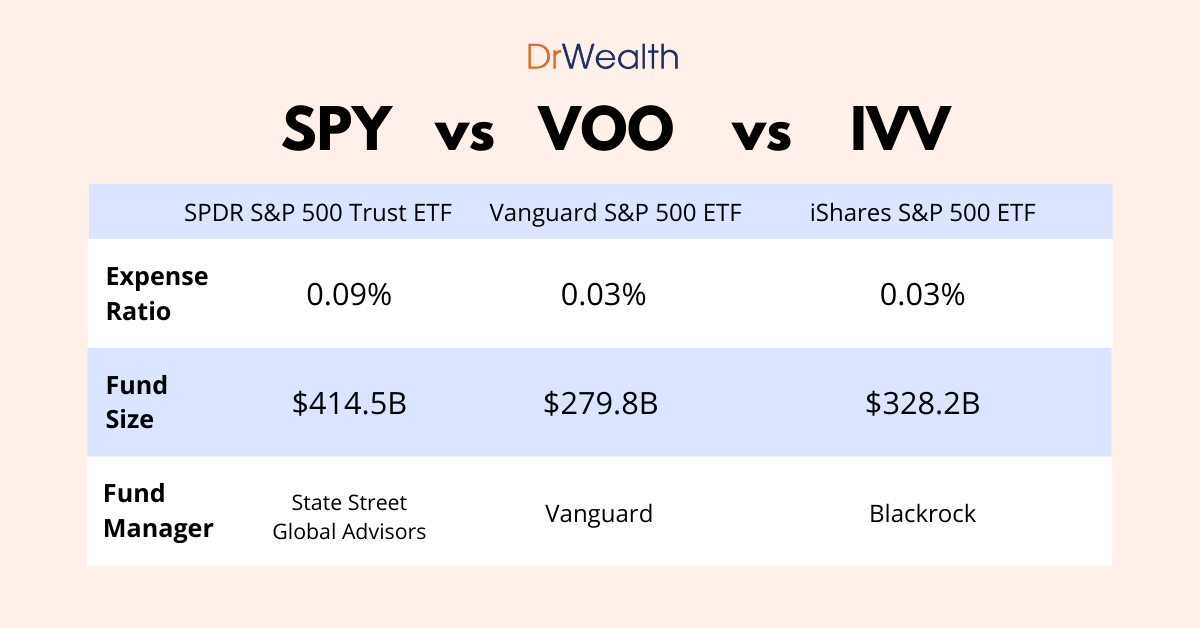
- SPY (SPDR S&P 500 ETF Trust): The oldest and largest S&P 500 ETF, SPY is highly liquid and popular among active traders. However, it typically has a slightly higher expense ratio than VOO.
- IVV (iShares Core S&P 500 ETF): Offered by BlackRock’s iShares, IVV is very similar to VOO in terms of its low expense ratio and tracking methodology. It’s often considered a direct competitor and a strong alternative.
While these ETFs track the same index, subtle differences exist in their expense ratios, fund size, and how they handle securities lending, which can slightly impact total returns. For long-term buy-and-hold investors, VOO and IVV are generally considered superior due to their lower costs.
Tax Efficiency Considerations
ETFs like VOO generally offer a tax advantage over traditional actively managed mutual funds, particularly in taxable brokerage accounts. This is largely due to their unique “creation/redemption” mechanism. When an ETF needs to rebalance or redeem shares, it can do so “in-kind” by transferring low-basis (highly appreciated) shares out of the fund. This process effectively removes embedded capital gains from the fund, reducing the likelihood of capital gains distributions to shareholders, which are taxable events.
For investors, this means they typically have more control over when they realize capital gains (by selling their shares) rather than being subject to mandatory distributions from the fund. This tax efficiency can significantly enhance after-tax returns over the long run, making VOO an attractive choice for taxable investment accounts.
The Mechanics of Investing in VOO
Investing in VOO is remarkably straightforward, yet understanding a few key mechanical aspects can help optimize an investor’s strategy.
Buying and Selling VOO Shares
As an ETF, VOO shares are bought and sold on major stock exchanges (like the New York Stock Exchange) throughout the trading day. This is done through a brokerage account. An investor places an order (market order, limit order, etc.) just as they would for an individual stock. Most major online brokerages (e.g., Vanguard, Fidelity, Schwab, E*TRADE, Robinhood) offer VOO, and many have commission-free trading, making it very accessible.
The price of VOO shares fluctuates throughout the day based on supply and demand, typically staying very close to its underlying net asset value (NAV). Investors can buy as little as one share, making it suitable for those with smaller amounts to invest regularly.
Understanding Expense Ratios and Dividends
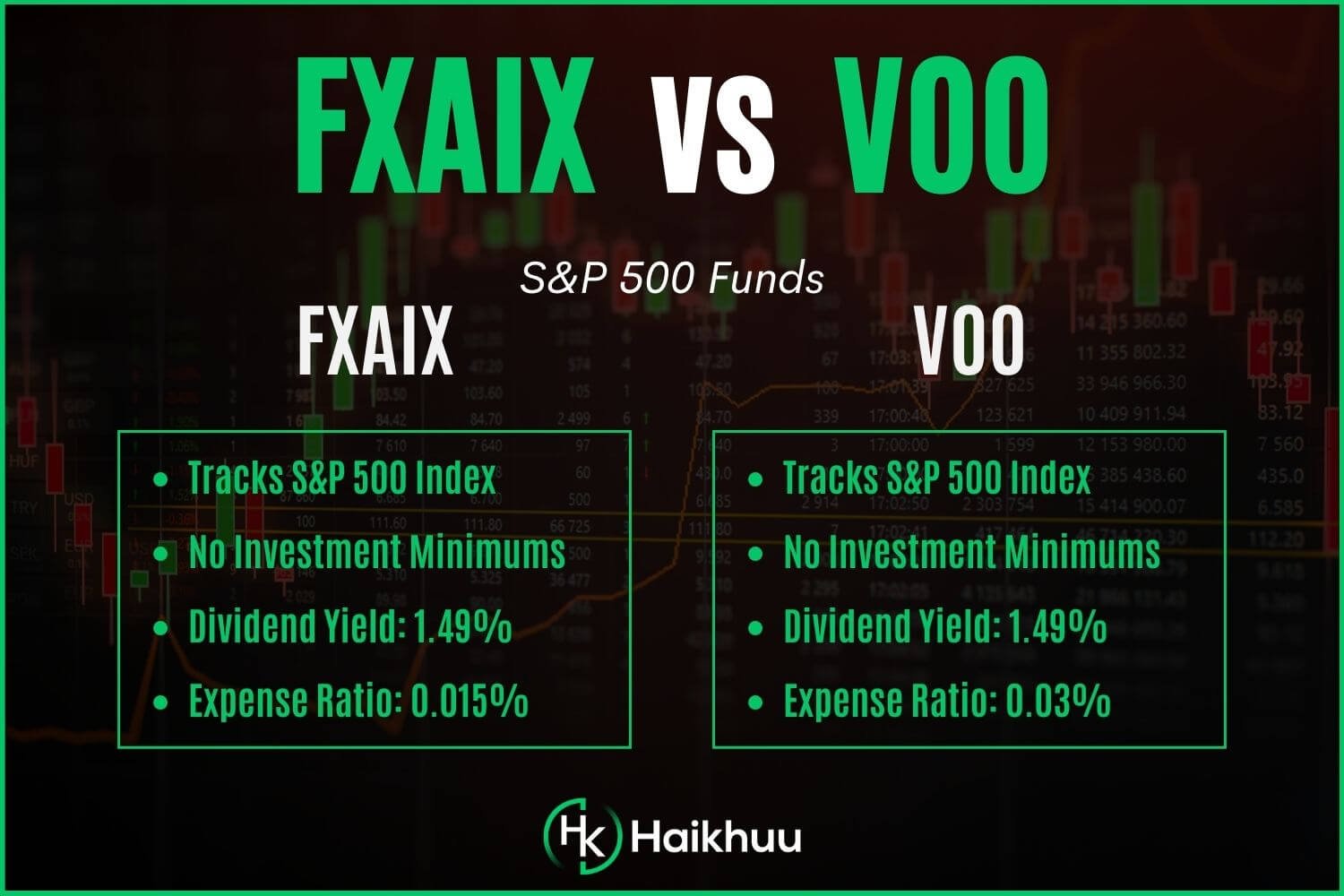
- Expense Ratio: This is the annual fee charged by Vanguard to cover the fund’s operating expenses. As mentioned, VOO has an extremely low expense ratio (e.g., 0.03%). This fee is automatically deducted from the fund’s assets and is reflected in the ETF’s performance; investors do not receive a separate bill. The lower the expense ratio, the more of an investor’s return is kept.
- Dividends: The companies within the S&P 500 often pay dividends to their shareholders. VOO collects these dividends from its underlying holdings and typically distributes them to VOO shareholders on a quarterly basis. These dividends represent a component of the ETF’s total return and can be a steady source of income.
Reinvesting Dividends for Compounding Growth
One powerful strategy for long-term investors is to reinvest VOO’s dividends. Most brokerage accounts offer an option to automatically reinvest dividends back into purchasing more shares (or fractional shares) of VOO. This allows investors to harness the power of compounding, where earnings from existing investments generate further earnings. Over decades, dividend reinvestment can significantly boost total returns, accelerating wealth accumulation. This passive approach avoids the need to manually re-invest small dividend payments.
Brokerage Accounts and Investing Platforms
To invest in VOO, you’ll need a brokerage account. These can be opened with various financial institutions, ranging from traditional full-service brokers to online discount brokerages. When choosing a platform, consider factors like:
- Commission Fees: Many platforms offer commission-free ETF trading.
- Minimums: Some platforms have minimum initial deposit requirements, though many are $0.
- Research Tools and Resources: For those who want to delve deeper, platforms offering robust research tools can be beneficial.
- Customer Service: The quality of support available can be important, especially for new investors.
Platforms like Vanguard’s own brokerage, Fidelity, Charles Schwab, and E*TRADE are popular choices that offer VOO and provide a wide range of services.
Considerations and Potential Downsides
While VOO offers numerous advantages, it’s not without its considerations and potential downsides that investors should be aware of to make informed decisions.
Market Risk and Volatility
VOO tracks the S&P 500, which is an equity index. As such, it is fully exposed to market risk and volatility inherent in the stock market. During market downturns, the value of VOO shares will decline, sometimes sharply. There is no guarantee of principal, and investors could lose money, particularly if they need to sell during a significant market correction. While historically the S&P 500 has recovered from all downturns, the timeline for recovery can vary.
This is why VOO, like any equity investment, is best suited for long-term investors who can ride out market fluctuations without needing to access their capital.
Lack of Active Management and Stock Picking
For investors who enjoy researching individual companies or believe they can outperform the market through skilled stock picking, VOO might feel restrictive. Its passive management style means it will never “beat” the S&P 500; it will only match its performance minus its tiny expense ratio. There’s no opportunity for a fund manager to identify undervalued gems or avoid overvalued stocks.
For those who desire some active management, VOO might serve as a core holding, complemented by a smaller allocation to actively managed funds or individual stocks. However, numerous studies have shown that most actively managed funds fail to consistently beat their benchmarks after fees, making VOO’s passive approach a reliable alternative.
Concentration in Large-Cap US Equities
While VOO provides excellent diversification within the large-cap U.S. stock market, it does represent a concentration in this specific asset class. It does not provide exposure to:
- International Markets: Non-U.S. developed or emerging market stocks.
- Small-Cap or Mid-Cap U.S. Stocks: Companies outside the top 500 (though some of these do graduate to the S&P 500).
- Bonds or Other Fixed Income: Interest-rate sensitive investments that can provide stability.
- Commodities or Real Estate: Alternative asset classes.
Therefore, for a truly diversified portfolio that hedges against U.S.-specific economic downturns or seeks different growth drivers, VOO should be part of a broader asset allocation strategy.
When VOO Might Not Be the Only Solution
While VOO is an excellent foundational investment, it’s rarely the only investment an individual should have, especially as they approach retirement or have specialized financial goals. Investors might consider other options for:
- Income Generation: If stable, higher-yield income is a primary goal, a diversified bond portfolio or dividend-focused funds might be more appropriate.
- Capital Preservation: For short-term savings or funds needed within a few years, VOO’s market volatility makes it unsuitable; cash equivalents or short-term bonds are better.
- Specific Thematic Investing: If an investor wants targeted exposure to a particular industry (e.g., clean energy, cybersecurity) or geographic region, sector-specific ETFs or international funds would be necessary.
VOO is a powerful general-purpose tool, but like any tool, it works best when used in conjunction with others to build a comprehensive financial plan.

Conclusion: VOO as a Cornerstone of Smart Investing
In conclusion, “What is a VOO?” unravels to reveal an investment vehicle that is both elegantly simple and profoundly impactful. The Vanguard S&P 500 ETF stands as a testament to the power of low-cost, broadly diversified, passive investing. By granting investors access to 500 of America’s leading companies through a single, easily tradable share, VOO demystifies the stock market and empowers individuals to participate in the long-term growth of the U.S. economy.
Its myriad advantages – unparalleled diversification, ultra-low expense ratio, ease of access, and historical performance – position it as an ideal core holding for almost any long-term investment portfolio. While acknowledging its inherent market risks and its focus on large-cap U.S. equities, VOO consistently proves to be a cornerstone for intelligent investing. For those seeking a professional, insightful, and engaging approach to building wealth without the complexities and often higher costs of active management, VOO offers a compelling and robust solution, enabling investors to focus on their financial goals with confidence and clarity.
aViewFromTheCave is a participant in the Amazon Services LLC Associates Program, an affiliate advertising program designed to provide a means for sites to earn advertising fees by advertising and linking to Amazon.com. Amazon, the Amazon logo, AmazonSupply, and the AmazonSupply logo are trademarks of Amazon.com, Inc. or its affiliates. As an Amazon Associate we earn affiliate commissions from qualifying purchases.