
In the rapidly evolving landscape of digital communication, the nuance of the human voice has become a frontier for technological innovation. One of the most discussed, debated, and technically challenging phenomena in this space is “vocal fry.” While often discussed in social contexts, for those in the tech industry—ranging from AI developers to digital signal processing (DSP) engineers—vocal fry represents a complex data point in the quest to perfect human-computer interaction. Understanding vocal fry is no longer just the domain of linguists; it is a critical component of software development, synthetic media, and the future of artificial intelligence.

The Mechanics of Vocal Fry: Understanding the Glottal Rattle in the Digital Age
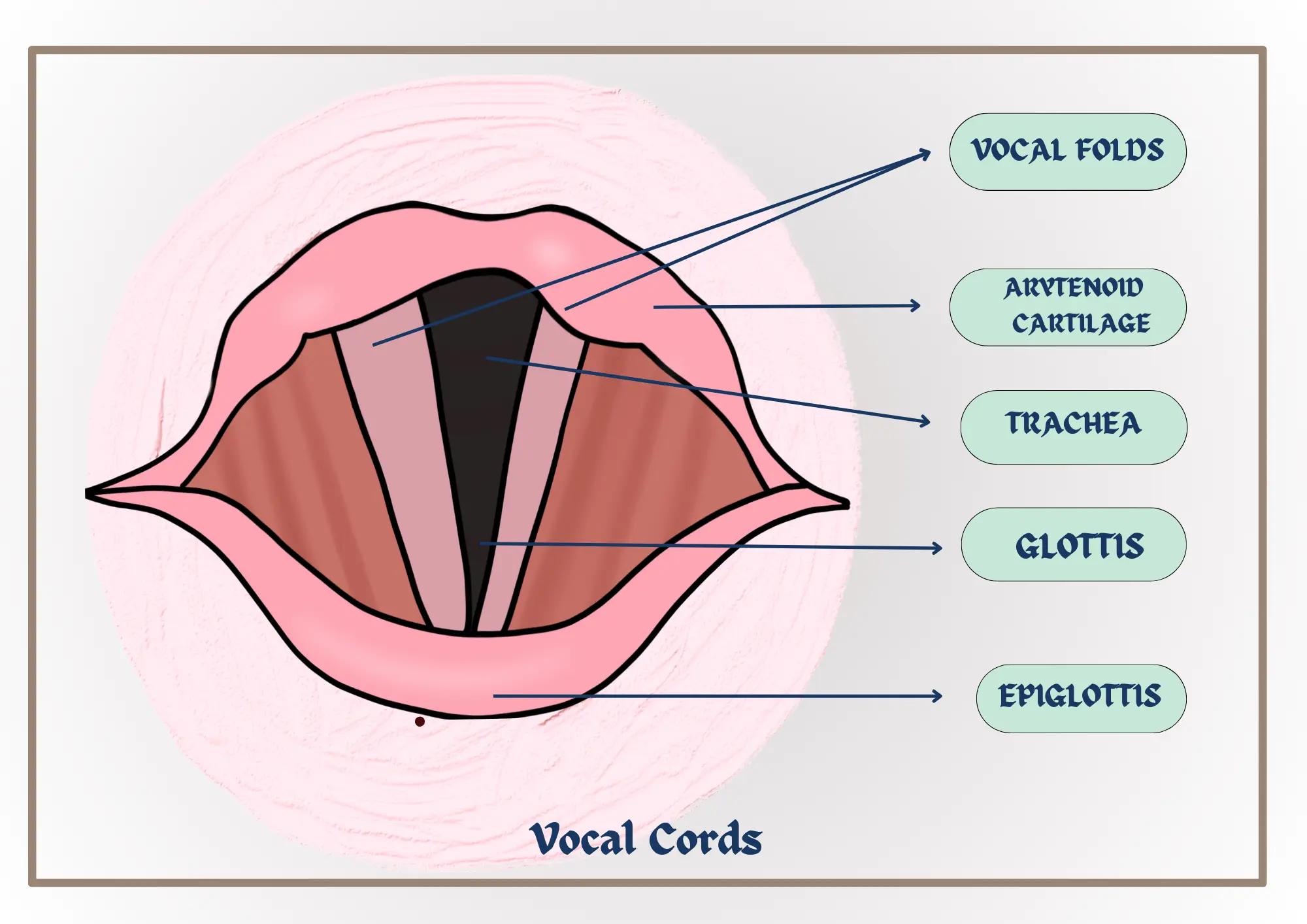
To address vocal fry within a technical framework, one must first understand its physiological and acoustical properties. Known scientifically as “glottal fry” or “pulse register,” vocal fry is the lowest vocal register a human can produce. It occurs when the vocal folds are compressed and slackened, allowing air to pass through at a slow, irregular rate. This creates a series of low-frequency “pops” or “creaks” rather than a smooth, continuous tone.
The Physics of Sub-Harmonic Frequencies
From an audio engineering perspective, vocal fry is characterized by a very low fundamental frequency ($f_0$), often dropping below 70 Hertz. Unlike the modal register (normal speaking voice), where vocal fold vibrations are periodic and regular, vocal fry introduces a high degree of “jitter” and “shimmer”—terms used in speech science to describe cycle-to-cycle variations in pitch and amplitude. For developers building voice-recognition software, these irregular waveforms present a significant challenge, as they often fall outside the expected parameters of standard speech patterns.
From Human Anatomy to Digital Waveforms
When a microphone captures vocal fry, the resulting waveform looks markedly different from standard speech. Instead of the rhythmic peaks associated with vowel sounds, the “creaky” voice appears as a series of discrete, damped pulses. In digital signal processing, identifying these pulses is crucial for tasks such as pitch detection and speaker diarization. If an algorithm is not trained to recognize these sub-harmonic pulses, it may misinterpret the speaker’s intent or fail to process the audio altogether, leading to errors in transcription or command execution.
Vocal Fry in AI and Machine Learning: Training the Voices of Tomorrow
The rise of generative AI and sophisticated Text-to-Speech (TTS) engines has moved the goalposts for “natural” synthetic voices. We are moving away from the robotic, monotone delivery of early GPS systems toward hyper-realistic, emotionally resonant AI personas. To achieve this, AI models must be able to replicate the “imperfections” of human speech, including vocal fry.
Natural Language Processing (NLP) and Prosody
Prosody refers to the rhythm, stress, and intonation of speech. In modern NLP, capturing the subtle nuances of prosody is essential for conveying emotion and intent. Vocal fry is frequently used by humans to signal the end of a sentence, a shift in mood, or a sense of casual intimacy. For AI companies like ElevenLabs or OpenAI, integrating vocal fry into their models is a strategic move to enhance “human-like” qualities. By training Large Language Models (LLMs) on datasets that include these glottal variations, developers can create AI that sounds less like a machine and more like a human collaborator.
The Challenge of Replicating “Imperfections”
Training a neural network to reproduce vocal fry is computationally intensive. It requires high-fidelity training data and sophisticated vocoders—algorithms that synthesize the human voice. Because vocal fry is non-linear and somewhat chaotic, it is harder to model than stable, melodic speech. Tech firms are currently employing Generative Adversarial Networks (GANs) to bridge this gap, where one part of the AI generates the creaky texture and another part critiques its realism until the output is indistinguishable from a human recording.
Synthetic Media and Digital Personalities
In the realm of synthetic media, the ability to toggle vocal fry is becoming a feature rather than a bug. Digital avatars and virtual influencers use specific vocal textures to build brand identity. A “tech-savvy” or “relaxed” persona might be programmed with a higher frequency of vocal fry to appeal to younger, digitally native audiences. This level of granular control over vocal characteristics represents the next step in personalized digital experiences.
Digital Signal Processing (DSP) and the Management of Low-Frequency Artifacts
While AI researchers are trying to replicate vocal fry, audio software engineers are often tasked with managing or mitigating it. In the world of professional podcasting, remote conferencing, and gaming, vocal fry can sometimes interfere with clarity, especially when processed through lossy codecs (like those used in Zoom or Discord).
Noise Gates, Compression, and Spectral Shaping
Traditional audio processing tools, such as compressors and noise gates, often struggle with the low-energy pulses of vocal fry. Because the “fry” is quieter than the rest of the speech, a standard compressor might over-amplify the “crackling” sound, making the audio grating to the listener. Advanced Digital Audio Workstations (DAWs) now feature AI-driven plugins that can identify vocal fry in real-time. These tools allow engineers to either smooth out the texture for better intelligibility or enhance it for stylistic effect using spectral shaping—a process that adjusts the frequency balance of a sound in high resolution.
AI-Driven Audio Restoration
One of the most significant breakthroughs in audio tech is AI-driven restoration. Companies like Adobe and iZotope have developed tools that can “clean up” speech recorded in sub-optimal conditions. If a user’s vocal fry is causing “muddy” audio in a low-bitrate recording, AI algorithms can reconstruct the missing harmonic content, effectively “filling in the gaps” of the glottal pulses to ensure the voice remains clear and professional. This technology is vital for the millions of content creators who rely on software to maintain broadcast-quality audio from home offices.
The Impact on UI/UX and Voice-First Technology
As we move toward a “voice-first” world—where we interact with our homes, cars, and workplaces via spoken commands—the technical understanding of vocal fry becomes a UX (User Experience) priority. The goal is to create interfaces that are both accessible and inclusive of all vocal styles.
Virtual Assistants and the Quest for Authenticity
Users are more likely to trust and engage with virtual assistants (like Siri, Alexa, or custom enterprise bots) if they sound authentic. Research suggests that “perfectly” smooth synthetic voices can trigger the “uncanny valley” effect, where users feel a sense of unease. By intentionally engineering subtle vocal fry into certain contexts, tech companies can make their interfaces feel more approachable and less clinical. This is a delicate balance in UI design: the tech must be “imperfect” enough to be human, but “perfect” enough to be clear.
User Perception and Accessibility
From an accessibility standpoint, voice-recognition technology must be robust enough to handle various vocal registers. If an automated customer service line or an accessibility tool for the visually impaired cannot recognize a voice with heavy vocal fry, it creates a technological barrier. Tech companies are now prioritizing diverse voice sets in their “Human-in-the-Loop” (HITL) training processes to ensure that whether a user speaks with a high-pitched modal voice or a low-frequency creak, the system responds with 99.9% accuracy.
The Future of Vocal Tech: Personalization and Real-Time Synthesis
Looking forward, the technology surrounding vocal fry will only become more sophisticated. We are entering an era of “Real-Time Voice Transformation.” Imagine a customer service representative in a high-stress environment using software to smooth out their vocal fry in real-time to sound more authoritative, or a gamer using an AI filter to add a “gritty” glottal rattle to their in-game character’s voice.
The intersection of linguistics and technology has turned the “vocal fry” from a mere quirk of speech into a vital parameter for the digital age. As developers continue to refine the algorithms that power our world, the ability to decode, replicate, and manage these subtle glottal pulses will be a hallmark of the next generation of AI and audio innovation. Whether it is making a virtual assistant sound more relatable or ensuring a podcast sounds crystal clear, the tech behind the “fry” is a testament to how far we have come in digitizing the human experience.
aViewFromTheCave is a participant in the Amazon Services LLC Associates Program, an affiliate advertising program designed to provide a means for sites to earn advertising fees by advertising and linking to Amazon.com. Amazon, the Amazon logo, AmazonSupply, and the AmazonSupply logo are trademarks of Amazon.com, Inc. or its affiliates. As an Amazon Associate we earn affiliate commissions from qualifying purchases.