
In the dynamic world of business and technology, efficiency and cost-effectiveness are paramount. As supply chains become increasingly complex and the pace of innovation accelerates, companies are constantly seeking smarter ways to manage their operations. One such strategy, Vendor-Managed Inventory (VMI), has emerged as a powerful tool for optimizing stock levels, reducing costs, and fostering stronger supplier relationships. But what exactly is a VMI, and how does it fit into the broader themes of technology, branding, and money that drive modern businesses?
This article will delve into the multifaceted nature of VMI, exploring its core principles, its advantages for both vendors and buyers, and its crucial role in today’s tech-driven, brand-conscious, and financially scrutinized business environment. We’ll uncover how VMI leverages technology, impacts brand perception, and ultimately contributes to healthier profit margins.
The Core Concept: Defining Vendor-Managed Inventory (VMI)
At its heart, Vendor-Managed Inventory (VMI) is a supply chain management strategy where the vendor (the supplier of goods) takes responsibility for maintaining the optimal inventory levels at the buyer’s (the customer’s) location. Instead of the buyer placing individual purchase orders when stock runs low, the vendor actively monitors the buyer’s inventory data and replenishes stock proactively. This shift in responsibility is a fundamental departure from traditional inventory management, where the buyer dictates when and how much to order.
Think of it as a partnership where the vendor becomes an extension of the buyer’s internal inventory management team. The buyer typically grants the vendor access to their sales data, point-of-sale (POS) information, or inventory levels, allowing the vendor to make informed decisions about replenishment. The vendor then uses this data to forecast demand, schedule deliveries, and ensure that the buyer has the right products in the right quantities at the right time.
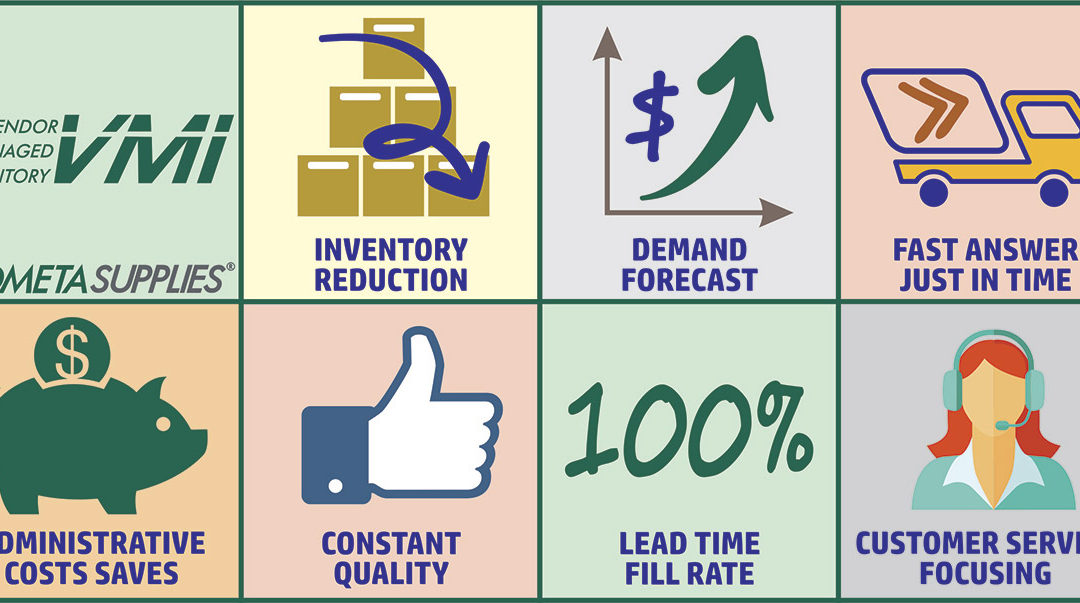
The ultimate goal of VMI is to create a more streamlined, efficient, and responsive supply chain. By entrusting inventory management to the vendor, buyers can reduce the burden on their internal resources, minimize stockouts, and avoid the costs associated with overstocking. For vendors, VMI offers greater visibility into customer demand, allowing for better production planning, reduced lead times, and the potential to build stronger, more loyal customer relationships.
How Does VMI Work in Practice?
The implementation of a VMI system typically involves several key steps:
- Data Sharing: The buyer shares critical inventory and sales data with the vendor. This can be done through various methods, including electronic data interchange (EDI), shared databases, or even regular manual reports in simpler setups. The level of data access and the frequency of updates are crucial for the VMI system’s success.
- Agreement on Min/Max Levels: The vendor and buyer collaboratively establish agreed-upon minimum and maximum inventory levels for each product. These levels are determined based on factors like sales velocity, lead times, production capacity, and seasonal demand.
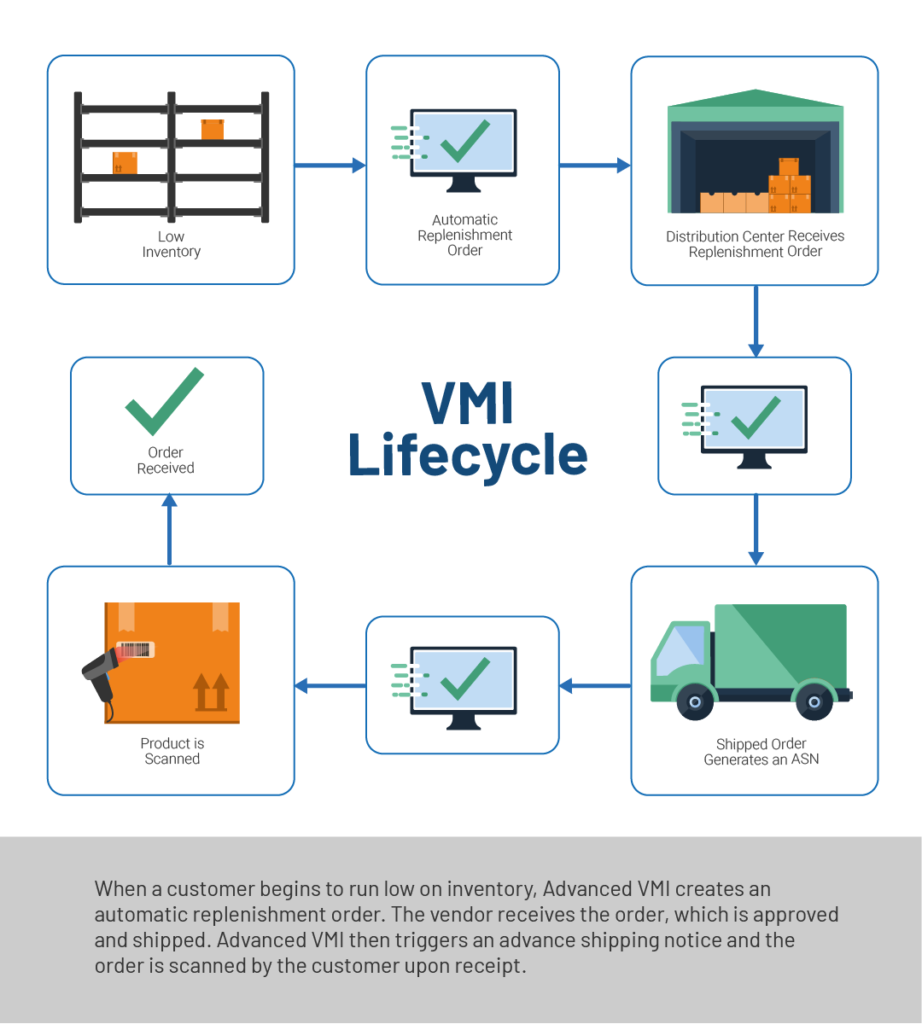
- Monitoring and Forecasting: The vendor uses the shared data to continuously monitor the buyer’s inventory. Advanced VMI systems leverage sophisticated software that analyzes sales trends, historical data, and external factors (like promotions or market shifts) to forecast future demand accurately.
- Proactive Replenishment: Based on the monitoring and forecasting, the vendor initiates replenishment orders. This means the vendor decides when to ship products and in what quantities, often delivering directly to the buyer’s shelves or warehouse.
- Performance Metrics and Review: Regular reviews of inventory levels, stockout rates, and other key performance indicators (KPIs) are essential. This allows both parties to assess the effectiveness of the VMI program and make adjustments as needed.
While the core principle remains consistent, the specific implementation of VMI can vary. Some VMI programs involve the vendor taking ownership of the inventory until it is sold by the buyer (known as consignment VMI), while others focus solely on managing the replenishment process.
The Tech-Enabled Advantage: VMI in the Digital Age
The rise of VMI is inextricably linked to advancements in technology. Without robust digital tools and data-sharing capabilities, VMI would be far less effective, if not impossible. Technology acts as the engine that powers modern VMI systems, enabling the seamless flow of information and intelligent decision-making.
Leveraging Technology for Smarter Inventory Management
Several key technological components are crucial for successful VMI implementation:
- Enterprise Resource Planning (ERP) Systems: ERP systems provide a centralized platform for managing various business processes, including inventory, sales, procurement, and finance. Integrating VMI with an ERP system allows for real-time data synchronization, providing a holistic view of inventory across multiple locations and sales channels. This integration is fundamental for accurate demand forecasting and efficient replenishment.
- Point-of-Sale (POS) Systems: For retailers, POS systems are a goldmine of real-time sales data. When integrated with VMI, POS data allows vendors to see exactly what is selling, when, and in what quantities. This granular insight enables precise forecasting and helps prevent both stockouts and overstocking at the shelf level.
- Inventory Management Software (IMS): Dedicated IMS solutions, often with VMI functionalities, are designed to track inventory levels, manage stock movements, and automate replenishment processes. These software packages can provide sophisticated analytics, demand planning tools, and alert systems, empowering vendors to make proactive decisions.
- Cloud Computing and Data Analytics: Cloud-based VMI platforms offer scalability, accessibility, and the ability to process vast amounts of data efficiently. Advanced data analytics and AI tools are increasingly being integrated into VMI systems. These technologies can identify complex patterns in sales data, predict future demand with greater accuracy, and even suggest optimal stocking strategies based on various external factors. This allows for a more predictive and less reactive approach to inventory management.
- Internet of Things (IoT) Devices: In some advanced VMI scenarios, IoT sensors can be deployed at the buyer’s location to provide real-time inventory counts. For example, smart shelves equipped with weight sensors or RFID tags can automatically report stock levels to the vendor, eliminating the need for manual data entry and providing an even more immediate and accurate picture of inventory status.
- Electronic Data Interchange (EDI): EDI facilitates the standardized electronic exchange of business documents between trading partners. In VMI, EDI is often used to transmit purchase orders, invoices, and inventory level updates, ensuring consistency and reducing errors.
The synergy between VMI and technology allows businesses to move beyond guesswork and manual tracking. It fosters a data-driven approach to inventory management, leading to greater accuracy, reduced waste, and improved operational efficiency. This technological backbone is what differentiates modern VMI from its more rudimentary predecessors and makes it a powerful competitive advantage.
The Brand Impact: How VMI Shapes Reputation and Customer Loyalty
While VMI is primarily an operational strategy, its influence extends significantly into the realm of brand. A well-executed VMI program can have a profound positive impact on a company’s brand perception, fostering customer loyalty and strengthening its market position. Conversely, a poorly managed VMI can damage a brand’s reputation.
Building Trust and Reliability Through VMI
A brand’s promise often revolves around reliability, availability, and customer satisfaction. VMI directly contributes to fulfilling these promises in several ways:
- Ensuring Product Availability: Perhaps the most direct brand benefit of VMI is the consistent availability of products. When a customer walks into a store or visits an e-commerce site, they expect the item they want to be there. VMI significantly reduces the likelihood of stockouts, ensuring that customers can always purchase what they need. This reliability builds trust and encourages repeat business, a cornerstone of strong brand loyalty.
- Enhancing Customer Experience: A frustrating experience due to an out-of-stock item can lead to lost sales and negative customer perceptions. By ensuring consistent product availability, VMI contributes to a positive customer experience. Satisfied customers are more likely to become brand advocates, spreading positive word-of-mouth and reinforcing the brand’s reputation for dependability.
- Improving Perceived Value: When products are consistently available and the purchasing process is seamless, customers perceive greater value from the brand. This perception of value can justify premium pricing and differentiate the brand from competitors. The brand becomes synonymous with convenience and the assurance of getting what you want, when you want it.
- Strengthening Supplier Relationships: For the vendor, a successful VMI partnership signifies a commitment to their customer’s success. This collaborative approach fosters strong, long-term relationships built on trust and mutual benefit. A vendor that consistently delivers on VMI expectations is more likely to be seen as a valuable partner, leading to preferential treatment and increased business. This, in turn, strengthens the vendor’s own brand as a reliable and supportive supplier.
- Demonstrating Innovation and Efficiency: Implementing a VMI system often signals that a company is forward-thinking and embraces efficient operational practices. This can enhance the brand’s image as being modern, technologically adept, and committed to optimizing its supply chain for customer benefit. This can be particularly appealing to business partners and investors who value operational excellence.
However, the brand implications can also be negative if VMI is not managed effectively. Frequent stockouts, incorrect product deliveries, or a lack of communication can erode customer trust, damage the brand’s reputation for reliability, and ultimately lead to lost sales and customer churn. The brand promise needs to be backed by operational reality, and VMI is a critical component in ensuring that reality aligns with the brand’s aspirations.
The Financial Upside: VMI as a Driver of Profitability
Beyond operational efficiency and brand enhancement, VMI has a direct and significant impact on a company’s financial health. By optimizing inventory management, VMI contributes to reduced costs, improved cash flow, and ultimately, increased profitability.

Unlocking Financial Benefits Through VMI
The financial advantages of VMI are compelling for both buyers and vendors:
- Reduced Inventory Holding Costs: Holding excess inventory ties up significant capital and incurs substantial costs, including warehousing, insurance, obsolescence, and potential spoilage. VMI, by ensuring optimal stock levels, drastically reduces these holding costs for the buyer. The vendor, often better equipped to manage inventory across multiple clients, can achieve economies of scale in warehousing and handling.
- Minimized Stockout Costs: Stockouts are not just an inconvenience; they represent lost sales opportunities and can lead to customer dissatisfaction, which has its own indirect financial implications. By preventing stockouts, VMI directly boosts sales and revenue for the buyer. The cost of lost sales due to unavailability can be substantial and is often overlooked in traditional cost analyses.
- Improved Cash Flow: With less capital tied up in excess inventory, businesses experience improved cash flow. This freed-up capital can be reinvested in other areas of the business, such as marketing, research and development, or debt reduction, contributing to overall financial growth.
- Reduced Expedited Shipping Costs: In traditional models, businesses often resort to expedited shipping to cover for unexpected stock shortages. This is a costly last-resort measure. VMI’s proactive replenishment model minimizes the need for such costly shipping, leading to significant savings.
- Enhanced Production Planning and Efficiency (for Vendors): For vendors, VMI provides greater visibility into customer demand, enabling them to optimize their production schedules. This reduces costly production disruptions, minimizes waste, and allows for more efficient use of resources. Predictable demand leads to more efficient manufacturing and procurement, lowering the cost of goods sold.
- Better Negotiation Power: A strong VMI relationship can sometimes lead to better pricing and terms for the buyer, especially if the vendor is committed to reducing overall supply chain costs. The efficiency gained through VMI can be shared, leading to more favorable financial agreements.
- Reduced Administrative Overhead: By automating replenishment and reducing the need for manual order processing, VMI can lower administrative costs associated with inventory management. Fewer purchase orders to process, fewer invoices to reconcile, and less time spent on inventory counts translate into real cost savings.
In conclusion, VMI is far more than just a buzzword; it’s a strategic imperative for businesses looking to thrive in today’s competitive landscape. By understanding its technological underpinnings, recognizing its impact on brand perception, and appreciating its profound financial benefits, companies can harness the power of Vendor-Managed Inventory to build more resilient, efficient, and profitable operations. Whether you are a buyer seeking to optimize your stock and reduce costs, or a vendor aiming to deepen customer relationships and streamline your own operations, exploring and implementing a VMI strategy could be a pivotal step towards achieving your business objectives.
aViewFromTheCave is a participant in the Amazon Services LLC Associates Program, an affiliate advertising program designed to provide a means for sites to earn advertising fees by advertising and linking to Amazon.com. Amazon, the Amazon logo, AmazonSupply, and the AmazonSupply logo are trademarks of Amazon.com, Inc. or its affiliates. As an Amazon Associate we earn affiliate commissions from qualifying purchases.