
In the hyper-connected landscape of modern retail, we often take for granted the seamless speed with which a product moves from a shelf to a digital shopping cart. At the heart of this efficiency lies a modest but revolutionary piece of technology: the Universal Product Code, or UPC. While the average consumer sees a series of black lines and numbers, the UPC is actually a sophisticated data-encoding system that serves as the bridge between physical objects and global digital databases. Understanding what a UPC code is requires looking beyond the sticker and examining the technology, software protocols, and hardware systems that allow global commerce to function in real-time.
The Anatomy of a UPC: Decoding the Technology Behind the Bars
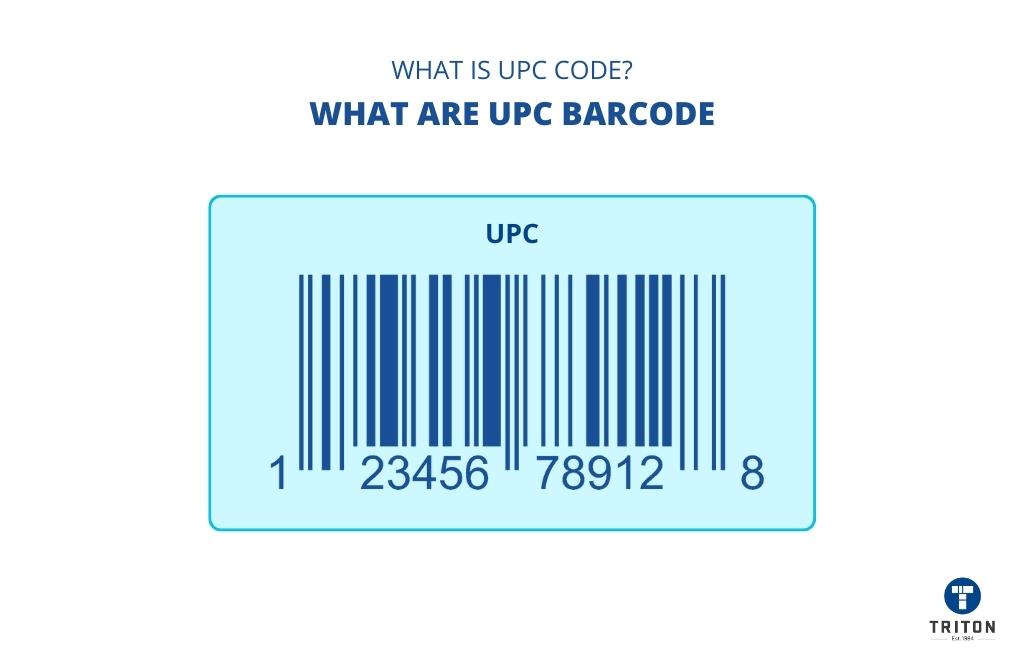
To understand the UPC, one must first view it not as an image, but as a data structure. Specifically, the most common version used in North America is the UPC-A, which consists of 12 numerical digits mapped to a specific pattern of bars and spaces. This isn’t just a random assortment of lines; it is a precisely engineered binary language designed for machine vision.
GTIN-12 Structure and Data Formatting
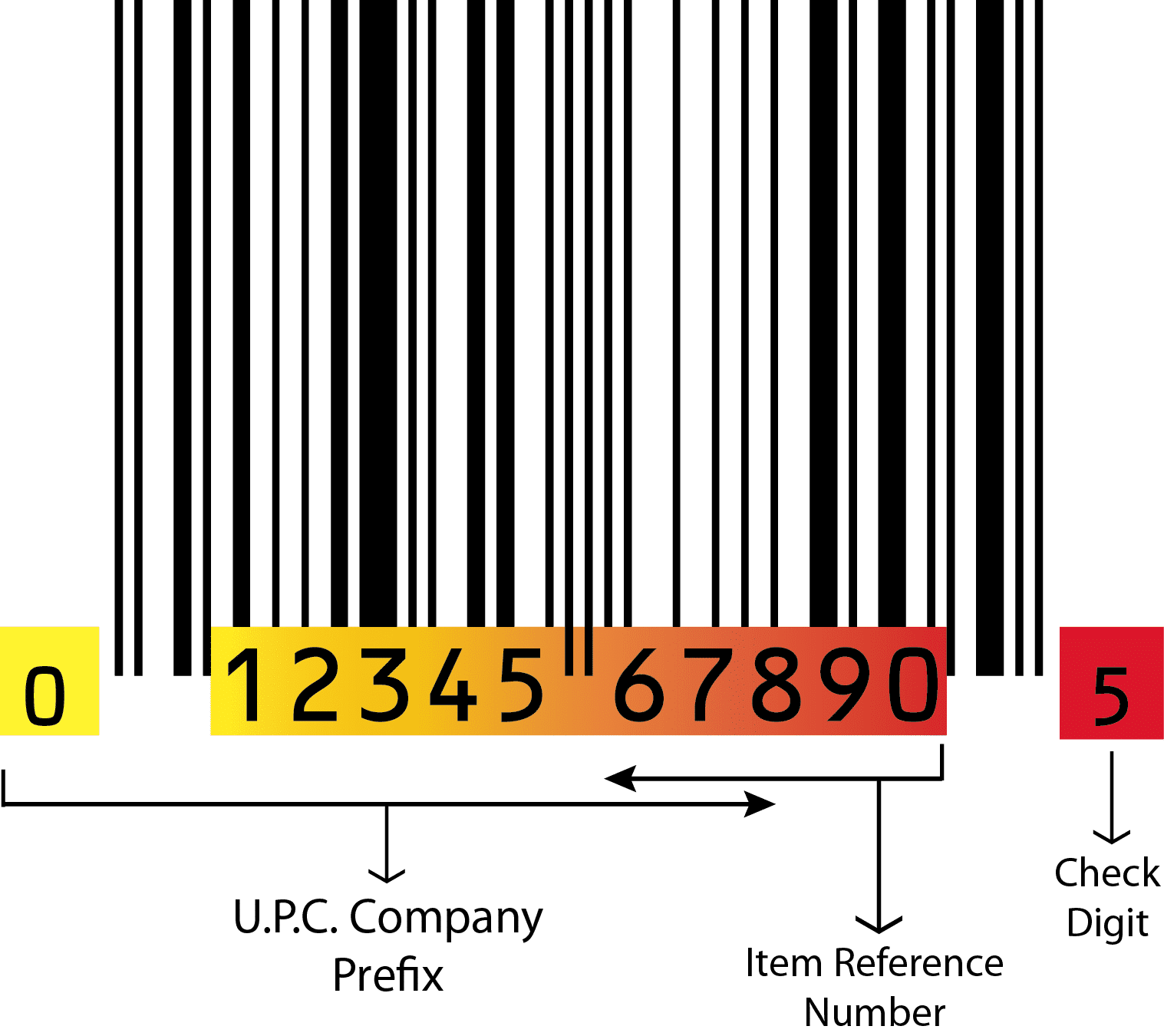
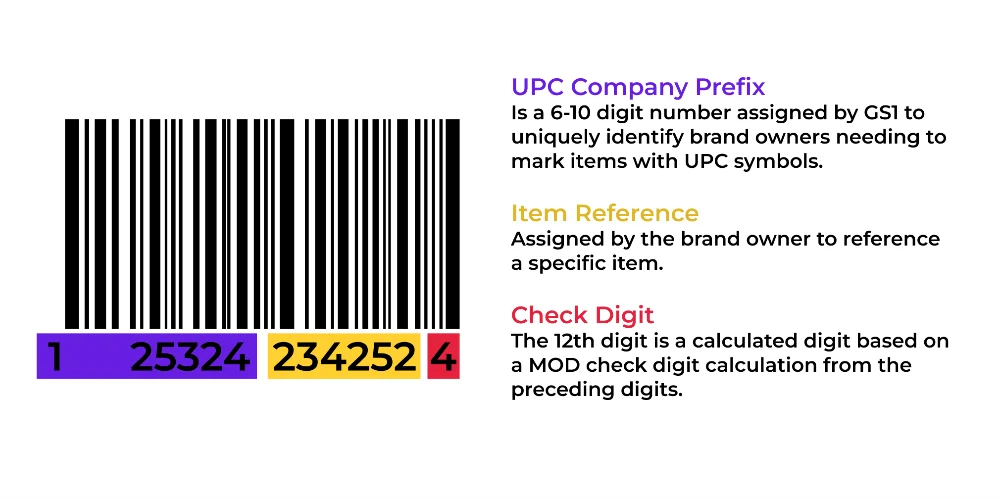
The numerical component of a UPC is technically known as a GTIN-12 (Global Trade Item Number). This 12-digit string is divided into specific segments that software systems use to identify products.
- The Company Prefix: Assigned by GS1 (the global standards organization), this 6-to-10-digit number identifies the manufacturer or brand owner. In a database, this prefix acts as a primary key for corporate identification.
- The Item Reference: The following digits are assigned by the company to represent a specific SKU (Stock Keeping Unit). Every variation of a product—different sizes, colors, or flavors—requires a unique item reference.
- The Check Digit: The final digit is a product of a mathematical algorithm applied to the previous 11 digits. This is a crucial fail-safe for hardware scanners. If the scanner’s calculated result doesn’t match the check digit, the system alerts the operator of a “misread,” preventing data corruption.
The Binary Logic of Scanners
The visual “barcode” is essentially a font that translates the GTIN-12 into a format a machine can read. Each digit is represented by two bars and two spaces of varying widths. In technical terms, the barcode uses a “modular” system where each character is seven modules wide. These modules are either “dark” (1) or “light” (0).
When a laser or LED light passes over the barcode, the dark bars absorb the light while the light spaces reflect it back to a sensor. The scanner’s software interprets these variations in light intensity as binary code, which is then translated back into the 12-digit GTIN. This process happens in milliseconds, showcasing the efficiency of optical character recognition in high-speed environments.
How UPC Technology Synchronizes Global Inventory
The true power of the UPC is not in the code itself, but in the massive, interconnected software ecosystems it supports. A UPC is a “key” that unlocks information stored in a database. Without the software infrastructure behind it, a barcode is just a series of lines.
The GS1 Standard and Universal Interoperability
The UPC is governed by GS1, a global non-profit that ensures every code is unique. From a tech standpoint, this is an incredible feat of standardization. Because everyone adheres to the GS1 Global Data Model, a product manufactured in Tokyo can be scanned in a warehouse in Berlin and sold at a retail terminal in New York without any software re-configuration.
This interoperability is made possible by Global Data Synchronization Networks (GDSN). These cloud-based platforms allow manufacturers to upload product specifications (weight, dimensions, ingredients, etc.) which are then automatically pushed to retail databases worldwide. When a scanner reads a UPC, it is pulling from these synchronized records to ensure the data is accurate and current.
Real-Time Data Integration in Modern POS Systems
Modern Point of Sale (POS) systems are far more than digital cash registers; they are sophisticated data hubs. When a UPC is scanned at checkout, several automated processes are triggered simultaneously:
- Price Look-Up (PLU): The system queries the local or cloud database to find the current price.
- Inventory Deduction: The software subtracts the item from the store’s inventory count in real-time.
- Replenishment Logic: If the stock level falls below a programmed threshold, the software may automatically generate a purchase order to the distributor.
- Data Analytics: The transaction is logged into a Big Data engine, allowing retailers to track sales trends, peak shopping times, and consumer behavior patterns.
From Lasers to Image Sensors: The Evolution of Scanning Hardware
The technology used to read UPC codes has evolved significantly since the first pack of Wrigley’s chewing gum was scanned in 1974. These advancements have moved from simple light reflection to advanced computational photography.
Linear CCD vs. 2D Imaging Technology
Early UPC scanners used Linear Laser Scanners. These devices use a reciprocating mirror to sweep a laser beam across the barcode. While effective, they are limited because they can only read 1D (linear) barcodes and require the beam to be perpendicular to the bars.
Today, most high-end retail environments use 2D Area Imagers. These devices function more like a digital camera. They take a high-resolution “picture” of the barcode and use sophisticated digital signal processing (DSP) to locate and decode the UPC from any angle. Because these imagers use software-based decoding, they can read barcodes even if they are partially damaged, wrinkled, or displayed on a smartphone screen—a feat impossible for older laser technology.
Mobile Scanning and the Democratization of Data
The proliferation of high-quality CMOS sensors in smartphones has moved UPC technology from the warehouse to the palm of the consumer’s hand. Modern mobile apps utilize the phone’s camera and a software development kit (SDK) to perform real-time image analysis.
This has birthed a new era of “Edge Computing” in retail. Consumers can scan a UPC in a store to instantly compare prices online, check for allergens, or read user reviews. For businesses, this means employees can perform inventory audits using a standard smartphone rather than expensive, proprietary handheld terminals, significantly lowering the barrier to entry for advanced logistics management.
The Digital Future: Moving Beyond the Traditional UPC
While the 1D UPC has served the industry for decades, the technology is currently undergoing its most significant shift in 50 years. As we move toward the “Internet of Things” (IoT) and more transparent supply chains, the limitations of the standard UPC are becoming apparent.
RFID and the Shift Toward IoT
Radio Frequency Identification (RFID) is often seen as the logical successor to the UPC for high-volume inventory. Unlike a UPC, which requires a line-of-sight scan, an RFID tag uses radio waves to transmit data. A warehouse worker can scan an entire pallet of 500 items in seconds without opening a single box.
However, RFID hasn’t replaced the UPC entirely due to the cost of tags and the need for specialized hardware. Instead, we are seeing a hybrid approach where the UPC remains the consumer-facing identifier, while RFID handles the backend logistics and anti-theft measures.
Transitioning to 2D Barcodes and the GS1 Digital Link
The most imminent change is “Sunrise 2027″—a global initiative by GS1 to transition from 1D UPC barcodes to 2D barcodes (like QR codes) at the point of sale. This is a massive technological upgrade.
A traditional UPC can only hold 12 digits of data. A 2D barcode using the GS1 Digital Link standard can contain a URL that points to a wealth of information. This allows the same code to be used for:
- Checkout: Scanning the item at the register.
- Traceability: Storing batch numbers and expiration dates to handle targeted recalls.
- Consumer Engagement: Linking the buyer to a manual, a video, or a loyalty program.
- Sustainability: Providing a digital product passport that details the item’s carbon footprint or recycling instructions.
Conclusion
The UPC code is a masterpiece of technical standardization and industrial engineering. What began as a simple way to speed up grocery lines has evolved into a global language that powers the world’s supply chains. It is the fundamental data unit that allows software, hardware, and cloud networks to track billions of products across the globe with near-perfect accuracy.
As we look toward the future, the UPC is not disappearing; it is evolving. From the binary logic of red lasers to the data-rich potential of 2D imaging and Digital Links, the “code on a product” remains the most vital piece of technology in the retail world. Whether you are a software developer building the next generation of POS systems or a business owner managing a growing inventory, understanding the technical depth of the UPC is essential to navigating the digital future of commerce.
aViewFromTheCave is a participant in the Amazon Services LLC Associates Program, an affiliate advertising program designed to provide a means for sites to earn advertising fees by advertising and linking to Amazon.com. Amazon, the Amazon logo, AmazonSupply, and the AmazonSupply logo are trademarks of Amazon.com, Inc. or its affiliates. As an Amazon Associate we earn affiliate commissions from qualifying purchases.