
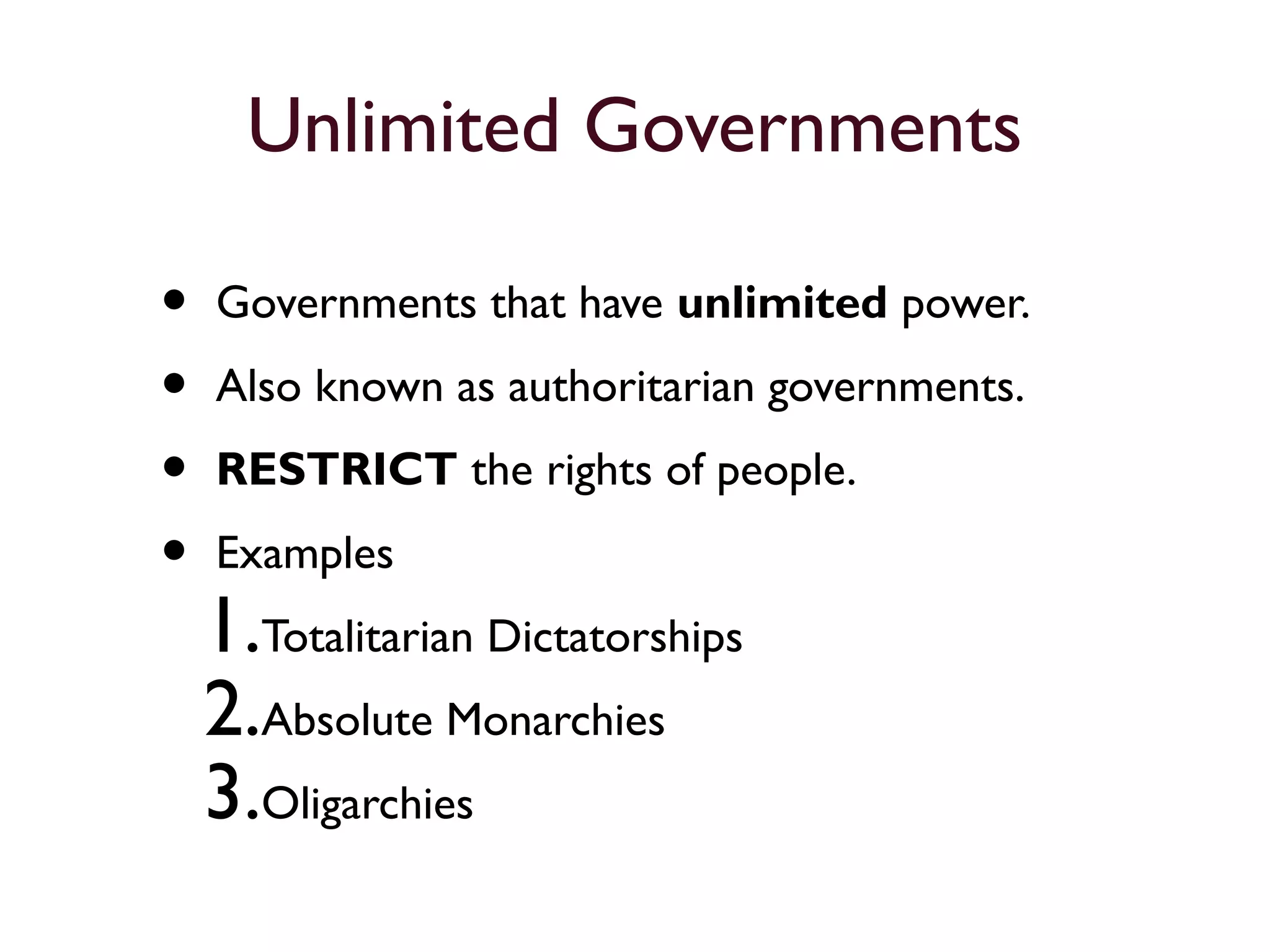
In the realm of political economy, the term “unlimited government” describes a system where the state exercises authority without significant legal, constitutional, or fiscal constraints. While the political implications of such a system often dominate public discourse, the financial ramifications are arguably more profound for the individual investor, the business owner, and the average taxpayer. From a monetary perspective, an unlimited government is one that can print, spend, and regulate with total autonomy, often leading to significant shifts in wealth distribution, market volatility, and long-term economic stability.

Understanding the mechanics of an unlimited government is essential for anyone looking to protect their assets and navigate the complexities of modern finance. When a government moves away from fiscal discipline and toward a model of unchecked expansion, it alters the fundamental rules of the marketplace. This article explores the economic architecture of unlimited government, how it impacts personal finance, and the strategies necessary to safeguard wealth in an era of fiscal centralization.
The Economic Definition of Unlimited Government
At its core, an unlimited government in a financial context is defined by the absence of “hard” constraints on its budget and monetary policy. In a limited system, governments are bound by gold standards, balanced budget amendments, or strict central bank independence. In an unlimited system, these guardrails are eroded or removed entirely, allowing for perpetual deficit spending and the monetization of debt.
The Erosion of Monetary Constraints
Historically, the gold standard acted as a natural check on government growth. Because currency was tied to a physical commodity, a state could only spend what it possessed or could realistically borrow based on its reserves. The shift toward fiat currency systems—money backed by nothing more than government decree—laid the groundwork for the modern unlimited government. Without the tether of a physical asset, the state gains the power to expand the money supply at will. While this provides flexibility during crises, it also removes the primary mechanism that forces a government to live within its means.
Debt as a Tool of Perpetual Expansion
In an unlimited government model, debt is no longer a temporary measure for emergencies; it becomes a permanent feature of the fiscal landscape. When a government faces no constitutional limit on its borrowing capacity, it can fund massive social programs, military expansions, and infrastructure projects without immediate tax increases. This creates an environment of “artificial liquidity,” where the economy appears to be growing due to high levels of state spending, even if underlying productivity is stagnant. For the investor, this means that market cycles are increasingly driven by government policy rather than genuine economic demand.
How Unlimited Government Spending Impacts Personal Finance
The financial reach of an unchecked state eventually filters down to the individual level. While the initial stages of massive government spending may feel like a boon to the economy, the long-term consequences often manifest as a steady erosion of purchasing power and a tightening of the private financial sector.
Inflation as a Hidden Tax
One of the most direct consequences of unlimited government is inflation. When the state increases the money supply to fund its operations, the value of each existing unit of currency declines. This is effectively a hidden tax on savers. While income taxes are visible and often debated, inflation quietly transfers wealth from the private citizen to the state by devaluing the debt the government owes while simultaneously making daily goods and services more expensive for the consumer. For those holding large amounts of cash or fixed-income assets, an unlimited government represents a constant threat to the real value of their holdings.
The Crowding Out Effect on Private Investment
As a government expands its role in the economy, it often “crowds out” private enterprise. When the state becomes the primary borrower in the credit markets, it drives up the cost of capital for everyone else. Small businesses and individual entrepreneurs may find it harder to secure loans or find that interest rates are prohibitively high because the government is soaking up available liquidity to fund its own deficits. This centralization of capital limits the diversity of the economy and makes individual financial success more dependent on government contracts or subsidies rather than market innovation.
Investing in an Era of Expanding State Control
For the savvy investor, an unlimited government requires a paradigm shift in asset allocation. Traditional models that rely on stable currency values and predictable regulatory environments may no longer apply. Instead, a strategy focused on resilience and “hard” value becomes paramount.
Asset Allocation Strategies

In an environment of unchecked government spending, diversification must go beyond just stocks and bonds. Investors often look toward “inflation hedges”—assets that historically maintain their value when the currency is debased. This includes real estate, which offers both utility and a physical hedge, and equities in companies with high pricing power. Companies that can pass on increased costs to consumers are better positioned to survive in a high-inflation, unlimited government scenario.
The Role of Hard Assets and Commodities
Gold, silver, and other commodities have historically served as the ultimate insurance policy against fiscal irresponsibility. Because these assets cannot be printed or manufactured by a central authority, they represent a finite store of value. In recent years, the conversation has expanded to include digital assets like Bitcoin, which some investors view as “digital gold” due to its programmed scarcity. These assets act as a counterbalance to a fiat system where the supply of money is subject to the whims of political leadership.
Navigating Regulatory Shifts
An unlimited government is also a highly regulatory government. As the state grows, it often seeks new ways to capture revenue and control economic activity. This can lead to sudden changes in capital gains taxes, the implementation of wealth taxes, or new compliance requirements for various industries. Investors must stay agile, monitoring legislative trends as closely as they monitor corporate earnings. Seeking professional financial advice that incorporates “regime change” risk—the risk that the rules of the game will change—is essential for long-term wealth preservation.
Business Finance and the Risks of Centralization
For business owners and corporate executives, the rise of unlimited government creates a complex dual reality. On one hand, government spending can provide lucrative opportunities; on the other, it creates a dependency that can be hazardous to long-term business health.
Dependency on Subsidies and Grants
When the government is the largest spender in the economy, many businesses pivot their models to chase state funding. While this can lead to short-term growth, it creates a “fragile” business structure. If political winds shift or if the government is forced to implement austerity measures, businesses that rely on subsidies may find themselves insolvent. Sustainable business finance in this era requires maintaining a core revenue stream that is independent of government largesse.
Taxation and Capital Flight
To fund an unlimited scope of operations, the state eventually requires more revenue than printing money can provide. This leads to increasingly aggressive tax policies. For businesses, high corporate tax rates and complex regulatory burdens can stifle expansion and innovation. This often results in capital flight, where businesses move their headquarters or manufacturing facilities to jurisdictions with more limited government and more favorable fiscal environments. Understanding the global tax landscape is now a critical component of corporate strategy.
Strategies for Financial Sovereignty
In the face of an unlimited government, the goal for many is to achieve a degree of financial sovereignty—the ability to maintain one’s wealth and economic freedom regardless of state policy.
Diversifying Beyond Borders
One of the most effective ways to mitigate the risks of a single government’s fiscal policy is geographic diversification. By holding assets in different jurisdictions, investors can protect themselves from localized currency collapses or radical changes in tax law. This can include foreign bank accounts, international real estate, or stocks in multinational corporations that generate revenue across various regulatory environments.
Embracing Decentralized Finance (DeFi)
The rise of decentralized finance (DeFi) offers a technological alternative to traditional, government-centric financial systems. DeFi platforms operate on blockchain technology, allowing for peer-to-peer lending, borrowing, and trading without the need for a central intermediary. While still an emerging and volatile sector, DeFi represents a growing movement toward a financial system that is governed by code and transparency rather than political mandates. For those concerned about the overreach of an unlimited government, these tools provide a way to participate in the global economy with reduced exposure to centralized fiscal risks.
The concept of an unlimited government is more than a political theory; it is a financial reality that reshapes the way we earn, save, and invest. By recognizing the signs of unchecked fiscal power—such as perpetual debt, currency debasement, and regulatory expansion—individuals and businesses can take proactive steps to protect their financial future. Sovereignty in this era requires a combination of traditional discipline, innovative asset selection, and a global perspective on wealth management.
aViewFromTheCave is a participant in the Amazon Services LLC Associates Program, an affiliate advertising program designed to provide a means for sites to earn advertising fees by advertising and linking to Amazon.com. Amazon, the Amazon logo, AmazonSupply, and the AmazonSupply logo are trademarks of Amazon.com, Inc. or its affiliates. As an Amazon Associate we earn affiliate commissions from qualifying purchases.