
The term “trailer brake” can encompass a range of technologies designed to enhance the safety and control of towed vehicles. While the fundamental purpose remains consistent – to facilitate controlled deceleration and stopping of a trailer – the specific mechanisms and their integration into modern vehicle systems are diverse and evolving. Understanding these systems is crucial for anyone involved in towing, from recreational users to commercial operators, as they directly impact vehicle dynamics, road safety, and regulatory compliance. This exploration will delve into the technological intricacies of trailer braking systems, focusing on their design, function, and the various forms they take in contemporary applications.

The Fundamental Principles of Trailer Braking
At its core, a trailer brake system is an extension of the primary braking system of the towing vehicle, designed to apply braking force to the trailer’s wheels. This synchronized application of brakes ensures that the trailer decelerates at a rate proportional to the towing vehicle, preventing scenarios like trailer sway, jackknifing, or excessive stopping distances. The effectiveness of any trailer braking system is predicated on its ability to reliably detect the towing vehicle’s braking intent and translate that intent into proportionate braking action on the trailer.
Why Trailer Brakes are Essential
The importance of trailer brakes cannot be overstated, particularly as trailer weight and size increase. A heavy trailer, without its own braking system, imposes a significant load on the towing vehicle’s brakes, leading to rapid overheating, premature wear, and a dangerous reduction in stopping power. Furthermore, in the event of a sudden stop or evasive maneuver, an unbraked trailer can become unstable. The inertia of the trailer can push against the towing vehicle, causing a loss of control. Trailer brakes mitigate these risks by providing independent stopping capability, thereby enhancing overall vehicle stability and reducing the strain on the towing vehicle’s braking components. This directly translates to improved safety for all road users.
Components of a Basic Trailer Braking System
A rudimentary trailer braking system often consists of several key components. These include the brake mechanism itself, typically drum or disc brakes mounted on the trailer’s axles. These are actuated by a system that transmits the braking command. In many cases, this involves surge or inertia-activated mechanisms, which are designed to engage automatically when the towing vehicle decelerates. Electrical connections are also vital, especially for more sophisticated systems, to power actuators and control modules. The design and complexity of these components can vary significantly depending on the type of trailer and the intended application.
Types of Trailer Brake Actuation Systems
The method by which trailer brakes are activated is a primary differentiator between various trailer braking technologies. These systems range from simple mechanical devices to complex electronic controls, each with its own set of advantages and disadvantages. The choice of actuation system is often dictated by trailer type, weight, intended use, and regulatory requirements.
Surge Brakes (Inertia Brakes)
Surge brakes, also known as inertia brakes, are a common and relatively simple form of trailer braking. They operate on the principle of inertia. When the towing vehicle brakes, the momentum of the trailer causes it to push forward relative to the hitch. This forward movement is used to mechanically activate the trailer’s brakes. A master cylinder, integrated into the trailer’s drawbar or A-frame, is compressed by this forward thrust. This compression forces hydraulic fluid to the trailer’s wheel cylinders or calipers, engaging the brakes.
Advantages and Limitations of Surge Brakes
The primary advantage of surge brakes is their simplicity and the fact that they do not require any electrical connection or control from the towing vehicle. This makes them ideal for trailers where the towing vehicle may not be equipped with trailer brake wiring or for applications where a straightforward, self-contained system is desired. They are often found on boat trailers, utility trailers, and smaller RVs. However, surge brakes have limitations. Their activation is solely dependent on the forward surge, meaning they may not engage as effectively or as quickly as electronically controlled systems, especially in certain braking scenarios. They also do not offer the same level of fine-tuning or adjustability as electric or hydraulic brake controllers. Furthermore, when backing up, surge brakes can sometimes engage, causing difficulty. Some surge brake systems incorporate a reverse lockout feature to address this.
Electric Trailer Brakes
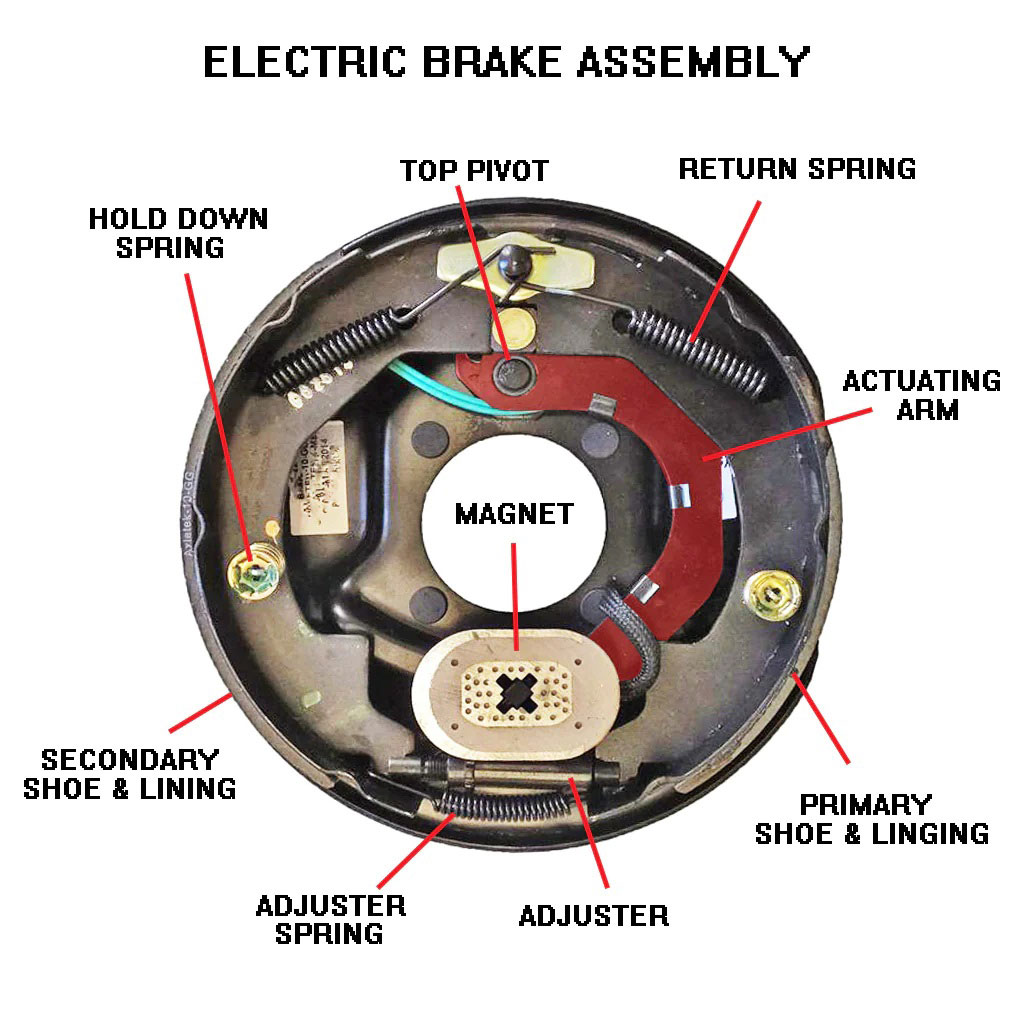
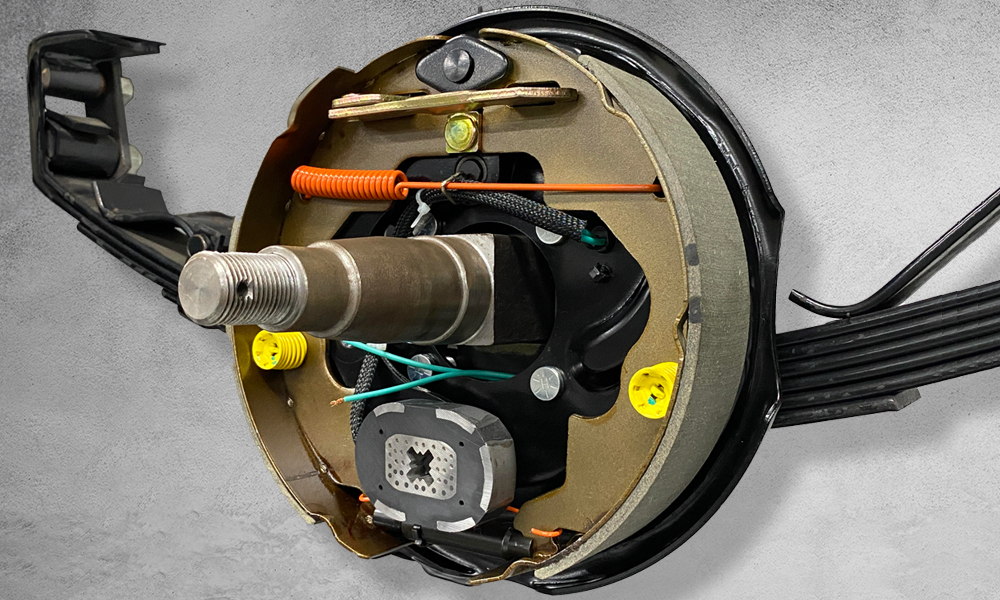
Electric trailer brakes are perhaps the most prevalent type of trailer braking system, offering a balance of performance, control, and ease of installation. These systems utilize an electric current to activate the trailer’s brakes. Typically, a proportional brake controller is installed in the towing vehicle’s cabin. This controller receives signals from the towing vehicle’s braking system and sends a variable electrical current to electromagnets within the trailer’s brake assemblies.
How Electric Brakes Function
When the driver applies the brakes on the towing vehicle, the brake controller senses this deceleration. Based on the intensity of the braking and the settings dialed into the controller, it sends an appropriate amount of power to the trailer’s brake magnets. These magnets, when energized, engage with the brake drums or rotors, creating friction and slowing the trailer. The intensity of the electrical current directly correlates to the braking force applied. Most modern electric brake controllers are proportional, meaning they adjust the braking force applied to the trailer in direct relation to how hard the towing vehicle is being braked. This ensures a smooth and integrated braking experience.
Advantages and Considerations for Electric Brakes
Electric brakes offer several key advantages. They provide precise control over the braking force applied to the trailer, allowing for smooth and responsive deceleration. They are also relatively easy to install and maintain. A significant benefit is the ability to adjust the braking force from the driver’s seat, allowing for optimization based on load conditions or driver preference. However, electric brakes require a dedicated electrical connection from the towing vehicle to the trailer, typically via a 7-pin trailer connector, and a compatible brake controller in the towing vehicle. Improper wiring or a faulty controller can lead to brake malfunction. Regular checks of the electrical connections and brake component wear are essential for reliable operation.
Hydraulic Trailer Brakes (with Electric or Surge Actuation)
Hydraulic trailer brakes utilize hydraulic fluid pressure to actuate the brakes, similar to the braking system on the towing vehicle itself. While the braking mechanism is hydraulic, the actuation method can vary. They are often found on larger, heavier trailers such as RVs, car haulers, and equipment trailers, where substantial braking power is required.
Electric-Over-Hydraulic (EOH) Systems
Electric-over-hydraulic (EOH) systems represent a sophisticated integration of electric control with hydraulic actuation. In these systems, the brake controller in the towing vehicle sends an electrical signal to an EOH actuator unit mounted on the trailer’s A-frame or within the trailer’s frame. This actuator then uses an electric pump to pressurize hydraulic fluid, which is routed to the trailer’s hydraulic brake assemblies (calipers or wheel cylinders).
Benefits and Complexities of EOH
EOH systems offer some of the best of both worlds. They benefit from the precise, proportional control provided by electric brake controllers, ensuring smooth and responsive braking. Simultaneously, they leverage the power and efficiency of hydraulic actuation, providing strong and consistent braking force, especially for heavier loads. This makes them an excellent choice for demanding applications. However, EOH systems are more complex than purely electric brakes. They involve both electrical and hydraulic components, requiring careful installation and maintenance of both systems. Potential points of failure include the electric pump, hydraulic lines, fluid levels, and the electric brake controller.
Surge-Actuated Hydraulic Brakes
Some hydraulic trailer brake systems are activated by a surge mechanism. In this configuration, the forward thrust of the trailer during braking engages a master cylinder within the trailer’s drawbar. This master cylinder then pressurizes the hydraulic fluid, which actuates the trailer’s hydraulic brakes. This system combines the simplicity of surge activation with the power of hydraulic braking.
Application and Suitability
This type of system is often found on heavier trailers that can benefit from the robust braking power of hydraulics but where the complexity or cost of EOH systems may not be warranted. They offer more effective braking than pure surge brakes due to the hydraulic advantage. However, like all surge brakes, they can have limitations in certain braking scenarios and may require a reverse lockout mechanism.
Advanced Trailer Braking Technologies and Integrations
As automotive technology advances, so too do trailer braking systems. Modern towing vehicles and trailers are increasingly equipped with integrated electronic systems that offer enhanced safety, control, and convenience. These advancements move beyond basic braking to incorporate intelligent features that actively manage trailer dynamics.
Integrated Trailer Brake Controllers
Many newer towing vehicles come equipped with factory-installed integrated trailer brake controllers. These controllers are seamlessly integrated into the vehicle’s electronic systems and often offer advanced features and user interfaces accessible through the dashboard or infotainment system. They are typically proportional and can be calibrated for various trailer types and loads.
Features and Benefits of Integrated Systems
Integrated controllers often provide a more refined and intuitive user experience. They may include features like automatic gain adjustment, trailer sway control integration, and diagnostic capabilities. By communicating directly with the vehicle’s CAN bus (Controller Area Network) or similar systems, they can achieve a higher level of synergy with the towing vehicle’s stability control and anti-lock braking systems. This can lead to more effective intervention in critical situations, such as preventing trailer sway or optimizing braking performance during ABS activation.
Trailer Sway Control Systems
Trailer sway, a dangerous oscillation of the trailer, is a significant safety concern. Modern trailer sway control systems, often integrated with or working in conjunction with trailer braking systems, actively combat this phenomenon. These systems can detect the onset of sway and automatically apply individual trailer brakes (or a combination of trailer and towing vehicle brakes) to counteract the oscillations and stabilize the trailer.
Technological Underpinnings and Operation
Trailer sway control typically relies on sensors within the towing vehicle (accelerometers and yaw rate sensors) to detect lateral movement. When sway is detected, the integrated brake controller can be programmed to apply braking force to the trailer, often in a pulsating manner, to dampen the oscillations. Some advanced systems can also subtly adjust the towing vehicle’s brakes or throttle to further aid in stabilization. The effectiveness of these systems is directly tied to the responsiveness and reliability of the trailer braking system itself.
Electronic Stability Control (ESC) for Towing
Electronic Stability Control (ESC) is a standard safety feature in most modern vehicles, designed to prevent skids and loss of control. When towing, ESC systems can be enhanced to include trailer stability logic. This advanced technology can detect not only potential skids in the towing vehicle but also critical trailer sway events.
How ESC Manages Trailer Dynamics
When ESC detects potential trailer sway, it can independently apply the trailer brakes, often using the integrated trailer brake controller, to slow the trailer and bring it back into alignment with the towing vehicle. In more severe cases, ESC might also reduce engine power and apply individual brakes on the towing vehicle to help regain control. The seamless integration of ESC with the trailer braking system represents a significant leap forward in towing safety, providing an active layer of protection against dangerous trailer behavior.
Maintenance and Safety Considerations for Trailer Brakes
The performance and reliability of any trailer braking system are heavily dependent on proper maintenance and adherence to safety protocols. Understanding these aspects is paramount for ensuring safe towing operations.
Regular Inspection and Servicing
Like any braking system, trailer brakes require regular inspection and servicing. This includes checking brake pads or shoes for wear, inspecting brake drums or rotors for damage, examining brake fluid levels (for hydraulic systems), and ensuring that all electrical connections are clean and secure (for electric and EOH systems). For surge brake systems, the drawbar mechanism and master cylinder should be inspected for proper operation and any signs of corrosion or damage.
Key Maintenance Checks
- Brake Pad/Shoe Wear: Inspect for adequate thickness.
- Rotor/Drum Condition: Look for scoring, cracks, or excessive wear.
- Hydraulic Fluid: Check level and condition (if applicable).
- Electrical Connections: Ensure they are clean, free from corrosion, and securely connected.
- Actuator Function: For surge and EOH systems, verify smooth operation.
- Brake Adjustment: Ensure brakes are properly adjusted according to manufacturer specifications.
Proper Use and Adjustment of Brake Controllers
For electric and EOH systems, proper adjustment of the brake controller is crucial. The gain setting determines the maximum braking force applied to the trailer, while the power setting (if available) can fine-tune the initial braking response. Over-application can cause excessive wear and instability, while under-application reduces braking effectiveness. Many controllers offer manual override buttons, allowing the driver to manually apply the trailer brakes. This is useful for testing the system and for assisting with braking in certain situations.
Optimizing Gain and Power Settings
The optimal gain setting will vary depending on the trailer’s weight, load distribution, and the towing vehicle’s braking characteristics. It’s generally recommended to adjust the gain until the trailer brakes can be felt applying synchronized braking force without locking up the trailer wheels or causing the trailer to push the towing vehicle. Regular road testing and adjustments are necessary, especially when the trailer load changes.
Understanding Load Capacities and Regulations
It is imperative to understand the load capacities of both the towing vehicle and the trailer, as well as any relevant regulations regarding trailer brakes. Many jurisdictions mandate that trailers exceeding a certain weight (often around 1,500 to 3,000 lbs, depending on the region) must be equipped with their own braking system. Failure to comply with these regulations can result in fines and unsafe towing conditions. Always ensure that the trailer’s braking system is appropriately rated for its intended load and that the towing vehicle is capable of safely managing the combined vehicle and trailer weight.
By understanding the different types of trailer brake systems, their operational principles, and the importance of proper maintenance, owners and operators can significantly enhance the safety and control of their towed vehicles, ensuring a more secure and enjoyable towing experience.
aViewFromTheCave is a participant in the Amazon Services LLC Associates Program, an affiliate advertising program designed to provide a means for sites to earn advertising fees by advertising and linking to Amazon.com. Amazon, the Amazon logo, AmazonSupply, and the AmazonSupply logo are trademarks of Amazon.com, Inc. or its affiliates. As an Amazon Associate we earn affiliate commissions from qualifying purchases.