
In the realm of modern technology, we often focus on the silicon chips in our pockets or the fiber-optic cables beneath our oceans. However, one of the most sophisticated examples of structural engineering and material science exists within the human mouth. When we ask, “What is a tooth made of?” we are no longer just looking at a biological question. In the current era of medical technology, this question encompasses bio-engineering, nanotechnology, and high-tech restorative materials that aim to mimic—and sometimes exceed—the capabilities of natural evolution.
As we bridge the gap between organic biology and synthetic innovation, the composition of a tooth serves as a blueprint for the next generation of durable materials. This article explores the layers of the tooth through the lens of technological advancement, examining how we are replicating nature’s designs through CAD/CAM systems, 3D printing, and regenerative medicine.
The Biological Hardware: Nature’s Original Engineering
To understand the technology required to repair or replace a tooth, we must first analyze the “hardware” provided by nature. A tooth is not a single solid block; it is a complex, layered structure designed to withstand hundreds of pounds of pressure per square inch, thousands of times a day.
Enamel: The Ultimate Biological Ceramic
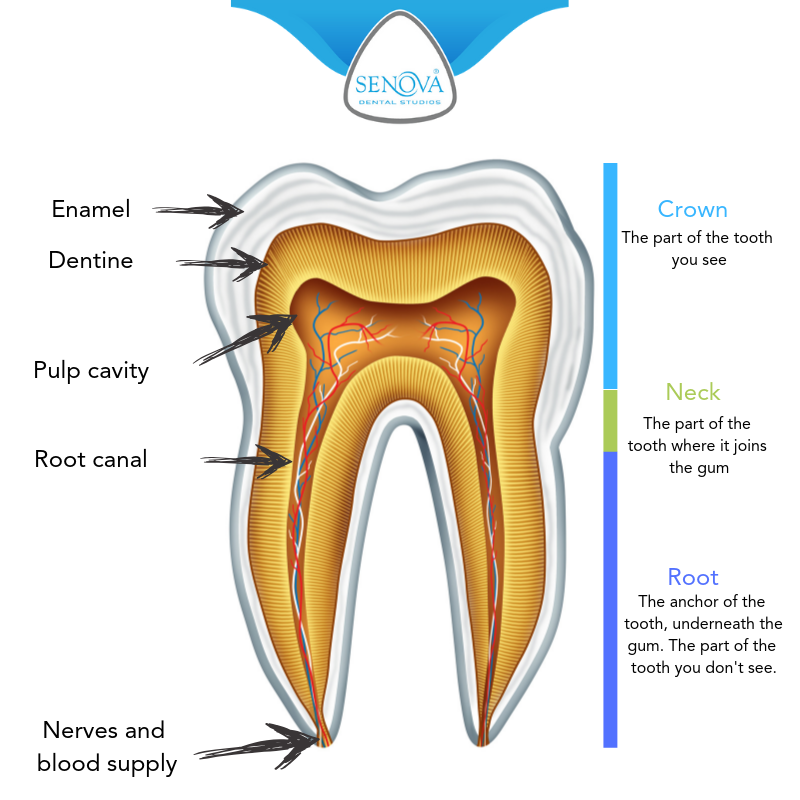
From a material science perspective, tooth enamel is the hardest substance in the human body. It is composed of approximately 96% mineral—primarily hydroxyapatite, a crystalline calcium phosphate. In the tech world, we would classify enamel as a highly specialized ceramic. Unlike bone, enamel contains no living cells and cannot repair itself. This “design flaw” has spurred a massive tech industry focused on developing synthetic enamels and remineralization technologies that use nanoparticles to fill the microscopic voids in the hydroxyapatite lattice.
Dentin and the Neural Network
Beneath the enamel lies the dentin, a substance that functions much like a shock absorber. Dentin is less brittle than enamel and contains microscopic tubules that communicate with the central nerve. In the context of “smart” technology, dentin acts as a sensory interface. When the enamel is breached, these tubules transmit signals to the pulp (the tooth’s “CPU”), resulting in the sensation of pain. Modern dental tech focuses heavily on “dentin hypersensitivity” solutions, using laser-activated resins to seal these tubules and restore the integrity of the tooth’s internal communication system.
The Pulp Chamber: The Biological Data Center
The pulp is the innermost part of the tooth, containing blood vessels, connective tissue, and large nerves. In a technological sense, the pulp is the life-support system and the data center of the tooth. When the pulp is compromised, the “system” fails. This has led to the development of advanced endodontic technologies, such as rotary files made of nickel-titanium (NiTi) alloys that can navigate the complex, micro-scale geometry of root canals with surgical precision.
Synthetic Replication: The Rise of High-Tech Restoratives
When the natural composition of a tooth fails, technology steps in to provide a replacement. The question of “what a tooth is made of” then shifts from biology to materials science. We are currently seeing a transition from traditional metals to sophisticated, biocompatible ceramics and polymers.
Zirconia and the Era of Digital Milling
In the past, dental crowns were often made of gold or porcelain-fused-to-metal. Today, the “tech-forward” tooth is increasingly made of Zirconium Dioxide (Zirconia). Known as “ceramic steel,” Zirconia offers incredible fracture toughness. The production of these “teeth” is a feat of modern software engineering. Using CAD/CAM (Computer-Aided Design and Manufacturing), a dentist can take a 3D digital scan of a patient’s mouth. This data is then sent to a high-speed milling machine that carves a custom tooth out of a solid block of Zirconia with micron-level accuracy.
Lithium Disilicate and Aesthetic Engineering
For front-facing teeth, where light refraction is as important as durability, the tech industry utilizes Lithium Disilicate. This glass-ceramic is engineered to mimic the optical properties of natural enamel—specifically how it absorbs and reflects light (translucency). Through controlled crystallization, material scientists have created a substance that provides the perfect balance between the “analog” beauty of a natural smile and the “digital” precision of modern manufacturing.

Composite Resins and Nanofillers
For minor repairs, “what a tooth is made of” is often a sophisticated composite resin. These are not simple plastics; they are high-tech polymers reinforced with nanofillers. By manipulating the particle size of the fillers—sometimes down to the 20-nanometer range—engineers have created materials that can be polished to a high luster while maintaining the strength to withstand the forces of mastication.
The Future of Tooth Composition: 3D Printing and Bio-Printing
We are currently standing on the threshold of a revolution where “what a tooth is made of” may once again be biological, but facilitated by advanced manufacturing.
3D Printing and Custom Scaffolds
Additive manufacturing, or 3D printing, is transforming dental laboratories. Instead of milling away material (subtractive manufacturing), 3D printers build dental structures layer by layer. This allows for the creation of complex “scaffolds.” Researchers are currently using 3D-printed biocompatible polymers that act as a framework. These scaffolds are seeded with growth factors, encouraging the body’s own cells to migrate into the structure and “rebuild” the tooth from the inside out.
Bio-Ink and Regenerative Medicine
The most cutting-edge niche in dental tech is bio-printing. This involves using “bio-ink”—a substance made of living cells—to print a replacement tooth. While still in the experimental phase, the goal is to use a patient’s own stem cells to print a biological tooth that can be “plugged” into the jawbone. In this future, a tooth will be made of the patient’s own genetic material, grown to the exact digital specifications required by their unique anatomy.
Integrating IoT: The Smart Tooth
Beyond the material itself, the tech industry is looking at “Smart Teeth.” Imagine a crown or an implant that is not just a passive chunk of ceramic, but an active device. Embedded sensors within synthetic teeth can now monitor the pH levels of saliva, detect the presence of specific bacteria, or even measure the pressure of bruxism (teeth grinding). These data points can be transmitted to a smartphone app, turning the tooth into a diagnostic tool for overall systemic health.
The Infrastructure of the Modern Tooth: Implants and Osseointegration
If we consider the entire “system” of a tooth, we must look at how it is anchored. When a natural tooth is lost, the technology used to replace the root is a masterclass in metallurgy and surface science.
Titanium and the Magic of Osseointegration
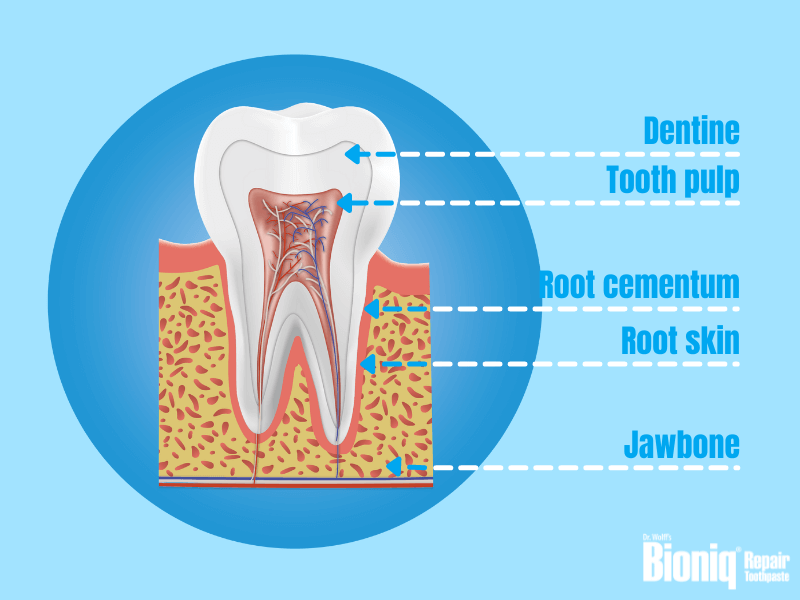
Modern dental implants are primarily made of Grade 5 Titanium alloy. The “tech” here lies in the surface treatment of the metal. Engineers use acid-etching or sandblasting to create a microscopic, porous surface. This triggers a biological process called osseointegration, where the jawbone literally fuses with the metal. In this context, the “tooth” is made of a hybrid of human bone and aerospace-grade metal.
Ceramic Implants and Metal-Free Tech
For patients seeking a completely metal-free solution, Zirconia implants are the new frontier. These one-piece or two-piece ceramic systems offer high biocompatibility and reduce the risk of galvanic corrosion—a “tech glitch” that can occur when different metals in the mouth create a small electric current. The development of ceramic implants represents the pinnacle of current material science, offering a “natural” feel with the durability of engineered stone.
Conclusion: The Synthesis of Nature and Innovation
When we ask, “What is a tooth made of?” we find an answer that is increasingly a blend of biological evolution and technological mastery. From the natural hydroxyapatite crystals of enamel to the CAD/CAM-milled Zirconia crowns and the potential of 3D-printed stem cells, the “composition” of our teeth is a testament to human ingenuity.
As technology continues to advance, the line between the natural and the synthetic will continue to blur. We are moving toward a future where “what a tooth is made of” is limited only by our ability to engineer at the molecular level. Whether through the lens of digital security for dental records, the software used for 3D modeling, or the nanotechnology in our filling materials, the tooth has become a high-tech asset, essential not just for health, but as a showcase of our progress in the digital and material age.
aViewFromTheCave is a participant in the Amazon Services LLC Associates Program, an affiliate advertising program designed to provide a means for sites to earn advertising fees by advertising and linking to Amazon.com. Amazon, the Amazon logo, AmazonSupply, and the AmazonSupply logo are trademarks of Amazon.com, Inc. or its affiliates. As an Amazon Associate we earn affiliate commissions from qualifying purchases.