
In an increasingly digital and visually driven world, the concept of a three-dimensional (3D) figure has transcended its purely geometric definition to become a cornerstone of modern technology. From the intricate designs of advanced machinery rendered in CAD software to the immersive landscapes of virtual reality, 3D figures are the building blocks of our digital experiences and physical innovations. At its core, a three-dimensional figure is an object that occupies space and has three measurable dimensions: length, width, and height (or depth). Unlike a two-dimensional figure, which exists only on a plane and possesses only length and width, a 3D figure extends into the third dimension, allowing it to have volume and be perceived from multiple perspectives. This fundamental distinction underpins a vast array of technological applications that define our contemporary world.
The Fundamental Nature of Three-Dimensionality
To truly grasp the technological implications of 3D figures, one must first understand their inherent nature and the principles that differentiate them from their 2D counterparts. This foundational knowledge is crucial for anyone engaging with digital design, engineering, or interactive media.
Defining Dimensions: Beyond Flatness
A dimension can be thought of as a direction in which movement is possible. A point has zero dimensions, as it has no length, width, or height. A line, representing one dimension, allows movement along its length. A plane, which is two-dimensional, allows movement along its length and width, creating a flat surface like a drawing on paper or an image on a screen. However, a three-dimensional figure breaks free from this flatness, adding a third axis—typically referred to as height or depth—that allows it to extend into space. This added dimension grants an object volume, enabling it to contain something or be filled, distinguishing it from an outline or a flat shape. Understanding this progression of dimensionality is key to appreciating the complexity and utility of 3D models in technological contexts.
Key Characteristics of 3D Objects: Volume, Depth, and Perspective
The defining characteristics of 3D figures are what make them so powerful in technology. Volume is perhaps the most significant, representing the amount of space an object occupies. This attribute is critical in engineering for calculating material requirements, in architecture for space planning, and in physics simulations for understanding displacement and density. Depth is the visual cue that conveys distance and three-dimensionality, allowing us to perceive how far an object extends from a surface or viewer. In computer graphics, sophisticated rendering techniques are employed to simulate depth, creating realistic shadows, light refractions, and atmospheric effects. Finally, perspective refers to the way an object appears to change shape or size depending on the viewing angle and distance. Technologies like 3D modeling software and virtual reality systems meticulously calculate and display objects from various perspectives, providing users with an intuitive and immersive experience of spatial relationships.
Basic Geometric Primitives
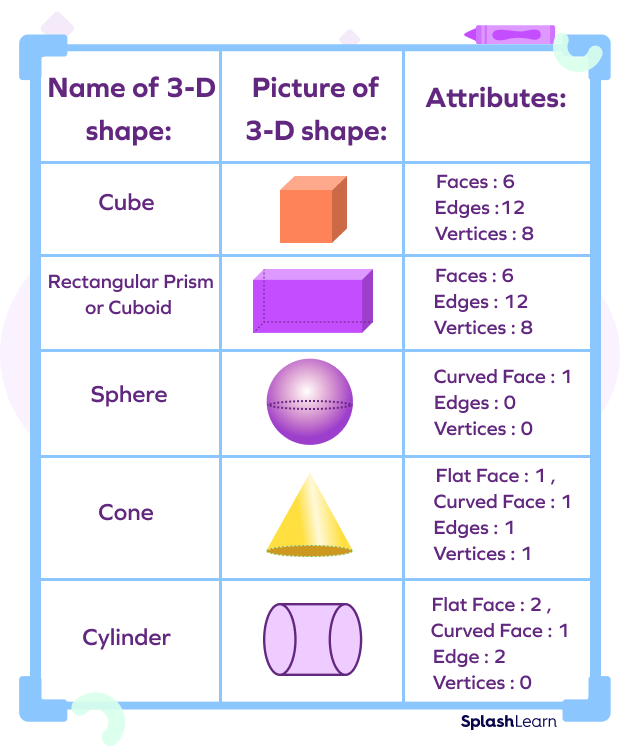
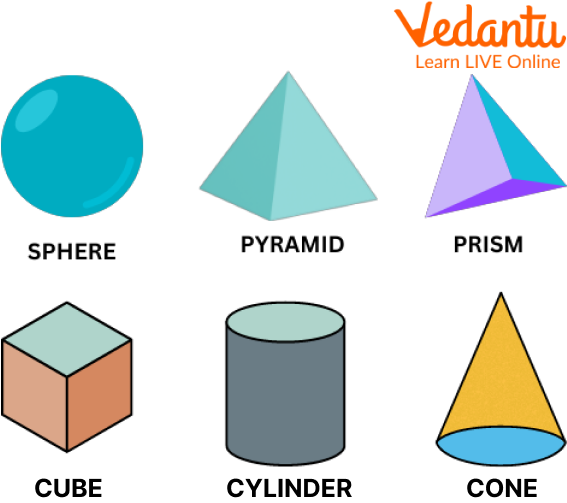
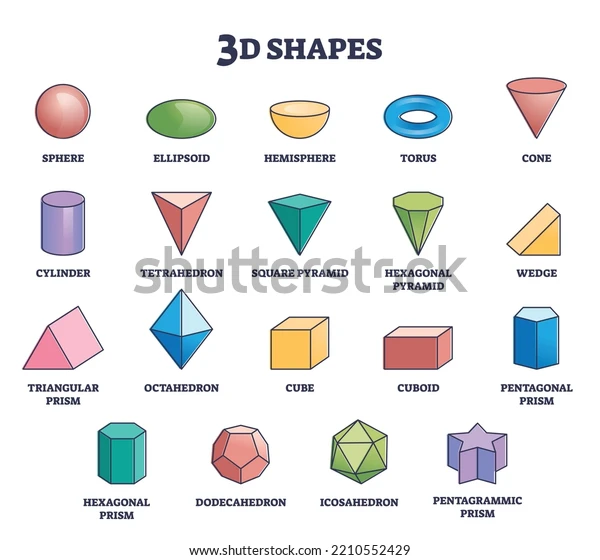
The complex 3D models we encounter in video games, architectural visualizations, and medical imaging are often constructed from basic geometric primitives. These fundamental shapes include cubes, spheres, cylinders, cones, and pyramids. Understanding these building blocks is essential in 3D modeling and computer graphics, as more elaborate forms are typically created by combining, modifying, and transforming these simpler objects. For instance, a sophisticated character model in a game might begin as a collection of spheres and cylinders that are then sculpted and refined. In CAD, engineers use these primitives to design components, ensuring precise dimensions and structural integrity. The ability to manipulate these foundational elements programmatically or through intuitive interfaces is a hallmark of advanced 3D technology.
The Ubiquity of 3D Figures in Technology
The ability to represent, manipulate, and interact with three-dimensional data has profoundly impacted nearly every sector of technology. From industrial design to entertainment, 3D figures are not just static images but dynamic tools that drive innovation and foster new forms of interaction.
Computer-Aided Design (CAD) and Engineering
One of the most transformative applications of 3D figures is in Computer-Aided Design (CAD). CAD software allows engineers, architects, and product designers to create precise 3D models of objects, from microchips to entire buildings. This technology has revolutionized product development cycles, enabling designers to visualize, simulate, and analyze designs before physical prototyping. Engineers can test structural integrity, material stresses, fluid dynamics, and assembly processes virtually, significantly reducing costs and accelerating time-to-market. The parametric nature of modern CAD software means that design changes can be easily propagated throughout an entire model, ensuring consistency and accuracy across complex projects. This detailed 3D representation is indispensable for modern manufacturing, ensuring that components fit together perfectly and function as intended.
3D Modeling and Animation: Crafting Digital Realities
The entertainment industry, particularly film, television, and video games, owes much of its visual spectacle to 3D modeling and animation. Artists use specialized software to sculpt, texture, and rig 3D characters, environments, and objects, bringing imaginative worlds to life. 3D modeling involves creating the static geometry of an object, while 3D animation breathes life into these models by defining their movement over time. The principles of depth, perspective, and volume are meticulously applied to create convincing illusions of reality, or highly stylized fictional universes. Beyond entertainment, 3D modeling is crucial for architectural visualizations, medical illustrations, and scientific simulations, providing powerful visual communication tools that can convey complex information in an accessible and engaging manner.
Virtual and Augmented Reality: Immersive 3D Environments
Virtual Reality (VR) and Augmented Reality (AR) are perhaps the most direct applications where 3D figures take center stage. VR immerses users in completely simulated 3D environments, transporting them to digital worlds for gaming, training, or exploration. Every object, character, and landscape within a VR experience is a carefully crafted 3D figure, rendered in real-time to provide a seamless and interactive illusion of depth and presence. AR, on the other hand, overlays digital 3D figures onto the real world, enhancing our perception of reality with interactive information or virtual objects. From navigating with 3D maps projected onto the street to interacting with virtual furniture in your living room, AR leverages 3D models to bridge the gap between the digital and physical realms, opening new possibilities for education, commerce, and communication.
From Digital Concept to Tangible Reality: 3D Printing and Manufacturing
The advent of 3D printing marked a pivotal moment where digital 3D figures could be transformed into physical objects with unprecedented ease and precision. This technology is fundamentally reliant on the detailed, volumetric information contained within a 3D model.
Additive Manufacturing Revolution
3D printing, also known as additive manufacturing, builds three-dimensional objects layer by layer from a digital design. Unlike traditional subtractive manufacturing (which removes material to create an object), 3D printing adds material, allowing for the creation of incredibly complex geometries that were previously impossible or prohibitively expensive to produce. The technology uses a 3D model, typically in a format like an STL file, which slices the digital object into thousands of thin cross-sections. The 3D printer then precisely deposits material (plastic, metal, ceramic, even biological tissues) according to these slices, gradually constructing the physical object. This direct translation from a digital 3D figure to a tangible product is revolutionizing industries from aerospace to healthcare.
Prototyping and Production
For decades, rapid prototyping has been a cornerstone of product development, allowing designers to quickly create physical models of their 3D designs for testing and evaluation. 3D printing has dramatically accelerated and democratized this process, enabling companies of all sizes to iterate on designs faster and at lower costs. Beyond prototyping, 3D printing is increasingly being used for direct digital manufacturing, producing end-use parts, custom tools, and specialized components. The ability to produce bespoke items on demand, with highly complex internal structures that optimize for strength, weight, or functionality, is changing the economic landscape of production and supply chains.
Design Challenges and Opportunities in 3D Printing
While 3D printing offers immense flexibility, designing for additive manufacturing introduces specific challenges and opportunities. Designers must consider factors like overhangs, support structures, material properties, and layer resolution. However, it also liberates designers from traditional manufacturing constraints, allowing for organic shapes, lattice structures, and parts with integrated functionalities. Generative design algorithms, often driven by artificial intelligence, can automatically create optimized 3D figures based on specified performance criteria, pushing the boundaries of what’s physically possible and efficient. The continuous evolution of 3D printing materials and techniques further expands the horizons for what digital 3D figures can become.
The Role of 3D in Data Visualization and Scientific Computing
Beyond creating objects and immersive environments, 3D figures are critical tools for understanding and interpreting complex data and phenomena, particularly in scientific and analytical fields.
Representing Complex Data Sets
Traditional 2D graphs and charts can effectively display relationships between two or three variables. However, when dealing with multi-variate data or spatially referenced information, 3D data visualization becomes indispensable. Scientists and analysts use 3D figures to represent anything from protein structures to financial market trends, allowing for the identification of patterns, anomalies, and correlations that would be hidden in a flatter representation. Interactive 3D dashboards and models enable users to rotate, zoom, and slice through data, providing a more intuitive and comprehensive understanding of complex systems. This ability to “see” data in a spatial context is a powerful analytical aid.
Medical Imaging and Simulation
In healthcare, 3D figures are fundamental to diagnosis, treatment planning, and medical education. Technologies like CT (Computed Tomography) scans, MRI (Magnetic Resonance Imaging), and ultrasound generate vast amounts of 2D cross-sectional images, which are then reconstructed into detailed 3D models of organs, bones, and tissues. These 3D figures allow doctors to visualize internal anatomy from any angle, identify tumors, plan surgeries with greater precision, and track disease progression. Furthermore, medical simulations built using 3D figures provide realistic training environments for surgeons and medical students, allowing them to practice complex procedures in a risk-free virtual space.
Geospatial Data and Mapping
Geographic Information Systems (GIS) heavily rely on 3D figures to represent terrain, buildings, and urban environments. 3D mapping extends beyond flat topographical maps, offering a rich, volumetric representation of our planet. This is crucial for urban planning, environmental monitoring, disaster management, and navigation. City planners use 3D models of proposed developments to visualize their impact on skylines and shadow patterns. Emergency services can simulate scenarios in 3D to optimize response routes. Modern navigation systems increasingly incorporate 3D representations of buildings and landmarks, making wayfinding more intuitive and immersive.
The Future Landscape: Innovations Driven by 3D Technology
The journey of 3D figures in technology is far from over. Continuous innovation in hardware, software, and algorithms promises even more sophisticated and integrated applications, blurring the lines between the digital and physical.
Advanced Human-Computer Interaction
The future will see even more intuitive and natural ways to interact with 3D figures. Haptic feedback systems will allow users to “feel” virtual objects, while advanced gesture recognition and brain-computer interfaces could enable manipulation of 3D models with thoughts or simple hand movements. Technologies like volumetric displays, which project true 3D images that can be viewed from any angle without special glasses, are on the horizon, promising to transform everything from telemedicine to entertainment. These advancements aim to make the interaction with 3D figures as seamless and natural as interacting with real-world objects.
AI and Machine Learning in 3D Applications
Artificial Intelligence (AI) and Machine Learning (ML) are set to revolutionize how 3D figures are created, optimized, and utilized. AI can automate the generation of 3D content, creating vast digital worlds with minimal human intervention. ML algorithms can analyze complex 3D data sets to identify patterns, predict outcomes, and suggest design improvements, particularly in generative design for manufacturing. Furthermore, AI-powered computer vision systems can interpret real-world 3D data (from cameras and sensors) to enable autonomous vehicles to navigate complex environments or robots to manipulate objects with dexterity. This synergy between AI and 3D will unlock unprecedented levels of automation and intelligence in technological systems.
The Metaverse and Beyond
The concept of the metaverse – persistent, shared 3D virtual spaces – represents a significant future direction for 3D technology. Envisioned as the next evolution of the internet, the metaverse will be built entirely upon interconnected 3D figures and environments, enabling immersive social interactions, commerce, education, and entertainment. Users will inhabit digital avatars, navigate 3D worlds, and interact with virtual objects and services, all rendered as sophisticated 3D models. Beyond the metaverse, ongoing research in fields like 4D printing (3D printing with materials that change shape over time) and holographic computing promises to further push the boundaries of what three-dimensional figures can achieve, blurring the lines between static objects and dynamic, responsive entities.
In conclusion, the three-dimensional figure, once primarily a concept of geometry, has evolved into a fundamental and indispensable component of our technological landscape. Its ability to represent volume, depth, and perspective has empowered engineers, designers, artists, scientists, and consumers to create, interact with, and understand the world in richer, more immersive ways. As technology continues to advance, the role of 3D figures will only grow, driving innovation in every sector and shaping the future of human-computer interaction, digital creation, and our very perception of reality.
aViewFromTheCave is a participant in the Amazon Services LLC Associates Program, an affiliate advertising program designed to provide a means for sites to earn advertising fees by advertising and linking to Amazon.com. Amazon, the Amazon logo, AmazonSupply, and the AmazonSupply logo are trademarks of Amazon.com, Inc. or its affiliates. As an Amazon Associate we earn affiliate commissions from qualifying purchases.