
The Tesla Model S is more than just an electric vehicle; it is the technological catalyst that fundamentally altered the trajectory of the global automotive industry. When it first launched in 2012, it shattered the prevailing narrative that electric cars were sluggish, limited-range novelties. Instead, the Model S introduced a paradigm shift, proving that sustainable transportation could be synonymous with high-performance engineering, luxury, and advanced software integration. Today, it stands as the benchmark for the modern software-defined vehicle.
The Architecture of Innovation: Powertrain and Performance
At the core of the Model S experience is an engineering philosophy that departs entirely from internal combustion engines. By utilizing a skateboard platform—where the battery pack is integrated into the floor of the chassis—Tesla achieved a low center of gravity that defines the car’s handling dynamics.
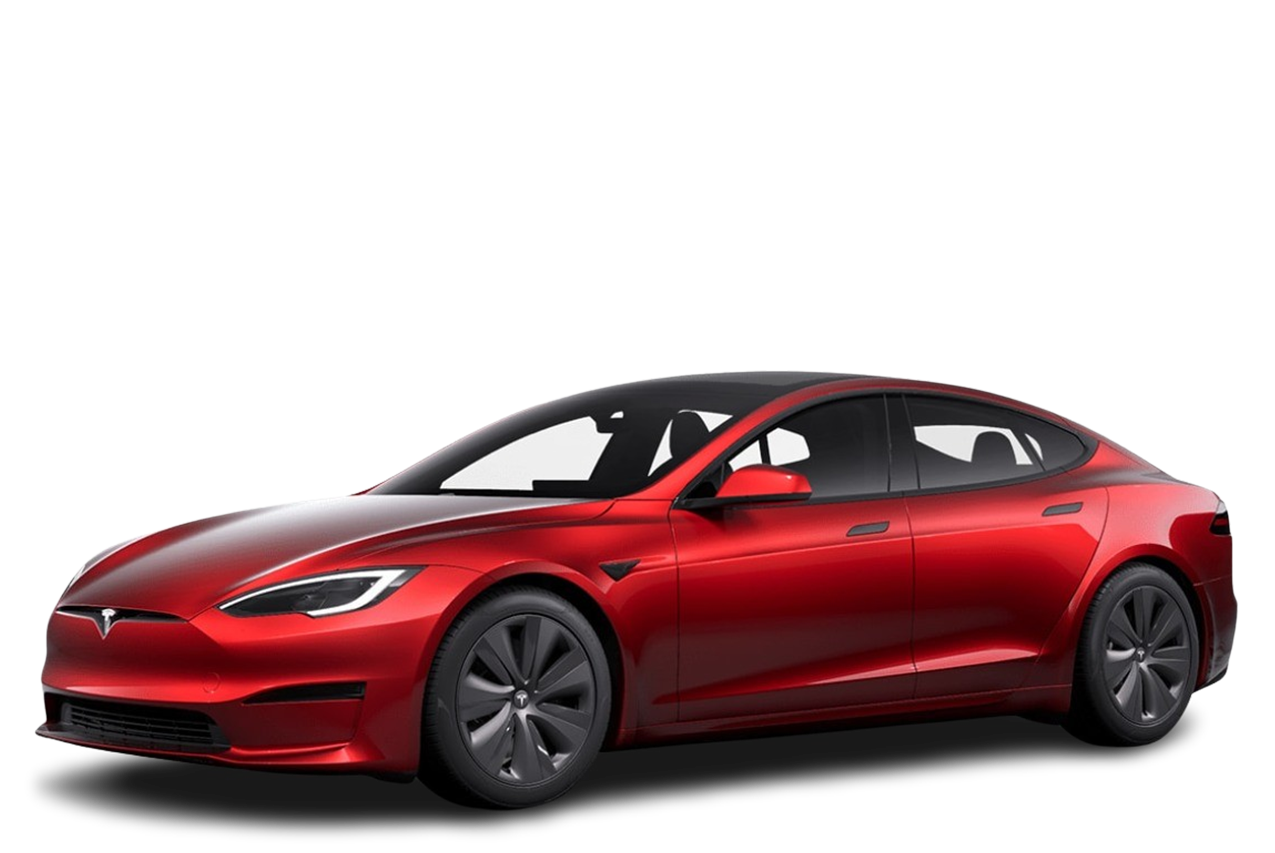
Electric Drivetrain Efficiency
The Model S utilizes a sophisticated dual-motor or tri-motor (in the case of the Plaid variant) all-wheel-drive system. Unlike mechanical linkages found in traditional cars, Tesla’s motors are controlled by digital torque vectoring. This allows the vehicle to adjust power to each wheel in milliseconds, providing unparalleled traction and stability in varying road conditions. The efficiency of these motors, coupled with the car’s industry-leading drag coefficient (Cd of 0.208), allows the Model S to extract maximum range from every kilowatt-hour.
The Plaid Threshold
The introduction of the “Plaid” trim level pushed the Model S into hypercar territory. By implementing carbon-sleeved rotors for the electric motors, Tesla solved the issue of centrifugal force at high rotations per minute, allowing the vehicle to sustain extreme power outputs without overheating. Achieving 0-60 mph in under two seconds is not merely a marketing metric; it is a demonstration of the sheer power density inherent in modern battery technology when married to advanced power electronics.
The Software-Defined Vehicle: Beyond the Hardware
While the hardware is impressive, the true identity of the Model S is found in its software stack. Tesla treats the Model S as a mobile computing platform, a concept that has redefined expectations for automotive ownership through Over-the-Air (OTA) updates.
The Central Nervous System
Unlike legacy vehicles that contain dozens of fragmented Electronic Control Units (ECUs) from various suppliers, the Model S utilizes a centralized computing architecture. This integration allows the car to improve over time. A Model S owner today might receive an update that improves braking performance, optimizes battery thermal management, or introduces a new entertainment feature in the cabin. The vehicle you buy on day one is, in theory, capable of becoming more efficient and feature-rich by the end of its lifecycle.
User Interface and Infotainment
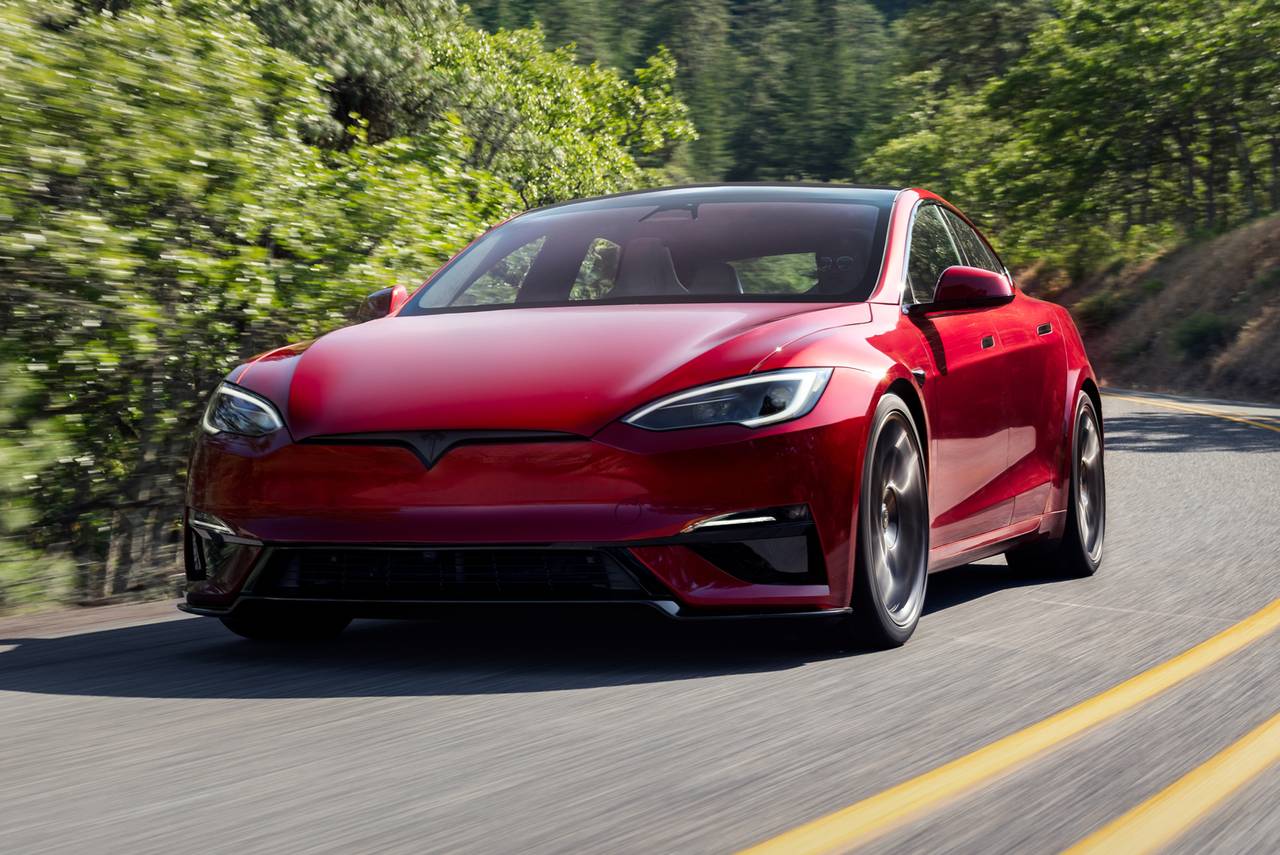
The dashboard of the Model S is dominated by a high-resolution 17-inch touchscreen, which serves as the primary interface for all vehicle functions—from climate control and navigation to vehicle settings. The recent shift to a horizontal landscape orientation and the inclusion of a high-powered gaming computer capable of console-quality graphics underscore Tesla’s vision of the car as a “third living space.” With support for wireless controllers and high-fidelity audio, the Model S transforms from a mode of transportation into a mobile entertainment hub during charging stops.
Autopilot and the Future of Autonomous Driving
No discussion of the Model S is complete without addressing Tesla’s driver-assistance systems. While often the subject of intense public debate, the technology represents the most significant investment in vision-based artificial intelligence for the automotive sector.
Neural Networks and Computer Vision
Tesla has eschewed traditional LiDAR and radar-heavy sensing suites in favor of Tesla Vision, a system that relies entirely on cameras and neural networks. The Model S processes the world in 3D, identifying lanes, obstacles, traffic lights, and other road users in real-time. This data-driven approach allows the vehicle to navigate complex environments, manage lane changes, and execute turns with increasing sophistication as the underlying AI models are trained on billions of miles of fleet data.
The Safety Proposition
Beyond autonomy, the software architecture prioritizes safety. Features like “Active Safety” continuously monitor the surroundings, providing automatic emergency braking and collision avoidance warnings. Because the car is connected to the cloud, it can preemptively alert the driver to hazardous conditions identified by other vehicles on the same route, creating a collaborative intelligence network that standard vehicles simply cannot replicate.
Charging Infrastructure and the Ownership Experience
The Model S experience is inextricably linked to the Supercharger network, a proprietary global charging ecosystem. By controlling both the vehicle and the charging infrastructure, Tesla solved the “chicken-and-egg” problem that stifled EV adoption for decades.
The Supercharger Advantage
The Model S is designed to interface seamlessly with Superchargers. The vehicle’s onboard computer handles the communication with the charging stall, allowing for a “plug and charge” experience that is essentially frictionless. Furthermore, the car’s trip planner automatically calculates necessary charging stops based on real-time traffic, elevation changes, and energy consumption, removing the range anxiety that often deters potential EV buyers.
Battery Longevity and Thermal Management
A critical aspect of the Model S technology is its advanced thermal management system. Batteries are temperature-sensitive, and Tesla’s liquid-cooled architecture ensures that the cells operate within an optimal window during both discharge (high-performance driving) and charge (rapid Supercharging). This proactive management is key to maintaining battery health over hundreds of thousands of miles, ensuring that the vehicle retains its value and utility long after it leaves the assembly line.
The Legacy of the Model S
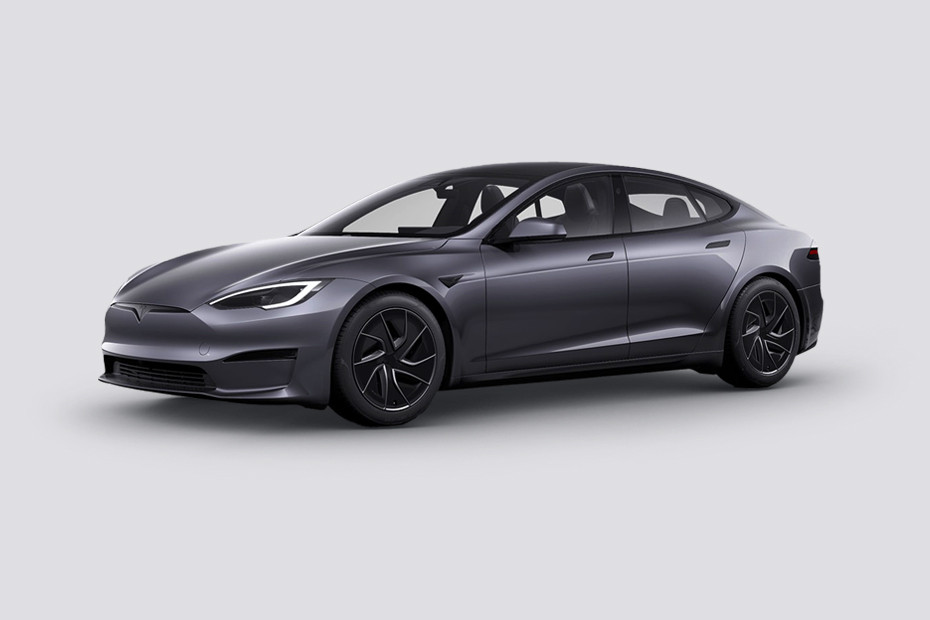
The Tesla Model S represents a turning point in history where the digital age fully integrated with physical mobility. It forced an industry that had been stagnant for decades to pivot toward electrification, forcing global manufacturers to abandon legacy development cycles in favor of rapid, iterative innovation.
From its minimalist, aerodynamic aesthetics to the complex neural networks driving its pilot assistance systems, the Model S serves as a window into the future of transportation. It is not merely a machine for moving from point A to point B; it is a testament to how software, battery science, and a departure from conventional manufacturing can solve some of the most complex challenges in energy and transportation. As vehicle-to-grid technology and full autonomy continue to evolve, the Model S remains the foundational blueprint for how we will interact with the road in the decades to come. It redefined the luxury sedan not by what it burned, but by how it calculated, connected, and ultimately, accelerated toward a new era of mobility.
aViewFromTheCave is a participant in the Amazon Services LLC Associates Program, an affiliate advertising program designed to provide a means for sites to earn advertising fees by advertising and linking to Amazon.com. Amazon, the Amazon logo, AmazonSupply, and the AmazonSupply logo are trademarks of Amazon.com, Inc. or its affiliates. As an Amazon Associate we earn affiliate commissions from qualifying purchases.