
The acronym TDP might sound cryptic, but its meaning and implications ripple across the very domains your favorite websites explore: technology, branding, and finance. While the initial, most common association for TDP often lies in the realm of computing hardware, understanding its broader context reveals its interconnectedness with how we innovate, how we present ourselves and our businesses, and how we manage our financial resources. This article will delve into the multifaceted meaning of TDP, exploring its significance in each of these key areas and how a solid grasp of the concept can benefit you.
TDP in the World of Tech: Power, Performance, and Efficiency
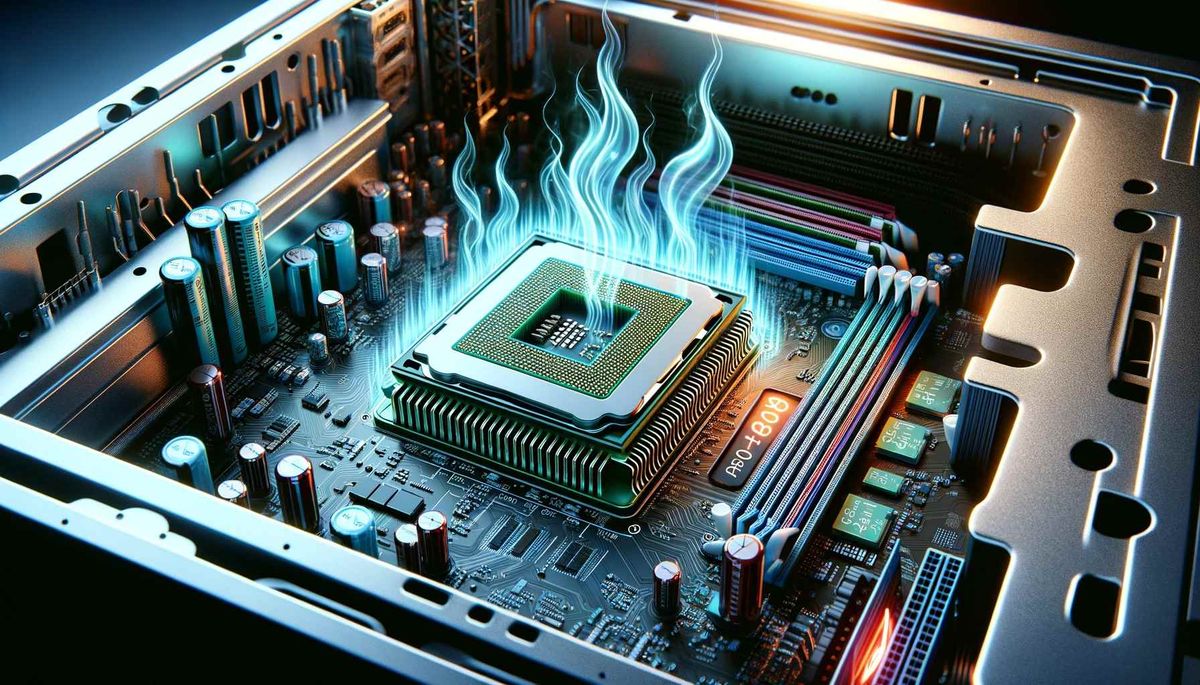
When you encounter the term TDP in the context of technology, particularly concerning computer components, it almost invariably refers to Thermal Design Power. This is a crucial metric that engineers and consumers alike use to understand the heat output of a processor (like a CPU or GPU) under typical maximum operating conditions. It’s not an exact measure of power consumption, but rather a guideline for the cooling solution required to keep the component operating optimally.
Understanding Thermal Design Power (TDP)
At its core, TDP is a specification provided by chip manufacturers, such as Intel and AMD for CPUs, and NVIDIA and AMD for GPUs. It represents the average power dissipation that the processor is expected to emit when running a typical, complex workload at its maximum frequency. Imagine a computer working hard to render a video, play a demanding game, or crunch complex data. During these tasks, the processor is pushed to its limits, generating heat as a byproduct of its electrical activity. TDP quantifies this expected heat output.
Why is TDP Important in Tech?
- Cooling Solutions: The primary purpose of TDP is to guide the selection of appropriate cooling systems. If a CPU has a TDP of 65 watts, the heatsink and fan (or liquid cooling system) must be capable of dissipating at least 65 watts of heat to prevent the CPU from overheating. Overheating can lead to performance throttling (where the CPU slows down to protect itself), instability, and in extreme cases, permanent damage.
- Power Supply and Chassis Design: TDP also plays a role in power supply unit (PSU) selection. While TDP isn’t direct power consumption, it’s a strong indicator. A system with high-TDP components will require a more robust PSU to provide sufficient power and stability. Furthermore, chassis (computer case) designers use TDP figures to ensure adequate airflow and ventilation within the case, preventing heat buildup from other components.
- Performance Benchmarking and Expectations: While TDP isn’t a direct measure of performance, it’s often correlated with it. Higher TDP processors generally have more cores, run at higher clock speeds, and offer greater processing power. However, it’s a delicate balance. Manufacturers strive to improve performance per watt, meaning newer generations of processors might offer similar or better performance at a lower TDP, indicating greater efficiency.
- Mobile and Integrated Devices: In laptops, tablets, and smartphones, TDP is even more critical. Power efficiency is paramount due to limited battery life and compact designs. Lower TDP components allow for thinner, lighter devices with longer battery runtimes and quieter operation, as smaller, less powerful cooling solutions can be employed.
- Overclocking: For enthusiasts looking to push their hardware beyond its factory settings (overclocking), understanding TDP is essential. Overclocking significantly increases power consumption and heat output, requiring substantially more robust cooling than the component’s default TDP would suggest.
Misconceptions about TDP:
It’s crucial to understand that TDP is not a direct measure of maximum power consumption. A CPU might briefly spike to higher power draw under very specific, short-lived loads. TDP represents a sustained, typical maximum. Furthermore, TDP doesn’t tell the whole story of a component’s energy efficiency; factors like idle power consumption and performance per watt are also important considerations.
TDP in the Realm of Brand: Transactional Data Processing and Beyond
While “Thermal Design Power” is the most prevalent definition in tech, the acronym TDP can also stand for Transactional Data Processing in a broader business and technological context. This interpretation shifts the focus from hardware specifications to the management and manipulation of information within business systems.
Transactional Data Processing (TDP) in Business
Transactional Data Processing refers to the system and methods used by organizations to record, manage, and process transactions that occur within their operations. A transaction, in this sense, is a discrete, atomic unit of work that changes the state of a system. Think of common business activities:
- Sales Transactions: A customer purchasing an item in a store or online, involving inventory updates, payment processing, and receipt generation.
- Financial Transactions: Recording an invoice, processing a payment, or making a journal entry in an accounting system.
- Inventory Management: Updating stock levels when goods are received, shipped, or used internally.
- Customer Relationship Management (CRM): Recording new leads, updating customer contact information, or logging service requests.
- Human Resources (HR): Processing payroll, updating employee records, or managing leave requests.
Key Aspects of Transactional Data Processing:
- Accuracy and Consistency: TDP systems must be highly accurate and ensure data consistency across different parts of the business. If a sale is recorded, inventory must be updated, and revenue recognized accordingly, without discrepancies.
- Timeliness: Transactions often need to be processed in near real-time to provide up-to-date information for decision-making and operational efficiency.
- Atomicity, Consistency, Isolation, Durability (ACID): Robust TDP systems often adhere to ACID properties, which guarantee that transactions are processed reliably.
- Atomicity: A transaction is treated as a single, indivisible unit. It either completes entirely or is rolled back completely, leaving the system in its original state.
- Consistency: A transaction brings the database from one valid state to another.
- Isolation: Concurrent transactions do not interfere with each other.
- Durability: Once a transaction is committed, it is permanent, even in the event of system failures.
- Scalability: As businesses grow and the volume of transactions increases, TDP systems must be able to scale to handle the demand without performance degradation.
- Security: Protecting sensitive transactional data from unauthorized access, modification, or deletion is paramount.
Relevance to Brand:
While not directly about marketing or identity, efficient and reliable TDP is fundamental to a company’s brand reputation.
- Customer Trust: Inaccurate billing, lost orders, or incorrect inventory information directly damage customer trust and brand perception. A smooth and reliable transaction experience is a cornerstone of good customer service and a positive brand image.
- Operational Efficiency: Streamlined TDP contributes to efficient operations, which can translate into faster service, better product availability, and ultimately, a stronger brand.
- Data-Driven Brand Insights: The data generated by TDP systems provides invaluable insights into customer behavior, product popularity, and sales trends. This information can inform branding strategies, product development, and marketing campaigns, allowing brands to better connect with their target audience.

The Link to Technology and Money:
Transactional Data Processing is intrinsically linked to both technology (the software and hardware that enable it) and money (the financial transactions being processed). Advanced software, databases, and cloud infrastructure are the technological backbone of effective TDP. The financial outcomes of these transactions directly impact a business’s financial health, profitability, and investment potential.
TDP in the Financial Sphere: Trade Data Platform and Beyond
In the world of finance and investment, TDP can refer to a Trade Data Platform or similar systems dedicated to managing and analyzing trading information. This interpretation highlights the role of data in financial markets and the infrastructure required to support complex financial operations.
Trade Data Platforms (TDPs) and Financial Market Data
A Trade Data Platform (TDP) is a comprehensive system designed to collect, store, process, and distribute vast amounts of real-time and historical trading data. This data is the lifeblood of financial markets, enabling:
- Price Discovery: The continuous flow of trading data helps determine the current market price of assets.
- Market Analysis: Traders, analysts, and portfolio managers use this data to identify trends, patterns, and opportunities.
- Risk Management: Understanding trading volumes, volatility, and price movements is crucial for managing investment risk.
- Regulatory Compliance: Financial institutions are required to maintain detailed records of their trades for regulatory oversight and reporting.
- Algorithmic Trading: High-frequency trading (HFT) strategies and other algorithmic approaches rely heavily on immediate access to and processing of TDPs.
Components of a Trade Data Platform:
- Data Ingestion: Mechanisms to pull data from various exchanges, brokers, and other sources.
- Data Storage: Robust databases capable of handling massive datasets with high read/write speeds.
- Data Processing and Analytics: Tools and algorithms for cleaning, transforming, and analyzing the data, often involving machine learning and AI.
- Data Distribution: APIs and interfaces to provide data to end-users, trading systems, and other applications.
- Real-time Feeds: Providing up-to-the-minute market information.
- Historical Data Archives: Storing years of data for in-depth historical analysis and backtesting.
Beyond the Platform: TDP in Financial Concepts
While a “Trade Data Platform” is a specific type of TDP, the broader concept of data management in finance is critical. Consider other potential interpretations or related concepts:
- Trading Desk Procedures: In some organizational contexts, TDP might informally refer to the established procedures and protocols for a trading desk – essentially, how they operate and process trades.
- Time Deposit Products: Less commonly, TDP could be an abbreviation for Time Deposit Product in banking, referring to a type of savings account where funds are deposited for a fixed period at a predetermined interest rate. This interpretation is more niche and less likely to be the primary meaning in a general tech/business context.
Relevance to Money and Brand:
- Informed Investment Decisions: Access to accurate and timely trading data is fundamental for making sound investment decisions, directly impacting personal and business wealth.
- Market Integrity: Robust TDPs contribute to the transparency and integrity of financial markets, fostering confidence among investors and supporting brand trust in financial institutions.
- Financial Product Innovation: Data analysis from TDPs can lead to the development of new financial products and services, driving innovation within the sector.
- Competitive Advantage: Financial firms that can effectively leverage TDPs gain a significant competitive advantage through superior analysis and faster execution.
Conclusion: The Ubiquitous TDP
As we’ve explored, the acronym TDP, while seemingly simple, carries significant weight across diverse fields. Whether you’re an IT professional optimizing cooling for a powerful server, a business owner ensuring smooth customer transactions, or an investor analyzing market trends, understanding the concept of TDP in its relevant context is crucial.
In Tech, Thermal Design Power dictates the physical limitations and cooling needs of our electronic devices, influencing performance, efficiency, and form factor.
In the broader Brand landscape, Transactional Data Processing underpins the reliability and accuracy of business operations, directly impacting customer trust and operational efficiency, which in turn shape brand perception.
And in Money, a Trade Data Platform or similar systems are essential for informed financial decision-making, market integrity, and the very functioning of modern financial markets.
By recognizing these distinct yet interconnected meanings of TDP, you can gain a deeper appreciation for the underlying systems and considerations that drive innovation, build reputable brands, and manage financial well-being in our increasingly digital and interconnected world.
aViewFromTheCave is a participant in the Amazon Services LLC Associates Program, an affiliate advertising program designed to provide a means for sites to earn advertising fees by advertising and linking to Amazon.com. Amazon, the Amazon logo, AmazonSupply, and the AmazonSupply logo are trademarks of Amazon.com, Inc. or its affiliates. As an Amazon Associate we earn affiliate commissions from qualifying purchases.