
A tax return document is a formal declaration to the government outlining an individual’s or entity’s financial income, expenditures, and tax liabilities for a specific period, usually a fiscal year. It’s not merely a piece of paper; it’s a comprehensive financial report that serves as the foundation for calculating how much tax you owe, or how much of a refund you’re entitled to. For individuals and businesses alike, understanding the intricacies of a tax return document is paramount to fulfilling their legal obligations, optimizing their financial standing, and navigating the often-complex landscape of taxation.

The purpose of a tax return is multifaceted. Primarily, it enables tax authorities to assess tax obligations accurately. Without this standardized reporting mechanism, it would be virtually impossible to ensure fair and equitable taxation across a population or business sector. Beyond mere compliance, a tax return also serves as a critical financial record. It can be used to demonstrate income for loan applications, mortgage approvals, or even to track financial progress over time. For businesses, it’s an indispensable tool for financial planning, budgeting, and strategic decision-making.
The complexity of a tax return can vary significantly depending on the filer’s circumstances. A simple W-2 employee might have a relatively straightforward filing, while a small business owner with multiple income streams, deductions, and credits will encounter a more intricate process. Regardless of complexity, the underlying principles remain consistent: reporting income, claiming eligible deductions and credits, and arriving at a final tax liability. This document is more than just an obligation; it’s a crucial component of personal and corporate financial stewardship.
Understanding the Core Components of a Tax Return
At its heart, a tax return document is a structured report that systematically captures financial information relevant to tax assessment. While the specific forms and lines may differ based on jurisdiction and filer type, the fundamental elements remain consistent. These components are designed to provide a clear and auditable trail of income, expenses, and any adjustments that affect the final tax calculation.
Income: The Foundation of Your Tax Return
Income is the lifeblood of any tax return. It represents all the money and goods received by an individual or entity during the tax period. This can encompass a wide array of sources, and accurately reporting all of them is the first crucial step in the filing process.
Wages and Salaries
For most individuals, the primary source of income is their employment. Wages and salaries refer to the compensation received from an employer in exchange for services rendered. This typically includes base pay, overtime, bonuses, and commissions. Employers are required to report these earnings to both the employee and the relevant tax authorities via documents like W-2 forms (in the US), which are then used to populate the income section of the individual’s tax return.
Self-Employment and Business Income
Individuals who work for themselves or own a business report their income differently. This category includes earnings from freelance work, independent contracting, and the profits generated by a business operation. Unlike W-2 employees, self-employed individuals are typically responsible for calculating and paying their own self-employment taxes (Social Security and Medicare). Business income is reported on specific business tax forms and can be complex, often involving accounting principles to determine net profit.
Investment Income
Investment income is derived from assets held for financial gain. This can include dividends from stocks, interest earned from savings accounts or bonds, and capital gains realized from the sale of assets like stocks, bonds, or real estate. Tax laws often treat different types of investment income differently, with varying tax rates and reporting requirements. Understanding these nuances is essential for accurate reporting and potentially minimizing tax liability on investment earnings.
Other Income Sources
Beyond the common categories, income can originate from various other sources. This includes rental income from properties, royalties from intellectual property, unemployment benefits, alimony received, and even certain types of gambling winnings. While these may seem less substantial than wages or business profits, they are all taxable and must be reported on the tax return. Failure to disclose all income sources can lead to penalties and interest.
Deductions and Credits: Reducing Your Taxable Burden
Once income has been reported, the next critical step is to identify and claim any eligible deductions and credits. These are provisions in the tax code designed to reduce the amount of income that is subject to tax (deductions) or to directly reduce the amount of tax owed (credits). Strategically utilizing these can significantly impact the final tax bill.
Understanding the Difference: Deductions vs. Credits
It’s vital to distinguish between deductions and credits. Deductions reduce your taxable income. For instance, if you have $50,000 in taxable income and claim a $10,000 deduction, your taxable income is reduced to $40,000. Credits, on the other hand, reduce your tax liability dollar-for-dollar. If you owe $8,000 in taxes and qualify for a $2,000 tax credit, your tax bill is reduced to $6,000. Credits are generally more valuable than deductions of the same amount.
Common Deductions for Individuals
Individuals can claim various deductions to lower their taxable income. These often fall into two main categories: above-the-line deductions (which reduce Adjusted Gross Income, or AGI) and below-the-line deductions (which are itemized and can only be taken if they exceed the standard deduction). Examples include contributions to retirement accounts (like 401(k)s or IRAs), student loan interest, health savings account (HSA) contributions, and certain business expenses for self-employed individuals.
Itemized Deductions vs. Standard Deduction
Taxpayers have a choice: they can either take the standard deduction, a fixed amount set by the government that varies based on filing status, or they can itemize their deductions. Itemizing involves listing out specific deductible expenses, such as medical expenses exceeding a certain threshold, state and local taxes (SALT), mortgage interest, and charitable contributions. The choice between the two depends on which one yields a larger reduction in taxable income.
Tax Credits: Direct Reduction of Tax Liability
Tax credits are a powerful tool for reducing tax obligations. They are typically awarded for specific activities or to individuals meeting certain criteria. Common examples include the Child Tax Credit, earned income tax credit (EITC), education credits (like the American Opportunity Tax Credit), and credits for energy-efficient home improvements. Some credits are refundable, meaning that if the credit amount exceeds the tax owed, the excess will be refunded to the taxpayer. Non-refundable credits can only reduce the tax liability to zero.
Tax Forms and Schedules: The Language of Tax Returns
The actual process of preparing a tax return involves filling out various forms and schedules. These documents provide the structure for reporting financial information and calculating tax obligations. Each form is designed to capture specific types of data, ensuring that all relevant details are considered.
The Main Tax Forms
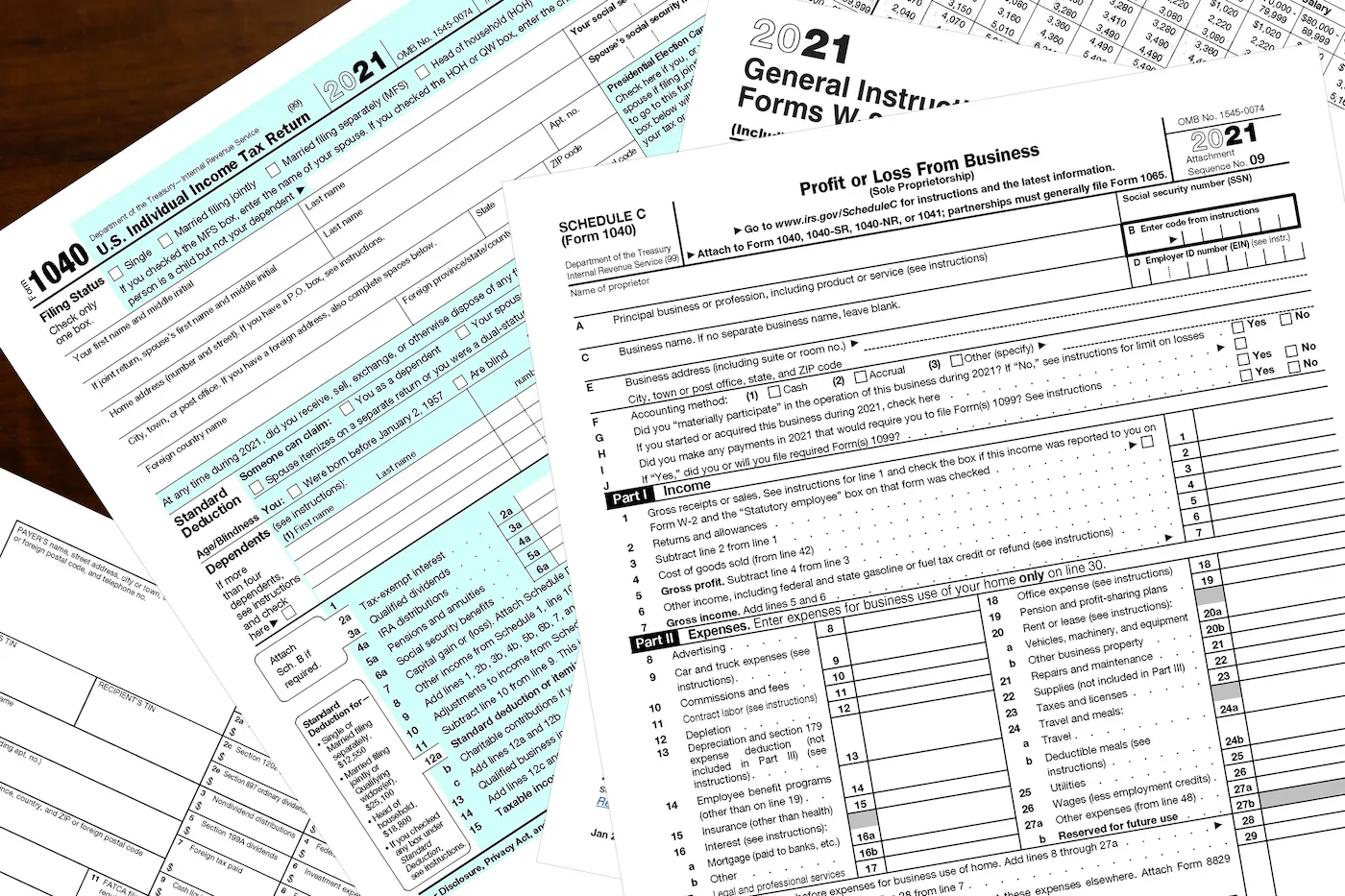
The primary document for individual income tax returns in the United States is Form 1040. This form serves as the central hub where income, deductions, credits, and other relevant information are summarized to calculate the final tax liability or refund. For businesses, the forms vary widely, with entities like corporations filing Form 1120 and partnerships filing Form 1065.
Supporting Schedules
The 1040 form is often supplemented by a series of schedules, each addressing a specific area of financial activity. For example, Schedule B is used for interest and ordinary dividends, Schedule C is for profit or loss from a business (sole proprietorship), Schedule D is for capital gains and losses, and Schedule E is for supplemental income and loss, covering rental real estate, royalties, partnerships, and S corporations. These schedules provide the detailed breakdowns that are then summarized on the main tax form.
Understanding Filing Status
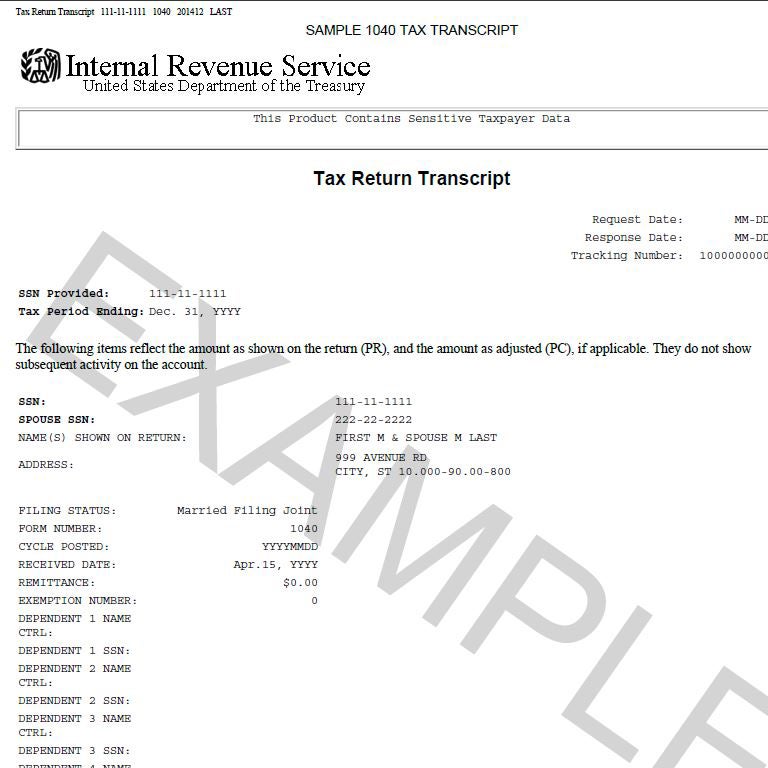
Your filing status significantly impacts your tax return, affecting tax brackets, standard deduction amounts, and eligibility for certain credits. Common filing statuses for individuals include Single, Married Filing Jointly, Married Filing Separately, Head of Household, and Qualifying Widow(er). Choosing the correct filing status is crucial for accurate tax calculations.
The Process of Filing a Tax Return
Filing a tax return is an annual obligation for most individuals and businesses. It involves gathering necessary documentation, choosing a filing method, accurately completing the required forms, and submitting them to the appropriate tax authority by the deadline. This process, while sometimes daunting, is essential for compliance and financial health.
Gathering Your Financial Information
The first and arguably most critical step in preparing your tax return is collecting all relevant financial documents. This involves a thorough review of the past year’s financial activities to ensure nothing is overlooked.
Essential Documents for Individuals
For individual filers, this typically includes W-2 forms from employers, 1099 forms for freelance or contract work, interest and dividend statements from financial institutions, records of any capital gains or losses from investment sales, receipts for deductible expenses (such as medical bills, charitable donations, or business expenses), and documentation for any tax credits being claimed. It’s also important to have Social Security numbers for yourself, your spouse, and dependents.
Documentation for Businesses
Businesses require a more extensive set of documents. This includes profit and loss statements, balance sheets, bank statements, receipts for all business expenses, invoices, payroll records, inventory records, and documentation related to any loans or investments. The specific documents needed will depend on the business structure (sole proprietorship, partnership, LLC, corporation) and its operational complexity.
Choosing Your Filing Method
Once your information is organized, you need to decide how you will prepare and file your tax return. There are several options available, each with its own advantages and considerations.
Tax Software and Online Services
The rise of technology has made tax preparation more accessible than ever. Numerous tax software programs and online services are available that guide users through the filing process, often using intuitive question-and-answer formats. These tools can help identify potential deductions and credits, perform calculations automatically, and even facilitate e-filing. They are often a cost-effective solution for individuals with relatively straightforward tax situations.
Professional Tax Preparers
For individuals and businesses with complex financial situations, or those who simply prefer expert assistance, hiring a tax professional is a common choice. Tax accountants, Enrolled Agents, or Certified Public Accountants (CPAs) have the expertise to navigate intricate tax laws, identify all eligible deductions and credits, and ensure compliance. While this option incurs a fee, it can often lead to significant tax savings and peace of mind.
Paper Filing
While increasingly less common due to the efficiency and speed of electronic filing, it is still possible to fill out tax forms by hand and mail them to the tax authorities. This method is generally recommended for individuals with very simple tax returns who are not comfortable with technology, or in situations where e-filing is not feasible.
Submission and Deadlines
The final stage of the tax return process is submitting it to the relevant tax authority by the statutory deadline. Missing this deadline can result in penalties and interest charges.
The Filing Deadline
In the United States, the deadline for filing individual income tax returns is typically April 15th of each year, unless that date falls on a weekend or holiday, in which case it is the next business day. Businesses have different deadlines depending on their structure. Extensions can often be filed to gain more time to prepare the return, but it’s important to note that an extension to file is not an extension to pay any taxes owed.
Electronic Filing vs. Mail
Electronic filing (e-filing) is the most common and recommended method of submission. It is faster, more accurate, and often provides confirmation that your return has been received and accepted. If you owe taxes, e-filing with direct deposit or direct debit for payment is the most efficient way to handle the transaction. Mailing your return requires careful attention to the correct address and sufficient postage.
The Importance and Implications of an Accurate Tax Return
Filing an accurate tax return is not just about avoiding penalties; it has broader implications for an individual’s or entity’s financial well-being and legal standing. The information reported on a tax return serves as a factual representation of financial activity and carries significant weight in various financial and legal contexts.
Compliance and Avoiding Penalties
The primary reason for filing an accurate tax return is to comply with tax laws. Tax authorities have systems in place to detect discrepancies and errors. Underreporting income, overstating deductions or credits, or failing to file altogether can lead to a range of penalties, including fines, interest charges on underpayments, and in severe cases, criminal prosecution. Ensuring accuracy is the most effective way to mitigate these risks.
Financial Planning and Record-Keeping
A well-prepared tax return serves as a valuable financial document. It provides a snapshot of your income, expenses, and overall financial health for a given year. This information can be instrumental in personal financial planning, budgeting, and tracking progress towards financial goals. For businesses, tax returns are a critical component of financial reporting and analysis, informing strategic decisions and future investments. Maintaining organized records throughout the year makes the tax filing process smoother and ensures that all relevant information is captured.
Impact on Future Financial Transactions
The information contained within a tax return often plays a significant role in future financial endeavors. When applying for loans, mortgages, or even certain types of insurance, lenders and financial institutions frequently request copies of recent tax returns to verify income and assess financial stability. An accurate and consistent filing history can enhance your creditworthiness and increase your chances of loan approval. Conversely, inconsistencies or a history of non-compliance can create significant hurdles.
Audits and IRS Scrutiny
While the majority of tax returns are processed without issue, a small percentage are selected for audit by tax authorities like the IRS. An audit is a review of your tax return to verify the accuracy of the information reported. Having a meticulously prepared tax return with thorough documentation to support all income, deductions, and credits is crucial for navigating an audit successfully. A clear and well-substantiated return can often lead to a quick resolution, while a disorganized or questionable return can invite further scrutiny and potential penalties. Understanding the tax return document is, therefore, a foundational element of responsible financial management.
aViewFromTheCave is a participant in the Amazon Services LLC Associates Program, an affiliate advertising program designed to provide a means for sites to earn advertising fees by advertising and linking to Amazon.com. Amazon, the Amazon logo, AmazonSupply, and the AmazonSupply logo are trademarks of Amazon.com, Inc. or its affiliates. As an Amazon Associate we earn affiliate commissions from qualifying purchases.