
In the landscape of digital music production and algorithmic composition, understanding the “how” and “why” behind auditory structures is as critical as mastering the software used to create them. One of the most potent tools in a producer’s or developer’s arsenal is the suspended chord. Often abbreviated as a “sus” chord, this harmonic structure serves as a bridge between stability and movement. In a world increasingly driven by AI-generated melodies and complex Digital Audio Workstation (DAW) workflows, the suspended chord is more than just a musical choice—it is a functional component of tension management in sound design and software-based composition.

Understanding the Architecture of Digital Tension
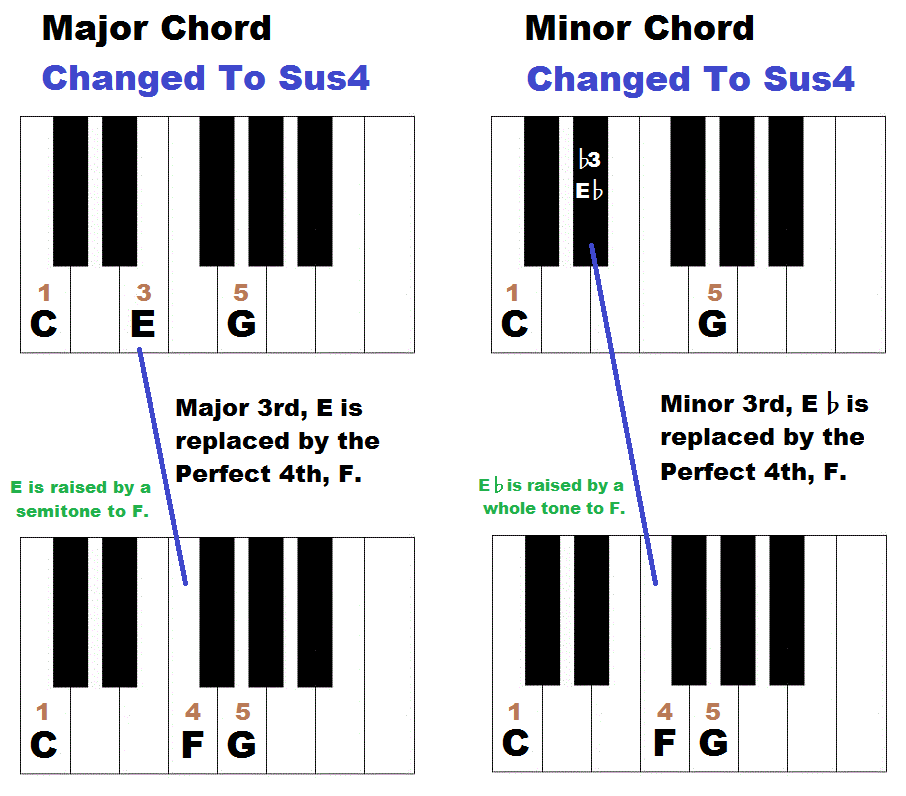
At its core, a suspended chord is a functional modification of a standard triad. In traditional music theory, a triad consists of a root, a third, and a fifth. The “third” is the defining element; it tells the listener whether the chord is major (happy) or minor (sad). A suspended chord technically “suspends” that third, replacing it with either a major second or a perfect fourth. This creates a state of technical “limbo” or open-endedness that the human ear—and by extension, music algorithms—perceives as unresolved.
The Mechanics of the Perfect Fourth (Sus4)
The most common iteration is the Sus4 chord. In this configuration, the third of the chord is replaced by the fourth interval. From a technical frequency perspective, the fourth creates a specific type of interference pattern with the fifth and the root. It creates a “yearning” sound that typically wants to resolve downward to the major or minor third. In digital synthesis, the Sus4 is often used to create a sense of “upward” energy. Because the fourth is only a half-step or whole-step away from the surrounding notes, it generates a dense cluster of frequencies that demands movement, making it a favorite for transition markers in electronic dance music (EDM) and cinematic scoring.
The Texture of the Major Second (Sus2)
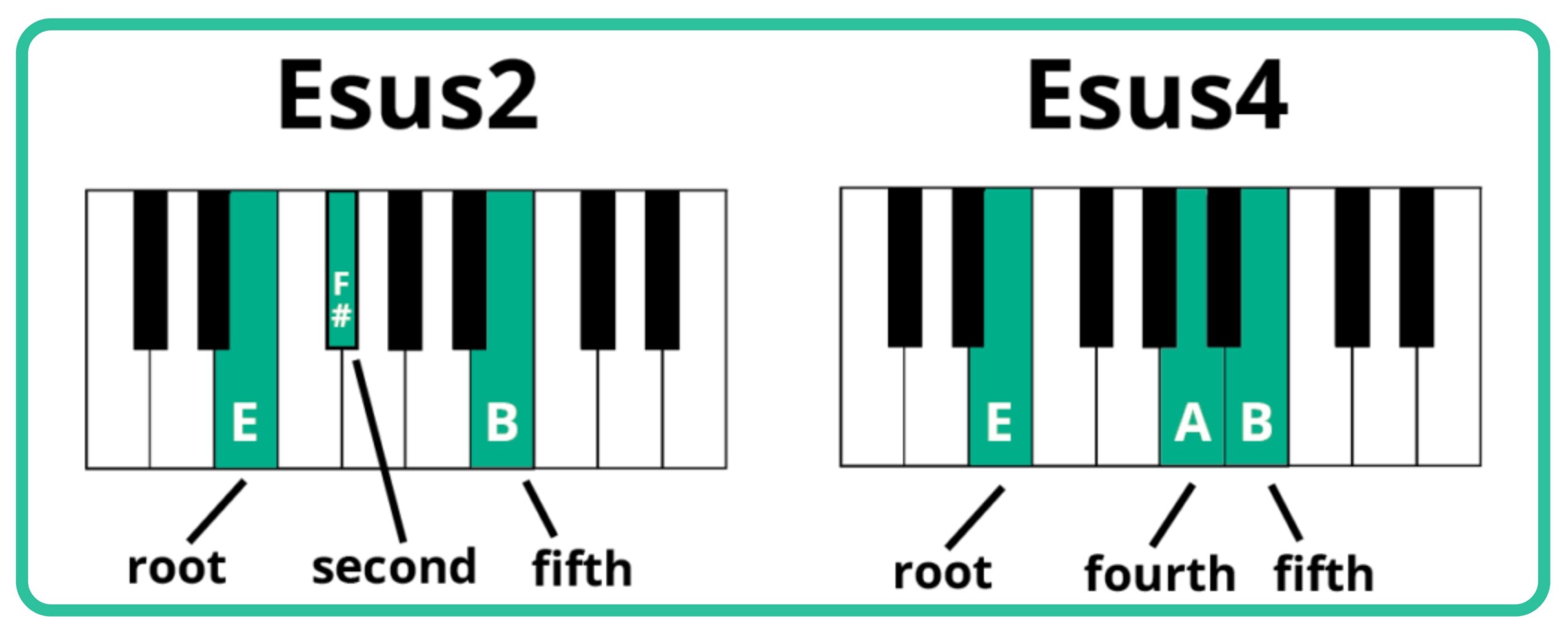
Conversely, the Sus2 chord replaces the third with a major second. This results in a more “open” and “airy” sound compared to the Sus4. From a sound engineering standpoint, the Sus2 provides more “spectral space.” Because the intervals are spread in a way that avoids the density of the third, the Sus2 chord is frequently utilized in ambient music and tech-focused soundscapes where the goal is to provide a harmonic foundation without cluttering the mid-range frequencies. It is a “neutral” chord, neither major nor minor, providing a versatile palette for digital sound design.
Implementing Suspended Chords in Digital Audio Workstations (DAWs)
Modern music production relies heavily on software environments like Ableton Live, Logic Pro, and FL Studio. Within these platforms, the suspended chord isn’t just a concept; it is a MIDI data structure that can be manipulated to influence the “flow” of a track.
Using MIDI Editors for Harmonic Precision
In the MIDI piano roll, creating a suspended chord involves a precise vertical arrangement of notes. For a developer or a technical producer, the ability to “hard-code” these progressions allows for more evocative user experiences. For instance, when designing UI/UX sounds for an app, using a Sus2 chord for a “processing” notification can subconsciously signal to the user that an action is incomplete but progressing. In the DAW, producers often use “chord triggers” or MIDI plugins to map suspended chords to single keys, allowing for complex harmonic shifts during live performances or rapid prototyping of song structures.
Automation and Velocity Control in Sus-Chord Transitions
The true power of a suspended chord in a digital environment is realized through automation. Because suspended chords are inherently “unresolved,” they pair perfectly with filter sweeps and resonance modulation. A common technique in tech-heavy genres is to play a Sus4 chord on a polyphonic synthesizer while slowly opening a low-pass filter. The harmonic tension of the fourth interval interacts with the filter’s cutoff frequency, creating a “shimmering” effect that is impossible to achieve with standard major or minor triads. By automating the velocity of the suspended note, a producer can emphasize the “pull” toward the resolution, guiding the listener’s attention through the digital arrangement.
The Role of AI in Algorithmic Chord Progressions
The intersection of artificial intelligence and music theory has brought the suspended chord to the forefront of generative audio. AI models, such as Google’s Magenta or various VST-based “smart” composers, utilize probabilistic logic to determine when a chord should be “suspended” to maintain listener engagement.
AI Generative Tools and Harmonic Probability
When an AI generates a chord progression, it relies on Large Language Models (LLMs) or Neural Networks trained on vast datasets of MIDI files. These models recognize that suspended chords are statistical “disruptors.” A progression that stays strictly within major and minor triads can become predictable and “stale” to the human ear. Developers of AI composition software program their algorithms to inject Sus2 or Sus4 chords at specific intervals—typically at the end of a four-bar phrase—to create a “cliffhanger” effect. This technical implementation ensures that the music feels “intelligent” and dynamic rather than robotic.
Solving the Resolution Problem with Machine Learning
One of the challenges in AI music is “resolution”—the ability of the software to know where to go next. Suspended chords are the perfect training ground for this. A machine learning model can be trained to understand that a Sus4 chord has a high probability of resolving to a Major I or a Dominant V chord. By analyzing these “vectors of resolution,” AI tools can create more sophisticated and emotionally resonant music. This has massive implications for the gaming industry, where adaptive soundtracks need to shift in real-time based on player actions; a suspended chord can play indefinitely while a player is in a “waiting” state, only resolving once an objective is met.
Sound Design and VST Synthesis for Suspended Structures
Beyond theory and MIDI, the physical “tech” of the sound—the synthesis—plays a role in how we perceive suspended chords. When we deal with digital oscillators and wavetables, the way notes in a chord interact can cause phase cancellation or harmonic enrichment.
Managing Frequency Clashes in Digital Synths
In high-gain digital synthesis (such as FM synthesis or heavy distortion), the intervals in a suspended chord can be problematic. A Sus4 chord contains a “perfect fourth” and a “perfect fifth,” which are very close to each other in terms of harmonic series. If the synth patch has too much “drive” or harmonic saturation, these frequencies can clash, creating “beating” or unpleasant digital artifacts. Engineers must use technical tools like spectral analyzers and EQs to “carve out” space for each note in the suspended chord. This level of technical precision ensures that the tension of the chord is felt by the listener without compromising the clarity of the mix.
Layering Textures for Ambient Soundscapes
In the realm of software-based ambient sound design, suspended chords are often layered across multiple VST instruments to create a “wash” of sound. By using a granular synthesizer to playback a Sus2 chord, a designer can create a soundscape that feels vast and unresolved. The “neutrality” of the suspended chord is its greatest asset here; because it doesn’t force a specific emotion (happy or sad), it allows the technical textures—the reverb tails, the delay taps, and the bit-crushing—to take center stage. This is a common strategy in “Lo-Fi” beat-making apps and productivity-focused background music generators.
Conclusion: The Functional Future of Suspended Harmony
The suspended chord is far more than a relic of classical music theory; it is a vital technical component of the modern digital landscape. From the MIDI grids of world-class producers to the complex algorithms of AI music startups, the “sus” chord provides the necessary tension that drives digital narratives forward.
As we move toward a future where software increasingly dictates our aesthetic experiences, the ability to program, synthesize, and manipulate suspended chords will remain a cornerstone of effective audio engineering. Whether you are a software developer building a new music app, a sound designer crafting a corporate brand identity through audio, or a producer looking to break the monotony of standard triads, mastering the technical nuances of the suspended chord is essential. It is the sound of “what happens next”—a digital bridge built on the foundations of harmonic tension and technical precision.
aViewFromTheCave is a participant in the Amazon Services LLC Associates Program, an affiliate advertising program designed to provide a means for sites to earn advertising fees by advertising and linking to Amazon.com. Amazon, the Amazon logo, AmazonSupply, and the AmazonSupply logo are trademarks of Amazon.com, Inc. or its affiliates. As an Amazon Associate we earn affiliate commissions from qualifying purchases.